Pelvic Floor Trauma: Hazards of Parturition
Gigin Lin1 and Bo-Syuan Huang1
1Chang Gung Memorial Hospital, Taipei, Taiwan
1Chang Gung Memorial Hospital, Taipei, Taiwan
Synopsis
Keywords: Body: Reproductive, Body: Body
This lecture explores the critical role of MRI in assessing postpartum pelvic floor trauma, crucial for improving women's postpartum quality of life. It discusses the challenges and advantages of using MRI in this context, highlighting the importance of accurate diagnosis and tailored treatment strategies. Through comprehensive discussion of pelvic floor anatomy, trauma types, and MRI sequences, supplemented by clinical case studies, it showcases MRI's superior diagnostic capabilities. The correlation between MRI findings and clinical symptoms underscores its value in guiding interventions. This talk encourages further research into optimizing MRI protocols, with potential benefits for postpartum care and women's health outcomes.Childbirth-related pelvic floor trauma presents a significant challenge in postpartum care, affecting women's quality of life. Accurate diagnosis and management are crucial for optimal outcomes, prompting the need for advanced imaging techniques like MRI to enhance assessment and treatment strategies. The specific aim of this talk is to elucidate the pivotal role of MRI in evaluating postpartum pelvic floor trauma, aiming to enhance understanding, diagnosis, and management of these injuries. It seeks to provide insights into the unique challenges and opportunities MRI presents in this context. This educational lecture will employ a comprehensive approach, starting with an overview of pelvic floor anatomy and common trauma types incurred during childbirth. It will then highlight the specifics of MRI imaging sequences utilized for pelvic floor assessment, supplemented by illustrative clinical case studies. Safety considerations and future trends in MRI for pelvic floor trauma will also be discussed. Published evidence showcases the superior diagnostic capabilities of MRI in identifying and characterizing postpartum pelvic floor trauma, thus facilitating tailored treatment strategies and improving patient outcomes. The presentation highlights the correlation between MRI findings and clinical symptoms, emphasizing the value of MRI in guiding therapeutic interventions. Understanding the role MRI for postpartum pelvic floor opens avenues for further research into optimizing MRI protocols and refining treatment approaches, ultimately enhancing the quality of postpartum care and women's health outcomes.
Acknowledgements
Funded by National Science and Technology Council, Taiwan (MOST 109-2628-B-182A-007-, MOST 110-2628-B-182A-018-, MOST 111-2628-B-182A-012-, MOST 111-2314-B-182A-042-, MOST 112-2314-B-182A-015-, NSTC 110-2314-B-182A-062-, NSTC 111-2314-B-182A-154- and NSTC 112-2314-B-182A-127-MY3) and Chang Gung Medical Foundation (CLRPG3K0024 and CMRPG3M0732).References
DeLancey JOL, Masteling M, Pipitone F, LaCross J, Mastrovito S, Ashton-Miller JA. Pelvic floor injury during vaginal birth is life-altering and preventable: what can we do about it?. Am J Obstet Gynecol. 2024;230(3):279-294.e2. Youssef A, Brunelli E, Pilu G, Dietz HP. The maternal pelvic floor and labor outcome. Am J Obstet Gynecol MFM. 2021;3(6S):100452. Shi M, Shang S, Xie B, et al. MRI changes of pelvic floor and pubic bone observed in primiparous women after childbirth by normal vaginal delivery. Arch Gynecol Obstet. 2016;294(2):285-289.Figures
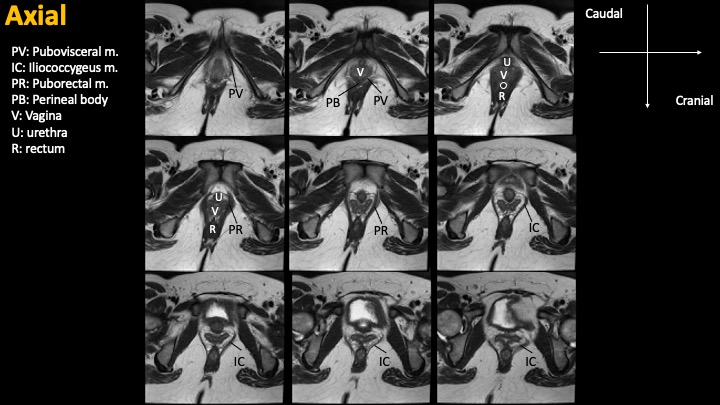
Overview of pelvic floor anatomy and common trauma types incurred during childbirth.