4D Flow MRI
Susanne Schnell1
1University of Greifswald, Germany
1University of Greifswald, Germany
Synopsis
Keywords: Cardiovascular: Hemodynamics, Contrast mechanisms: Flow, Image acquisition: Quantification
Phase-contrast MRI is an angiography technique that uses bipolar gradients to encode tissue or fluid motion into the MRI signal phase. If measured in 2D with 1-directional encoding this is termed 2D Phase-Contrast MRI. Extended to a time-resolved heart or pulse rate-triggered 3D sequence with 3-directional velocity encoding, this is termed 4D flow MRI. Error sources will be described throughout the course as well as data analysis and quantification approaches. Further extensions such as dual- and multi-venc, and 5D flow MRI will be described. Finally, applications in the thorax, head, and abdomen will be introduced.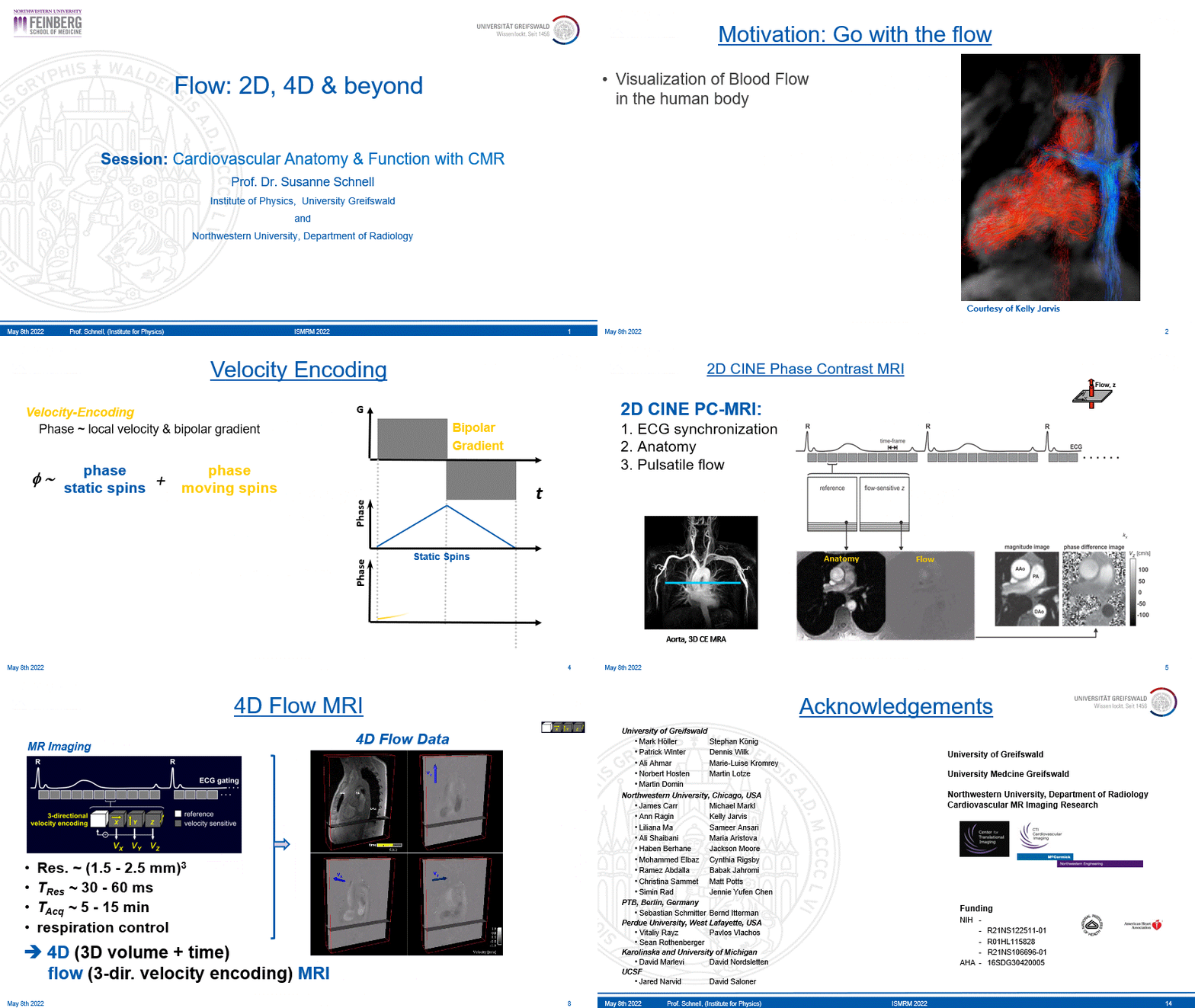 Slide #1