5189
Scan With Me (SWiM): A promising train-the-trainer program tailored for resource-limited settings1Pontificia Universidad Catolica de Chile, Santiago, Chile, 2Department of Medical Imaging, University for Development Studies, Tamale, Ghana, 3Montreal Neurological Institute, McGill University, Montreal, QC, Canada, 4Department of Radiology & Imaging Sciences, Indiana University School of Medicine, Indianapolis, IN, United States, 5Clinical Imaging Sciences Centre, University of Sussex, Brighton, United Kingdom, 6Consortium for Advancement of MRI Education and Research in Africa (CAMERA), Montreal, QC, Canada, 7Biophysics department, Higher Institute of Medical Technologies of Tunis., Tunis, Tunisia, 8Division of Experimental Medicine, McGill University, Montreal, QC, Canada, 9Crestview Radiology Ltd, Lagos, Nigeria, 10Department of Medicine, University of Cape Town, Cape Town, South Africa, 11National Neuroscience Institute, Singapore, Singapore, 12Department of Internal Medicine, Geisinger Wyoming Valley Hospital, Wilkes-Barre, PA, United States, 13John Hopkins School of Medicine, Baltimore, MD, United States, 14IRDOCNIGERIA, Lagos, Nigeria, 15Accuread Radiology, Nigeria Ltd, Lagos, Nigeria, 16Warrington and Halton Hospitals National Health Service Foundation Trust, Warrington, United Kingdom, 17RAD-AID International, Chevy Chase, MD, United States, 18Perelman School of Medicine, University of Pennsylvania, Philadelphia, PA, United States, 19Department of Oncology, Guy's & St Thomas' Hospital, London, United Kingdom
Synopsis
Keywords:
Motivation: There is a wide discrepancy in MRI accessibility globally, which has created an insurmountable challenge to fulfill the diagnostic healthcare needs of low- and middle- income countries.
Goal(s): To train MRI radiographers who can train their peers in a growing network.
Approach: The RAD-AID Teach-Try-Use approach was used within 6 weeks to deploy basic to advanced cardiac MRI (CMR) knowledge, followed by expert image acquisition demonstrations, and the use of cases to simulate, analyze and optimize scanner-specific imaging protocols for pathologies.
Results: 43 Participants from 16 countries gained practical CMR experience and implemented their own optimized protocols to generate high-quality images.
Impact: A sustainable skill set training approach was used to provide expertise to MRI radiographers who will then serve as trainers of their peers in resource-limited settings. Outcome of the training was measured by trainee evaluations and engagement and the high-quality images acquired by participants.
Introduction
Less than one-fourth of the world’s population has access to adequate MRI services. Frameworks have been suggested to advance sustainable access to MRI services in some low-resourced settings (1,2). As the overall cost of MRI is burdensome when considering equipment, infrastructure, and human resources, it follows that MRI availability and utilization correlate with a country’s resource level (3). Proposed solutions include optimized protocols, vendor financing programs, low-field MRI installations, machine learning technology, and skills training programs (2,4).The main drivers of limited access to MRI services (acquisition and interpretation) in most parts of low- and middle-income countries (LMICs) are unavailability of MRI radiographers and training programs to upskill them. So far, proposed approaches aimed at addressing the challenges of access to quality MRI services appear not to highlight the need for affordable tailored programs to upskill MRI radiographers in LMICs, in a sustainable fashion while optimizing available infrastructure in the training process (4,5).
Here, present the Scan With Me (SWiM) initiative, that was recently implemented to train MRI radiographers from LMICs, who will later become trainers of their peers in their respective countries. The main outcomes of the training were the development of optimized MRI acquisition and safety protocols to acquire high-quality MR images.
Methods
SWiM is a train-the-trainer capacity-building initiative of the Consortium for Advancement of MRI Education and Research in Africa (CAMERA). SWiM implements RAD-AID’s Teach-Try-Use strategy (6), which combines the deployment of free electronic learning resources (i.e., journal articles and video demonstrations) (7), expert lectures, case-based, and hands-on practical approaches to train a team of radiographers who work together as a network to grow their skills and collectively train others (Figures 1-2). Out of 104 radiographers from LCMICs who applied to participate in the program, 43 radiographers were selected from a total of 16 countries (comprising 9, 4 and 3 from Africa, Latin America (LATAM), and Asia, respectively). Twenty-nine faculties from different professions (radiographers, MDs, and engineers) from different countries and MR vendors delivered various training topics in 20 live online sessions over a 6-week period (Figure 3).Results
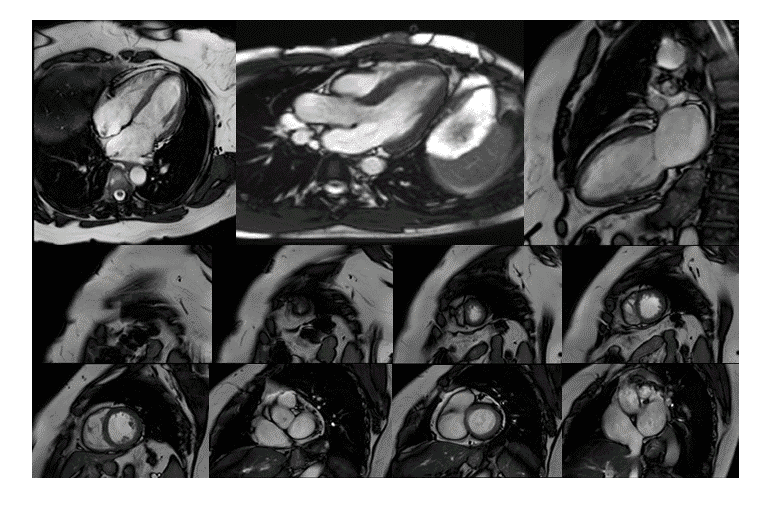
On August 22, 2023, the 6-week long pilot SWiM program began, using cardiac MR (CMR) imaging. The pilot program provided practical aspects of CMR imaging, from basic to advanced CMR practices. The curriculum was tailored to all levels of MRI radiographers, regardless of their level of expertise. Training was delivered to participants grouped into 5 teams (3 African, 1 Asian, and 1 LATAM teams).The curriculum was deployed in 3 segments (Teach, Try, Use) over the 6-week period. Topics on basic image formation and advanced CMR protocols were taught (using journal articles and videos) in the first 2 weeks. Live demonstrations and expert seminars were presented in weeks 3-4. In the last two weeks, two cases of CMR patients were presented to each team. With these cases, each team went through hands-on scanning experience using an MR simulator and a post-processing CMR software. On the last day of the program, all teams presented the results of these cases. To enable the participants to try out and optimize their CMR protocols, they were again grouped based on vendor-specific MRI machines available at their facilities. Each group subsequently developed scanner-specific optimized CMR protocols (Figure 4) to acquire high-quality images (Figure 5) for the specific cardiac pathologies they were presented with, and these protocols were then published on a freely accessible online portal. Ninety percent of trainees at the end of the program expressed interest in joining SWiM as a faculty to train others, particularly in MRI safety.
Discussion
The nature of the complexities of diseases in LMICs, coupled with the absence of relevant skill sets to aid accurate diagnosis with the range of MRI applications, calls for a need to optimize the limited resources to meet this challenge. An initiative that includes a multifaceted and tailored approach that combines formal education, practical training, mentorship, networking, and ongoing professional development is essential for MRI radiographers to meet the challenges of providing high-quality images for both clinical and research purposes.Conclusion
We expect the MRI radiographers who benefited from the program to now have an improved skill set to implement CMR imaging in their facilities. Future SWiM programs will target skill sets in other MR applications.Acknowledgements
Special thanks to McGill University, Fourwaves, Siemens Healthineers, Accuread Radiology Nigeria Ltd, SWiM faculty, and MRI facilities that supported this program.References
1.- Anazodo UC, Ng JJ, Ehiogu B, Obungoloch J, et al; Consortium for Advancement of MRI Education and Research in Africa (CAMERA). A framework for advancing sustainable magnetic resonance imaging access in Africa. NMR Biomed. 2023 Mar;36(3): e4846.
2.- Murali S, Ding H, Adedeji F, Qin C, Obungoloch J, Asllani I, Anazodo U, Ntusi NA, Mammen R, Niendorf T, Adeleke S. Bringing MRI to low‐and middle‐income countries: Directions, challenges and potential solutions. NMR in Biomedicine. 2023 Jul 4:e4992.
3.- Piersson AD, Gorleku PN. Assessment of availability, accessibility, and affordability of magnetic resonance imaging services in Ghana. Radiography (Lond). 2017 Nov;23(4):e75-e79. doi: 10.1016/j.radi.2017.06.002. Epub 2017 Jun 23. PMID: 28965907.
4.- Karera A, Engel-Hills P, Davidson F. Radiographers' experiences of image interpretation training in a low-resource setting. Radiography (Lond). 2023 May;29(3):590-596. doi: 10.1016/j.radi.2023.03.012. Epub 2023 Apr 5. PMID: 37027946.
5.- Rosman, D.A., Bamporiki, J., Stein-Wexler, R. et al. Developing Diagnostic Radiology Training in Low Resource Countries. Curr Radiol Rep 7, 27 (2019). https://doi.org/10.1007/s40134-019-0336-6.
6.- Elahi A, Dako F., Surratt S, Schweitzer A. RAD-AID’s Teach-Try-Use Model to Implement AI in Low-and-Middle-Income Countries. Society for Imaging Informatics in Medicine 2022 Annual Meeting, Kissimmee, Florida, June 2022. Also, here https://rad-aid.org/programs/informatics/.
7.- Scan With Me (SWiM), training platform. https://event.fourwaves.com/swim.
Figures
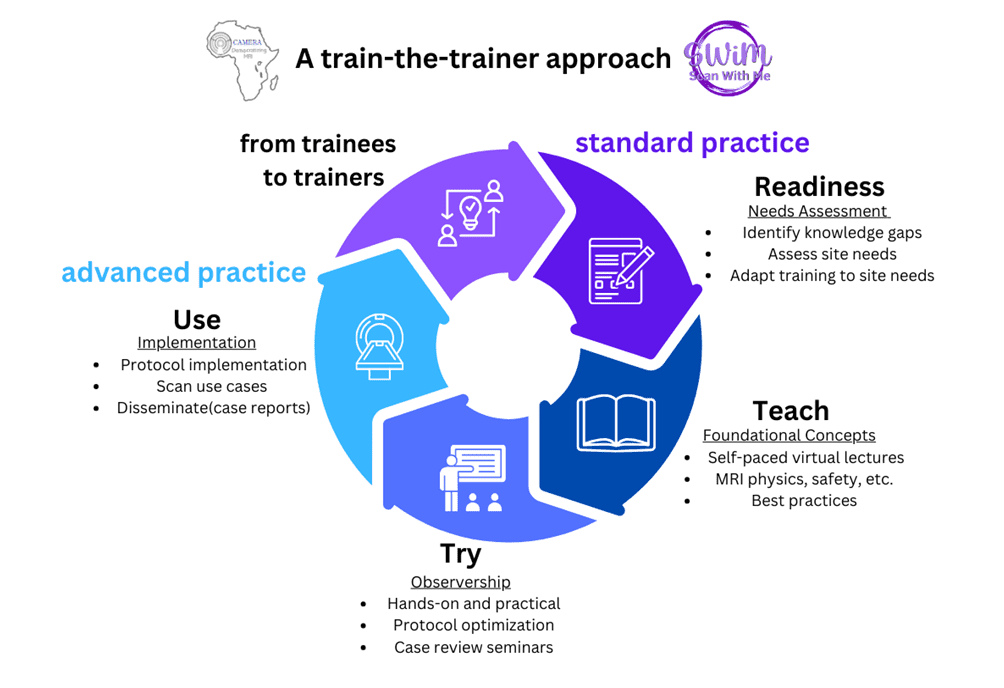
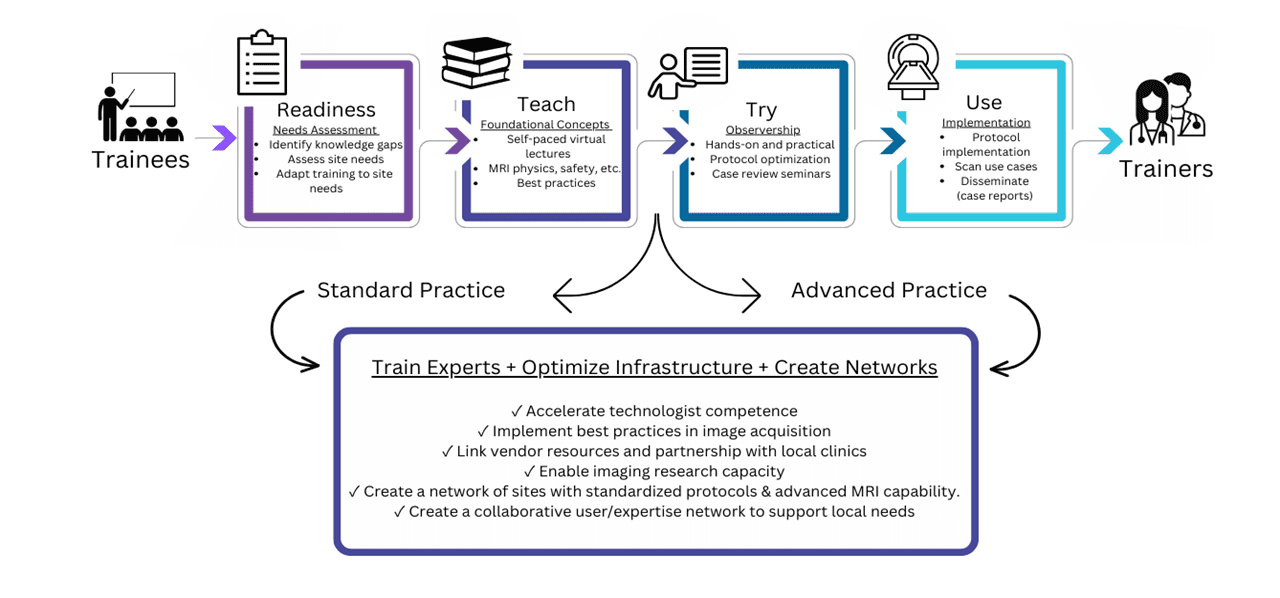
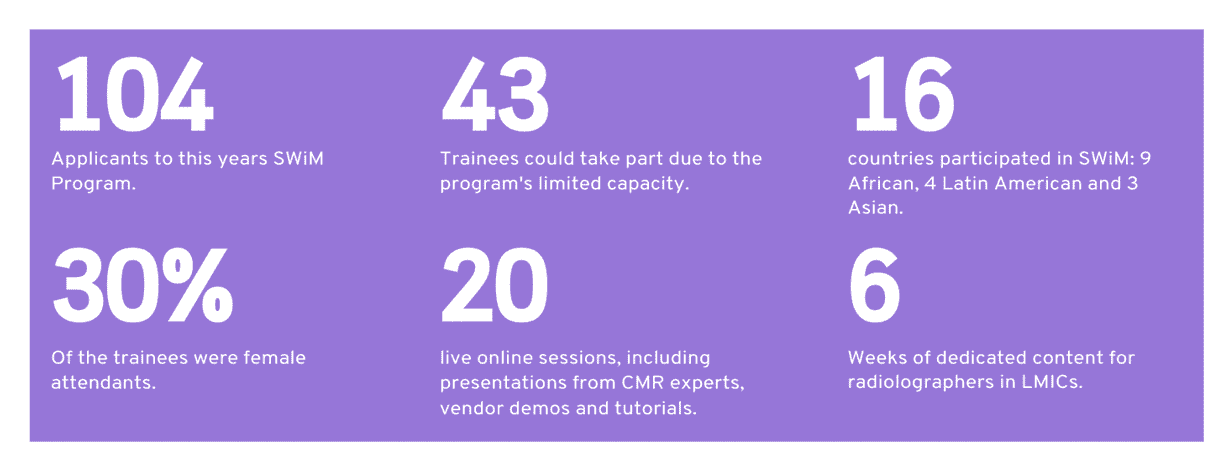
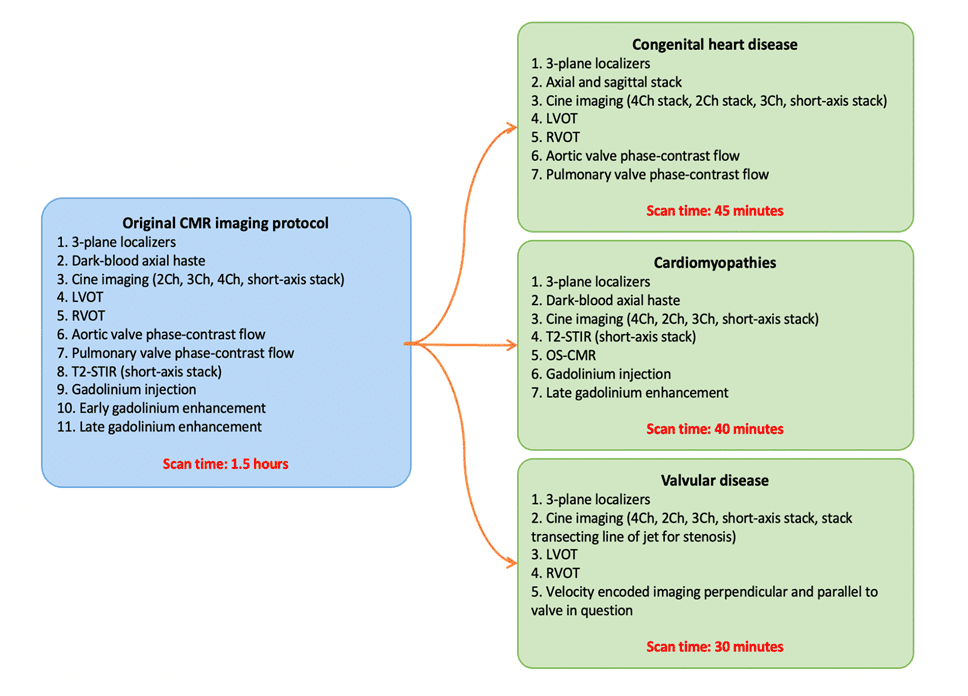
Figure 4: Example of an optimized CMR protocol proposed by one team.