5161
A Multiregional Study of MRI Services Between Huế (Vietnam), Adelaide (Australia), and Houston (America)1University of South Australia & South Australia Medical Imaging, Adelaide, Australia, 2Houston Methodist Hospital, Houston, TX, United States, 3University of Medicine and Pharmacy & Hue University, Hue, Vietnam
Synopsis
Keywords:
Motivation: Understanding variances in MRI services between different countries serves as a foundation for enhancing global MRI services, fostering the attainment of equitable and high-quality healthcare services globally.
Goal(s): What are differences in MRI services among Huế, Adelaide, and Houston, and what are the implications for global MRI service enhancement?
Approach: Data on various dimensions of MRI services was collected to investigate differences and similarities in technological infrastructure, image acquisition, service delivery, cost structures, professional expertise, and prevalent policies surrounding MRI services.
Results: The investigation revealed substantial discrepancies between cities; however, there are similarities in service delivery and training processes.
Impact: The study lays as a groundwork for the enhancement of global MRI services by identifying MRI service disparities among different regions, with the ultimate goal of fostering equitable and high-quality healthcare services globally.
Body of the abstract
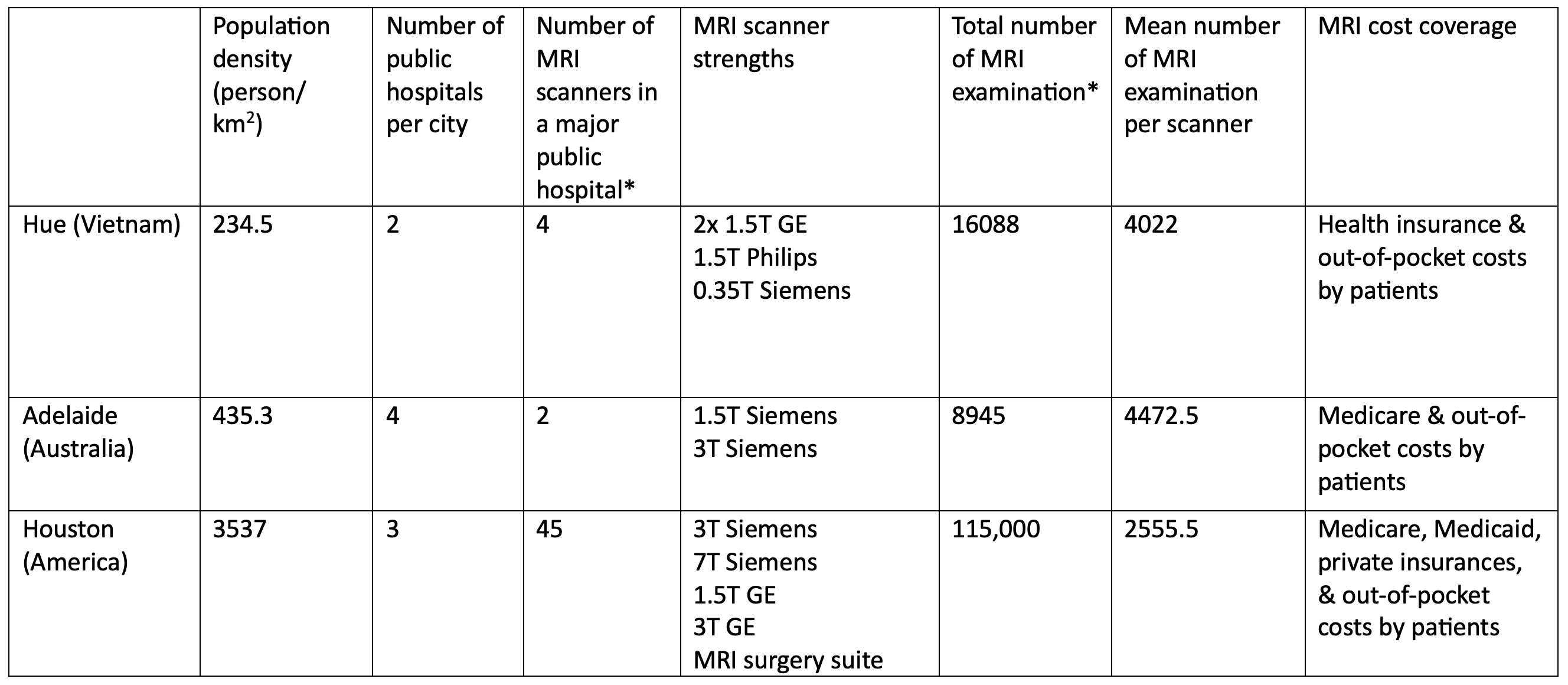
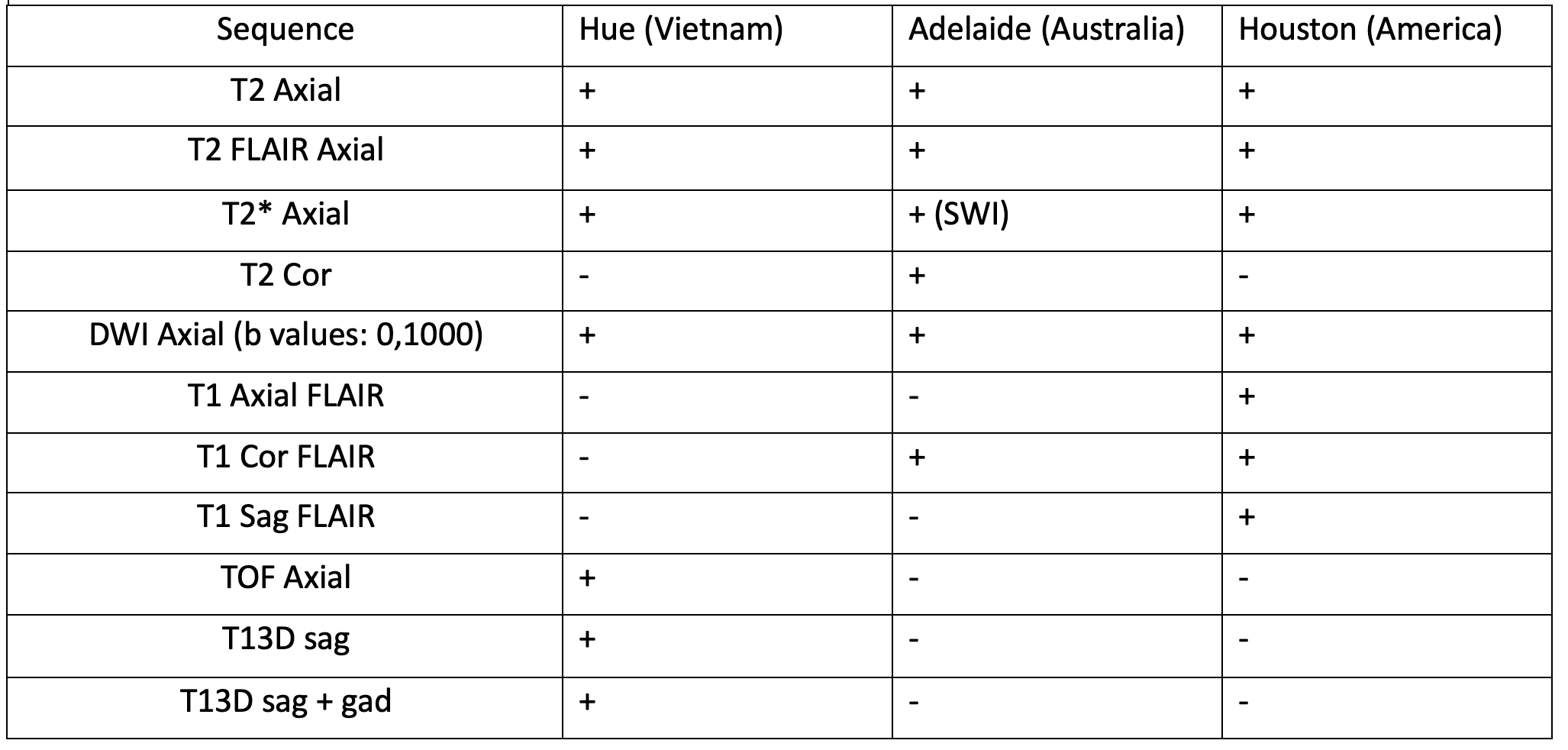
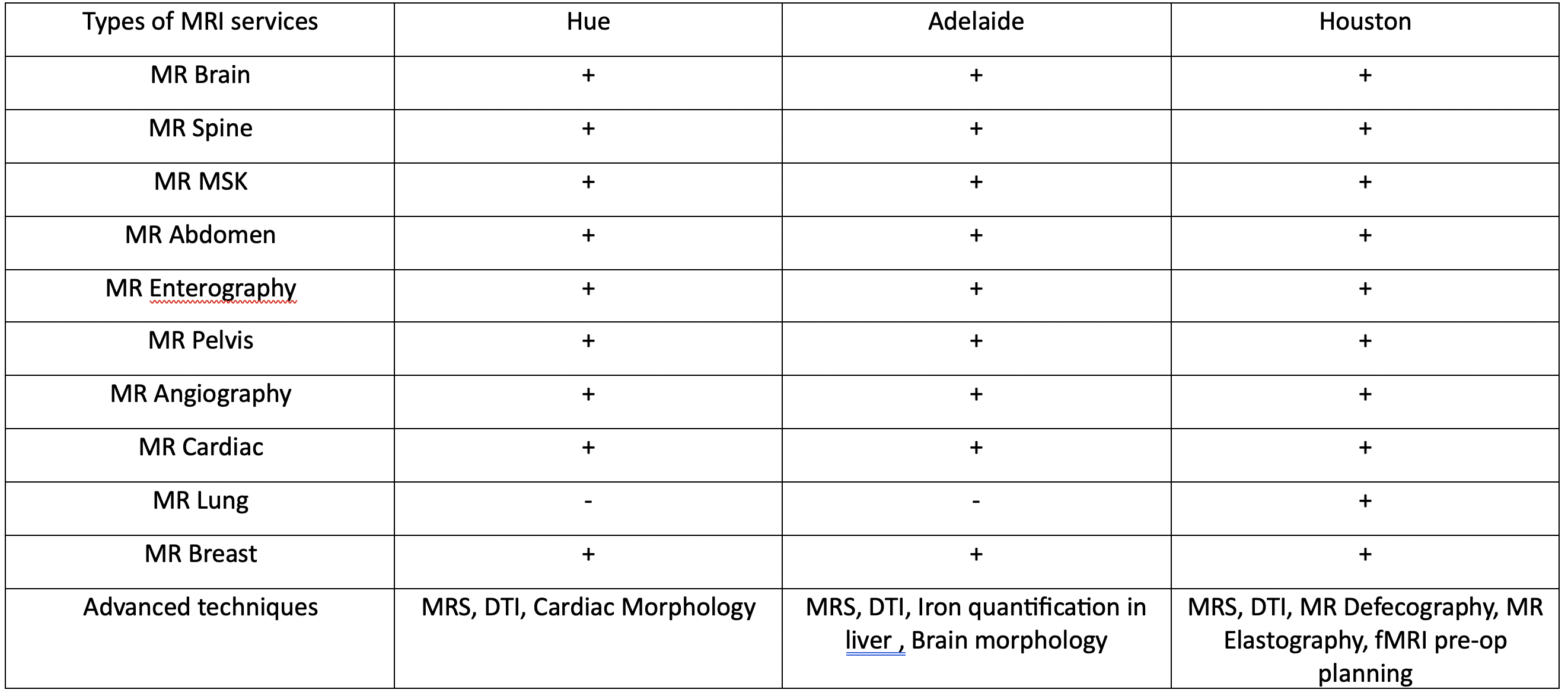
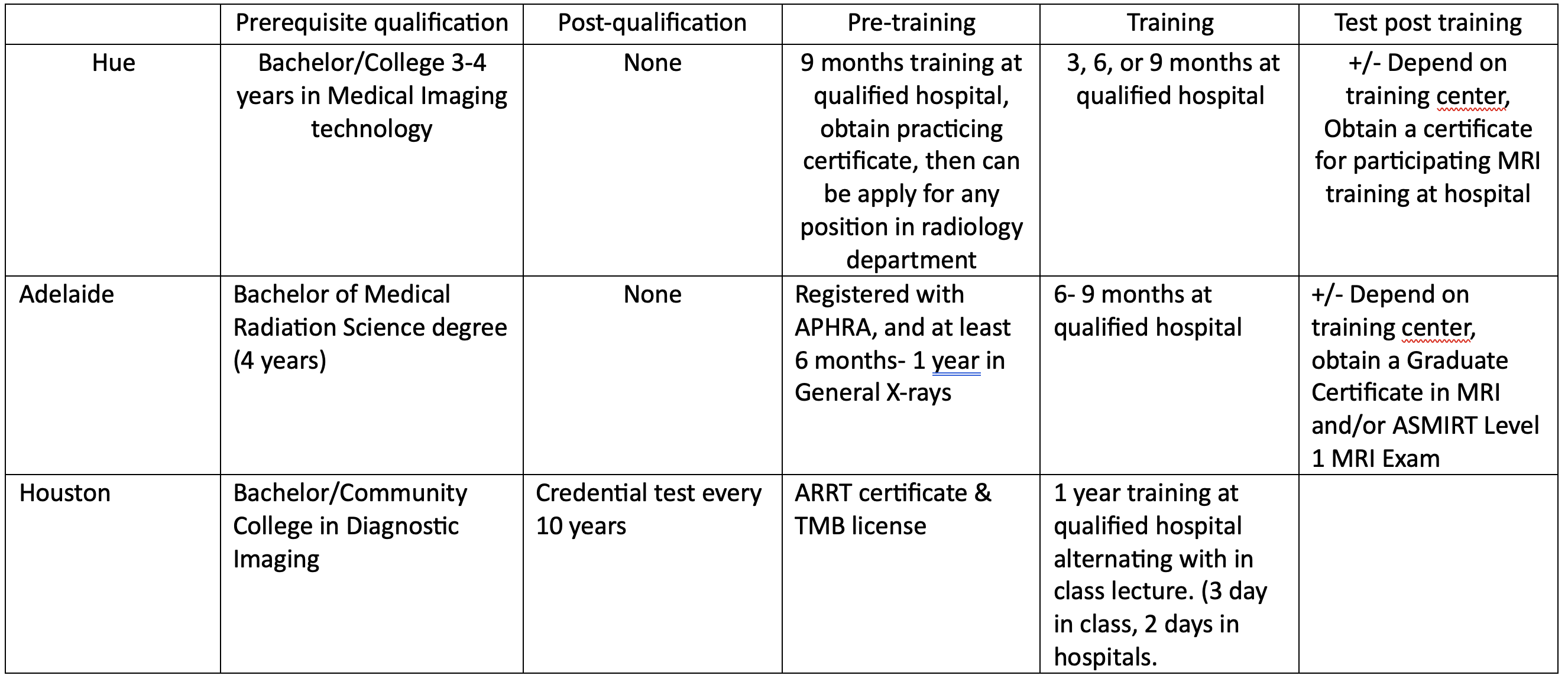
This study aims to present a descriptive analysis of Magnetic Resonance Imaging (MRI) services across three distinct cities: Huế (Vietnam), Adelaide (Australia), and Houston (America), providing insights into regional variances in healthcare settings. Data on various dimensions of MRI services was collected to investigate differences and similarities in technological infrastructure, image acquisition, service delivery, cost structures, professional expertise, and prevalent policies surrounding MRI services. All data used in the study are from the year 2022 from one major hospital in each city. The investigation revealed substantial discrepancies in MRI infrastructure, image acquisition and prevalent policies surrounding MRI services, reflecting diverse healthcare systems between cities. Houston has the largest infrastructure with 45 MRI scanners in a single major public hospital. Hue is unique in its use of a 0.35T low-field MRI scanner. In term of equipment vendors, Siemems leads the market across the three cities, with GE and Phillips also in the mix. Notably, Hue Central Hospital is the sole facility housing MRI scanners from all three vendors. Regarding imaging protocols, Hue stands out as a city where patients routinely receive contrast for routine brain scans. MRI costs are covered differently in each city, reflecting the different financial policies influencing the affordability and accessibility barriers of MRI services across different cities.Nevertheless, the study identifies commonalities between cities in service delivery, and training processes. Basic MRI examinations are available in all three cities, with Houston at the forefront of advanced MR technology such as MR Elastography and fMRI used in pre-operative planning. While the training process for MRI technicians exhibit slight differences, they are largely comparable across the cities.
A key limitation of the study is its reliance on data from a single year (2022) and from only one public hospital in each city, which might not accurately represent the overall development and distribution of MRI services in the respective regions. Furthermore, the selected cities may not represent the broader national or regional diversity within those countries. While the study reflects the diversity of healthcare systems, it may not fully capture the complexities and nuances of each system.
The idea of investigating variations in health care services among countries is explored in literature [1,2]. Nevertheless, there is limited studies that conduct comparisons of MRI services across various developing and developed countries.
In essence, this descriptive analysis lays as a groundwork for the enhancement of global MRI services by identifying MRI service disparities among different regions, with the ultimate goal of fostering equitable and high-quality healthcare services globally.
Acknowledgements
The permission to use data from Hue Central Hospital (Hue), South Australia Medical Imaging (SAMI) Flinders Medical Centre (FMC), and Houston Methodist Hospital (Houston) is acknowledged.References
1. Dieleman, J. L., Templin, T., Sadat, N., Reidy, P., Chapin, A., Foreman, K., ... & Kurowski, C. (2016). National spending on health by source for 184 countries between 2013 and 2040. The Lancet, 387(10037), 2521-2535.
2. Jalloul, M., Miranda-Schaeubinger, M., Noor, A. M., Stein, J. M., Amiruddin, R., Derbew, H. M., Mango, V. L., Akinola, A., Hart, K., Weygand, J., Pollack, E., Mohammed, S., Scheel, J. R., Shell, J., Dako, F., Mhatre, P., Kulinski, L., Otero, H. J., & Mollura, D. J. (2023). MRI scarcity in low- and middle-income countries. NMR in Biomedicine, e5022–e5022.
Figures