5154
Peek into an enduring language: An exploration of speed reading through the lens of neuroimaging1Department of Radiological Sciences, Graduate School of Human Health Sciences, Tokyo Metropolitan University, Arakawa, Japan
Synopsis
Motivation: Despite the growing interest in fast reading, which is a cutting-edge research area, researchers have not yet explored its potential in a lesser-known language.
Goal(s): Our goal was to explore the neural activation during the fast reading of ‘Sinhala’ letters.
Approach: Healthy Sinhalese participants were subjected to functional MRI (3T) along with a fast-reading training session to analyze pre- and post-fast-reading neural impacts.
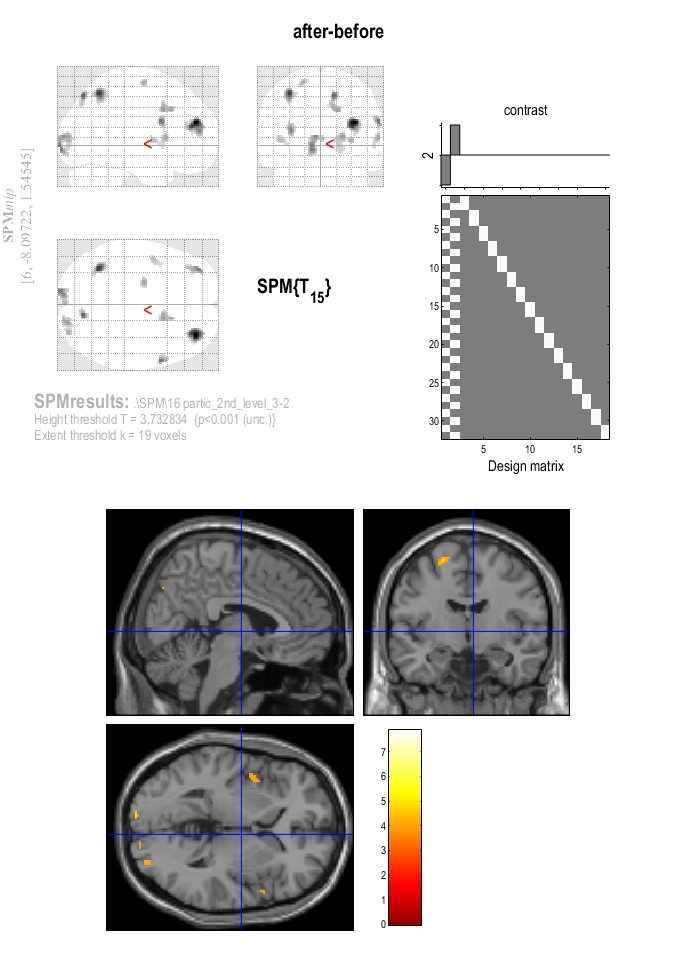
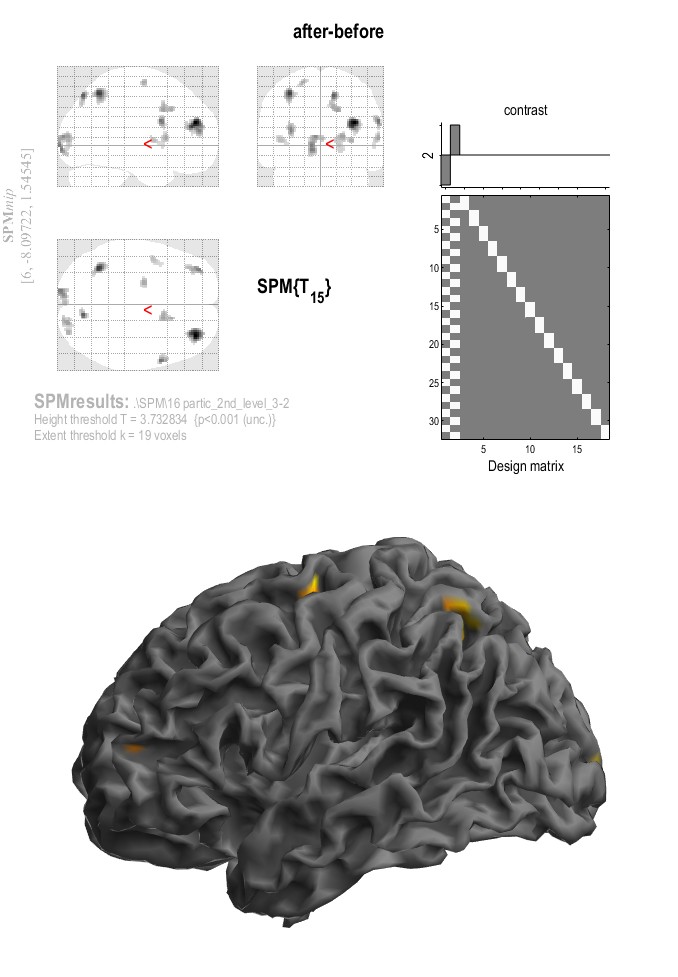
Results: Correlation analysis showed a significant increase in the activity of the right middle frontal gyrus in rapid reading than in ordinary reading (PFEW-corr(p<0.05)).
Impact: The increment of brain activation noticed in the fast-reading trained group suggests the significance of evaluating neural correlates unique to a language. This finding may aid in the development of effective fast-learning methods and improve approaches to second-language learning.
Purpose
It is crucial to comprehend the neural activation patterns linked to rapid reading across various languages. The goal of this study is to identify the precise regions of the brain that are involved in the rapid reading of the 'Sinhala' letters and to explore the cognitive processes and associated neural mechanisms that are utilized during language-specific processing in fast-reading.Methods
A total of 16 fast-reading trained subjects and 16 untrained subjects were utilized as the study sample ((male, 11: female, 5), mean age 30± 4.2 and dominant hand right,15: left,1). A simple ‘Sinhala’ novel was used for covert reading inside the MRI scanner (3.0 T SIGNA Premier). Participants were scanned in two sessions. The pre-training and the post-training scans were conducted under the same protocol. Image acquisitions of 3D-T1W1 and fMRI, sequence: GRE EPI TR: 1000(ms) TE: 30(ms), FOV:220 (mm), matrix: 64X64, characters per task block: 320-350. A digital screen inside the MR scanner was used to display the letters and participants were provided with MR-compatible goggles. A one-month interval was taken between the two scans for the fast-reading training class. Image-word and sound-word-based block design fast reading training technique was utilized. The training was conducted for one hour per week during the whole month and participants were instructed to self-train for 10 minutes each day.Results
Neural activation patterns were analyzed using SPM12 software. The left lingual gyrus, right middle, and superior temporal gyrus, and left precentral gyrus, (p<0.001, k=19)were activated in the pre-training brain. Significant neural activations were observed after fast reading training in 4 regions; Left and right lingual gyrus, left occipital fusiform gyrus, and left precentral gyrus, (p<0.001, k=20). The pre-training reading speed was 225±46 words per minute(wpm) and the post-training reading speed was 719±208 (wpm), showing an approximate increment of reading speed by three times in rapid readers than the normal. Correlation analysis using paired t-test showed a significant increase in the activity of the right middle frontal gyrus in rapid reading than in ordinary reading(p<0.05).Conclusion
Previous studies have yielded conflicting results regarding the role of the precentral gyrus in covert reading. However, this study's findings show significant activation in the left precentral gyrus during Sinhala reading, highlighting the importance of inner sound coordination in this process. Further, a decreased activity of language-related brain regions due to ceased inner speech and sound in speed reading was not observed as in previous studies. In conclusion, the increase in the right MFG reflects the high demand for attentional processes and sustained focus with increasing speed. Therefore, these insights into the neural mechanisms of fast reading will be valuable in developing fast-learning techniques among nations and more effective second language learning systems.Acknowledgements
I would like to extend my heartful thanks to my supervisor, Prof.Atsushi Senoo for guiding and facilitating the required background for the research. Also, I would like to extend my deepest thanks to Mr. Iso Ichiro for committing more time to the fast-reading training class despite the busy schedules especially adapting to a new language. Further, I am much grateful to my lab mates for giving your continuous support and advice throughout this study. last, but not least, I am forever grateful to my research participants who volunteered for my study, in a situation where I could have given up the study because of in vain attempt of collecting samples.References
1) Fujimaki, N. et al. (2004) ‘Neural activation dependent on reading speed during covert reading of novels’, NeuroReport, 15(2), pp. 239–243. doi: 10.1097/00001756-200402090-00005
2) Fujimaki, N. et al. (2009). Neural activations correlated with reading speed during reading novels. Neuroscience Research, 65, 335-342.
3) Rivas-Fernández, M. N., Varela-López, B., Cid-Fernández, S., & Galdo-Álvarez, S. (2021, September 8). Functional Activation and Connectivity of the Left Inferior Frontal Gyrus during Lexical and Phonological Retrieval. Symmetry, 13(9), 1655. https://doi.org/10.3390/sym130916552)
4)Buchweitz, A., Mason, R. A., Hasegawa, M., & Just, M. A. (2009, April). Japanese and English sentence reading comprehension and writing systems: An fMRI study of first and second language effects on brain activation. Bilingualism: Language and Cognition, 12(2), 141–151. https://doi.org/10.1017/s1366728908003970
Figures