5143
Investigation of Conducting for MRI for Patients with Implantable Medical Devices and Items included in the Metal Safety Checklist in Japan
Kousaku Saotome1, Kunihiro Yabe2, Kosuke Morita3, Toshiki Tateishi4, Tsutomu Kanazawa5, and Tsukasa Doi6
1Department of Radiological Sciences, School of Health Sciences, Fukushima Medical University, Fukushima, Japan, 2Yamagata Prefectural Shinjo Hospital, Shinjo-shi, Japan, 3Kumamoto University Hospital, Kumamoto-shi, Japan, 4University of Fukui Hospital, Fukui-shi, Japan, 5Niigata University Medical & Dental Hospital, Niigata-shi, Japan, 6Kouseikai Takai Hospital, Tenri-shi, Japan
1Department of Radiological Sciences, School of Health Sciences, Fukushima Medical University, Fukushima, Japan, 2Yamagata Prefectural Shinjo Hospital, Shinjo-shi, Japan, 3Kumamoto University Hospital, Kumamoto-shi, Japan, 4University of Fukui Hospital, Fukui-shi, Japan, 5Niigata University Medical & Dental Hospital, Niigata-shi, Japan, 6Kouseikai Takai Hospital, Tenri-shi, Japan
Synopsis
Motivation: To improve the safety of Magnetic Resonance Imaging for Patients with Implantable Medical Devices in Japan.
Goal(s): To Investigate of Conducting for Patients with Implantable Devices and Items included in the Metal Safety Checklist.
Approach: A questionnaire survey was conducted at medical facilities that perform MRI examinations of patients with implantable devices.
Results: Conducting MRI for Patients with Implantable Medical Devices and Items in the Metal Safety Checklist revealed variations.
Impact: This study advances the discussion of Conducting for Magnetic Resonance Imaging for Patients with Implantable Medical Devices and the need to create a template for the Metal Safety Checklist in Japan.
Background
When performing magnetic resonance imaging (MRI) scans, the presence of medical devices in the body as well as the presence of non-medical materials such as tattoos, art makeup, and even hair extension powder must be confirmed prior to scanning in order to prevent or minimize adverse events. Furthermore, if the presence of medical devices in the body is confirmed, their suitability must then be confirmed. Thus, the worldwide spread of MRI and the development and improvement of medical devices have made tremendous contributions to medicine, but have also posed unique challenges to medical professionals. In Japan, safety information and guidelines such as information aggregation systems, MRI compatibility databases for internal medical devices, and MR compatibility search systems are provided by the Japanese Society for Magnetic Resonance in Medicine and the Japan authorize organization for magnetic resonance technological specialist. While there are many resources available, we do not know the details of the system in Japan for pre-confirmation of metal in the body using the Metal Safety Checklist and for conducting MRI examinations of patients with implantable devices. We performed a questionnaire survey on the items of the Metal Safety Checklist and the Conducting for Magnetic Resonance Imaging for Patients with Implantable Medical Devices at medical facilities in Japan that perform MRI examinations of patients with implantable devices.Teaching Point
A questionnaire survey was conducted from March 21, 2021, to April 22, 2021, at 950 facilities in Japan that perform MRI on patients with intravitreal implantable devices. The collection rate was 65.5%.Survey Items
1) MRI system for patients with implanted devices
- Do you perform MRI examinations on patients with implanted devices?
- Who changes the settings of the implantable device for the MRI before the MRI exam?
- Who explains the risks of undergoing MRI scans to patients with implanted devices?
2) Pre-confirmation of metals in the body using the Metal Safety Checklist
- Do you have a Metal Safety Checklist?
- What items are included in the Metal Safety Checklist?
Survey Results
1) System for MRI examinations of patients with implantable devices
- 95% and 69% of the respondents answered that they had performed or were ready to perform MRI examinations for patients with Pacemaker (PM) and Implantable cardioverter-defibrillators (ICD) , respectively, more than for other devices.
- 21%, 29%, and 20% of the respondents answered that they had performed or were ready to perform MRI on patients with Deep Brain Stimulation (DBS), Spinal cord stimulation (SCS), and Cochlear implant (CI), respectively.
- Clinical engineers (CE) were most likely to change the mode of the device before the examination in PM and ICD, followed by the vendor's engineers and cardiologists.
- In DBS, neurosurgeons were the most frequent changes, followed by CEs and vendor engineers.
- In SCS, patients most often changed the mode by themselves, followed by attending physicians, CEs, and vendor engineers.
- Attending physicians most often explained the risks of having an MRI exam to patients with implanted devices, followed by radiological technologist (RT) or CE for all devices.
- Some centers did not explain the risks for all devices, ranging from 5-18%.
2) Pre-confirmation of metals in the body using the Metal Safety Checklist
- 86% of the facilities conducted a medical interview using the Metal Safety Checklist prior to MRI.
- The attending physician was the most common person to conduct the interview using the Metal Safety Checklist, followed by nurse, RT, and clerk.
- Almost all facilities included PM in the body metals checklist.
- More than 80% of the facilities included tattoos, art makeup, brain aneurysm clips, intravital electronic devices such as cochlear implants and neurostimulators, cardiovascular artifacts, and implantable cardioverter defibrillators on the checklist.
- About 70% of the respondents included intracorporeal metals and relics due to variable-pressure valve shunts, artificial heart valves, cosmetic surgery, and trauma, while about 50% included gastrointestinal hemostatic clips and bile duct, cafeteria, and tracheal stents.
- The least included in the checklist were hair growth powder and relic leads, at just over 20%.
Conclusions
- Many centers had performed or were prepared to perform MRIs on patients with PM and ICD, but fewer had done so for DBS, SCS, and CI.- There was wide variation in the items included in the Metal Safety Checklist
Acknowledgements
No acknowledgement found.References
Jabehdar Maralani, P., Schieda, N., Hecht, E. M., Litt, H., Hindman, N., Heyn, C., Davenport, M. S., Zaharchuk, G., Hess, C. P., & Weinreb, J. (2020). MRI safety and devices: An update and expert consensus. Journal of Magnetic Resonance Imaging: JMRI, 51(3), 657–674.Figures
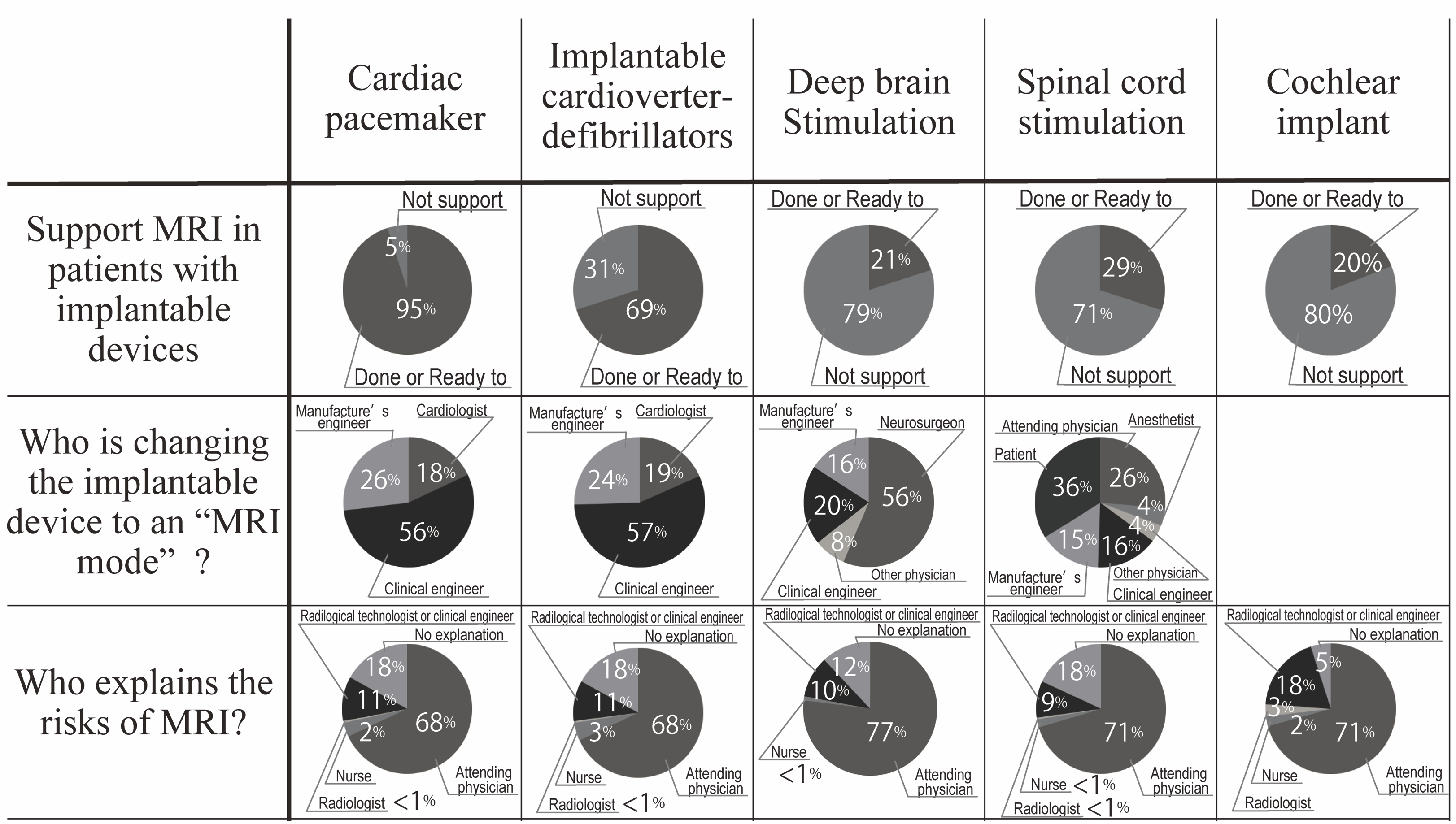
Conducting for Magnetic Resonance Imaging for Patients with Implantable Medical Devices
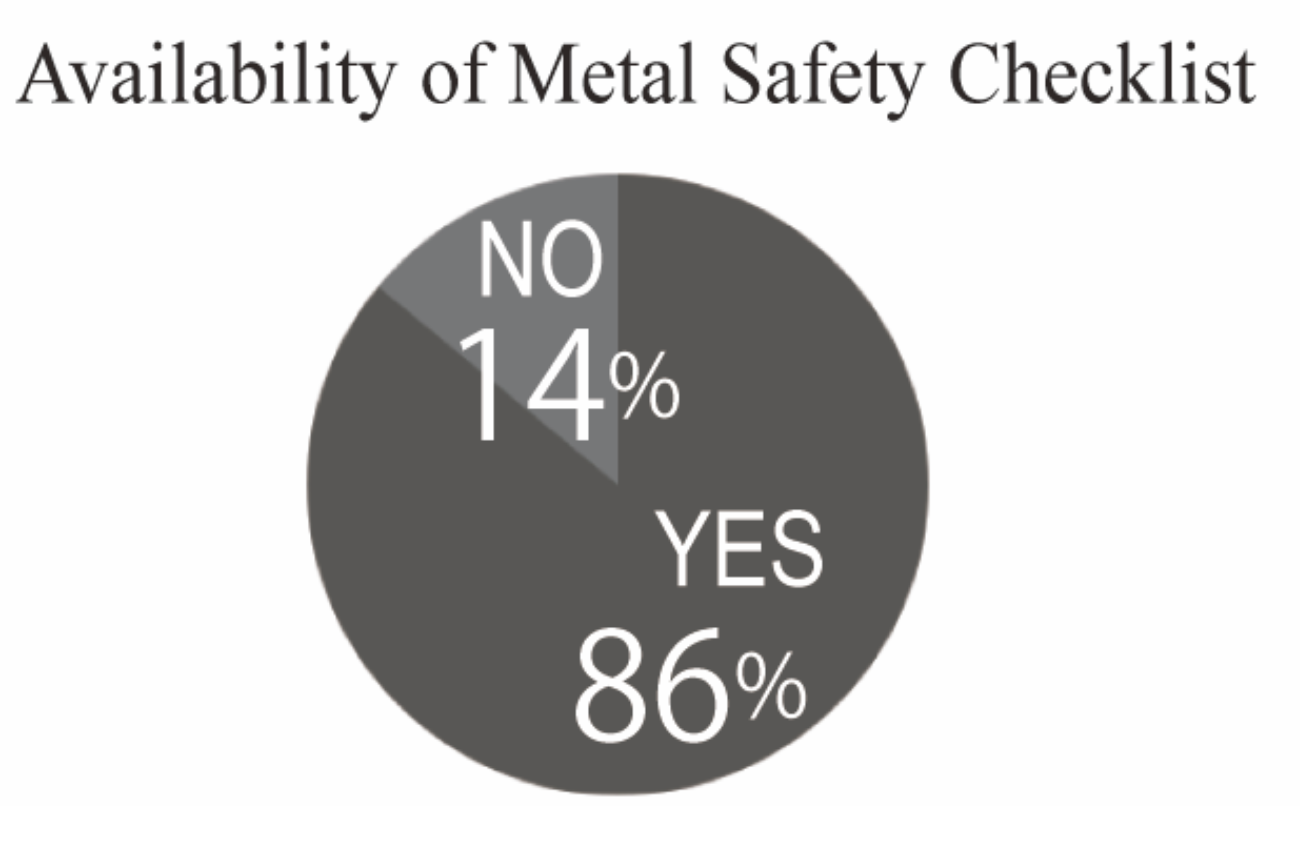
Availability of Metal Safety Checklist
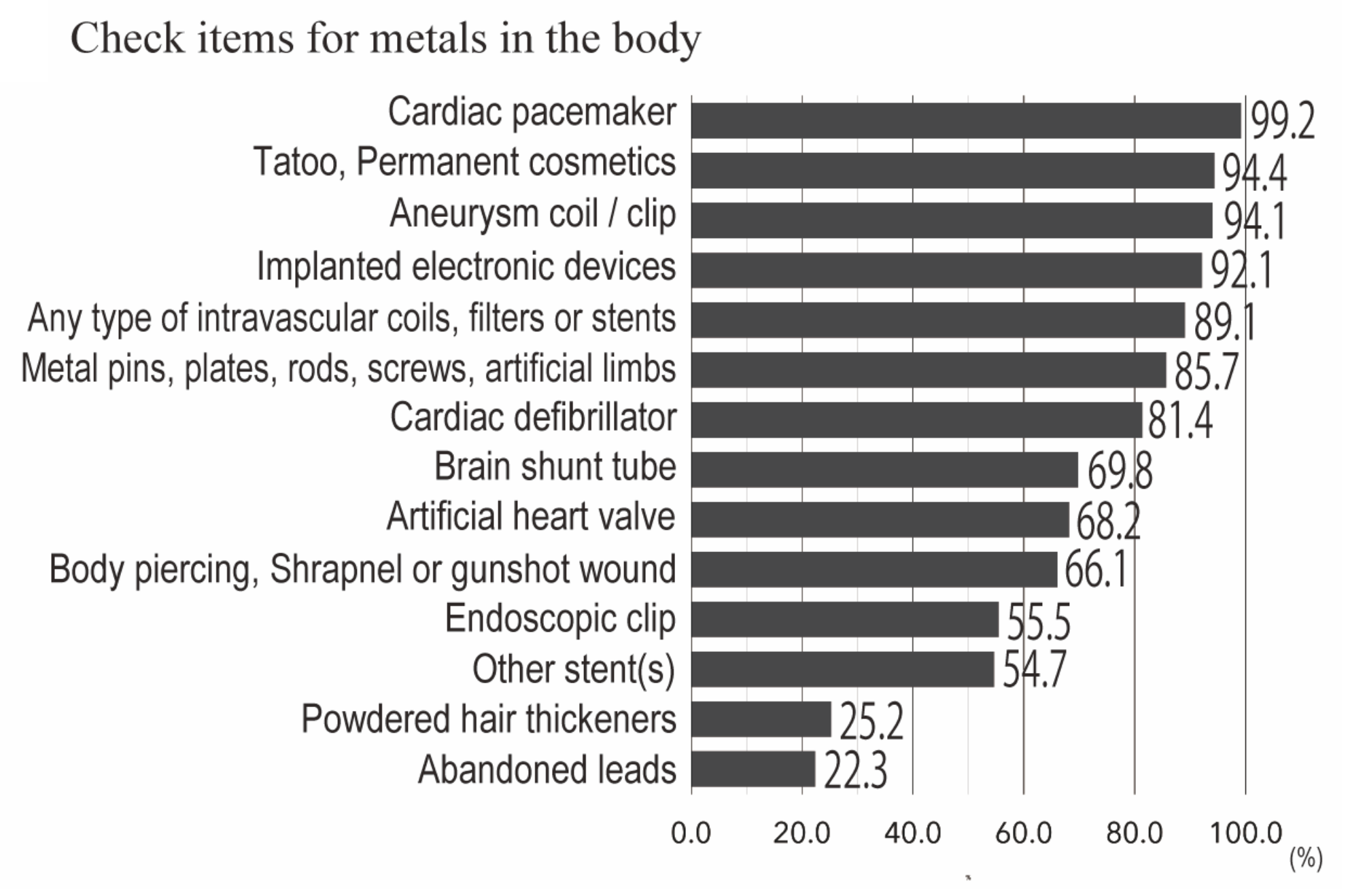
Items included in the Metal Safety Checklist
DOI: https://doi.org/10.58530/2024/5143