5129
Incident reports of bringing ferromagnetic objects into the magnetic resonance imaging room in the past 10 years1Division of Radiology and Nuclear Medicine, Sapporo Medical University Hospital, Sapporo, Japan
Synopsis
Motivation: The fatal accidents in the MRI room are caused by the bringing of ferromagnetic objects. It is necessary to identify the trends in incidents.
Goal(s): Our goal was to investigate the relationship between the frequency of bringing ferromagnetic objects and years of MRI experience.
Approach: We compiled incident reports for the past 10 years, extracted reports related to the bringing of ferromagnetic objects.
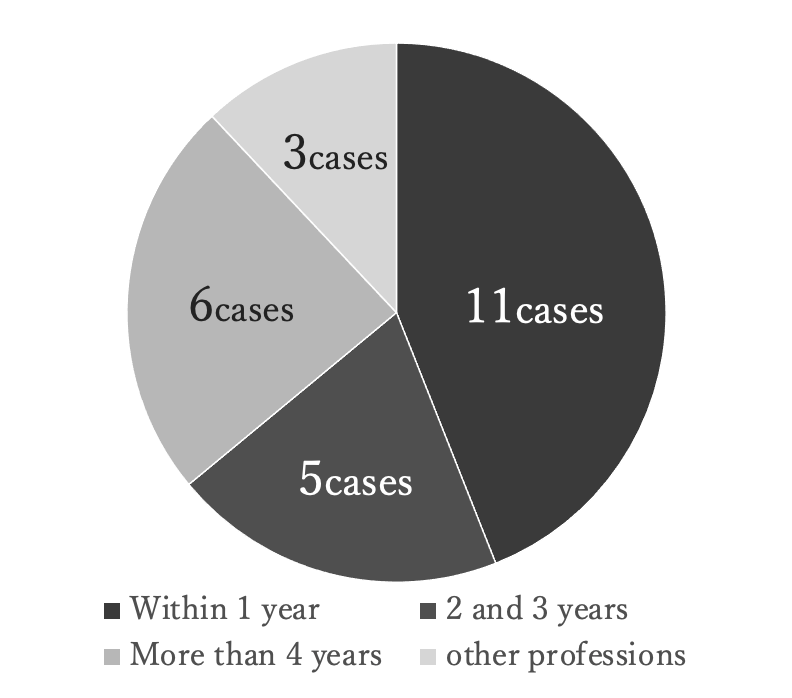
Results: There were 26 reports of ferromagnetic objects brought introduced, and half of the reports were from technologists with less than one year of MRI experience.
Impact: In order to prevent the adsorption accidents of the ferromagnetic objects, it is important to understand the causes of such incidents and the characteristics of our own facilities. Sharing this survey will lead to the prevention of similar incidents.
Background and Purpose
Bringing ferromagnetic objects to the MRI room can cause serious accidents. According to Heinrich’s law, for every serious accident, 29 minor accidents and 300 errors occur. Thus, understanding the current situation is necessary to prevent accidents. Incident reports are a tool for the identification and management of medical errors1. Learning from past incidents and sharing information will help prevent recurrence. This study aimed to investigate cases of ferromagnetic objects brought into the MRI room of our hospital using incident reports.Method
Incident reports on ferromagnetic objects brought into the MRI room in the past 10 years (January 2012 to December 2021) were analyzed. The frequency of bringing ferromagnetic objects (number of ferromagnetic objects brought in relative to the number of examinations per year), MRI experience in years, time of occurrence, names of ferromagnetic objects, and why they were brought into the MRI room were investigated.Results
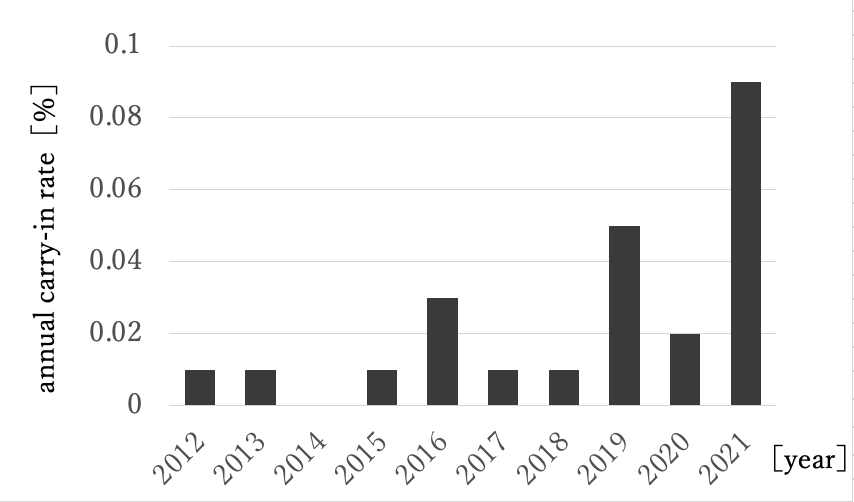
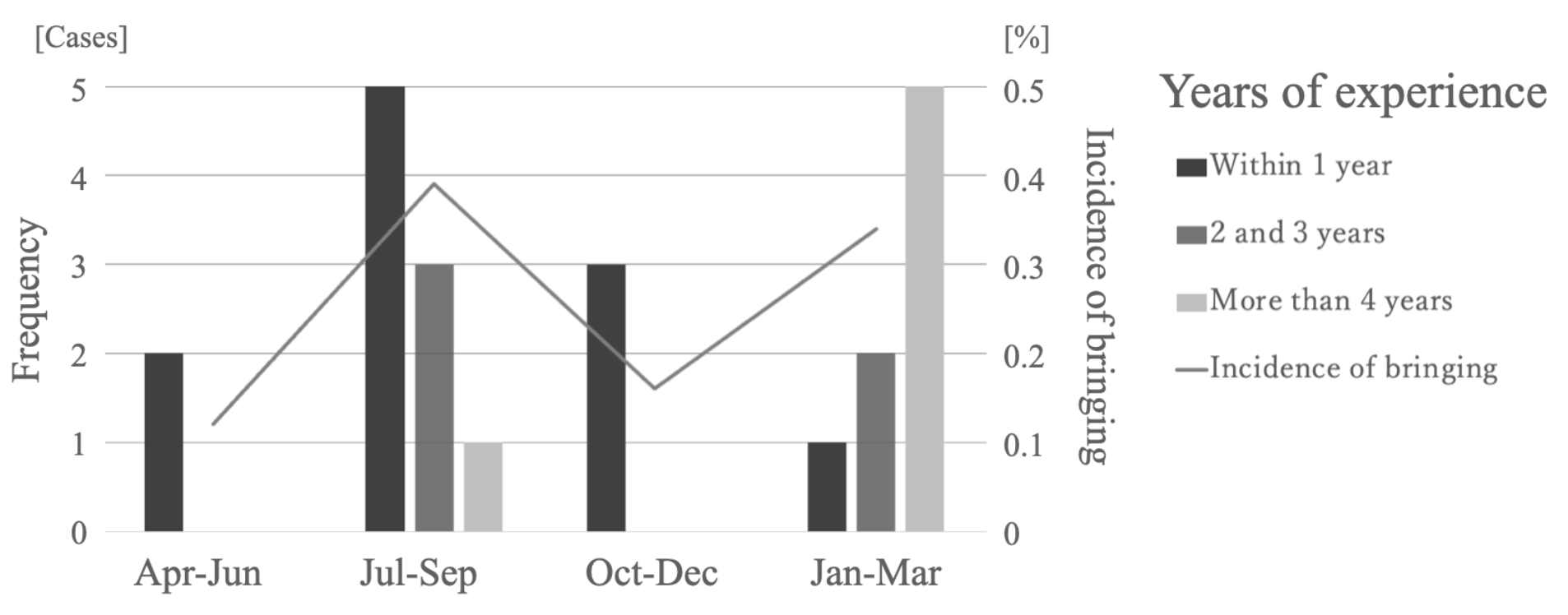
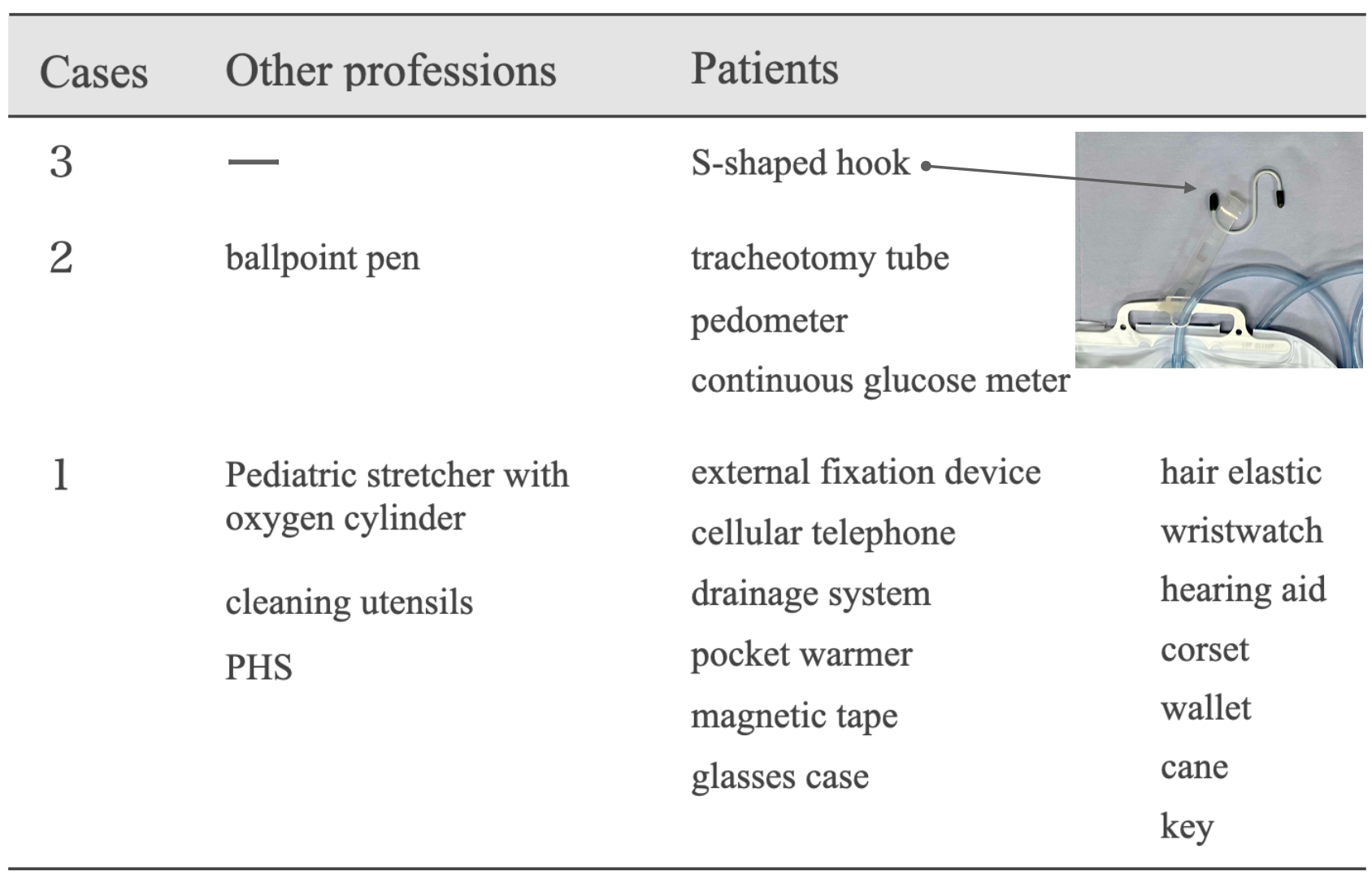
In total, 248 incident reports were extracted, which included 26 cases related to ferromagnetic objects. The rate of bringing in ferromagnetic objects was the highest in 2021, reaching 0.09% (Fig. 1). Incident reporters had Half of the personnel had ≤1 year of MRI experience (Fig. 2), and much of the incidents occurred in the second quarter (Fig. 3). The objects most frequently brought into the MRI room were S-shaped hooks and self-monitoring blood glucose meters (Fig. 4).Teaching point
In this survey, incident reports were used to investigate the ferromagnetic objects brought into the MRI room at our hospital over the past 10 years, and we found the trend and reasons for bringing ferromagnetic objects into the MRI room at our hospital. The first step in preventing accidents is to educate staff about what is easy to overlook and when to look for it.Conclusion
The frequency of bringing in ferromagnetic objects was higher in the second quarter as the staff had less experience with MRI. Thus, the investigation of ferromagnetic objects through incident reports will be useful for education, awareness, and accident prevention.Acknowledgements
NoneReferences
1. Jones D. N., Benveniste K. A., Schultz T. J., et al. Establishing national medical imaging incident reporting systems: Issues and challenges. Journal of the American College of Radiology. 2010;7(8):582–592.Figures