5123
GOT SAFETY?? Our journey into creating, embracing and growing a culture of MRI safety excellence!1MRI, SLUHN, Harleysville, PA, United States, 2MRI, SLUHN, Lehighton, PA, United States, 3MRI, SLUHN, Coaldale, PA, United States
Synopsis
Motivation: The ever-evolving complexities of implants, clothing and technology in MRI, combined with the increased recent reported safety incidents around the world, motivated us to reinvent our safety program.
Goal(s): Our goal was to create and institute a robust, multifaceted safety program that provides awareness into how each of us contributes to a safe environment in the MRI suite.
Approach: We assessed needs through surveys and observation. Support and education are provided via weekly emails, site visits, quarterly meetings, and clearly written policies.
Results: Greater technologist engagement through increased incident documentation, adoption of a safer workflow, and greater participation at safety meetings.
Impact: Got Safety??
We've created a path for
achieving a successful culture of safety in the MRI suite for staff and
patients utilizing a broad, collaborative and comprehensive process,
which brings together the key elements of safety with increased staff
commitment.
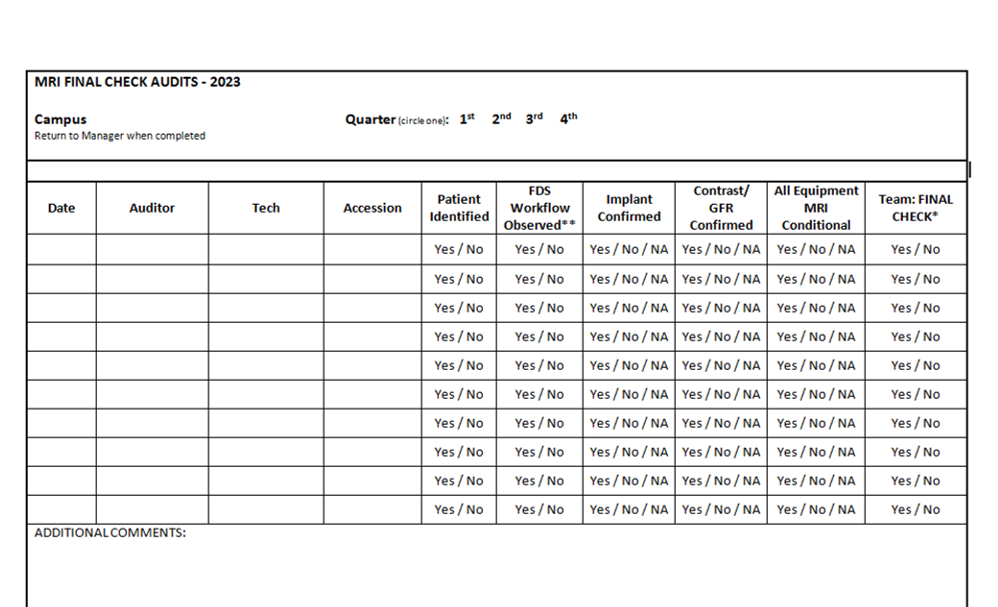
To do that we set out to create a safety program that provides awareness into how each of us contributes to a safe environment in the MRI suite. This includes reviewing the patient’s medical and surgical histories prior to their appointment, viewing prior imaging, proper patient screening practices, changing all patients into hospital clothing, reducing ferromagnetic detection alarms, and providing ongoing education on mitigating projectile and burn risks. MRSOs conduct quarterly audits to ensure techs are complying with our standards (fig 1)
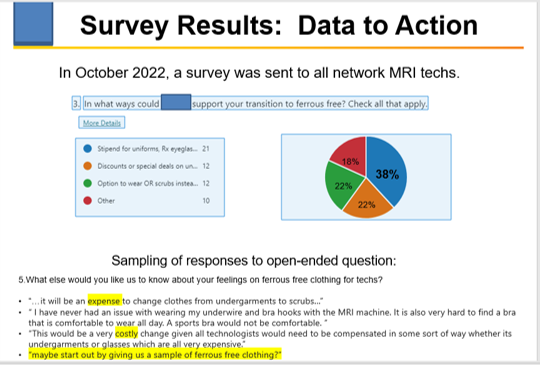
We first sent out an anonymous survey to all MRI technologists in our network, asking them to rate their opinions on moving to a more ferrous free environment, how the network could support that transition, and encouraged them to share any other thoughts they had about MRI safety. Over the course of almost a year we used the survey results (fig 2) to direct education to techs in person during site visits as well as via weekly emails, “Pearls of Wisdom”, which covered a wide range of various MRI safety topics. We included basics of MRI safety, new implants to be aware of, “how to” guides as well as links to YouTube videos, podcasts, and MRI safety sites.
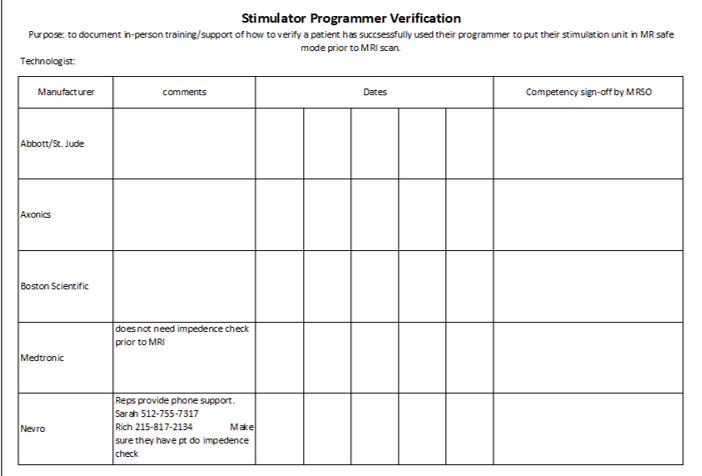
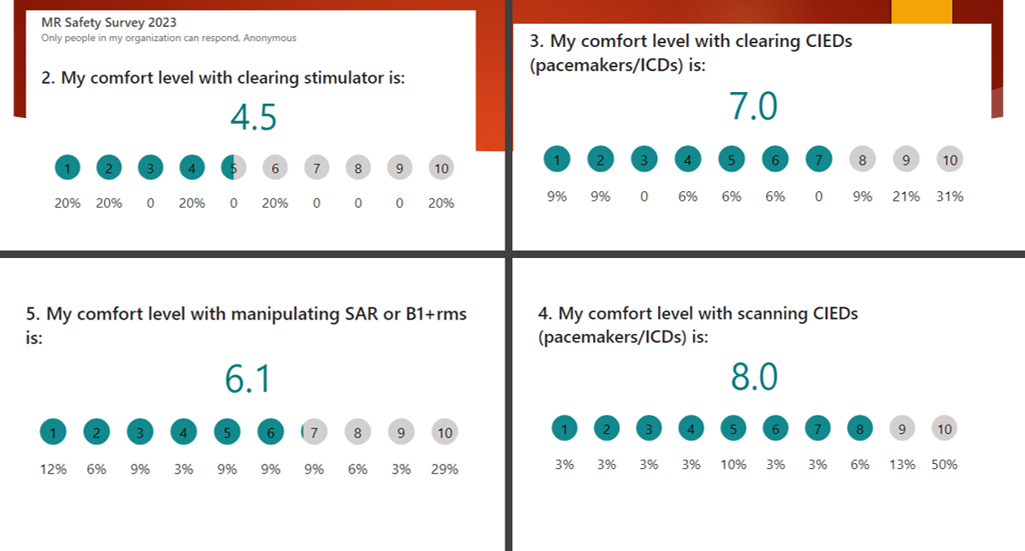
The second survey was sent out 8 months after the first and it focused on MRI techs rating their comfort level with clearing and scanning stimulators and CIEDs (Cardiovascular Implanted Electronic Device). (fig 3) The results informed us of where we needed to focus attention. We developed a step-by-step guide describing exactly how to clear and scan an inpatient with a CIED per our policy. We included contact information for reps, tips and tricks for finding cardiology information, and cardiology forms for each manufacturer. We then created a log for every tech in our network (fig 4), regardless of whether they or their site routinely scans CIEDS, to record the steps for one patient every quarter with the assistance of the MRSO. This exercise will boost techs confidence and knowledge. Each campus received a binder containing all this information. Using the data from our second survey, we constructed a form to log dates of technologist participation in verifying patients have put their pain stimulators into MRI mode successfully (fig 5). MRSOs sign off techs who have completed 5 verifications with the MRSO initially and feel comfortable with the process. We will continue with annual reviews.
It's not just enough to write good policies; they must be put into action to be meaningful! The best way to reinforce the importance and usage of a policy is to do it in person, one tech at a time. We go over 1 or 2 policies during our monthly campus visits. We print out the policy, give each tech time to read it and ask any questions, then they sign a log (fig 6). This lets MRSOs and managers know at a glance which policies need to be reviewed by whom.
We encourage a culture of safety that includes Leadership encouraging techs to share near misses by writing an incident report whenever things don’t go “just right.” Be it contrast issues, upset patients, safety issues, etc., by sharing through documentation, they could anonymously teach the rest of us. If these incidents are not shared, the problem cannot be fixed. We have a “Plan of Action” for every safety incident, and we share those in our quarterly Safety meetings. The incidents are reviewed by the MRMD and MR steering committees to support continuous improvement and identify areas for enhancing safety protocols.
Since implementing these steps, technologists have been more aware of policies that we have and their importance. We’ve noted a great increase in tech involvement and engagement in quarterly safety meetings, more non-injury incident reporting for the purpose of sharing and learning, and a greater personal awareness of how each technologist plays a significant role in keeping the MRI suite safe. For us, the “Secret Sauce” has been in-person interactions, which encourage more questions, more conversation, more “a-ha!” moments.
Acknowledgements
No acknowledgement found.References
No reference found.Figures
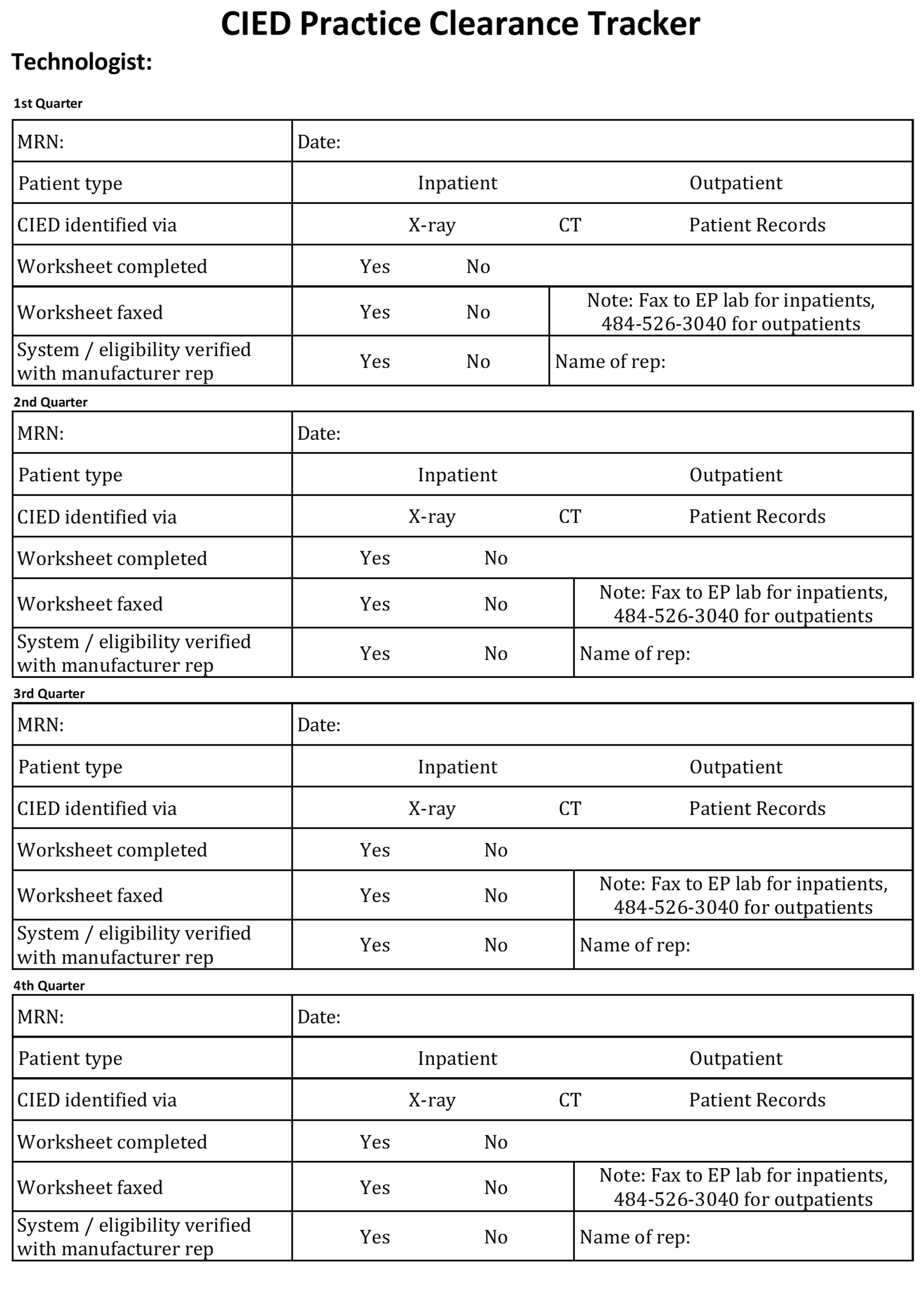
CIED Practice Clearance Tracker used to “Gain & Maintain” clearing skills
All techs clear one CIED patient per quarter