4921
The role of glymphatic function and CSF circulation in patients with glioma1Radiology and Biomedical imaging, University of California, San Francisco, San Francisco, CA, United States, 2neurological surgery, University of California, San Francisco, San Franciso, CA, United States
Synopsis
Keywords: Neurofluids, Tumor, CSF circulation, glymphatic system, Diffusion tensor imaging analysis along the perivascular space (ALPS)
Motivation: Limited research has been performed on the role of CSF circulation in the glymphatic transport in patients with glioma.
Goal(s): To evaluate the relationship between CSF circulation disturbance and glymphatic dysfunction in different glioma subtypes.
Approach: A novel measure of glymphatic function (ALPS index) was quantified and compared among 100 patients with different genetic subtypes and associated with CSF circulation related factors and tumor volume.
Results: We found that lower ALPS index in the tumor hemisphere was found in IDH-wildtype glioblastomas and with increasing grade in IDH-mutant gliomas. CSF circulation related factors were correlated with disruptions in glymphatic function.
Impact: Our promising results provide a novel insight of glymphatic dysfunction in patients with glioma.
Abstract
Introduction: Cerebrospinal fluid (CSF) circulation plays an important role in maintaining tissue homeostasis in the central nervous system. The glymphatic system mediates CSF and interstitial fluid exchange through the perivascular pathway, which eliminates waste solutes in the brain parenchyma. Although previous animal and human studies have reported the dysfunction of glymphatic transport in glioma1,2, there has been limited research on the role of CSF circulation in the glymphatic transport in these patients. This study investigates the relationships among CSF circulation, glymphatic function, T2 lesion (T2L) volume, and genetic subtype in patients with glioma. We hypothesize that markers of glymphatic function will become more impaired with more aggressive subtypes of glioma and will correlate with markers of CSF circulation.Methods: A total of 100 patients with a unilateral glioma (59 males, average age: 46.5±15.6 years old) who had preoperative 3T MRI examinations, including pre- and post-contrast T1-weighted, T2-weighted and T2FLAIR structural images (MRIs) and diffusion tensor images (DTIs, a single shell sequence with b=1000s/mm2, 6 or 24 directions). Grey matter (GM), white matter (WM), CSF, ventricle and T2 lesion (T2L) were segmented and quantified on the structural MRIs using an automated pipeline based on nnU-net deep learning model (https://github.com/reghbali/pyalfe). Volumes of CSF, ventricle and T2L were normalized by intracranial volume (ICV). The DTIs were processed using FMRIB Software Library (FSL) v6.0.6 (Figure 1) and Diffusion Imaging in Python (DIPY). Variations in the glymphatic system were assessed by calculating an analysis along the perivascular space (ALPS) index that takes the ratio of the diffusion of association fibers in the perivascular direction along the medullary veins adjacent to the body of lateral ventricle to the diffusion that is perpendicular to the principal fiber track direction (ALPS index=mean (Dxxproj, Dxxassoc)/mean (Dyyproj, Dzzassoc)). When necessary, ROIs of projection fiber and association fiber were manually amended to avoid the tumor region (Figure 1). Mean free water (mFW) was calculated in WM, indicating the free water content in the extracellular space. Measurements of CSF volume, ventricular volume, and mFW were used to assess the CSF circulation. A paired t-test was applied to compare the ALPS index between the tumor (ipsilateral) hemisphere and the contralateral hemisphere. Generalized linear models (GLM) were used to compare the ipsilateral ALPS index between tumor subtype and tumor grade within each subtype, adjusting for the covariance of age, gender, tumor location, T2L volume. Pearson correlations were used to evaluate the correlations of CSF circulation-related factors (i.e., CSF volume, ventricular volume, mFW) and the demographic factors (i.e., age, T2L volume with ipsilateral ALPS index. A multivariable regression model was used to detect the independent CSF circulation-related factors associated with the ipsilateral ALPS index. All statistical analyses were performed in SPSS v27 software, P<0.05 was regarded as statistically significance.
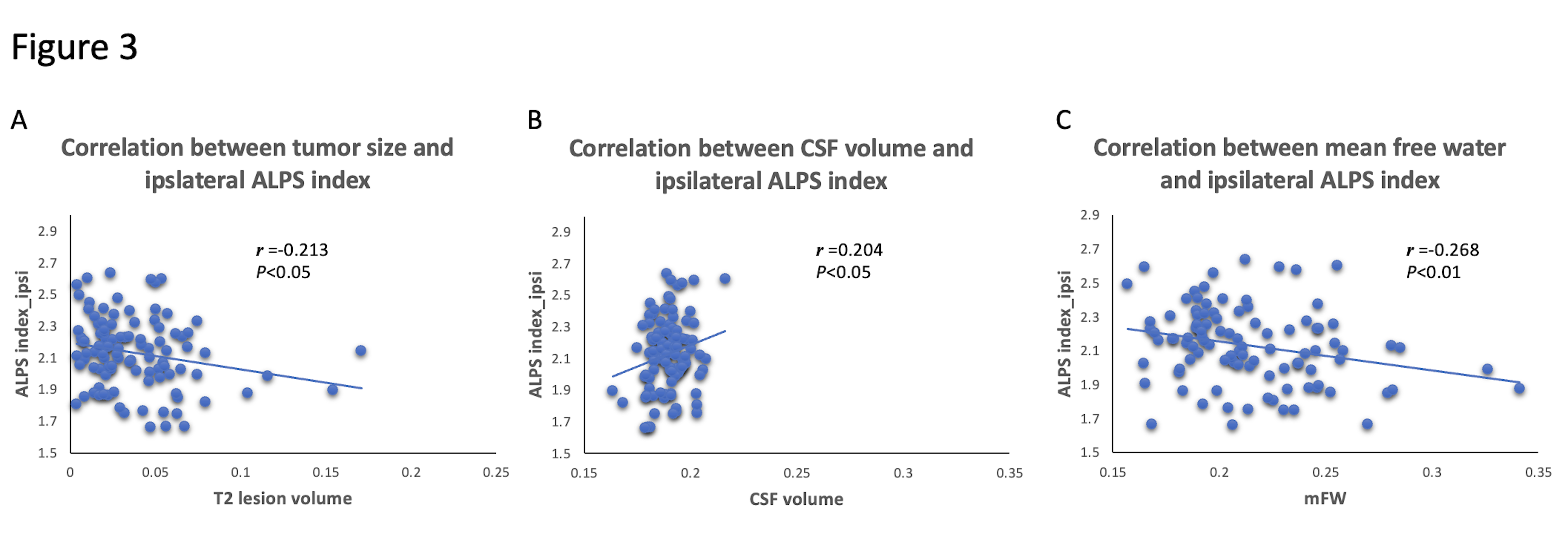
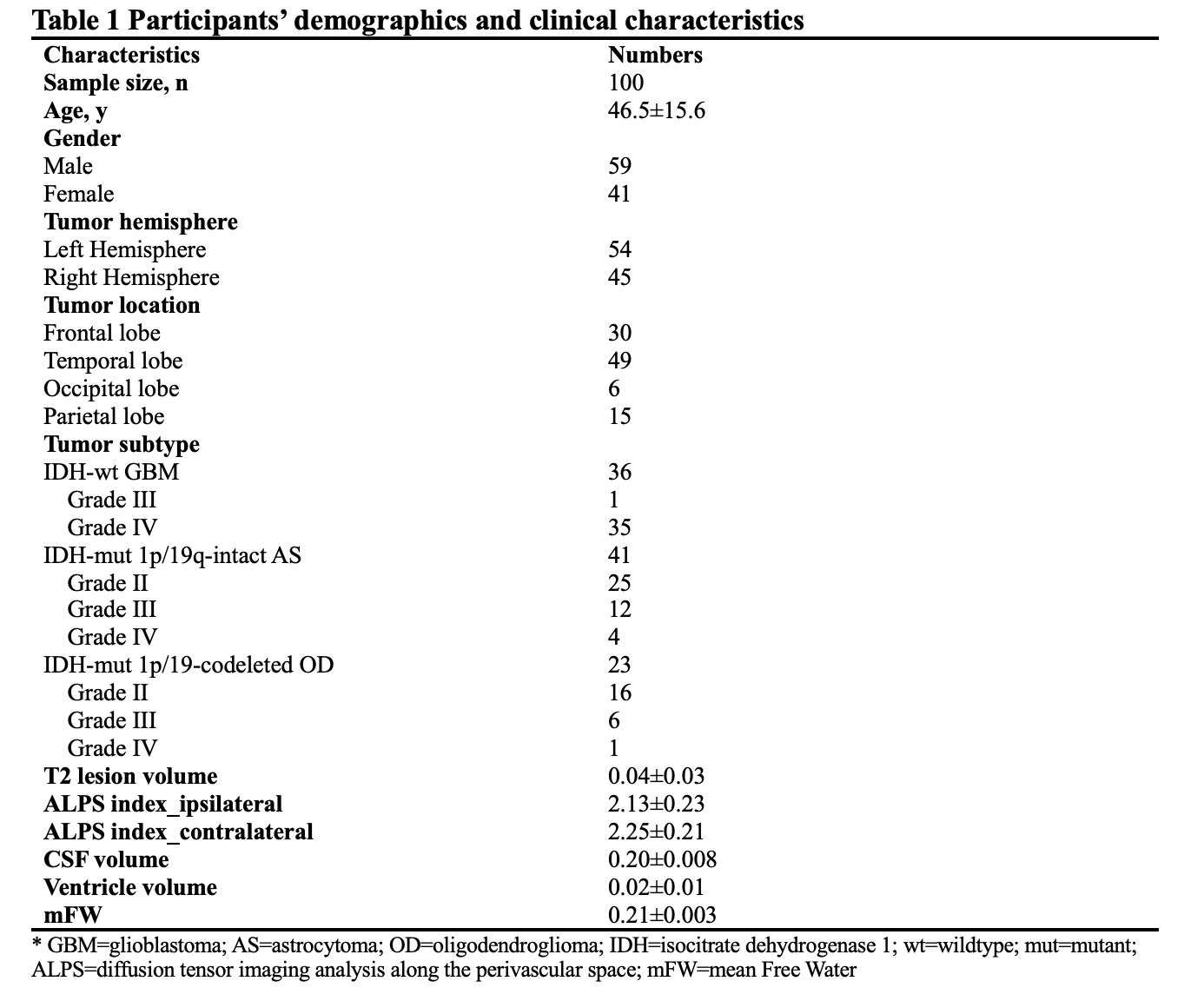
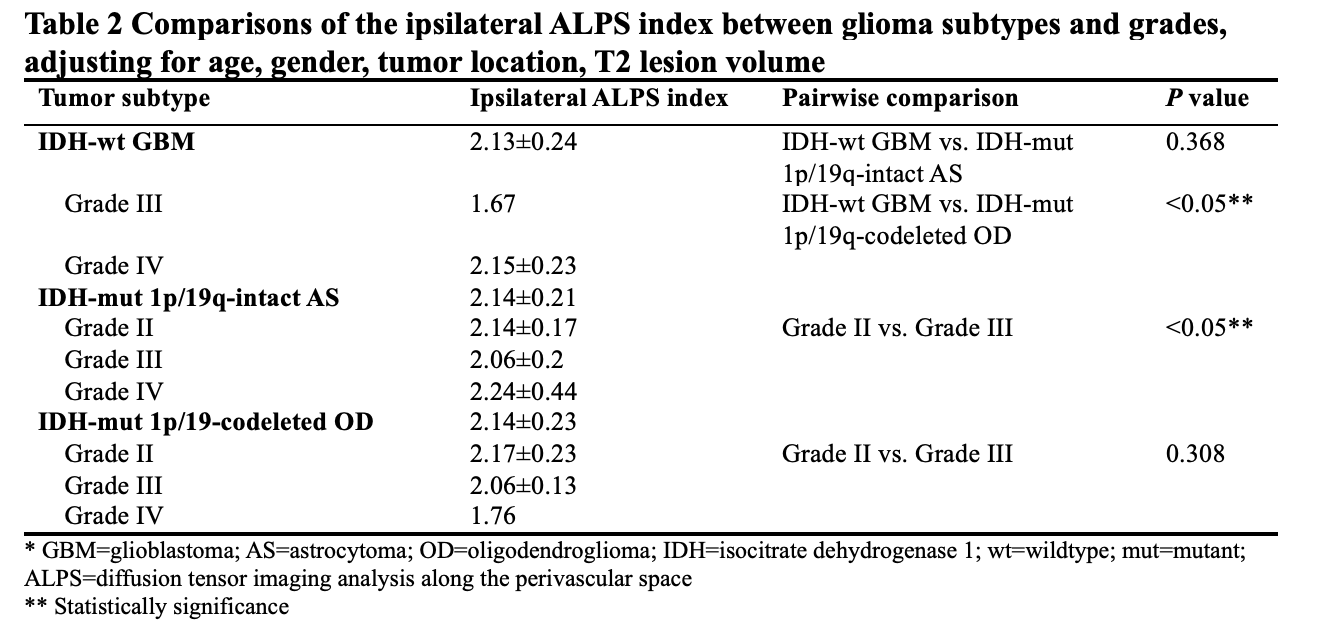
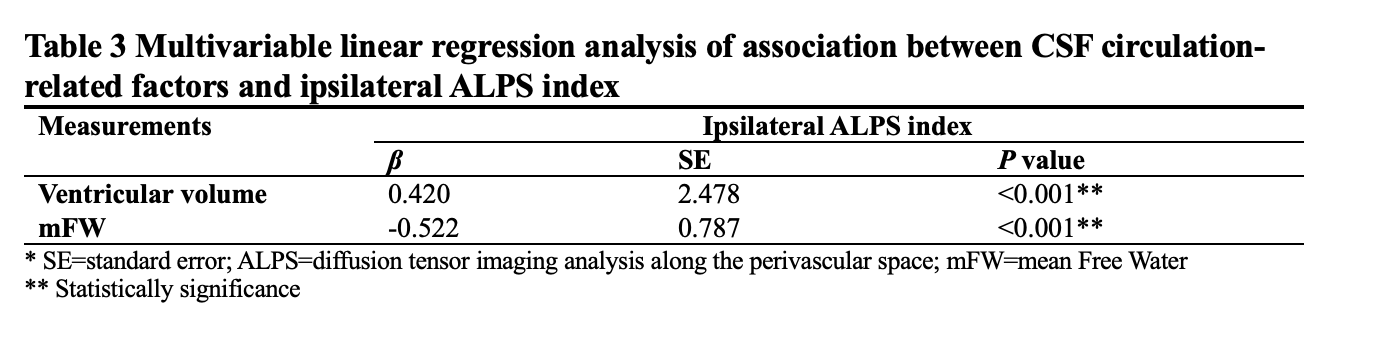
Results: Table 1 shows a summary of patients’ demographics and clinical information. The ALPS index in the tumor (ipsilateral) hemisphere was significantly lower than that in the contralateral hemisphere (P<0.001)(See Figure 2). Of the 100 subjects, 36 were isocitrate dehydrogenase-wildtype (IDH-wt) glioblastoma, 41 were IDH-mutant (IDH-mut) 1p/19q-intact astrocytoma and 23 were IDH-mut 1p/19q codeleted oligodendroglioma. Group comparisons revealed that the ipsilateral ALPS was lower in IDH-wt gliomas than that in IDH-mut gliomas, with the difference between IDH-wt glioblastoma and 1p/19q codeleted oligodendroglioma reaching significance (P<0.05). Ipsilateral ALPS index was also significantly reduced in grade III compared to grade II IDH-mut astrocytoma (P<0.05) (See Table 2 and Figure 2). The T2L volume (r=-0.213, P<0.05), mFW (r=-0.268, P<0.01) had significantly negative correlations with the ipsilateral ALPS index, while the CSF volume (r=0.204, P<0.05) was positive correlated with ipsilateral ALPS index (See Figure 3). No significant correlation between age and ipsilateral ALPS index was found. After multivariable regression analysis, ventricular volume (β=0.420, P<0.001) and mFW (β=-0.522, P<0.001) were independently associated with the ipsilateral ALPS index (See Table 3).
Discussion & Conclusion: Reduced ALPS index with IDH-wt and higher-grade IDH-mut gliomas suggests that impaired glymphatic function plays a role in glioma prognosis. More intriguingly, we found that this glymphatic impairment was also related to disruption in CSF circulation as quantified by smaller ventricular volume and higher free water content in WM. The observation of CSF circulation disturbances for all glioma subtypes that increased with lesion volume, suggests that the presence of a glioma affects “normal-appearing” brain function through disturbances in circulation and glymphatic dysfunction. Further studies are warranted to determine the role of these no-tumor metrics of mFW, ventricular volume, and ALPS index on glioma prognosis and outcome, as well as the evaluation of longitudinal changes in response to therapy.
Acknowledgements
The authors thank all the participants in this study and the funding support of the NIH grant (P01CA118816).References
1. Xu D, Zhou J, Mei H, et al. Impediment of cerebrospinal fluid drainage through glymphatic system in glioma. Front Oncol. 2022;11:790821.
2. Toh CH, Siow TY. Factors associated with dysfunction of glymphatic system in patients with glioma. Front Oncol. 2021;11:744318.
Figures
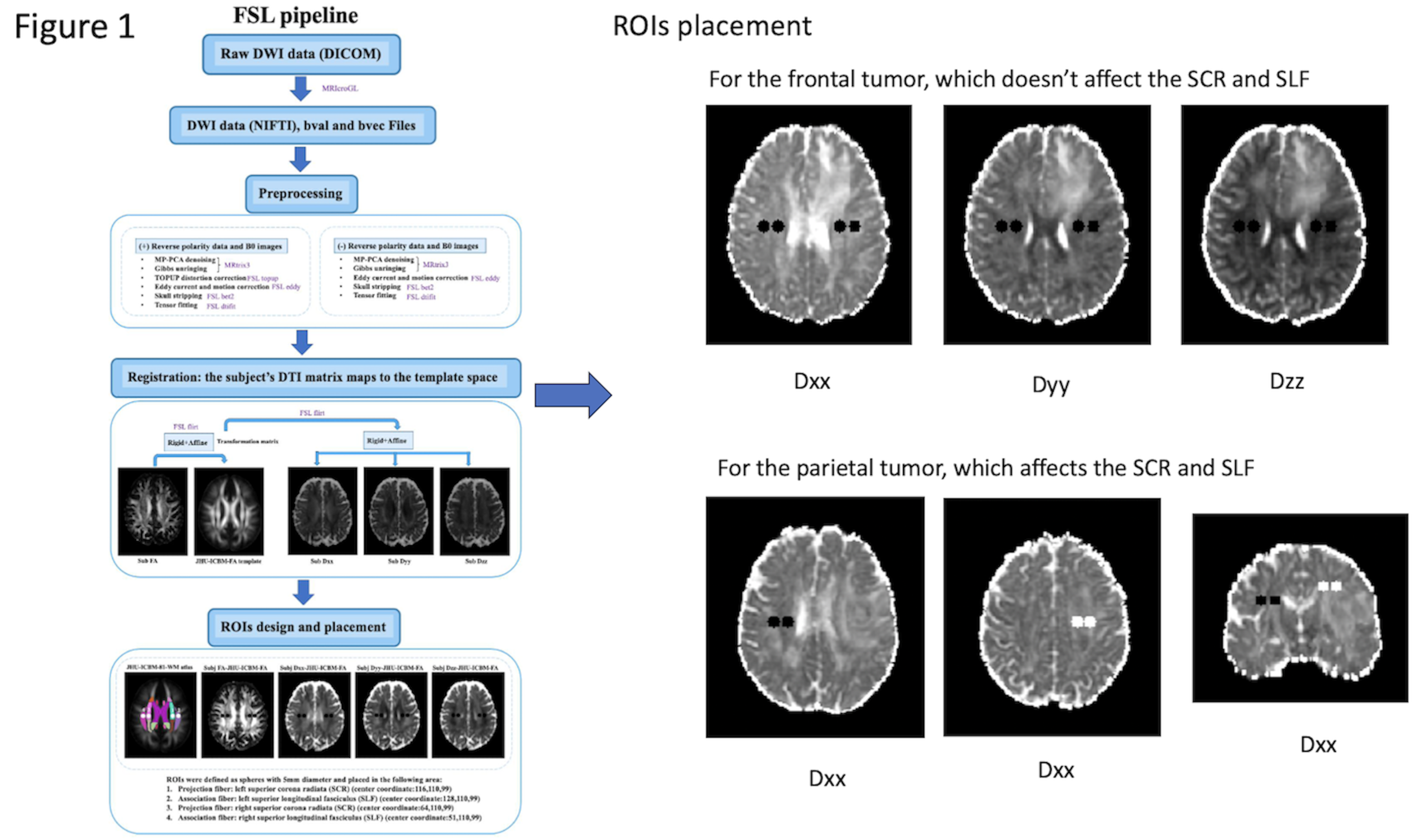
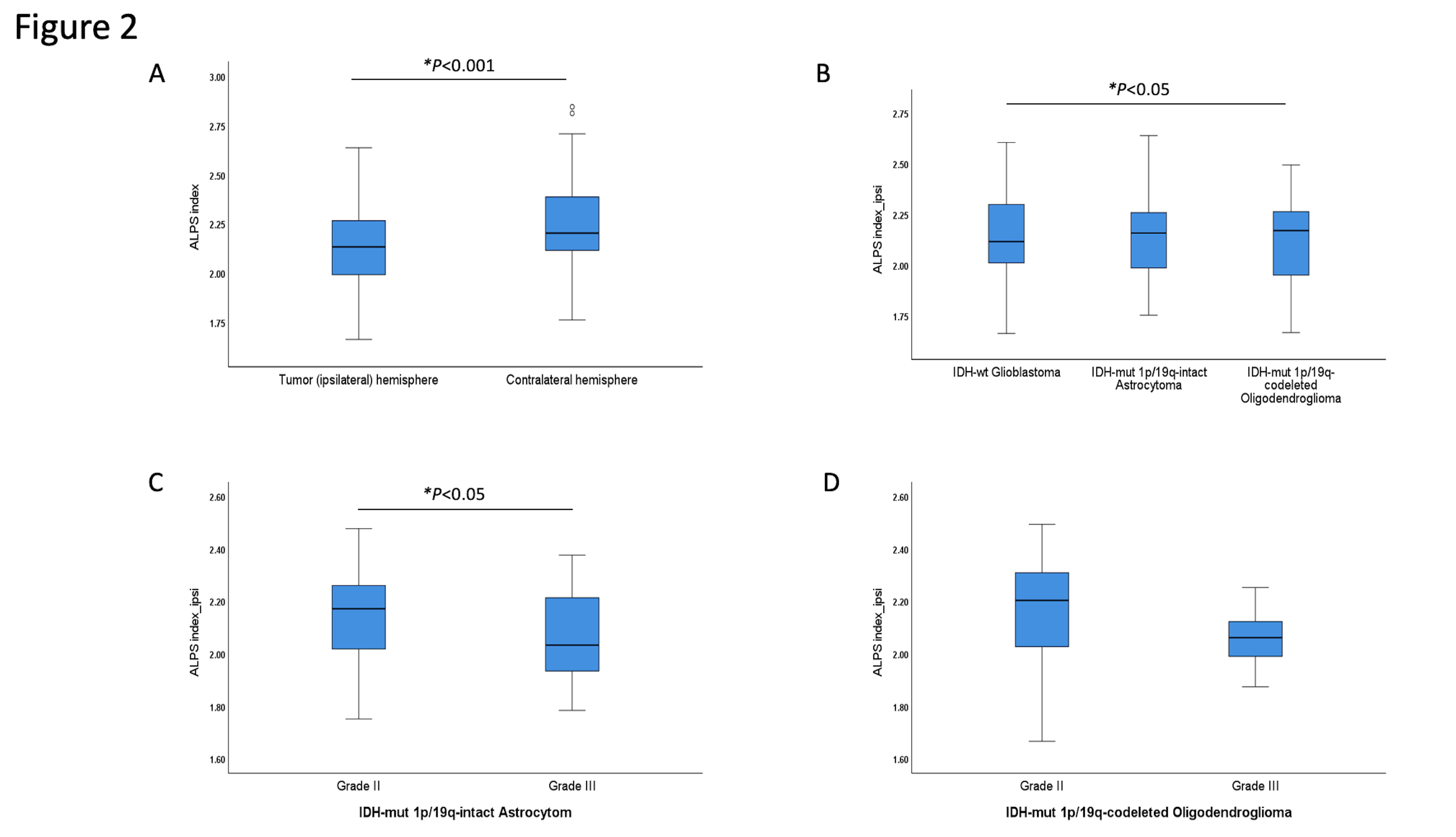
Figure 2. Group comparisons in ALPS index. A. The difference in ALPS index between the tumor (ipsilateral) hemisphere and contralateral hemisphere; B. The differences in the ipsilateral ALPS index between glioma subtypes; C. The difference in the ipsilateral ALPS index between low-grade and high-grade astrocytomas; D. The difference in the ipsilateral ALPS index between low-grade and high-grade oligodendrogliomas.