4708
Estimating brain age and identifying important neural connections in mouse models of genetic risk for Alzheimer’s disease1Biomedical Engineering, Duke University, Durham, NC, United States, 2Radiology, Duke University School of Medicine, Durham, NC, United States, 3Brain Imaging and Analysis Center, Duke University School of Medicine, Durham, NC, United States, 4Neurology, Duke University School of Medicine, Durham, NC, United States
Synopsis
Keywords: Diagnosis/Prediction, Alzheimer's Disease, Diffusion MRI
Motivation: Understanding Alzheimer’s disease (AD) requires decoding the complex interplay of risk factors, particularly how age-related structural connectivity changes affect AD onset and progression.
Goal(s): Using a state-of-the-art deep learning method, we aim to identify key brain connections, predict age and assess AD risk factors with structural brain connectomes and behavioral data from mouse models with humanized APOE genotypes.
Approach: Our Feature Attention Graph Neural Network (FAGNN) integrates multivariate data types, focusing on aging-related brain connections with a quadrant attention module.
Results: FAGNN surpassed other models in age prediction and identified critical neural pathways, like striatum-cingulum connection, offering insights into age-related brain connectivity changes.
Impact: We used AI and FAGNN to advance Alzheimer’s disease research, predicting risk factors such as age and identifying crucial neural connections pertinent to the risk factors, potentially paving the way for early detection and targeted interventions in aging-related cognitive decline.
Introduction
Alzheimer's Disease (AD) remains a pervasive and irreversible neurodegenerative disorder, with the number of patients continuously rising ("2021 Alzheimer's disease facts and figures," 2021). The complex interplay of genetic traits and lifestyle on aging, and AD progression is not yet fully understood. Acknowledging aging as the primary risk factor, our study employs diffusion MRI-derived structural connectomes to investigate brain connectivity changes associated with aging. We introduce the Feature Attention Graph Neural Network (FAGNN), an innovative model that integrates diverse datasets including brain connectomes, AD risk factors and cognitive behavioral metrics to predict brain age and reveal important networks involved in aging.Our model excels in age prediction accuracy and in generating salient sub-networks that identify critical connections for age prediction. Our model framework aims to enhance MRI analysis in AD research, providing insights into the early identification of individuals at high risk through comparing brain age predicted by the model and actual age. We hope such models contribute to the development of early diagnostic tools and can assess future therapeutic interventions.
Methods
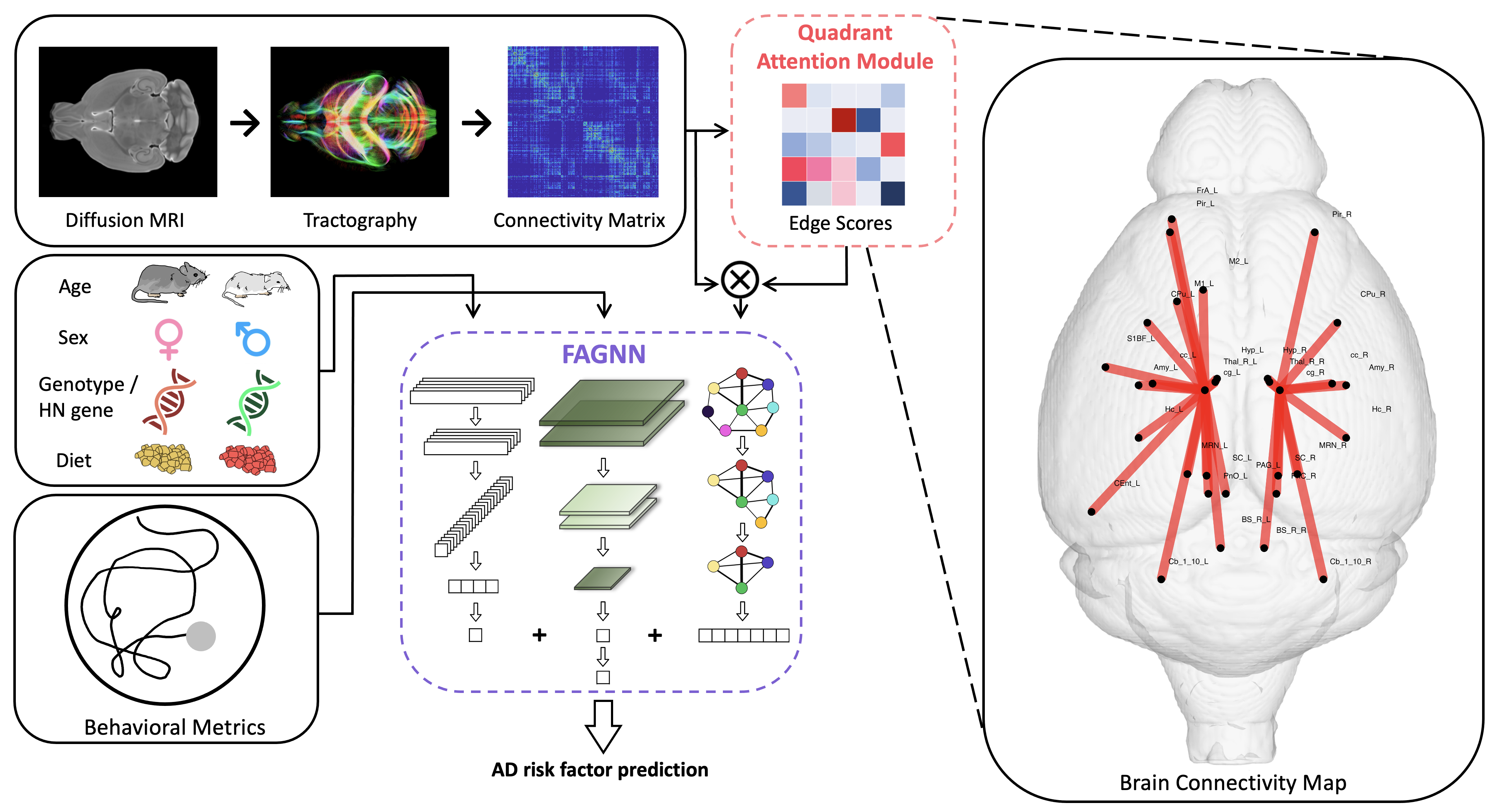
We used mouse models of human AD risks, expressing common human APOE variants and the human NOS2 gene, affecting immunity. We included both sexes, middle-aged (12 months) and older (18 months) mice, fed with standard and high fat/sugar diets, to model several AD risk factors. Using 9.4T MRI, we scanned fixed brain specimens with protocols described in (Badea et al., 2022) and estimated structural connectomes. MRtrix3 was employed to create tractography and connectomes from the diffusion MRI images (Tournier et al., 2019). The Morris Water Maze provided quantitative behavioral data on spatial learning and memory, such as swim velocity, distance, time to find hidden platforms and absolute winding number describing spatial navigation ability (Badea et al., 2022).In processing our data, we normalized and scaled input variables to be within 0 and 1, ensuring uniformity. Our Feature Attention Graph Neural Network (FAGNN) utilizes a multi-modal data for age prediction. It combines a 2D Convolutional Neural Network (CNN) for spatial feature extraction from behavioral data, with a 1D CNN for identifying patterns in the risk factor data. Connectome data undergoes a two-step process involving a quadrant attention module for scoring the brain connections, followed by a Graph Neural Network (GNN) based on a modified BrainGNN architecture (Li et al., 2020). The quadrant attention layer selects each quadrant of the connectome, and each quadrant is processed with multi-head attention layers to increase robustness. The GNN employs Graph Convolutional Networks (GCNs) and top-K pooling layers for noise and dimensionality reduction (Gao & Ji, 2019). The GNN’s top-K pooling selects nodes based on self-assigning node scores, enhancing the model's focus on relevant features. The model then integrates the sub-networks, each tuned by distinct learning rate, and the combined output is then processed through fully connected layers. The model employs mean squared error loss to predict continuous variables like age. The quadrant attention module provides edge scores to connectomes, identifying key brain connectivity for aging in mice models of genetic risk factors for AD. The model architecture is shown in Figure 1.
Results
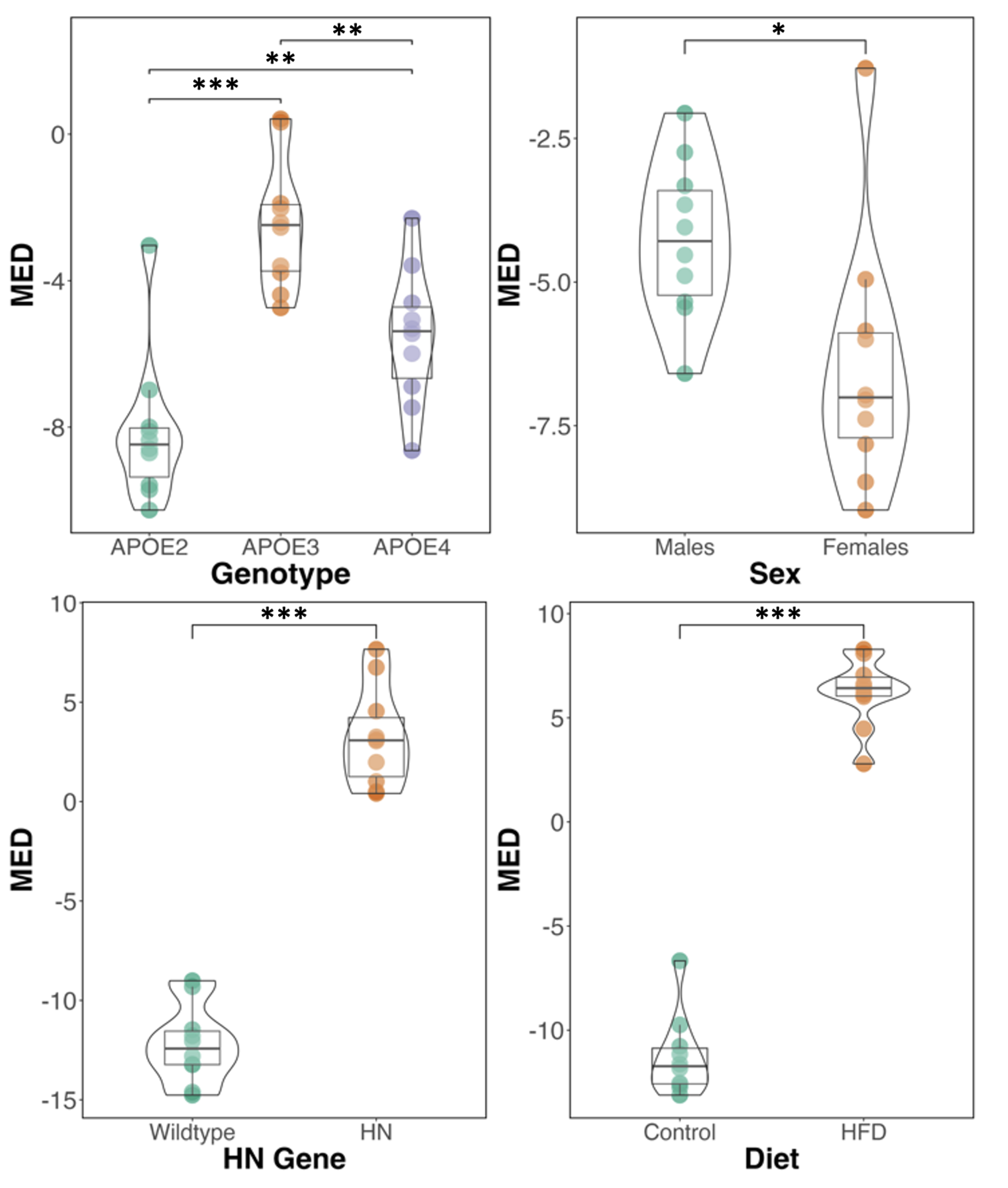
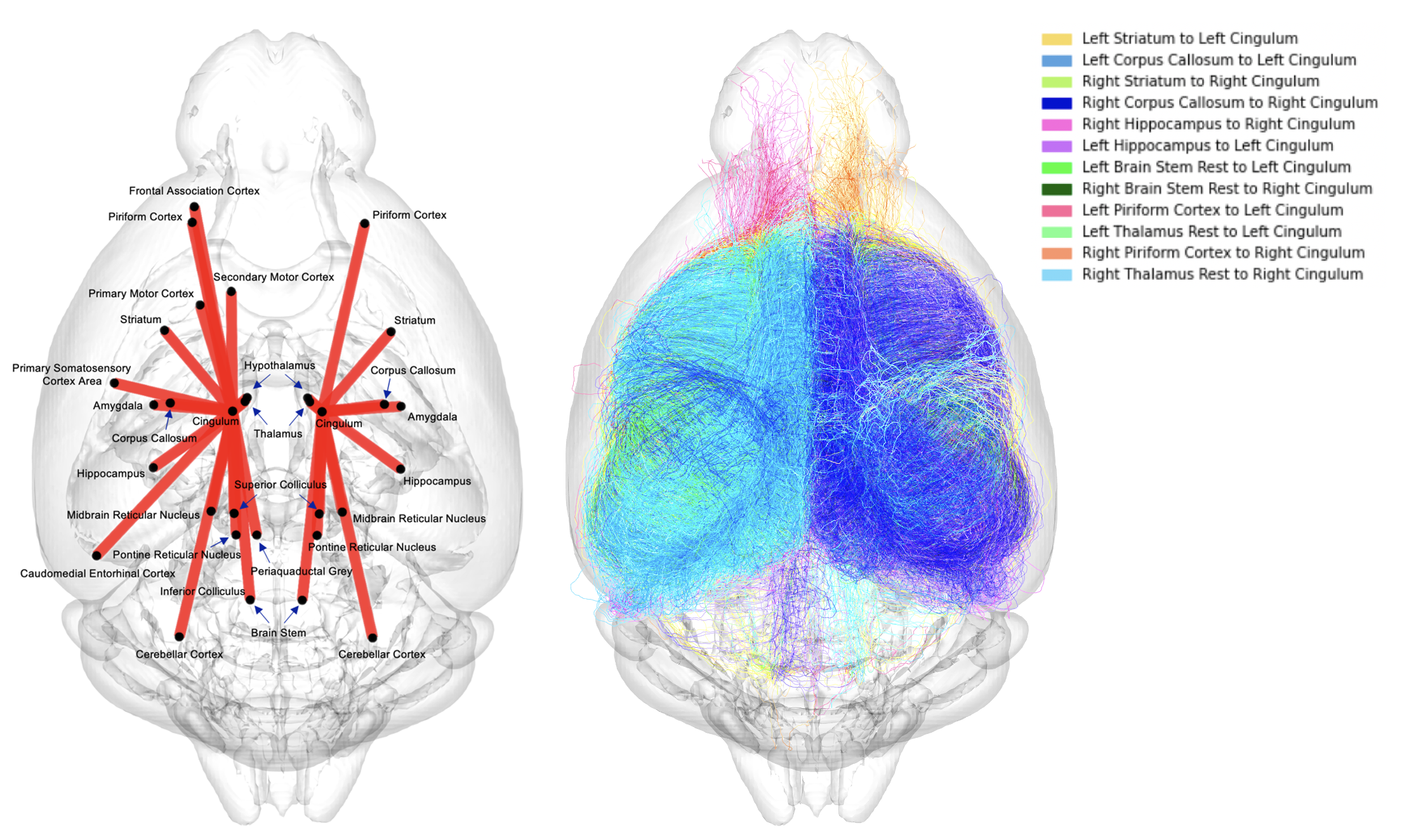
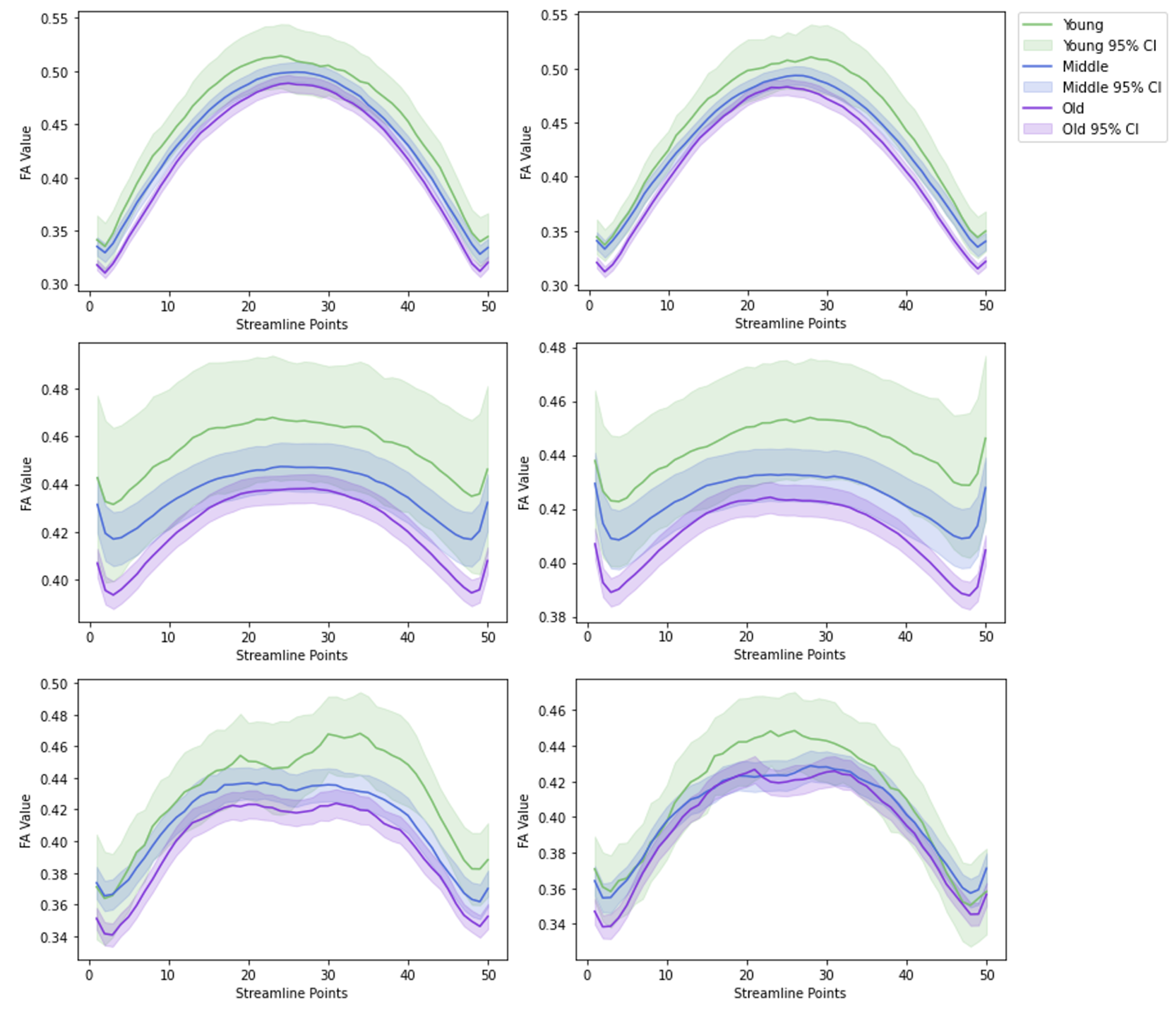
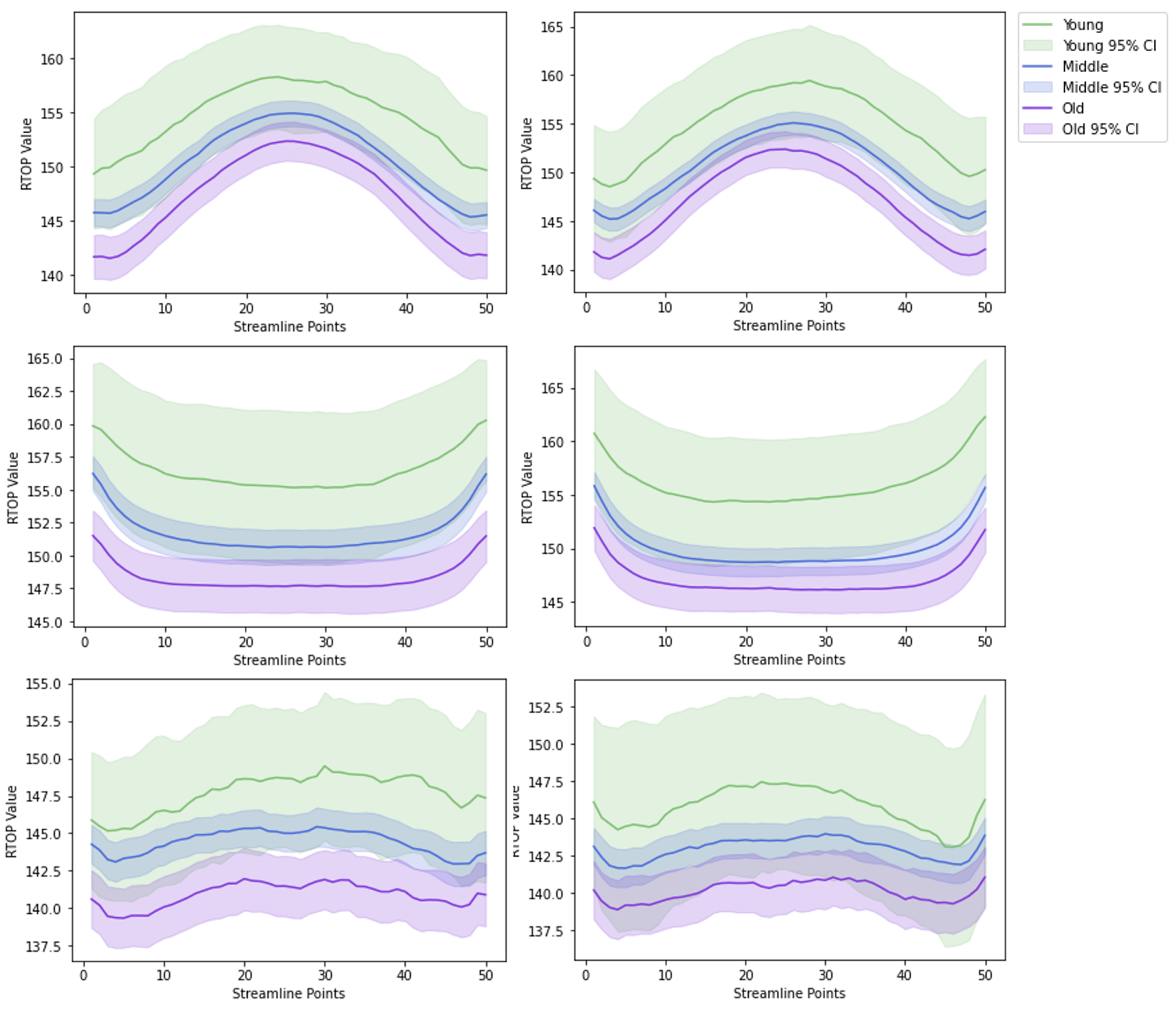
The mean estimation difference (MED) which is the mean difference between predicted age and true age, served as an indicator of brain aging, with lower MED values suggesting a younger brain age and a potentially more resilient brain. In Figure 2, our analysis revealed genotype-specific variations in brain age, with APOE2 carriers demonstrating the smallest MED, implying a neuroprotective effect against aging when compared to APOE3 and APOE4 genotypes. Sex showed a small but significant MED difference. Notably, the presence of human NOS2 gene (HN) and high-fat diet (HFD) conditions resulted in higher and significantly different MED values relative to controls, indicating an accelerated brain aging process. Figure 3 presents the top 30 brain connections, while the top 12 connections are illustrated through tractography, with distinct colors representing different tracts.Figures 4 and 5 present fractional anisotropy (FA) and return-to-original probability (RTOP) values across the top 6 tracts, segmented by age groups. Significant differences in FA and RTOP values were observed along these tracts, differentiating among the young, middle, and old groups. These results validate the effectiveness of our model in capturing the subtle progression of brain aging and its implications for AD risk.
Conclusion
FAGNN revealed age-related connectivity changes, with APOE genotype and lifestyle factors like diet influencing brain aging. The brain networks critical for aging were identified, offering insights for early Alzheimer's detection. The approach shows promise for similar human studies, potentially guiding interventions in neurodegenerative disease research.Acknowledgements
No acknowledgement found.References
2021 Alzheimer's disease facts and figures. (2021). Alzheimer's & Dementia, 17(3), 327-406. https://doi.org/10.1002/ALZ.12328
Badea, A., Li, D., Niculescu, A. R., Anderson, R. J., Stout, J. A., Williams, C. L., Colton, C. A., Maeda, N., & Dunson, D. B. (2022). Absolute Winding Number Differentiates Mouse Spatial Navigation Strategies With Genetic Risk for Alzheimer’s Disease. Frontiers in Neuroscience, 16.https://doi.org/10.3389/FNINS.2022.848654/FULL
Gao, H., & Ji, S. (2019). Graph U-Nets. IEEE Transactions on Pattern Analysis and Machine Intelligence,44(9), 4948-4960. https://doi.org/10.48550/arxiv.1905.05178
Li, X., Zhou, Y., Gao, S., Dvornek, N., Zhang, M., Zhuang, J., Gu, S., Scheinost, D., Staib, L., Ventola, P., & Duncan, J. (2020). BrainGNN: Interpretable Brain Graph Neural Network for fMRI Analysis. bioRxiv, 2020.2005.2016.100057-102020.100005.100016.100057. https://doi.org/10.1101/2020.05.16.100057
Tournier, J. D., Smith, R., Raffelt, D., Tabbara, R., Dhollander, T., Pietsch, M., Christiaens, D., Jeurissen, B., Yeh, C. H., & Connelly, A. (2019). MRtrix3: A fast, flexible and open software framework for medical image processing and visualisation. NeuroImage, 202, 116137-116137. https://doi.org/10.1016/J.NEUROIMAGE.2019.116137
Figures