4402
Arterial spin labeling and blood oxygenation level-dependent MRI to detect early kidney injury in chronic kidney disease1China Medical University, shenyang, China, 2MR Research Collaboration, Siemens Healthineers., Beijing, China, 3MR Application Predevelopment, Siemens Healthineers AG, Erlangen, Germany
Synopsis
Keywords: fMRI Acquisition, Kidney, arterial spin labeling ,chronic kidney disease , blood oxygen level-dependent
Motivation: Multiparametric magnetic resonance imaging (mpMRI) provides the potential for a more comprehensive noninvasive assessment of organ structure and function .however few studies have combined arterial spin labelling (ASL) and blood oxygen level-dependent (BOLD) to assess the kidney.
Goal(s): To detect early kidney injury in chronic kidney disease(CKD) by ASL and BOLD MRI.
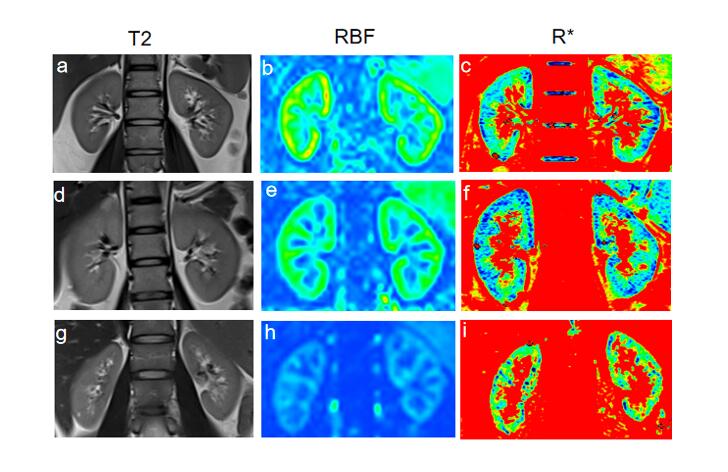
Approach: This study assessed CKD patients and healthy volunteers by combining ASL and BOLD imaging.
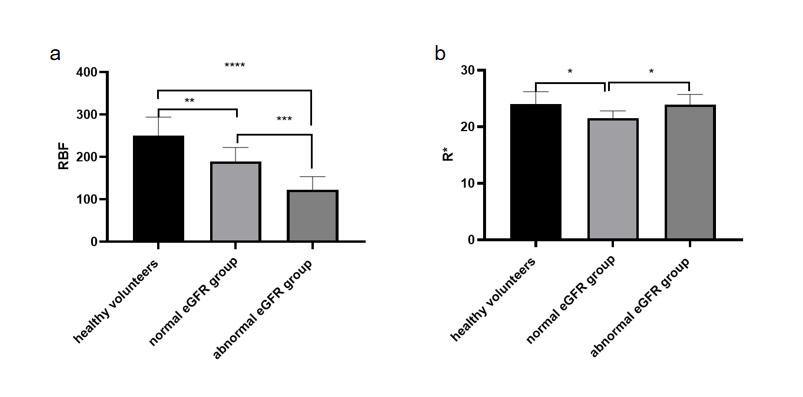
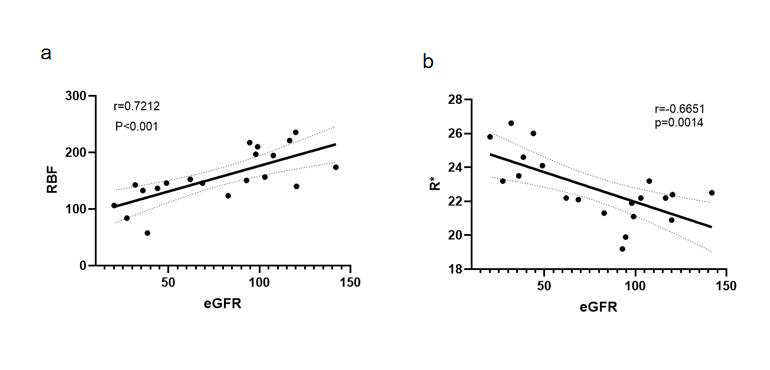
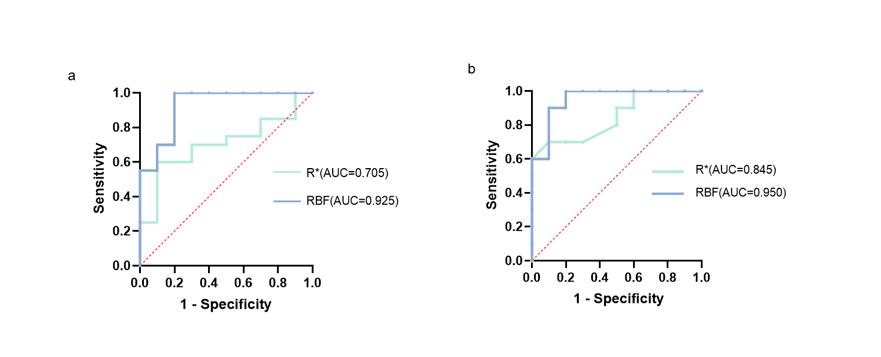
Results: mpMRI distinguishes well between healthy people and patients with CKD patients, especially ASL.
Impact: Our study found that ASL and BOLD are potentially useful in identifying CKD patients who require renal biopsy. Additionally, these noninvasive techniques show promise in detecting underlying pathological injuries in early-stage CKD patients.
Discussions and Conclusions: mpMRI is a very promising method for assessing the degree of chronic renal changes in patients with CKD. ASL and BOLD were useful in detecting underlying pathologic injury in early CKD patients with normal eGFR, especially ASL.
Acknowledgements
Acknowledgements: We would like to express our gratitude to the par-ticipants and all the staff members for their cooperation to help finishthe study.Thanks to Siemens Healthineers.
Funding This study has received funding by the National NaturalScience Foundation of China (grant no. 80271885)and Support Programme for Young and Middle-aged Talents in Science and Technology Innovation in Shenyang (RC210265).
References
1. Lu F, Yang J, Yang S, Bernd K, Fu C, Yang C, Xu H, Liu M, Zhan S, Wang C, Guo R, Wu Y. Use of Three-Dimensional Arterial Spin Labeling to Evaluate Renal Perfusion in Patients With Chronic Kidney Disease. J Magn Reson Imaging. 2021 Oct;54(4):1152-1163.
2. Hua C, Qiu L, Zhou L, Zhuang Y, Cai T, Xu B, Hao S, Fang X, Wang L, Jiang H. Value of multiparametric magnetic resonance imaging for evaluating chronic kidney disease and renal fibrosis. Eur Radiol. 2023 Aug;33(8):5211-5221.
3. ugiyama K, Inoue T, Kozawa E, Ishikawa M, Shimada A, Kobayashi N, Tanaka J, Okada H. Reduced oxygenation but not fibrosis defined by functional magnetic resonance imaging predicts the long-term progression of chronic kidney disease. Nephrol Dial Transplant. 2020 Jun 1;35(6):964-970.
Figures