4157
Evaluation the value of Gd-EOB-DTPA-Enhanced MRI -derived FLIS and spontaneous portosystemic shunt (SPSS) for liver function reserve1Lanzhou University Second Hospital, Lanzhou, China, 2Second Clinical School, Lanzhou University, Lanzhou, China, 3Philips Healthcare, Xi’an, China
Synopsis
Keywords: Liver, Contrast Agent, FLIS, chronic liver disease, Gd-EOB-DTPA, Child-Pugh score, SPSS
Motivation: To evaluate the diagnostic value of functional liver imaging score (FLIS) and spontaneous portosystemic shunt (SPSS) in patients with chronic liver disease.
Goal(s): We expect FLIS and SPSS to have a good correlation with Child-Pugh (CP) class in patients with chronic liver disease.
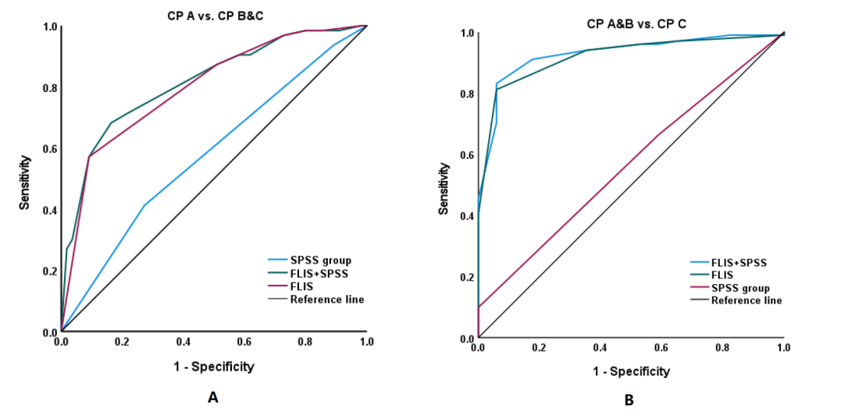
Approach: Analyzed the correlation between MRI parameters and CP class. ROC curves of different indexes were calculated to distinguish CP class.
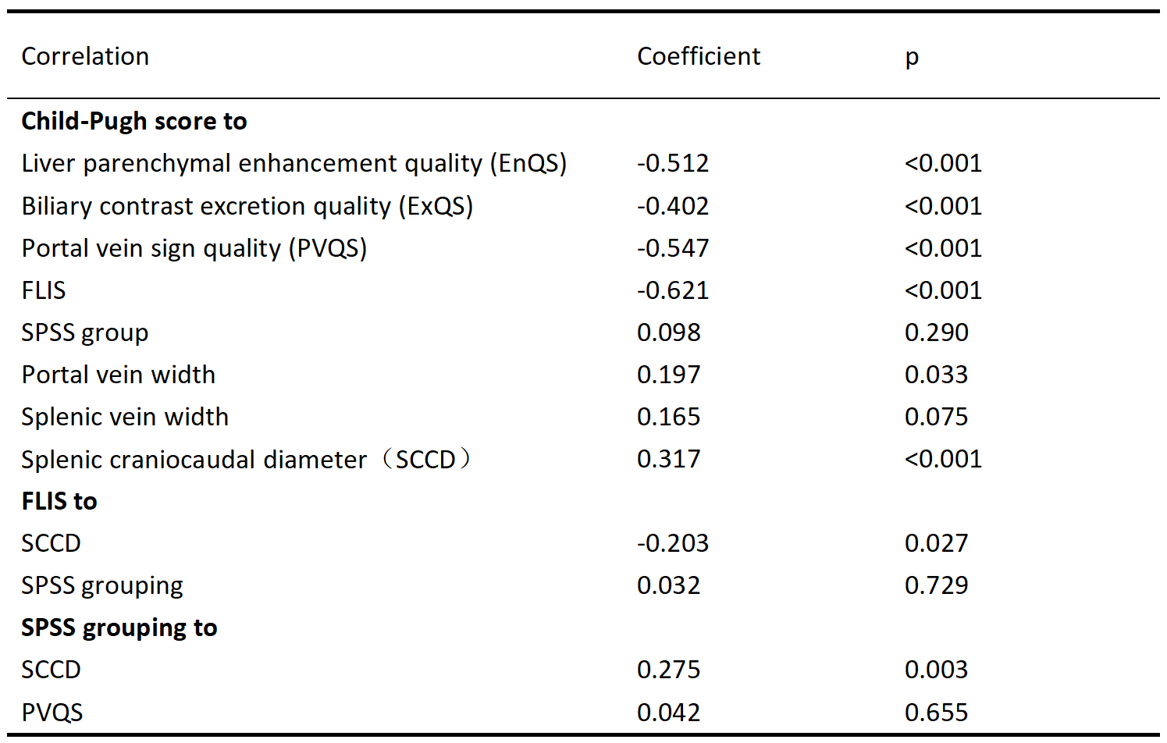
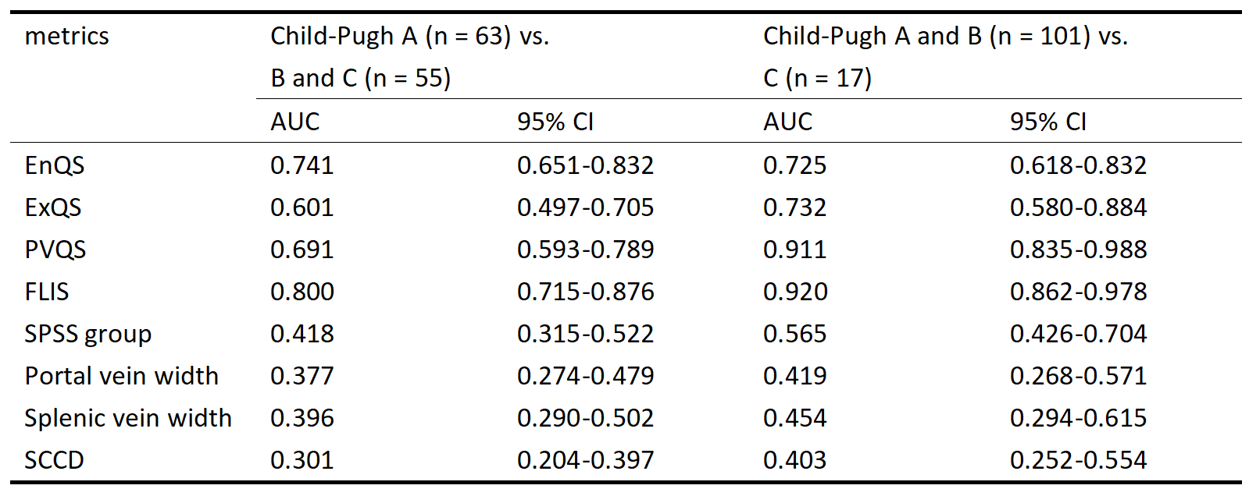
Results: FLIS and three FLIS parameters showed strong to very strong correlation with CP class. The AUC of FLIS is higher than other metrics. The correlation between SPSS and the CP class of CLD patients is not significant.
Impact: The presence of SPSS can serve as an imaging biomarker for further stage of cirrhosis, and can indicate cirrhosis patients with SPSS need closer monitoring. We will keep following up the relationship between SPSS and occurrence of malignant liver events.
Introduction and purpose
The evaluation of liver function in patients with chronic liver disease (CLD) is important for disease monitoring. However, the accurate assessment of liver function reserve only by laboratory examination is limited. Therefore, the search for a widely accepted noninvasive imaging methods to quantify the severity of chronic liver disease remains a challenge. Some studies1-3 have reported that functional liver imaging score (FLIS) – derived from Gd-EOB-DTPA-Enhanced MRI – correlates with liver function in patients with CLD. FLIS can not only stratify the ALBI grades, but also showed a strong correlation with the Child-Pugh score. While previous evidence has provided some insight into CLD and related liver function, there are many factors affecting liver reserve function. The purpose of this study was to evaluate the potential diagnostic value of FLIS score combined with spontaneous portosystemic shunt (SPSS) score on the accuracy of Child-Pugh (CP) classification in CLD patients.Materials and Methods
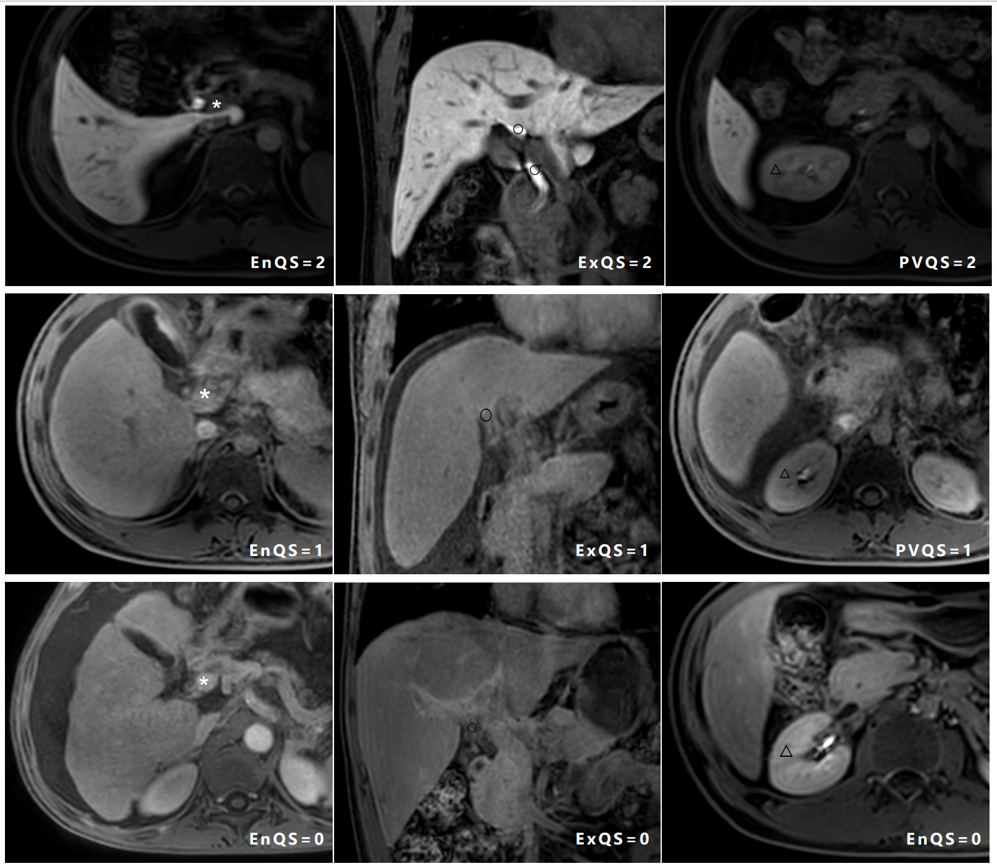
We retrospectively enrolled 118 patients with liver cirrhosis or CLD from the Second Hospital of Lanzhou University. All the subjects underwent MR examinations on a 3.0T scanner (Ingenia CX, Philips Healthcare, The Netherlands) with a 16-channel torso coil. The following parameters are used for Gd-EOB-DTPA-Enhanced axial images sequence: TR/TE1/TE2 = 3.3/1.31/2.1ms, flip angle:20 degrees, FOV = 400×320 mm2, reconstruction resolution:0.83 ×0.83mm2. Three parameters on hepatobiliary phase (HBP) images were evaluated for FLIS: liver parenchymal enhancement (EnQS,0-2 points), biliary excretion (ExQS,0-2 points), and signal intensity of the portal vein (PVQS,0-2 points). The FLIS represented the sum of the three quality scores above and ranged from 0 to 6 points. At the same time, patients were classified into three types with no spontaneous portosystemic shunts (SPSS), small SPSS (<8 mm), and large SPSS (≥8 mm) according to portal phase enhanced images. CP grade was used to evaluate liver reserve function, and patients were classified as CP A (n = 63), CP B (n = 38), or CP C (n = 17). We assessed the correlation between CP score and SPSS both FLIS and its components using Spearman rank correlation. Receiver operating characteristic (ROC) curve analysis was performed to demonstrate the cutoff value of FLIS for differentiating between CP classes. Figure 1 shows a standard image of FLIS ratings.Results
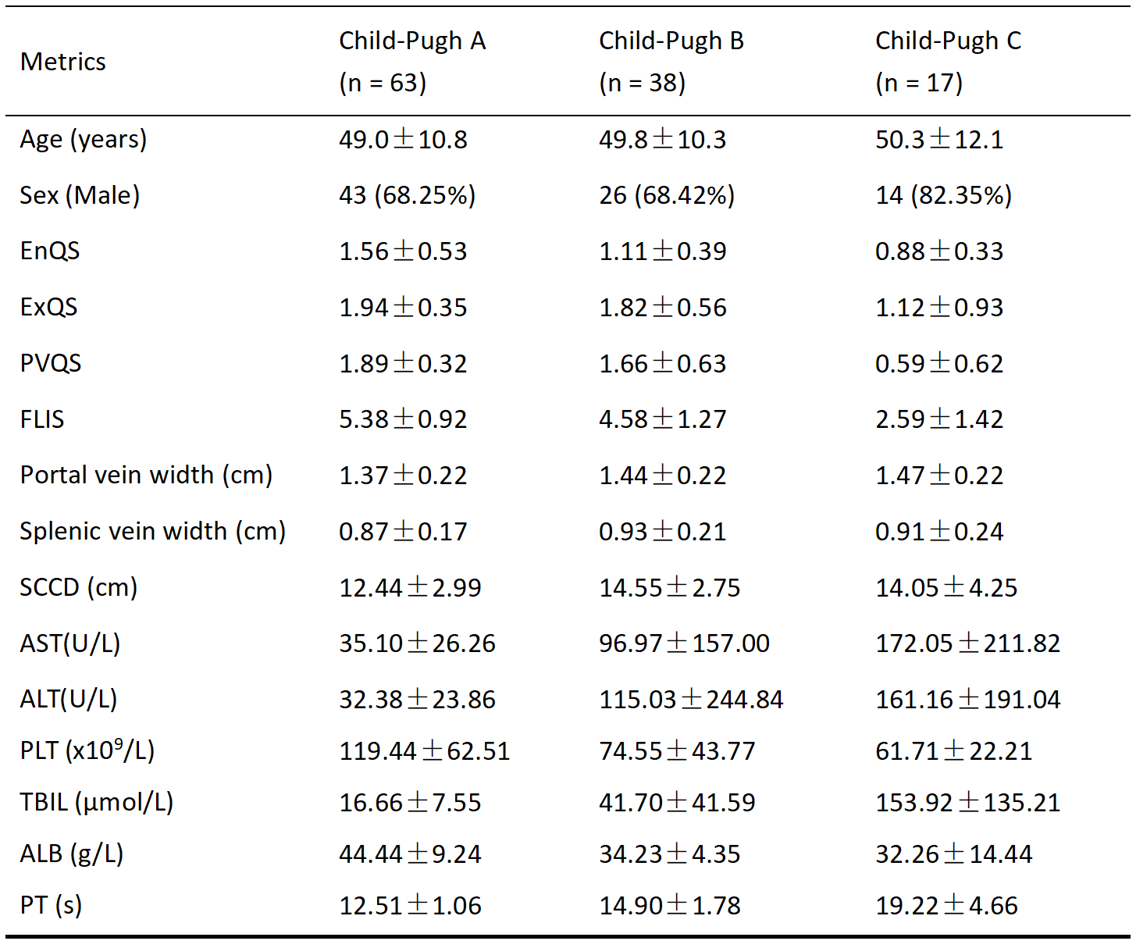
The mean and standard deviation (SD) of epidemiological and imaging measurements and laboratory tests for different Child-Pugh grades were shown in Table 1. FLIS and three FLIS parameters showed good correlation with CP score (r = −0.40 to 0.62). The correlation between liver CP grade and MR indexes, and between MR Measurement indexes were shown in Table 2. The ROC curves for differentiating CP grade by using different metrics were shown in figure 2. The diagnostic accuracy of MRI indicators for Child-Pugh classification was shown in Table 3. ROC curve analysis showed that FLIS ≥ 5 was the optimal cutoff for prediction of CP class A (area under the curve [AUC], 0.80).Discussion
Gd-EOB-DTPA-enhanced MRI is used for the diagnostic work-up of liver lesions in patients with CLD. Gd-EOB-DTPA -enhanced MRI derived FLIS and its three parameters, as a semi-quantitative technique, are easily obtained and calculated. In this study, we found that there was a significant correlation between liver CP class and FLIS and its three parameters, which can be used as evaluation indicators of liver reserve function. The correlation coefficient in our results was slightly lower than that of Lee et al. 's comparison of FLIS and CP class2, possibly due to the smaller sample size compared to their study. All these scores were based on changes in signal strength between tissues in the images obtained by HBP. Previous studies have shown that hepatocyte uptake of Gd-EOB-DTPA is strongly influenced by liver function, and that these parameters are related to a classification system for assessing levels of liver function4. Recent evidence suggests that SPSS does not sufficiently reduce portal pressure, but instead reduces hepatic portal perfusion, further aggravating liver function injury5,6. In this paper, we explored the correlation between SPSS and liver function. Althoughits effect on CP class was modest, the presence of SPSS can be used as an imaging biomarker for the further stage of cirrhosis, and can indicate that cirrhosis patients with SPSS need closer monitoring and interventional treatment. We will further follow up the relationship between SPSS and the occurrence of malignant liver events.Conclusion
This study evaluated the diagnostic accuracy of FLIS derived from Gd-EOB-DTPA-enhanced MRI in evaluating liver reserve function of CLD. The results show that FLIS and its three parameters have good diagnostic value for CP class.Acknowledgements
No acknowledgement found.References
1. Bastati, N., et al., Does the Functional Liver Imaging Score Derived from Gadoxetic Acid-enhanced MRI Predict Outcomes in Chronic Liver Disease? Radiology,2020. 294(1): p.98-107.
2. Lee, H.J., et al., Validation of functional liver imaging scores (FLIS) derived from gadoxetic acid-enhanced MRI in patients with chronic liver disease and liver cirrhosis: the relationship between Child-Pugh score and FLIS. Eur Radiol,2021. 31(11): p.8606-8614.
3. Aslan, S., et al., Determining the efficacy of functional liver imaging score (FLIS) obtained from gadoxetic acid-enhanced MRI in patients with chronic liver disease and liver cirrhosis: the relationship between Albumin-Bilirubin (ALBI) grade and FLIS. Abdom Radiol (NY),2022. 47(7): p.2325-2334.
4. Verloh, N., et al., Assessing liver function by liver enhancement during the hepatobiliary phase with Gd-EOB-DTPA-enhanced MRI at 3 Tesla. Eur Radiol,2014. 24(5): p.1013-9.
5. Praktiknjo M, et al. Total area of spontaneous portosystemic shunts independently predicts hepatic encephalopathy and mortality in liver cirrhosis. J Hepatol. 2020;72(6):1140-1150.
6. Bastati N, et al. Gadoxetic acid-enhanced MRI-derived functional liver imaging score (FLIS) and spleen diameter predict outcomes in ACLD. J Hepatol. 2022;77(4):1005-1013.
Figures