4148
Value of Preoperative Magnetic Resonance Elastography for Wnt/β-catenin Pathway Activation and MVI Expression in Hepatocellular Carcinoma1Department of Radiology, Ruijin Hospital, Shanghai Jiao Tong University School of Medicine, Shanghai, China, 2Department of General Surgery, Ruijin Hospital, Shanghai Jiao Tong University School of Medicine, Shanghai, China, 3Department of Radiology, Berlin Institute of Health, Charité-Universitätsmedizin Berlin, Corporate Member of Freie Universität Berlin, Humboldt-Universität zu Berlin, Germany, Berlin, Germany
Synopsis
Keywords: Liver, Liver, Hepatocellular carcinoma, Magnetic resonance elastography, Wnt/β-catenin signal pathway, Microvascular invasion, Prognosis
Motivation: Non-invasive detection of MVI and Wnt/β-catenin pathway activation remains challenging for hepatocellular carcinoma (HCC).
Goal(s): To investigate Wnt/β-catenin pathway and MVI expression in HCC using preoperative magnetic resonance elastography (MRE).
Approach: Totally, 210 HCC patients undergoing hepatectomy were recruited for preoperative MRE and recurrence-free survival was documented. Tumor c and φ value represented tissue stiffness and viscosity, respectively.
Results: The silence of Wnt/β-catenin pathway and the presence of MVI-positivity were markedly prone to postoperative recrudescence. Besides, an increased tumor c value was identified as independent risk factors for Wnt/β-catenin pathway activation, while a decreased tumor c value was strongly linked to MVI-positivity.
Impact: This study focuses on the contribution of biomechanics to HCC aggressiveness within the context of signal pathways and tumor microenvironment, and on clinical significances of integrating MRE into clinical practice for optimizing treatment decisions and enhancing risk stratification in HCC.
Introduction
Hepatocellular carcinoma (HCC), accounting for approximately 90% of liver cancer, is a prevalent and lethal malignancy worldwide, with high incidences of recurrence, metastasis, and mortality[1]. Nevertheless, approximately 50-70% patients after hepatectomy and up to 35% patients after transplantation suffered from recrudescence within the first 5 years [2]. Its complexity arises from diverse molecular pathways driving tumor progression and metastasis. Among these, the Wnt/β-catenin pathway (up to 50% of HCC) has emerged as a critical player in HCC pathogenesis, regulating crucial cellular processes such as proliferation, differentiation, invasion, migration, and apoptosis [3-7]. Moreover, microvascular invasion (MVI, present in 15–57.1% surgical specimens of HCC), which is visible only on microscopy and characterized by the cancer cell nest infiltrating the vessels lined with endothelium, is a well-known and pivotal indicator of HCC aggressiveness and poor prognosis[8-11]. However, it is advisable to opt for a wide resection margin to enhance the prognosis of MVI-positive patients [8, 10, 11]. Hence, the accurate preoperative assessment of Wnt/β-catenin pathway activation and MVI expression is of paramount importance in tailoring personalized treatment strategies and improving patient outcomes.Magnetic Resonance Elastography (MRE) has emerged as a non-invasive imaging modality capable of quantifying liver stiffness, a surrogate marker of fibrosis and HCC-associated changes in the microenvironment. Specifically in HCC, MRE could provide the tissue stiffness (c, shear wave speed, m/s) and viscosity (φ, loss angle, rad) to represent the tumor microenvironment, such as intratumoral Ki-67[12], glypican-3 exprssion[13] and CD3+ T lymphocytes[14]. Thus, the objective of this study was to investigate Wnt/β-catenin pathway and MVI expression in HCC using preoperative 3D MRE examination.
Methods
Between June 2020 and April 2023, 210 HCC patients undergoing hepatectomy and liver transplantation were recruited for preoperative MRE, and recurrence-free survival (RFS) was documented. Multivariate analyses identified independent predictors of MVI or Wnt/β-catenin phenotype, and relapse or mortality, respectively. Predictive discrimination was quantified with the area under the receiver operating characteristic curve (AUC).Results
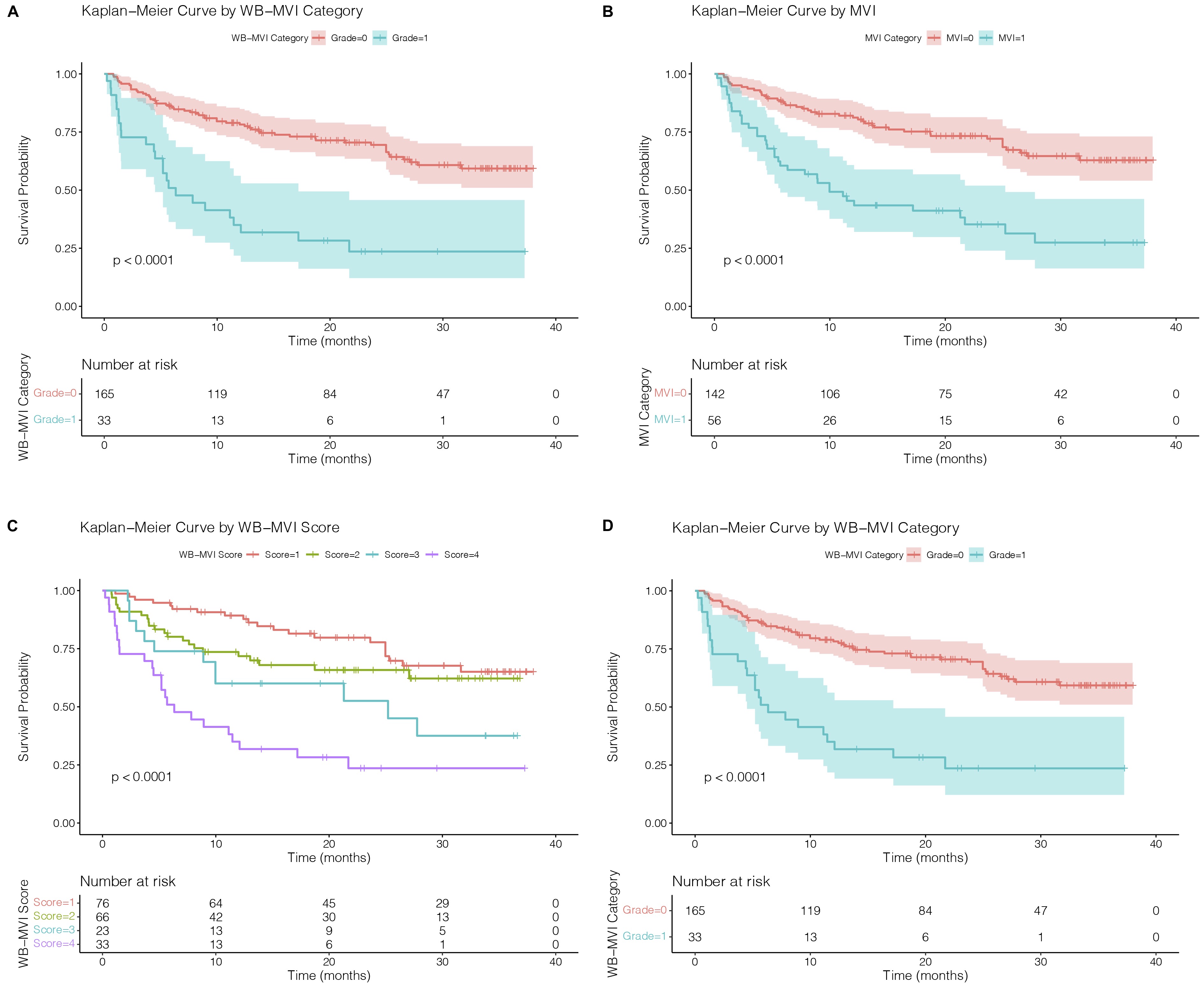
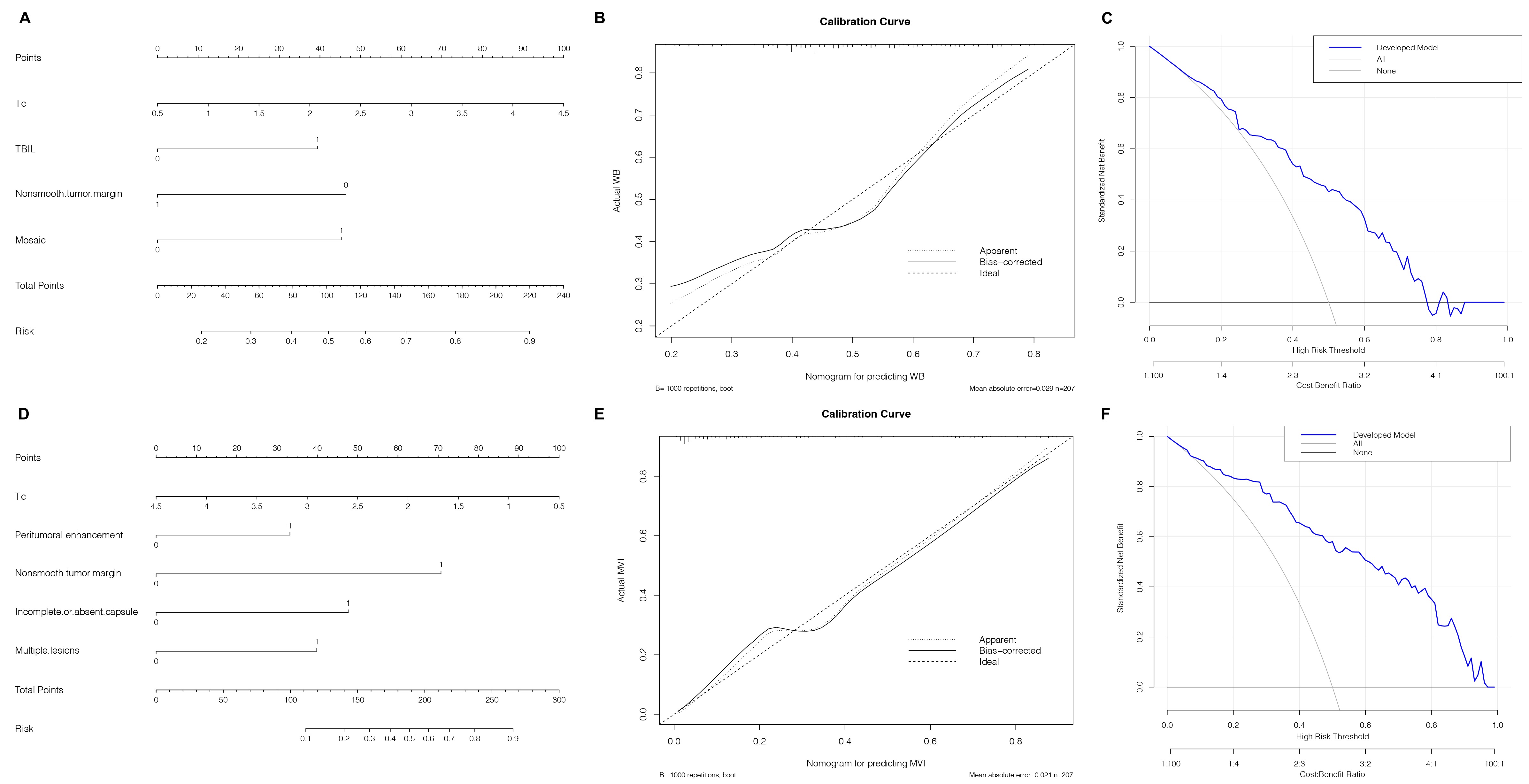
Totally, 59 patients suffered from MVI with the median RFS of 9.967 months (non-MVI >37.967 months; Log-rank test, P=0.007), while 105 patients were in a state of Wnt/β-catenin pathway silencing (27.067 months; activated state >37.967 months; P<0.001).Multivariate COX regression analysis indicated that Wnt/β-catenin pathway activation (HR 0.405, 95%CI 0.247-0.664, P<0.001; AUC=0.834, 95%CI 0.777-0.890, P<0.001) and MVI (HR 1.737, 95%CI 1.021-2.954, P=0.042; AUC=0.718, 95%CI 0.641-0.796, P<0.001) were independent predictors for postoperative recrudescence, together with carcinoembryonic antigen, aspartate aminotransferase, multiple lesions and enhancing capsule. Besides, an elevated tumor stiffness (c value: OR 1.582, 95%CI 1.034-2.420, P=0.034), total bilirubin >24µmol/L (OR 2.465, 95%CI 1.154-5.267, P=0.020), smooth tumor margin (OR 2.226, 95%CI 1.157-4.283, P=0.017), and mosaic architecture (OR 1.990, 95%CI 1.029-3.851, P=0.041) were markedly prone to Wnt/β-catenin expression, yielding an AUC of 0.711 (95%CI 0.641-0.782, P<0.001). Nevertheless, the decreased tumor c value (OR 2.075, 95%CI 1.095-3.937, P=0.025), alongside with non-smooth tumor edge (OR 8.246, 95%CI 3.048-22.307, P<0.001), peritumoral enhancement (OR 2.677, 95%CI 1.081-6.630, P=0.033), incomplete or absent capsule enhancement (OR 3.846, 95%CI 1.680-8.800, P=0.001), and multiple lesions (OR 2.579, 95%CI 1.036-6.420, P=0.042) were identified as independently correlated to MVI-positive HCC (AUC=0.880, 95%CI 0.827-0.933, P<0.001).Discussion
The Wnt/β-catenin signaling pathway of HCC is a highly complex and versatile pathway that regulates various neoplastic cellular processes, and MVI is a well-established risk factor for post-operative recrudescence [3]. In this study, we aimed to explore the clinical value of MRE-based neoplastic hallmarks in preoperatively predicting the activation of Wnt/β-catenin pathway and the expression of MVI in HCC patients. Our comprehensive analysis confirmed the prognostic impact of MVI, Wnt/β-catenin pathway activation, and their integrated status on the postoperative recrudescence. Furthermore, among the candidate patients with HCC, we demonstrated that tumor stiffness, represented by the tissue’s biomechanical property (c value), was an independent predictor for identifying both the MVI-positive and Wnt/β-catenin pathway expression before curative hepatectomy. Therefore, this study emphsizes the contribution of biomechanics to HCC aggressiveness in the realm of signal pathways and tumor microenvironment. Additionally, our research underscores the clinical significance of incorporating MRE into clinical practice for optimizing treatment decisions in HCC patients, enhancing risk stratification, guiding therapeutic choices, and improving prognostic assessments in the context of HCC.Conclusion
The integration of tumor stiffness with morphologic traits could satisfactorily distinguish HCC patients with high risk of Wnt/β-catenin activation and MVI, both of which facilitate stratifying patients’ outcomes before surgery.Acknowledgements
No acknowledgement found.References
[1] LLOVET J M, KELLEY R K, VILLANUEVA A, et al. Hepatocellular carcinoma [J]. Nat Rev Dis Primers, 2021, 7(1): 6.
[2] CHONG H-H, YANG L, SHENG R-F, et al. Multi-scale and multi-parametric radiomics of gadoxetate disodium–enhanced MRI predicts microvascular invasion and outcome in patients with solitary hepatocellular carcinoma ≤ 5 cm [J]. European Radiology, 2021,
[3] KHALAF A M, FUENTES D, MORSHID A I, et al. Role of Wnt/β-catenin signaling in hepatocellular carcinoma, pathogenesis, and clinical significance [J]. J Hepatocell Carcinoma, 2018, 5(61-73.
[4] HE S, TANG S. WNT/β-catenin signaling in the development of liver cancers [J]. Biomed Pharmacother, 2020, 132(110851.
[5] PERUGORRIA M J, OLAIZOLA P, LABIANO I, et al. Wnt-β-catenin signalling in liver development, health and disease [J]. Nat Rev Gastroenterol Hepatol, 2019, 16(2): 121-136.
[6] ZHANG Y, WANG X. Targeting the Wnt/β-catenin signaling pathway in cancer [J]. J Hematol Oncol, 2020, 13(1): 165.
[7] KITAO A, MATSUI O, YONEDA N, et al. Hepatocellular Carcinoma with β-Catenin Mutation: Imaging and Pathologic Characteristics [J]. Radiology, 2015, 275(3): 708-717.
[8] CHONG H, GONG Y, PAN X, et al. Peritumoral Dilation Radiomics of Gadoxetate Disodium-Enhanced MRI Excellently Predicts Early Recurrence of Hepatocellular Carcinoma without Macrovascular Invasion After Hepatectomy [J]. J Hepatocell Carcinoma, 2021, 8(545-563.
[9] CHONG H, GONG Y, ZHANG Y, et al. Radiomics on Gadoxetate Disodium-enhanced MRI: Non-invasively Identifying Glypican 3-Positive Hepatocellular Carcinoma and Postoperative Recurrence [J]. Acad Radiol, 2022,
[10] CHONG H, ZHOU P, YANG C, et al. An excellent nomogram predicts microvascular invasion that cannot independently stratify outcomes of small hepatocellular carcinoma [J]. Ann Transl Med, 2021, 9(9): 757.
[11] CHONG H H, YANG L, SHENG R F, et al. Multi-scale and multi-parametric radiomics of gadoxetate disodium-enhanced MRI predicts microvascular invasion and outcome in patients with solitary hepatocellular carcinoma </= 5 cm [J]. Eur Radiol, 2021, 31(7): 4824-4838.
[12] HU X, ZHOU J, LI Y, et al. Added Value of Viscoelasticity for MRI-Based Prediction of Ki-67 Expression of Hepatocellular Carcinoma Using a Deep Learning Combined Radiomics (DLCR) Model [J]. Cancers (Basel), 2022, 14(11):
[13] WANG Y, GUO J, MA D, et al. Reduced tumor stiffness quantified by tomoelastography as a predicative marker for glypican-3-positive hepatocellular carcinoma [J]. Front Oncol, 2022, 12(962272.
[14] QAYYUM A, HWANG K P, STAFFORD J, et al. Immunotherapy response evaluation with magnetic resonance elastography (MRE) in advanced HCC [J]. J Immunother Cancer, 2019, 7(1): 329.
Figures
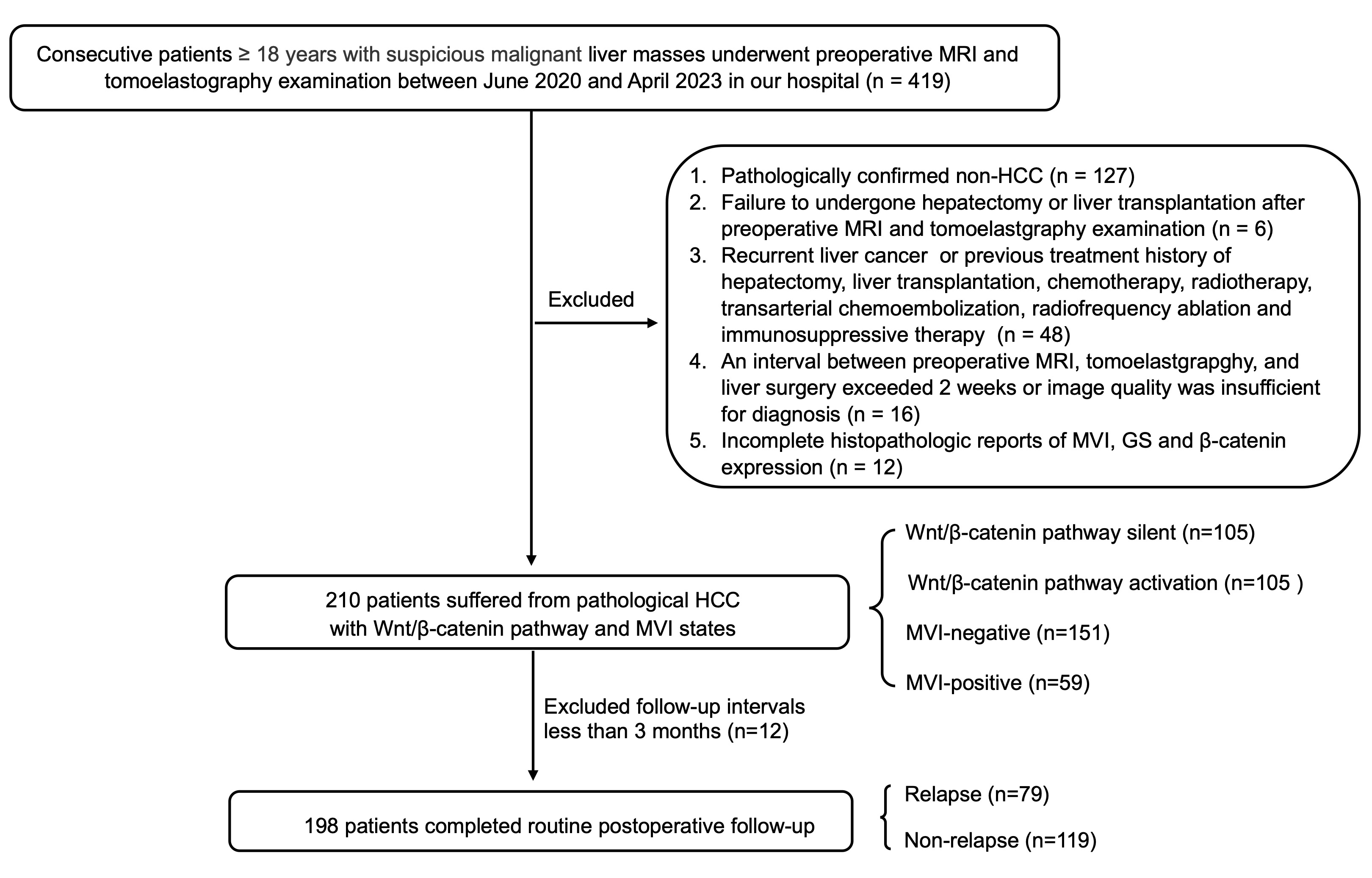
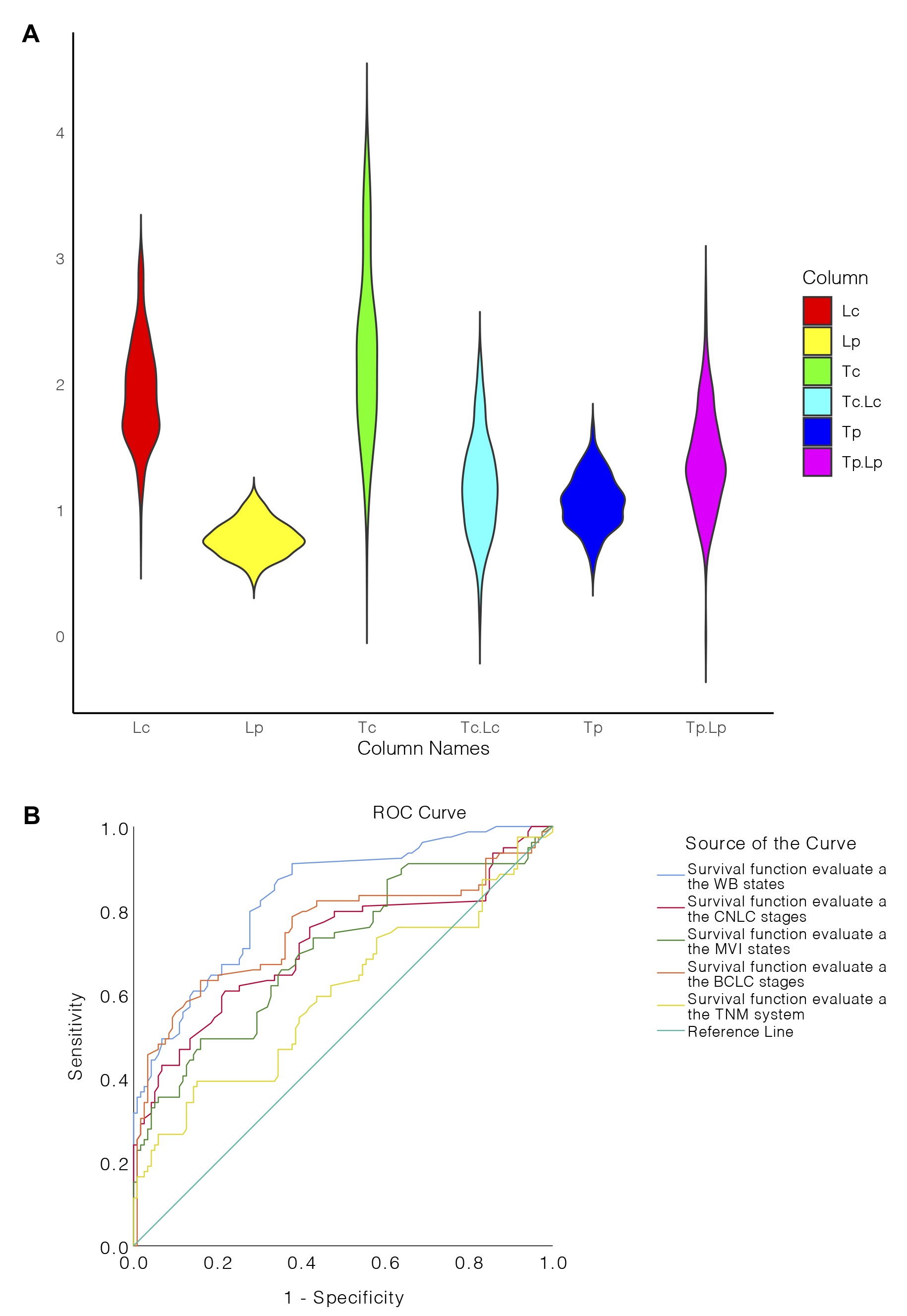
Figure 2. Violin Plot of MRE Parameters and Prognostic Performance for MVI and the Wnt/β-catenin pathway. Volin diagram of MRE parameters is manifested in Fig.2A. The predictive area under the receiver operating characteristic curve (AUC) for Wnt/β-catenin activation and MVI in postoperative recurrence were 0.834 and 0.718 (Figure 2B), respectively. In contrast, the AUC values of predicting relapse for the China Liver Cancer Staging, the Barcelona Clinic Liver Cancer staging, and the Tumor-Node-Metastasis system were 0.754, 0.705, and 0.599, respectively.