4099
Specific Absorption Rate Comparisons of Multiphoton Excitation, PINS and MultiPINS for Simultaneous Multislice Imaging1Electrical Engineering and Computer Sciences, University of California, Berkeley, Berkeley, CA, United States, 2Helen Wills Neuroscience Institute, University of California, Berkeley, Berkeley, CA, United States
Synopsis
Keywords: RF Pulse Design & Fields, RF Pulse Design & Fields, Multiphoton, SMS, SAR, PINS, MultiPINS
Motivation: Elevated specific absorption rate (SAR) levels pose a significant challenge for simultaneous multislice (SMS) imaging especially at high field strengths.
Goal(s): Multiphoton excitation has recently been proposed for reduced-SAR SMS applications. We aim to evaluate the SAR benefit of multiphoton SMS imaging compared to PINS and MultiPINS.
Approach: We show how pulse parameters affect the efficiencies of multiphoton SMS, PINS, and MultiPINS compared to conventional SMS through simple calculations and simulations. Additionally, we implement a multiphoton SMS spin-echo sequence in vivo at 3T.
Results: Multiphoton SMS is more SAR-efficient than PINS and MultiPINS for short pulse durations and thin slices under slew-rate constraints.
Impact: Multiphoton excitation makes short pulse durations and thin slices possible for SMS applications under SAR and slew-rate constraints. This subsequently enables the acquisition of high-quality imaging data for both scientific and medical purposes while reducing scan times.
1. Introduction
Simultaneous multislice (SMS) imaging accelerates image acquisition without a significant SNR loss by simultaneously exciting multiple slices, which are then disentangled using parallel imaging1,2. The specific absorption rate (SAR) of conventional SMS pulses scales linearly with the number of simultaneously excited slices, limiting their usability for high flip angle acquisitions at high field strengths. PINS3 and MultiPINS4 can reduce SAR by creating periodic excitations induced by RF sub-pulses interleaved with gradient blips. Multiphoton excitation has recently been utilized for SMS imaging by pairing a traditional single-slice RF pulse with oscillating gradients5,6. The oscillating gradients generate kHz RF fields, which combine with the traditional RF to produce multiphoton excitation. Here, we evaluate the SAR benefit of multiphoton SMS for various pulse parameters and show that multiphoton SMS offers more SAR reduction than PINS and MultiPINS for shorter pulse durations and thinner slices.2. Theory
2.1. Multiphoton SMS
Given a gradient $$$G_{z}=G_{AC}cos(\omega_{z}t)+G_{DC}$$$, where $$$G_{AC}$$$ is the sinusoidal component amplitude and $$$G_{DC}$$$ is the slice-select gradient amplitude, multiphoton excitation occurs when the resonance condition $$$\omega_{xy}+m\omega_{z}=\gamma\left(B_{0}+\overrightarrow{G}_{DC}\cdot\overrightarrow{r}\right)$$$ is satisfied (Figure 1). Here, $$$\omega_{xy}$$$ is the angular frequency of the traditional RF $$$(B_{1,xy})$$$, $$$\omega_{z}$$$ is the angular frequency of the z-direction RF $$$(B_{1,z})$$$ produced by the oscillating gradient, and $$$B_0$$$ is the main magnetic field. $$$m$$$ is the number of z-photons from the z-RF in resonance. $$$m=0$$$ represents traditional excitation, whereas $$$m\neq0$$$ represents multiphoton excitation. Since the same single-slice $$$B_{1,xy}$$$ is reused at multiple spatial locations and the low-frequency $$$B_{1,z}$$$ produces negligible SAR, multiphoton SMS provides a significant SAR reduction compared to conventional SMS. Because multiphoton excitation has different efficiencies for different $$$m$$$, to obtain equal flip angles for $$$N$$$ slices, $$$N$$$ scaled-down, shifted, and frequency-modulated xy-RF pulses can be summed up (Figure 2). The scaling coefficients, $$${\bf{c}}=[-\frac{N-1}{2},...,c_{-2},c_{-1},c_{0},c_{1},c_{2},...,\frac{N-1}{2}]$$$, of these pulses can be calculated according to $$$\bf{Ac}=\bf{1}$$$, where $$$A_{ij}=J_{j-i}((j-i)\alpha)$$$ with $$$i,j=-\frac{N-1}{2},..., -2,-1,0,1,2,...,\frac{N-1}{2}$$$. $$$J_{m}(-)$$$ is the Bessel function of the first kind of order $$$m$$$, and $$$\alpha=\frac{{G}_{\mathrm{AC}}}{{G}_{\mathrm{DC}}}$$$ is the ac-dc ratio. Then, the efficiency of multiphoton SMS compared to conventional SMS can be calculated by $$\mathrm{Eff}_{\mathrm{Multiphoton\;SMS}}=\frac{N}{\sum_{n=-\infty}^{n=\infty}\left(\sum_{m=-\frac{N-1}{2}}^{m=\frac{N-1}{2}}c_{m}J_{m-n}(m\alpha)\right)^2}.$$ In practice, computation with finite $$$n$$$ is sufficient.2.2. PINS (Power Independent of Number of Slices)
PINS interleaves hard pulses with gradient blips to excite periodic patterns3. However, these gradient blips increase the total pulse duration by a factor of $$L=\frac{N_{rf}-1}{N_{rf}}\frac{{Dur}_{rf} +{Dur}_{g}}{{Dur}_{rf}},$$ where, $$$N_{rf}$$$ is the number of RF sub-pulses, and $$$Dur_{rf}$$$ and $$$Dur_{g}$$$ are the durations of each RF sub-pulse and gradient blip, respectively4. For N simultaneously excited slices, the efficiency of PINS compared to conventional SMS is given by4 $$\mathrm{Eff}_{\mathrm{PINS}}=\frac{N}{L}.$$2.3. MultiPINS
MultiPINS applies a conventional SMS pulse during the gradient blips of PINS to spread out the RF energy for further SAR reduction4. For MultiPINS pulses of the form $$${RF}_{\mathrm{MultiPINS}}=M\;R F_{\mathrm{PINS}}+(1- M)R F_{\mathrm{Conventional\;SMS}}$$$, we have $$ \frac{\mathrm{PINS\;Energy}}{\mathrm{MultiPINS\;Energy}}\alpha\frac{\frac{1}{{Dur}_{rf}}}{\frac{(1-M)^2}{{Dur}_{rf}}+\beta\frac{M^2}{{Dur}_{g}}\frac{N_{rf}}{N_{rf} -1}},$$ where M is the MultiPINS mixing ratio between conventional SMS and PINS. Energies of the PINS and conventional SMS portions are inversely proportional to the duration of the PINS RF sub-pulses and the duration of the gradient blips, respectively. Since there is one less gradient blip than RF sub-pulses, a scaling factor of $$$\frac{N_{rf}}{N_{rf} -1}$$$ is used. $$$\beta$$$ accounts for the change in energy when conventional SMS pulses are modified to be transmitted during a time-varying gradient blip and can be determined experimentally.3. Methods
For a slew rate limit of $$$200\;T/m/s$$$, we compute the SAR reductions of Multiphoton SMS, PINS, and MultiPINS for different pulse durations and slice thicknesses using $$ SAR\;Reduction\;\%=\left( 1 - \frac{1}{\mathrm{Eff}}\right)\times100.$$A custom spin-echo multiphoton SMS sequence was designed in SpinBench and RTHawk platforms (Vista.ai, Los Altos, CA, USA) and implemented on a 3T GE MR750w scanner to excite 3 slices (Figure 3). Slice-GRAPPA7 was used for reconstruction and CAIPIRINHA phase encoding8,9 was implemented to improve reconstruction quality.
4. Results and Conclusion
Figure 4 shows that PINS and MultiPINS are either not feasible or not SAR-efficient for short pulse durations and thin slices due to the minimum gradient blip duration being limited by the slew rate. For shorter pulse durations and thinner slices, the duration of the RF sub-pulses is reduced, increasing their amplitude. The ac-dc ratio of multiphoton SMS offers a better trade-off between SAR reduction and pulse parameters, making multiphoton SMS a better choice for shorter pulse durations and thinner slices. Methods like VERSE10 can be used if peak $$$B_{1,xy}$$$ limits are exceeded for short pulse durations (e.g. refocusing pulses shorter than $$$4\;ms$$$ may exceed a peak $$$B_{1,xy}$$$ of $$$15\;{\mu}T$$$).Figure 5 demonstrates in-vivo T1 and T2 contrast obtained with a multiphoton SMS spin-echo sequence. For a pulse duration of $$$6\;ms$$$, three-slice multiphoton SMS provides 51% SAR reduction compared to conventional SMS.
Acknowledgements
This work was supported in part by the National Institutes of Health through grant R21EB030157 and grant R01MH127104.References
- Larkman DJ, Hajnal JV, Herlihy AH, Coutts GA, Young IR, Ehnholm G. Use of multicoil arrays for separation of signal from multiple slices simultaneously excited. J Magn Reson Imaging. 2001;13(2):313-317. doi:10.1002/1522-2586(200102)13:2<313::AID-JMRI1045>3.0.CO;2-W
- Barth M, Breuer F, Koopmans PJ, Norris DG, Poser BA. Simultaneous multislice (SMS) imaging techniques. Magn Reson Med. 2016;75(1):63-81. doi:10.1002/mrm.25897
- Norris DG, Koopmans PJ, Boyacioğlu R, Barth M. Power independent of number of slices (PINS) radiofrequency pulses for low‐power simultaneous multislice excitation. Magn Reson Med. 2011;66(5):1234-1240. doi:10.1002/mrm.23152
- Eichner C, Wald LL, Setsompop K. A low power radiofrequency pulse for simultaneous multislice excitation and refocusing. Magn Reson Med. 2014;72(4):949-958. doi:10.1002/mrm.25389
- Han V, Liu C. Multiphoton magnetic resonance in imaging: A classical description and implementation. Magn Reson Med. 2020;84(3):1184-1197. doi:10.1002/mrm.28186
- Han V, Chi J, Ipek TD, Chen J, Liu C. Pulsed selective excitation theory and design in multiphoton MRI. J Magn Reson. 2023;348:107376. doi:10.1016/j.jmr.2023.107376
- Setsompop K, Gagoski BA, Polimeni JR, Witzel T, Wedeen VJ, Wald LL. Blipped-controlled aliasing in parallel imaging for simultaneous multislice echo planar imaging with reduced g -factor penalty. Magn Reson Med. 2012;67(5):1210-1224. doi:10.1002/mrm.23097
- Breuer FA, Blaimer M, Heidemann RM, Mueller MF, Griswold MA, Jakob PM. Controlled aliasing in parallel imaging results in higher acceleration (CAIPIRINHA) for multi-slice imaging. Magn Reson Med. 2005;53(3):684-691. doi:10.1002/mrm.20401
- Ipek TD, Han V, Liu C. Multiphoton Simultaneous Multislice Imaging with CAIPIRINHA Phase Encoding. In Proceedings of the 31st Annual Meeting of ISMRM, Toronto, Canada, 2023. Abstract 0530.
- Conolly S, Nishimura D, Macovski A, Glover G. Variable-rate selective excitation. J Magn Reson 1969. 1988;78(3):440-458. doi:10.1016/0022-2364(88)90131-X
Figures
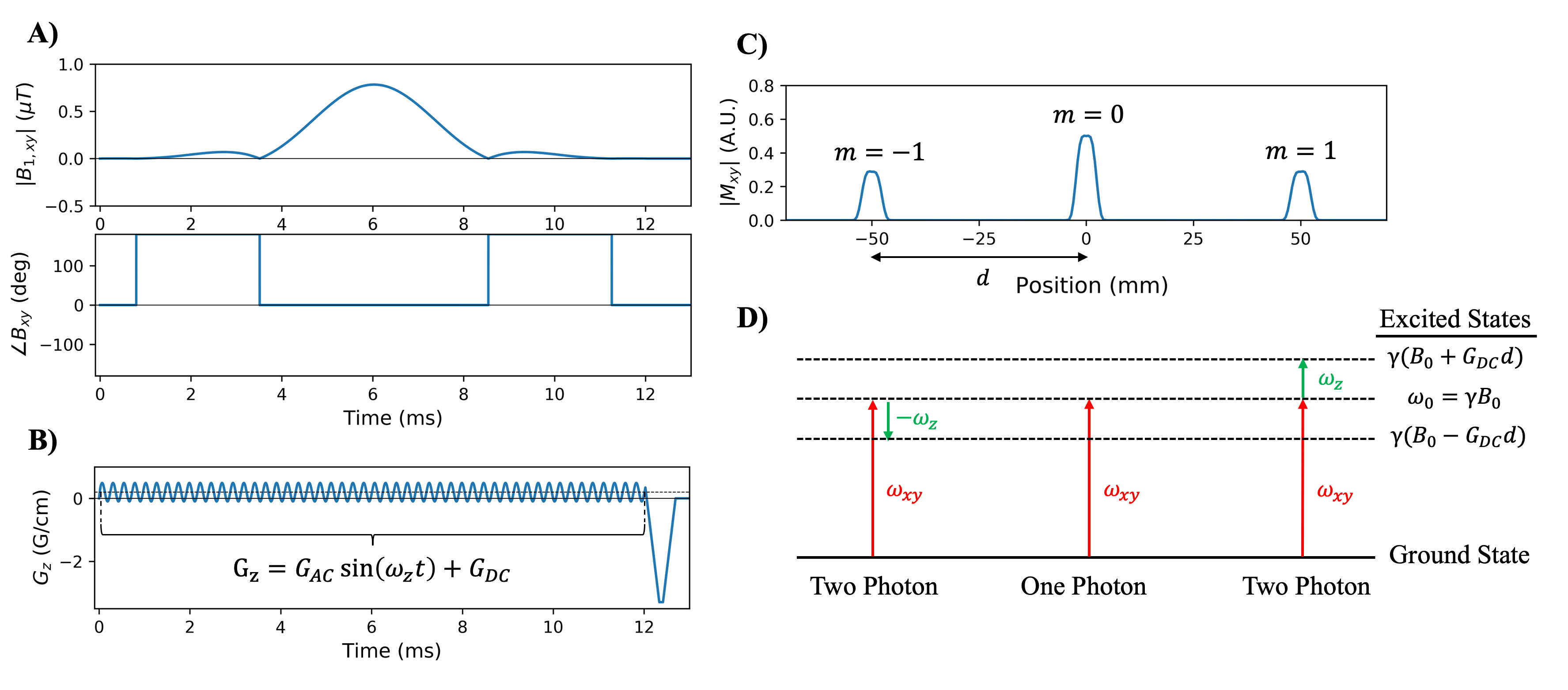
Figure 1. Multiphoton SMS Excitation with Oscillating Gradients.
A) An xy-polarized single-slice SLR RF pulse. B) An oscillating gradient waveform consisting of a sinusoidal gradient added on top of the regular slice-select gradient. C) Slice profiles resulting from pulses in A and B. Center slice has traditional excitation $$$(m=0)$$$, whereas right and left slices have two-photon excitation with one z-photon being absorbed/emitted $$$(m=\pm1)$$$. D) Energy level diagrams corresponding to the slice profiles in C.
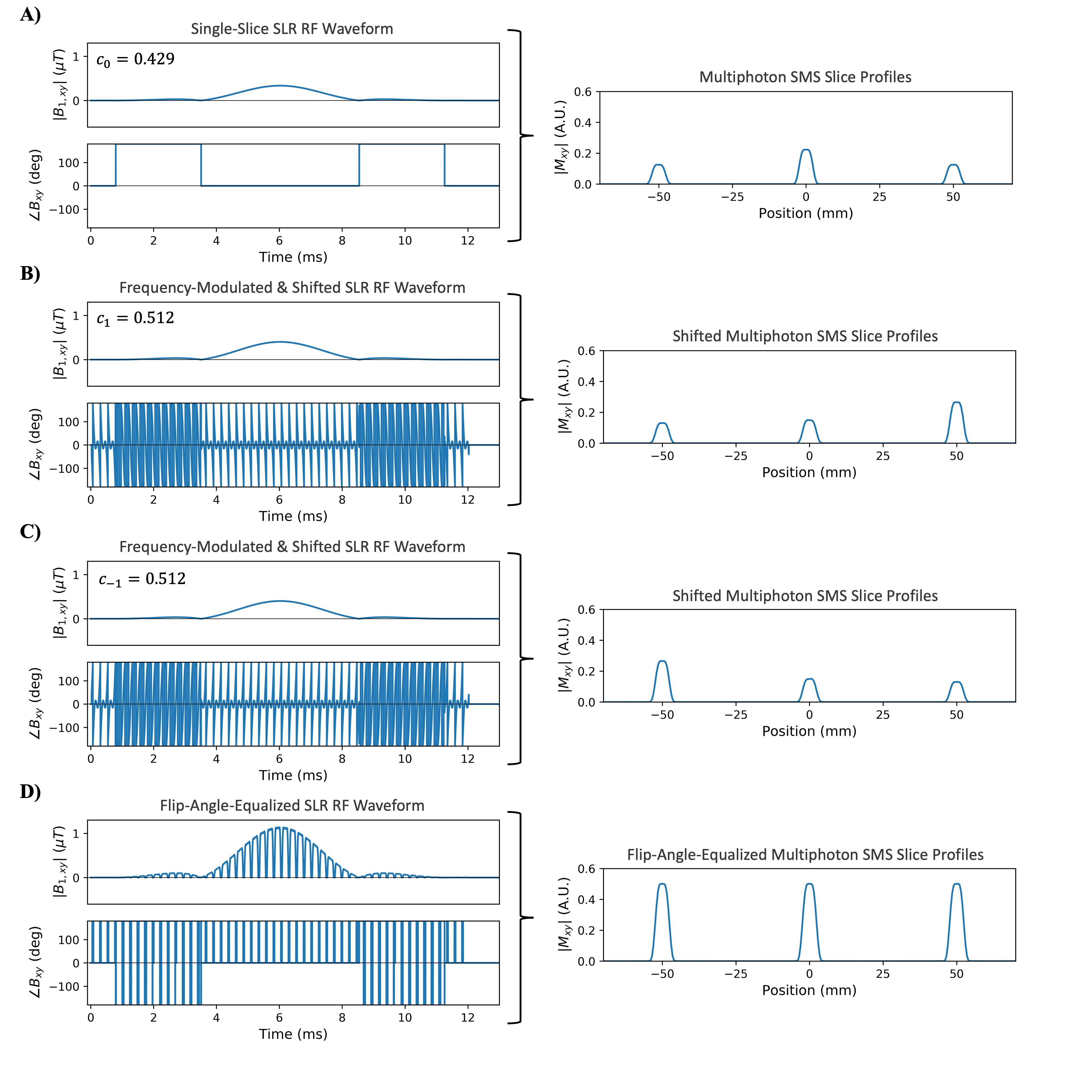
Figure 2. Flip Angle Equalization for a Three-Slice Multiphoton SMS Design.
A) A scaled-down single-slice SLR RF pulse and the corresponding slice profiles. Unequal $$$M_{xy}$$$ amplitudes indicate unequal flip angles caused by the lower efficiency of two-photon excitation. B, C) Scaled-down, frequency-modulated and shifted single-slice SLR RF pulses and the corresponding slice profiles. D) Summation of the pulses in A, B, and C and the resulting slice profiles indicating equal flip angles. All RF pulses are combined with oscillating gradients to obtain the slice profiles.
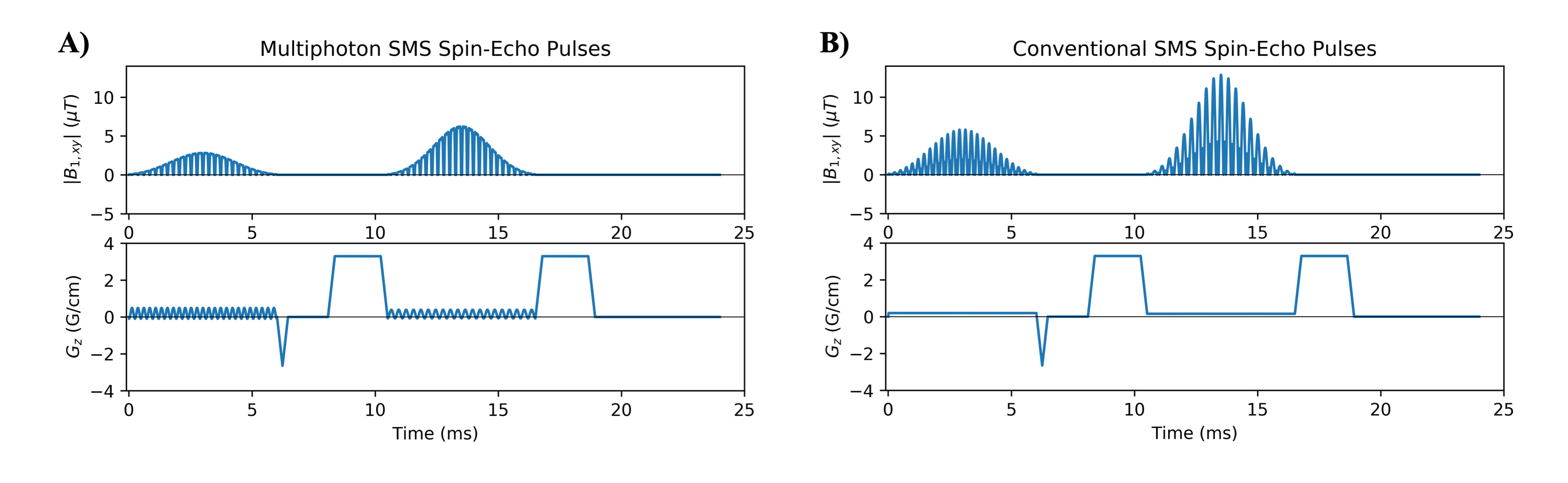
Figure 3. Multiphoton and Conventional SMS Spin-Echo Pulses.
A) Multiphoton SMS excitation and refocusing pulses that generate equal flip angles for three slices and the slice-select and horned oscillating gradients. The lower amplitudes of multiphoton SMS pulses indicate lower power deposition. Multiphoton SMS provides 51% SAR reduction in this case. B) Conventional SMS excitation and refocusing pulses and the slice-select and horned gradients. 6-ms $$$90^{\circ}$$$ and $$$180^{\circ}$$$ RF pulses excite and refocus 4- and 5-mm slices that are 5 cm apart, respectively.
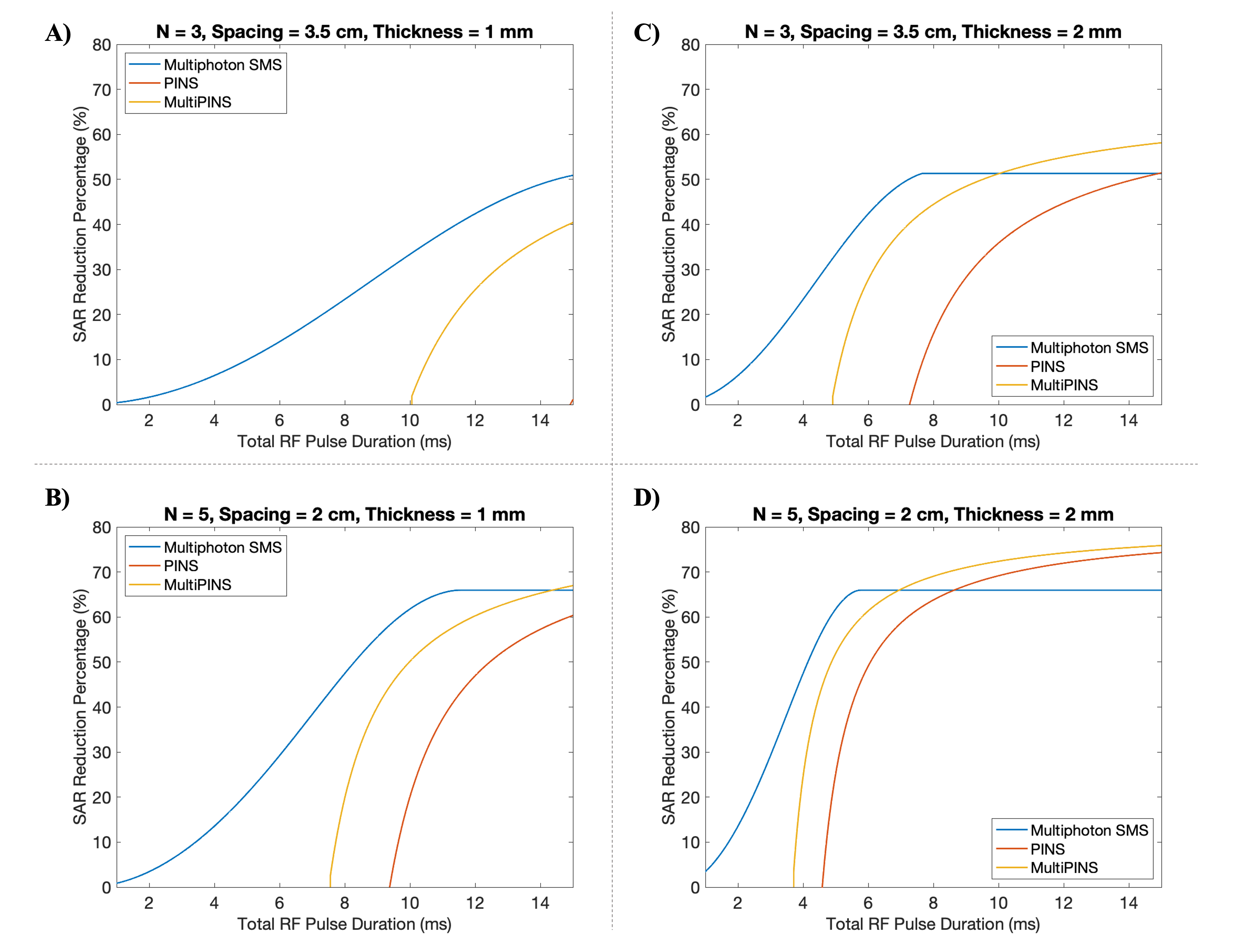
Figure 4. Multiphoton SMS Provides More SAR Reduction than PINS, and MultiPINS for Short Pulse Durations and Thin Slices.
A,C) SAR Reductions for 3 simultaneously excited slices that are 3.5 cm apart. B,D) SAR Reductions for 5 simultaneously excited slices that are 2 cm apart. Parameters: slice thickness = 1 mm for A and B, and 2 mm for C and D, slew rate = 200 T/m/s, time-bandwidth product = 2.5, $$$\beta=1$$$ (reflects the best-case scenario for MultiPINS). Multiphoton ac-dc ratio and MultiPINS mixing ratio were optimized for maximum SAR benefit.
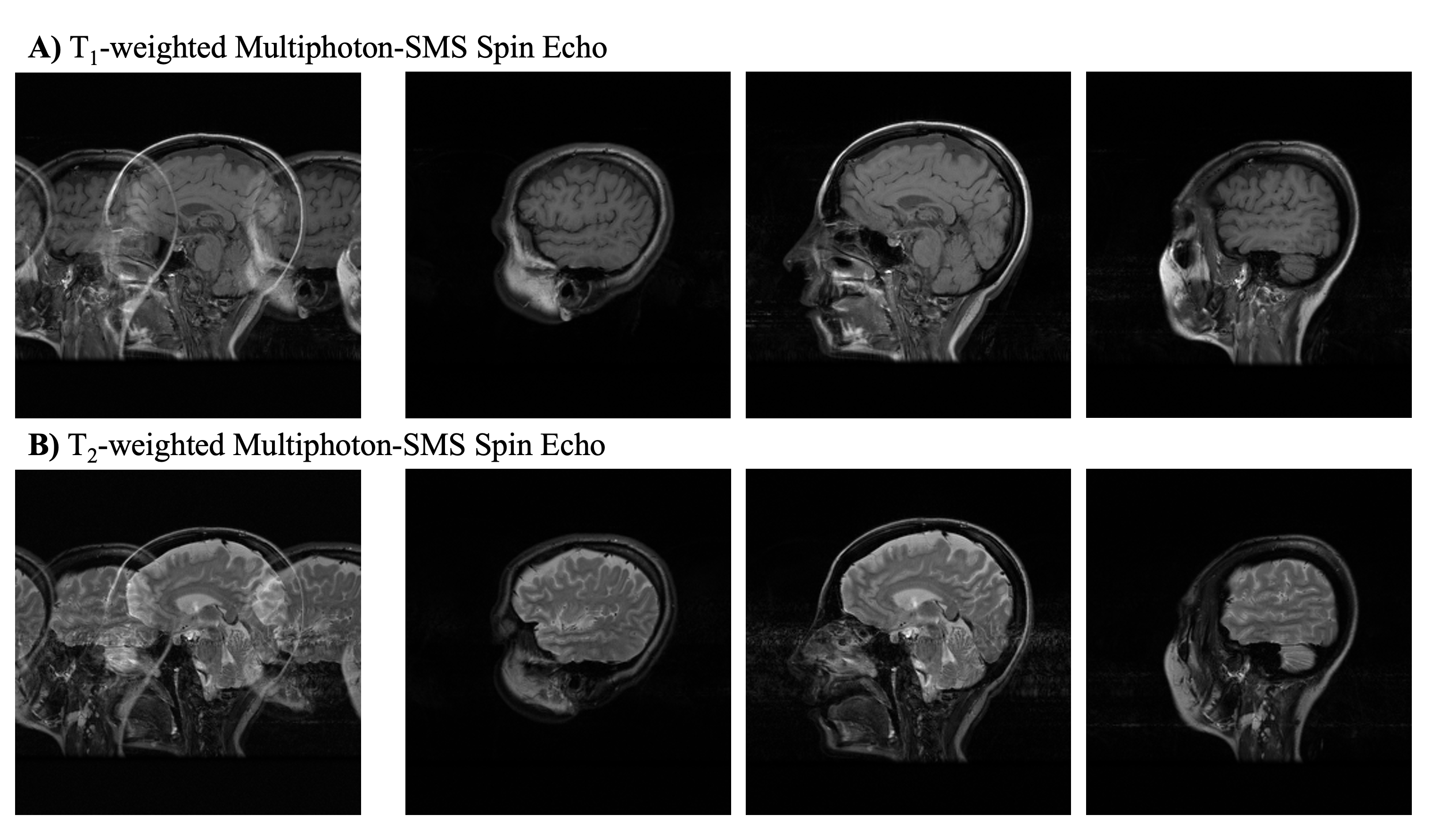
Figure 5. T1 and T2 Contrast Demonstration at 3T with a Multiphoton SMS Spin-Echo Sequence.
Three sagittal slices acquired with T1-weighted (A) and T2-weighted (B) multiphoton SMS spin-echo sequences. Parameters: TE/TR (A) = 21/650 ms, TE/TR (B) = 80/1500 ms, pulse duration = 6 ms, time-bandwidth product = 2, in-plane resolution = 1.18x1.18 mm2, FOV = 32x32 cm2, readout bandwidth = 50 kHz, slice thickness = 4 mm (excitation), 5 mm (refocusing). Multiphoton SMS reduces SAR by 51% compared to conventional SMS.