3842
Detecting BCL-6 overexpression Status in Primary Central Nervous System Lymphoma Using Multiparametric MRI Based Machine Learning1Radiological Diagnosis Department of the First Medical Center of the General Hospital of the People's Liberation Army of China, Beijing, China, 2Radiological Diagnosis Department of the First Medical Center of the General Hospital of the People's Liberation Army of China, Bejing, China
Synopsis
Keywords: Tumors (Pre-Treatment), Cancer
Motivation: Based on BCL-6 status,the prognosis of PCNSL can be detected,then the treatment can be adjusted.
Goal(s): Detecting BCL-6 Expression Status in Primary Central Nervous System Lymphoma Using Multiparametric MRI Based Machine Learning.
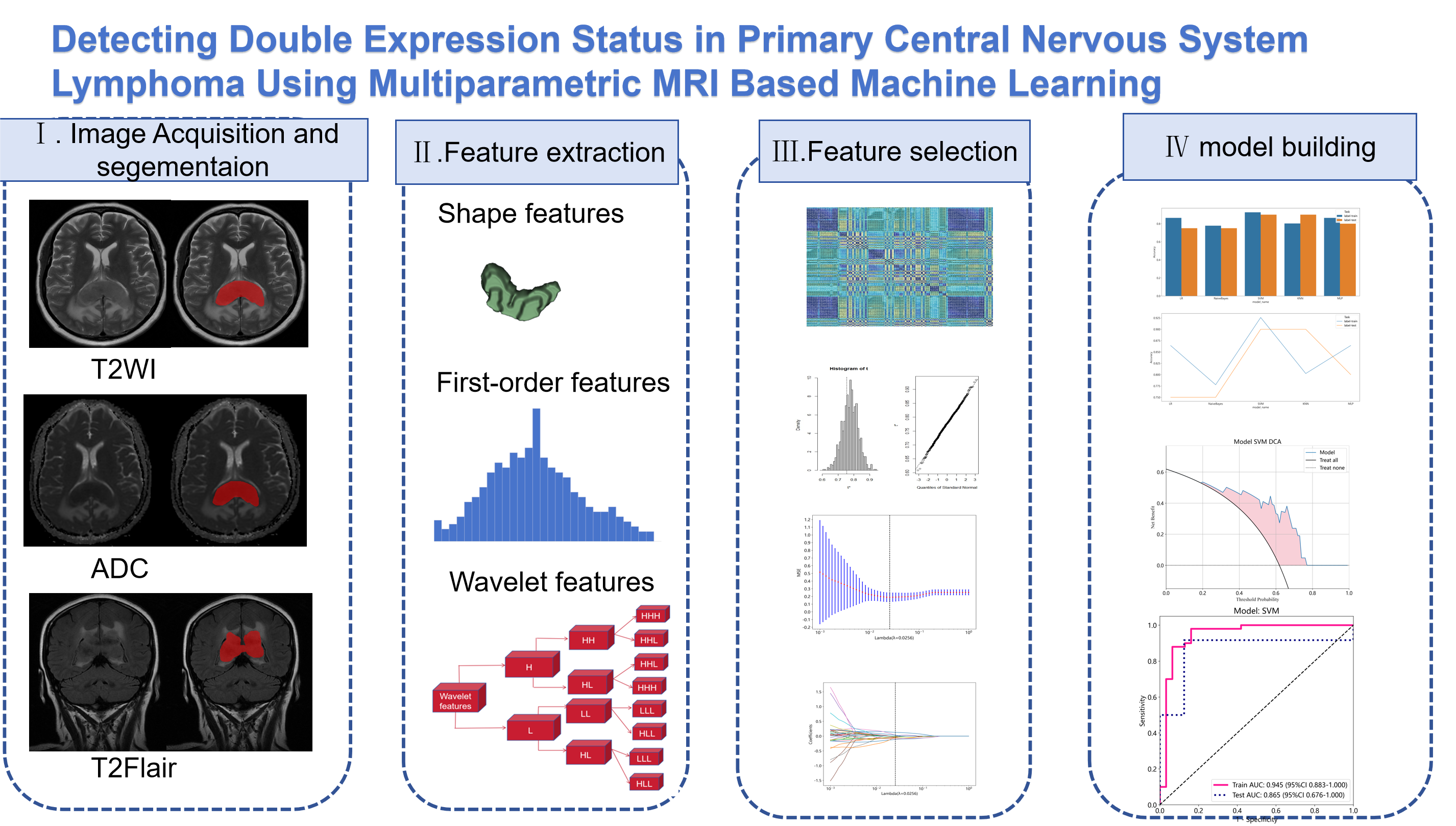
Approach: Using Python code to retrieve Pyromics for radiomics feature screening from T2、T2 Flair、ADC.The AUC value was used to evaluate the detection performance of the image sequence joint classifier, Obtain the best classifier.
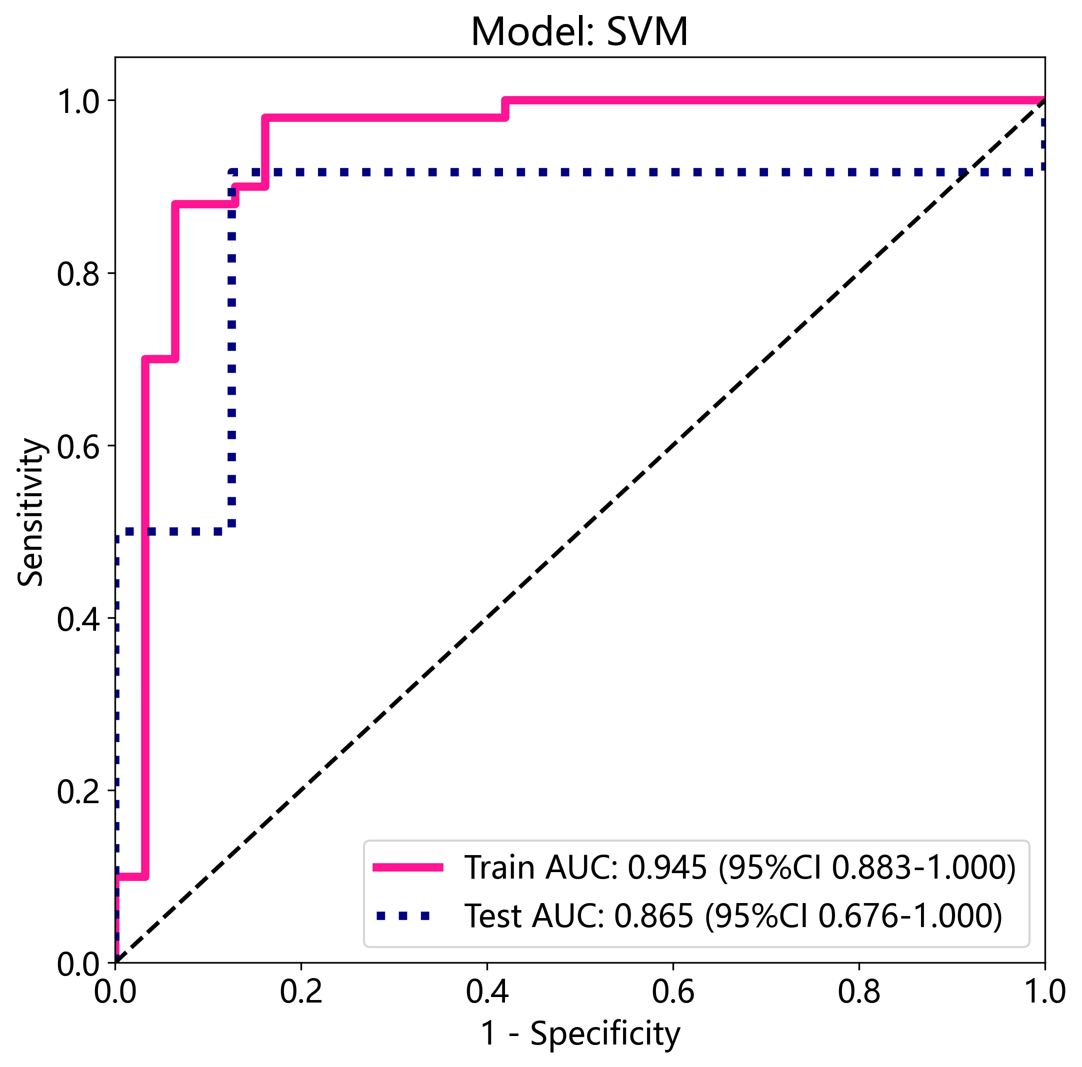
Results: The multi parameter sequence combined with SVM machine learning has the highest AUC, with BCL-6 overexpression detected in the training and validation sets of 0.945 and 0.865,sensitivity of 98% and 92.7%, specificity of 83.9% and 87.5%.
Impact: Based on BCL-6 status, the patients are divided into "good risk" and "poor risk".patients who have a “poor risk”phenotype may be candidates for aggressive initial therapy with chemotherapy and radiaion.It may be desirable to defer WBRTto avoid the radiation-induced neurotoxicity.
Introduction
Primary CNS lymphoma (PCNSL) is a highly aggressive non-Hodgkin lymphoma(NHL) confined to the CNS, including the brain, spine, cerebrospinal fluid(CSF), and eyes,with more than 90% of cases histologically classified as diffuse large B-cell lymphoma (DLBCL). [1]Compared to other high-grade non-Hodgkin lymphoma outside the CNS, PCNSL is particularly aggressive and overall survival is poor. [2]It is clear that differences in clinical features and in treatment responses of DLBCL are owing to the marked genetic and molecular heterogeneity that underlies disease aggressiveness and tumor progression.[3] In previous studies, BCL-6 expression was considered to a valuable biomarker for inferior prognosis and shorter survival.Therefore,the predictive value of BCL-6 can help us know relevant prognosis of PCNSL and adjust the treatment.[4]Materials and Methods
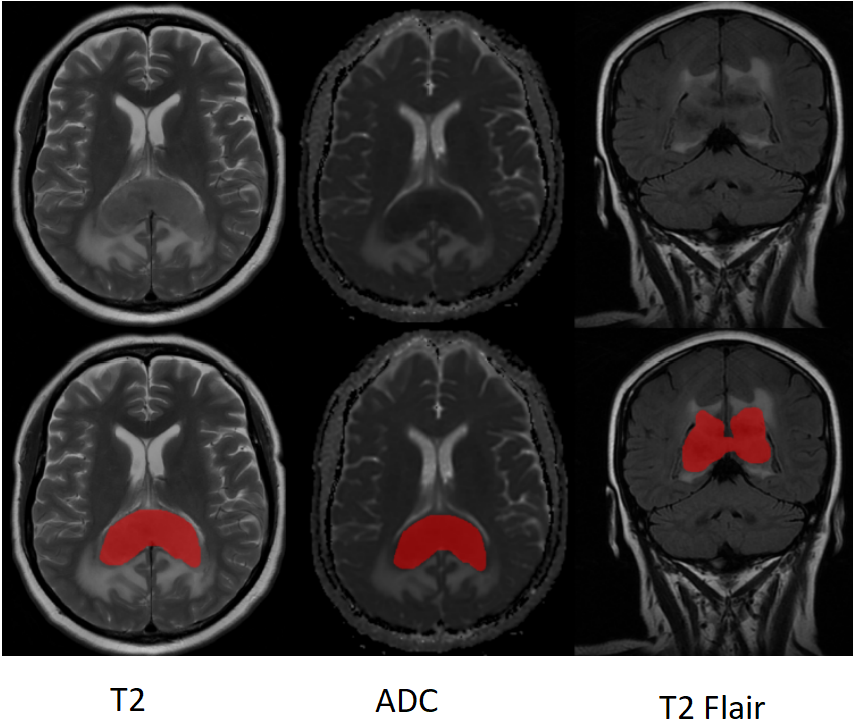
Retrospective analysis of 65 patients with primary central nervous system lymphoma (PCNSL) diagnosed pathologically at the First Medical Center of the General Hospital of the People's Liberation Army from January 2013 to July 2023, including 101 lesions. Based on immunohistochemical information, patients were divided into BCL-6 overexpression group (n patients=40, n lesions=72) and BCL-6 non overexpression group (n patients=25, n lesions=39). Apply ITK-SNAP 4.0 to delineate regions of interest and extract features from preoperative T2, T2 Flair, and ADC images. Using Python code to retrieve Pyromics for raadiomics feature screening, 904 features were extracted from each sequence. Use t-test and intra group correlation coefficient (ICC) to filter features, and use minimum absolute shrinkage and selection operators to filter features. All cases were randomly divided into a training group and a testing group at 8:2, using five classifier learning algorithms: logistic regression (LR), support vector machine (SVM), Naive Bayes (NB), K-nearest neighbor (KNN), and Multilayer Perceptron (MLP) for machine learning. The AUC value was used to evaluate the detection performance of the image sequence joint classifier and obtain the best classifier.Results
All 30 models based on radiomics can detect BCL-6 overexpression states to varying degrees, and the combination of different sequences and classifiers can improve model performance. The multi parameter sequence (T2WI+T2Flair+ADC) combined with SVM has the highest AUC, with BCL-6 overexpression detected in the training and validation sets of 0.945 (95% CI: 0.883-1.000) and 0.865 (95% CI: 0.703-1.000), accuracy of 92.6% and 81.0%, sensitivity of 98% and 92.7%, specificity of 83.9% and 87.5%, respectively, making it the best machine learning model.Conclusion
In this study, multiparametric MRI based machine learningfrom ADC, T2WI, T2FLAIR, through five classi-fiers, had optimal performance in detecting BCL-6 status,which could be a potential and promising tool in therapeutic planning and prognostic assessment in PCNSL.Acknowledgements
The authors would like to thank all the participants.References
[1]. Grommes C and DeAngelis LM (2017). Primary CNS Lymphoma. J Clin Oncol 35, 2410–2418.
[2]. Whole Tumor Histogram-profiling of Diffusion-WeightedMagnetic Resonance Images Reflects Tumorbiological Features of Primary Central Nervous System Lymphoma.
[3]. Expression of a single gene, BCL-6, strongly predicts survival in patients with diffuse large B-cell lymphoma.
[4] Intensive Chemotherapy and Immunotherapy in Patients With Newly Diagnosed Primary CNS Lymphoma: CALGB 50202 (Alliance 50202)
Figures