3692
A multi-layer binary model with adaptive metabolite selection for multi-type brain tumour classification1Cancer and Genomic Sciences, University of Birmingham, Birmingham, United Kingdom, 2Oncology, Birmingham Children's Hospital, Birmingham, United Kingdom, 3Alder Hey Children’s Hospital, Liverpool, United Kingdom, 4Paediatric Oncology, Great North Children's Hospital, Newcastle upon Tyne, United Kingdom, 5Children's Brain Tumour Research Centre, University of Nottingham, Nottingham, United Kingdom, 6Neuroradiology, Nottingham University Hospitals NHS Trust, Nottingham, United Kingdom, 7Radiology, Birmingham Children's Hospital, Birmingham, United Kingdom, 8Medical Physics, Nottingham University Hospitals NHS Trust, Nottingham, United Kingdom, 9Clinical Neuroscience, University of Nottingham, Nottingham, United Kingdom, 10Translational Research, University of Liverpool, Liverpool, United Kingdom, 11Bioengineering, University of Pennsylvania, Philadelphia, PA, United States, 12Centre for Human Brain Health, University of Birmingham, Birmingham, United Kingdom, 13RRPPS, University Hospital Birmingham NHS Foundation Trust, Birmingham, United Kingdom, 14Engineering, University of Birmingham, Birmingham, United Kingdom
Synopsis
Keywords: Tumors (Pre-Treatment), Cancer
Motivation: Accurate classification of multi-type brain tumours through in vivo proton magnetic resonance spectroscopy remains a significant challenge. Conventional machine learning classifiers consider all reliably observed metabolites as features and classify all brain tumours simultaneously, but their performance is limited for rare tumour types.
Goal(s): This abstract presents a novel multi-layer classification model, binary adaptive metabolite selection (BAMS), for better identifying rare tumour types.
Approach: BAMS generalises the problem by considering only one specific brain tumour type and selecting significant biomarkers in each layer iteratively and dynamically.
Results: In comparison to classic models, BAMS showed significantly improved diagnostic performance for rare brain tumour types.
Impact: A brain tumour classification method that can only work on main types and cannot determine rare types is unlikely to be useful for clinicians. This abstract introduces BAMS that can significantly improve diagnostic performance for rare brain tumour types.
Introduction
Childhood brain tumour classification through clinical proton magnetic resonancespectroscopy (1H-MRS) has been developed in recent years but mainly focuses on the main types [1]. Computational approaches are increasingly considered as an important research theme in precision oncology, especially for medical imaging [2]. Classifying multiple brain tumour types through conventional machine learning models shows poor classification performance for minority and highly overlapping classes like the atypicalteratoid rhabdoid tumours (AT/RTs), which restricts the use of translational 1H-MRS in brain tumour diagnosis. Considering the needs of clinical practice, the classification of such minority classes is expected to be improved in a multi-type classification scenario. This abstract introduces a novel multi-layer model with optimised metabolite selection that provides significantly improved classification performance compared to classic models.Method
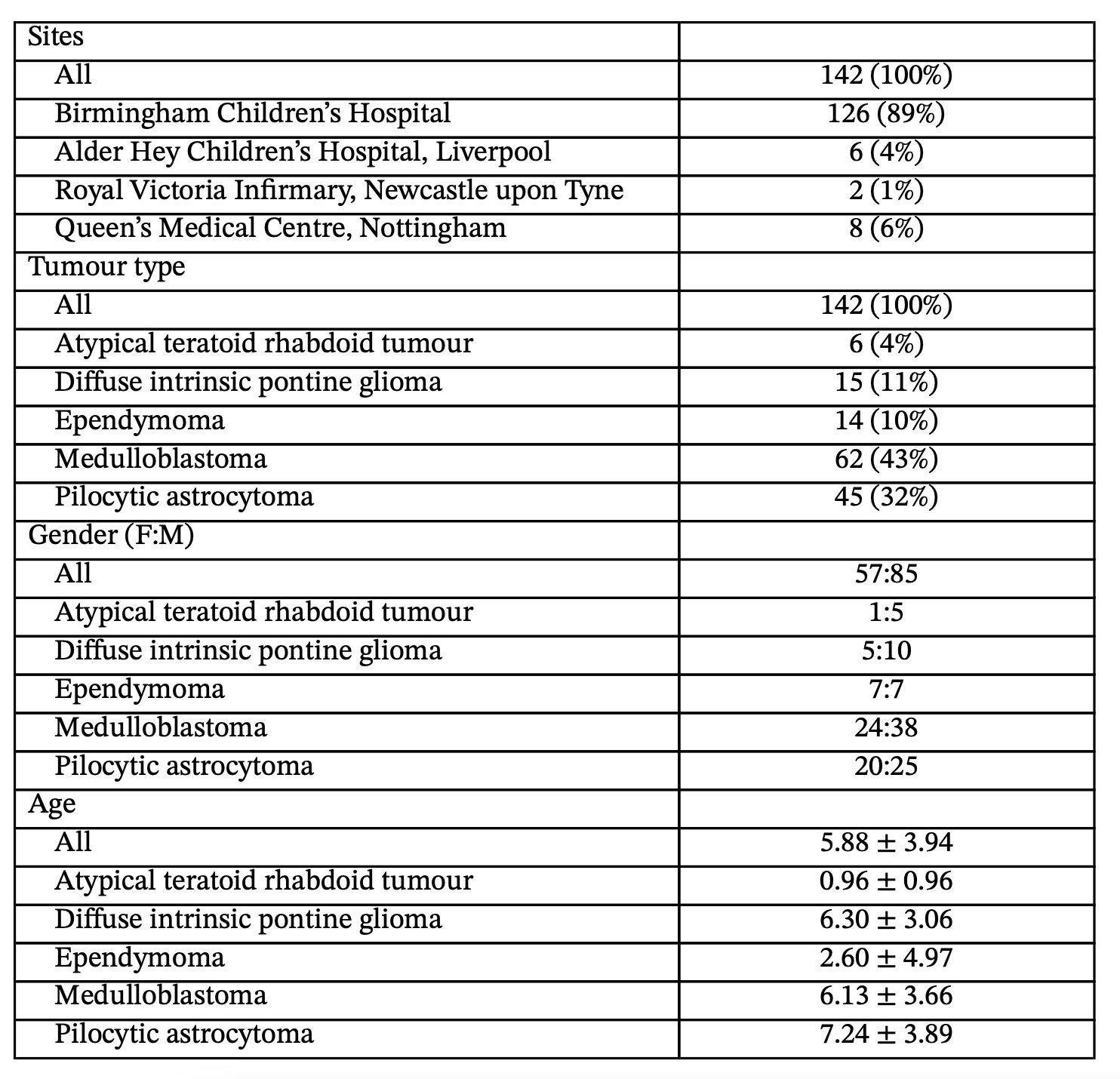
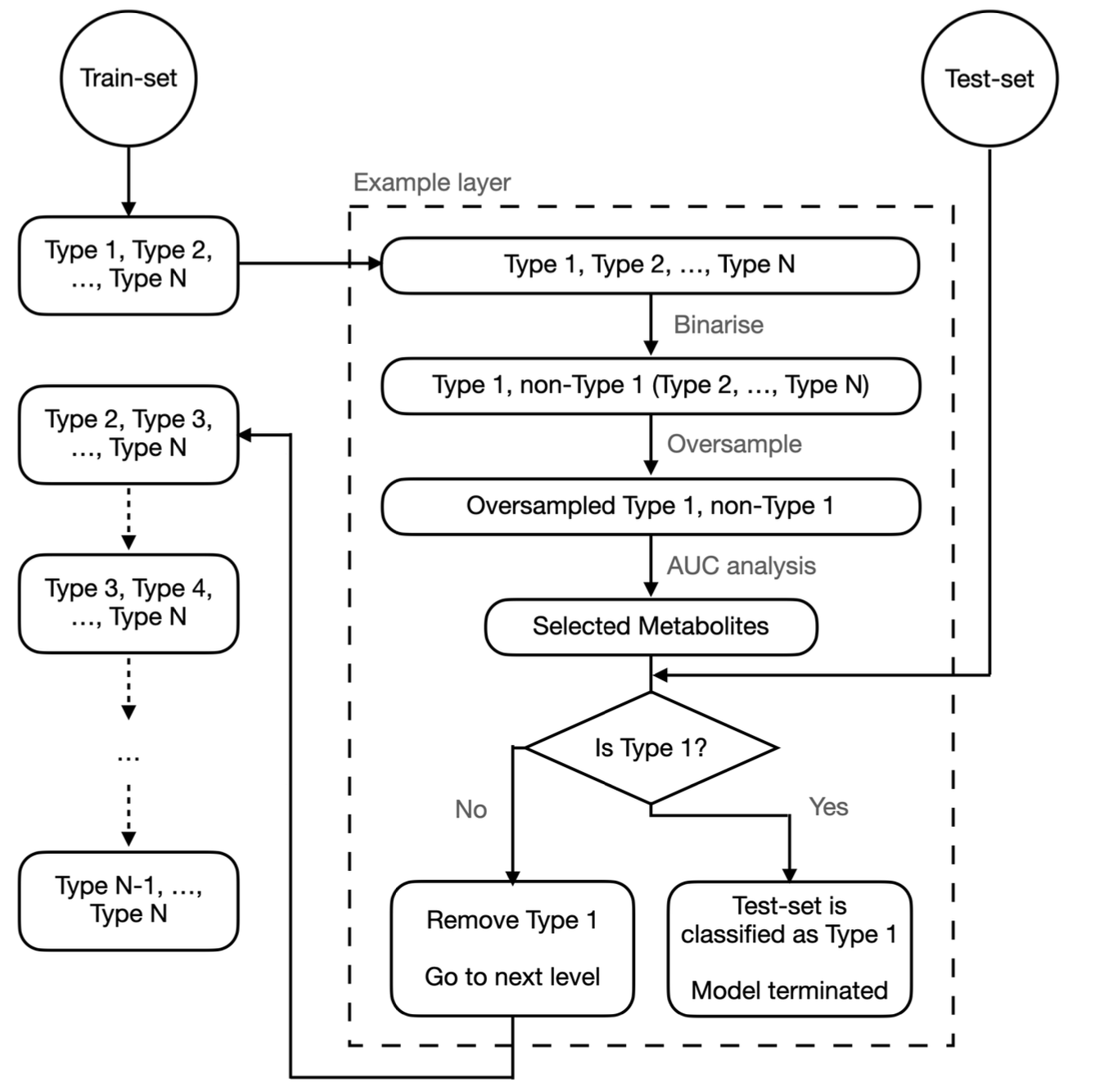
Pre-clinical in vivo 1H-MRS (B0 1.5T, TE 30—35ms, TR 1500—2000ms) was acquired from patients who presented with a brain tumour at four hospitals (Figure 1). The collected 1H-MRS was screened according to spectral quality (SNR > 4, FWHM < 0.15ppm) by experienced spectroscopists (D.Z.). Brain tumour types with a sample sizeof less than five were excluded.The abstract introduces a multi-layer Binary classification model with Adaptive Metabolite Selection (BAMS) (Figure 2) for multi-type brain tumour classification through metabolite profiles. BAMS simplifies a multi-type classification into binary problems in multiple layers. In each layer, all the cases that are not the focused tumour type are converted into one class. Consequently, BAMS focuses on one tumour type that is the most significantly different from all the other cases, according to optimised metabolite selection [4]. If the assessed tumour type occupies less than 33% of all cases, oversampling is performed through the synthetic minority oversampling technique [5] for rebalancing the classification to approximately 1:1. The model exits if the new case is determined to be the assessed tumour type, and it will continue if the tumour type cannot be determined in this layer until it becomes a binary problem in the last layer.
The collected brain tumour cases were classified using BAMS and the classic model for benchmarking purposes, where the classic model classifies all cases simultaneously. Classification experiments were performed by using conventional classifiers. The diagnostic performance was assessed with overall and balanced classification accuracies. Data analysis was conducted with R (version 4.3.1).
Results
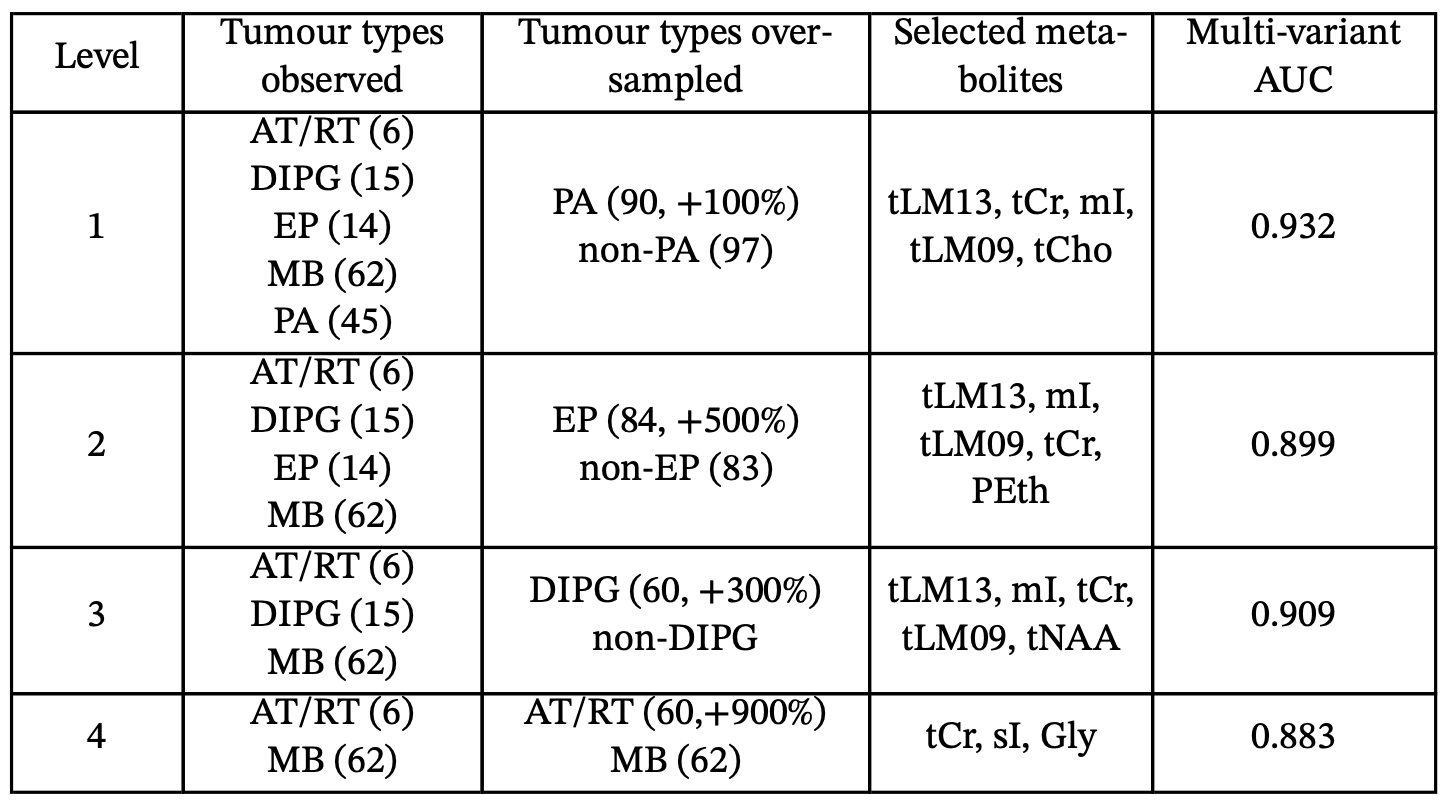
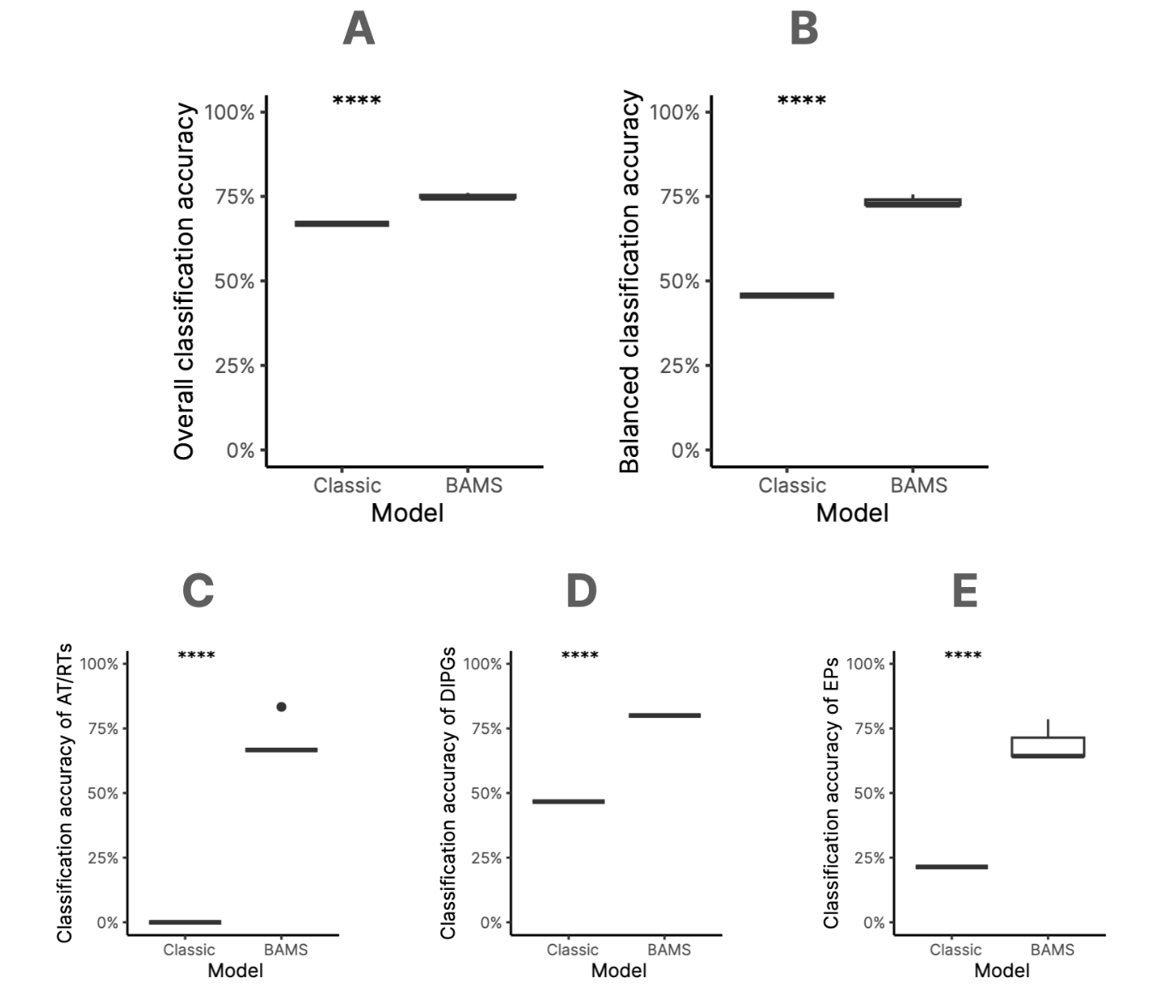
The quality-assured brain tumour cases (Figure 2), consisting of five tumour types, namely AT/RTs (N=6), diffuse intrinsic pontine gliomas (DIPGs) (N=15), ependymomas (N=14), medulloblastomas (N=62), and pilocytic astrocytoma (N=45), were classified. BAMS classified pilocytic astrocytomas, ependymomas, DIPGs, and AT/RTs in order with optimised metabolite selection (Figure 3). Classification accuracy was significantly improved through BAMS for all the classifiers in comparison to the classic model. Taking linear discriminant analysis as an example, the classification accuracy was improved to 76% from 67% overall and 74% from 46% balanced, and the tumour-specific diagnostic accuracy was improved to 71% from 21% for ependymomas, 67% from 0 for AT/RTs, and 80% from 47% for DIPGs (Figure 4).Discussion
Clinical scenarios encompass more than three tumour types, especially some rare types. Classic models select metabolites by considering their diagnostic abilities across all tumour types, so the metabolite combinations are dominated by the majority types. As a result, rare tumour types often suffer from low classification accuracy, but they also need to be clearly identified since different tumour types require different treatment planning. A classification method that can only work on main tumour types and cannot determine rare types is unlikely to be useful for clinicians. The problem could be solved by collecting sufficient rare tumour cases, but the low incidence rate of those rare tumours in the population means they may always be less than other main tumour types in naturally collected cohorts.This abstract makes an initial attempt by involving AT/RTs and DIPGs and introducing BAMS that can significantly improve diagnostic performance. In contrast to classic models, BAMS considers the fact that metabolites, which are obtained from in vivo 1H-MRS, have diverse diagnostic abilities across different tumour types and therefore should be carefully selected. Classic models classify all tumour types at the same time, whilst BAMS focuses on one tumour type that is the most different from the others to focus on in each layer. By simplifying the classification problem into binary at each level, using the corresponding significant metabolites, and oversampling the minority class dynamically, BAMS significantly improved the classification performance for rare tumour types.The future work includes expanding the cohort by involving more rare tumour types and translational validation through being implemented into a clinical decision support system.
Acknowledgements
NIHR Research Professorship, Grant/Award Numbers: NIHR-RP-R2-12-019; Help Harry Help Others; UK National Institute of Health Research’s Nottingham Biomedical Research Centre; Cancer Research UK and EPSRC Cancer Imaging Programme at the Children’s Cancer and Leukaemia Group (CCLG) in association with the MRC and Department of Health (England), Grant/Award Numbers: C7809/A10342; Cancer Research UK and NIHR Experimental Cancer Medicine Centre Paediatric Network, Grant/Award Numbers: C8232/A25261; Children’s Research Fund; Birmingham Women’s and Children’s Hospital Charities; The Children’s Cancer and Leukaemia Group Little Princess Trust, Grant/Award Numbers: 2017/15 and 2019/01; Children with Cancer, Grant/Award Numbers: 15/118; Action Medical Research and the Brain Tumour Charity, Grant/Award Numbers: GN2181; Health Data Research UK (HDR UK).References
[1] Yearley AG, Blitz SE, Patel RV et al. Machine learning in the classification of pediatric posterior fossa tumors: A systematic review. Cancers. 2022;14:5608.
[2] Panagiotou OA, Högg LH, Hricak H et al. Clinical application of computational methods in precision oncology: A review. JAMA Oncology. 2020;6:1282-1286.
[3] Wilson M, Reynolds G, Kauppinen RA, Arvanitis TN, Peet AC. A constrained least-squares approach to the automated quantitation of in vivo 1H magnetic resonance spectroscopy data. Magnetic Resonance in Medicine. 2011;65:1-12.
[4] Zhao D, Grist JT, Rose HEL et al. Metabolite selection for machine learning in childhood brain tumour classification. NMR in Biomedicine. 2022;35:e4673.
[5] Chawla NV, Bowyer KW, Hall LO, Kegelmeyer WP. SMOTE: Synthetic minority over-sampling technique. Journal of Artificial Intelligence Research. 2002;16:321-357.
Figures