3655
Radiomics Analysis Based on Preoperative Multiparametric MRI for Prediction of TACE Refractoriness in Hepatocellular Carcinoma1Department of Radiology, First Clinical Medical College, Shanxi Medical University, Taiyuan, China, 2College of Medical Imaging, Shanxi Medical University, Taiyuan, China
Synopsis
Keywords: Liver, Liver, TACE refractoriness,HCC,MRI,Radiomics
Motivation: Parts of HCC respond poorly to TACE, and its efficacy declines as the number of procedures increases in the clinical practice, which is called TACE refractoriness.
Goal(s): To develop and validate a preoperative multiparametric MRI-based radiomics model to predict TACE refractoriness in HCC.
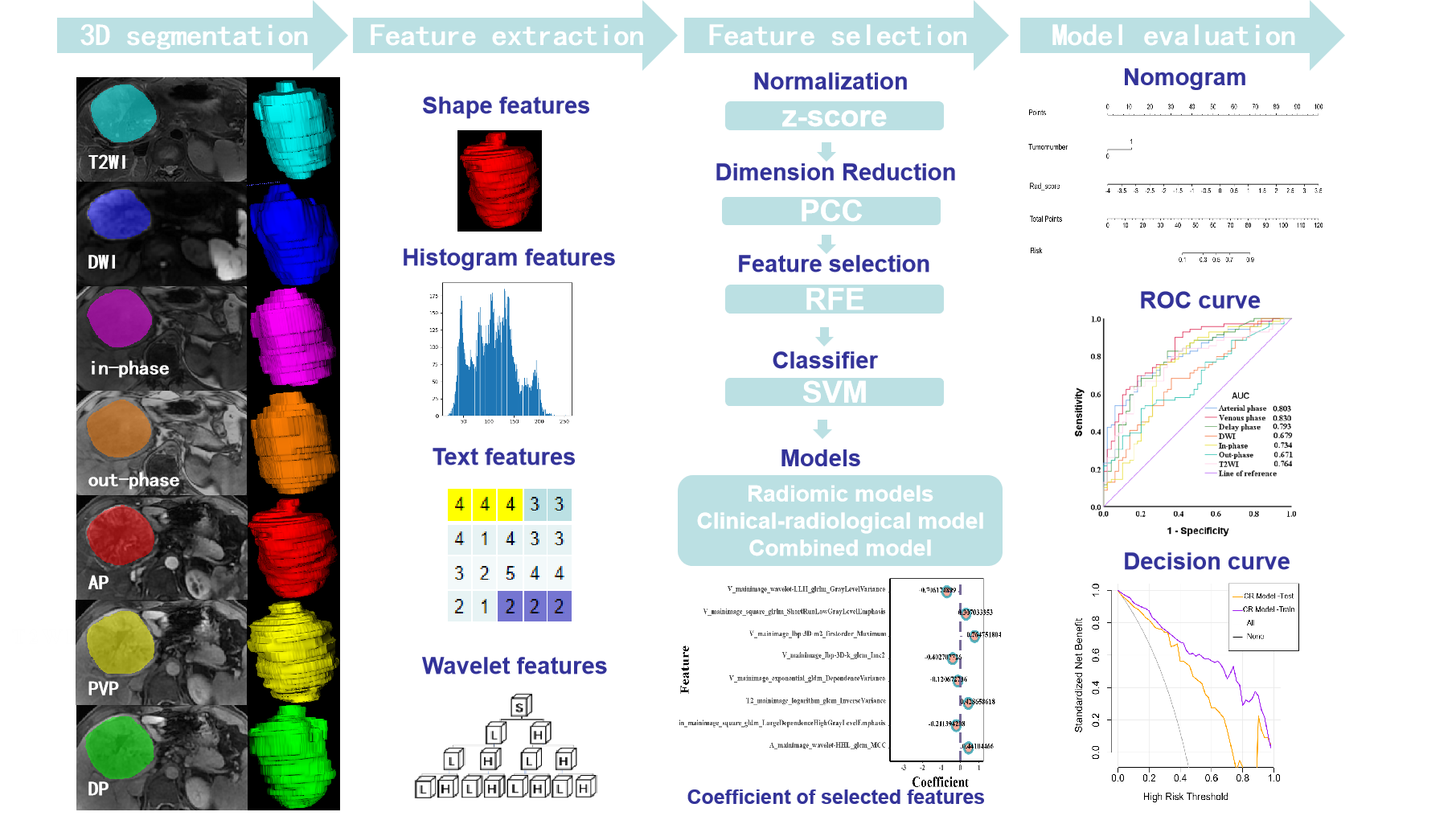
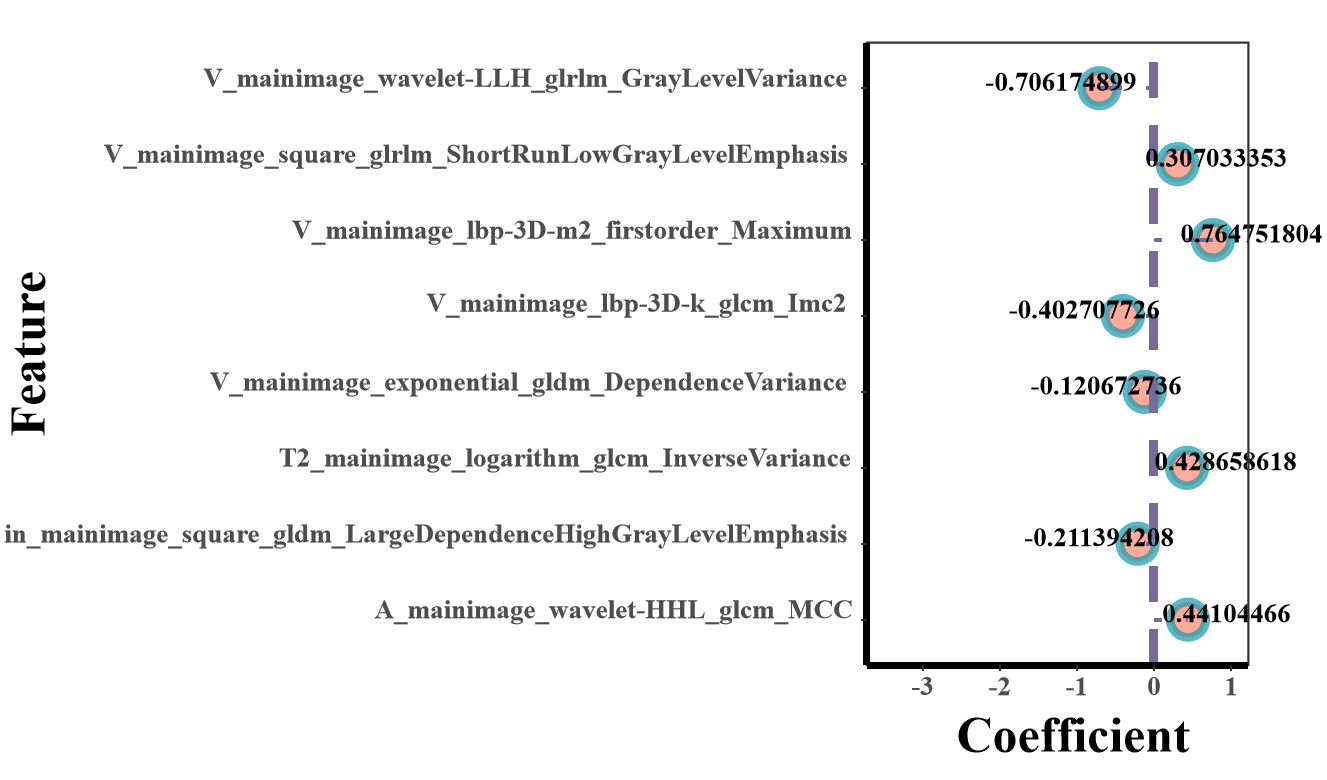
Approach: Radiomics feature selection was performed using PCC and RFE, and SVM was used to construct radiomic models based on each sequence and their combination, clinical-radiological model based on selected clinical-radiological predictor and combined model.
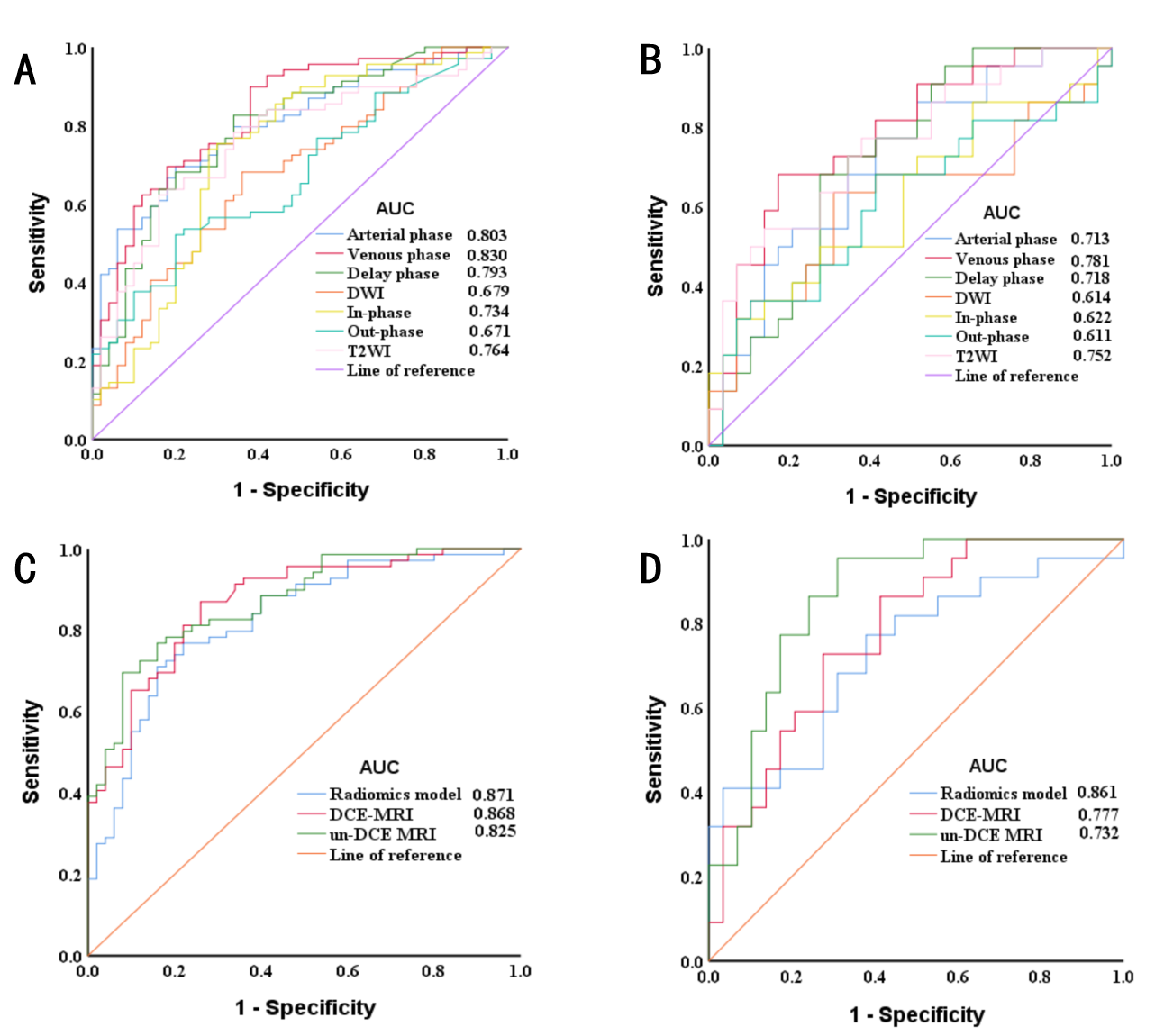
Results: The combined model exhibited excellent predictive performance. The multi-phase radiomics signature performed better in predicting TACE refractoriness compared to the best single-phase radiomics signature.
Impact: The preoperative multiparametric MRI radiomics analysis can predict TACE refractoriness in hepatocellular carcinoma, which may provide better guidance for decision-making regarding further TACE treatment and optimize the mode of treatment and patient management, ultimately resulting in patient survival benefits.
Abstract
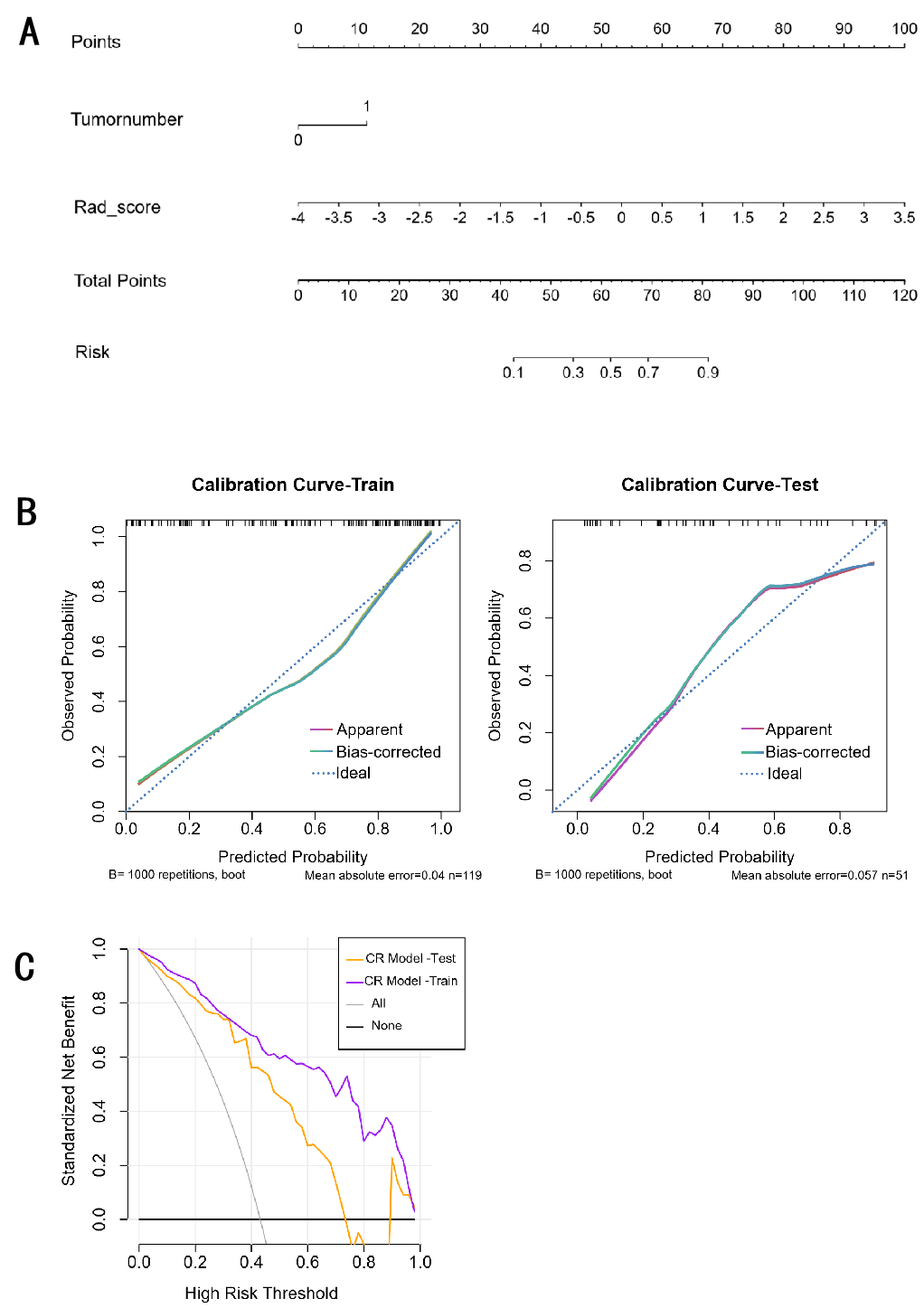
Background: The present guidelines recommend transarterial chemoembolization (TACE) as the first-line treatment for intermediate-stage hepatocellular carcinoma (HCC). However, a part of patients respond poorly to TACE, and its efficacy declines as the number of procedures increases in the clinical practice, which is called TACE refractoriness. It is necessary to accurately predict TACE refractoriness before TACE treatment. Accurate prediction of TACE refractoriness before TACE treatment enables patients to be transferred to systemic treatment as early as possible, which can maximize the therapeutic effect and prolong the survival of patients. Therefore, an effective and reliable method for early prediction of TACE refractoriness is urgently needed.Objectives: To develop and validate a preoperative multiparametric MRI-based radiomics model to predict TACE refractoriness in hepatocellular carcinoma.Material and methods: This retrospective study included 170 consecutive patients with clinically/pathologically confirmed HCC who received repeated TACE. Patients were randomly assigned to the training set(n=119) and the test set(n=51) in a ratio of 7:3. Radiomics features were extracted from the following 7 sequences: in-phase, out-of-phase, T2WI, DWI(b=800), T1WI arterial phase, T1WI portal phase and T1WI delay phase. Radiomics feature selection was performed using Pearson correlation coefficient (PCC) and recursive feature elimination(RFE), and a support vector machine (SVM) was used to construct radiomic models based on each sequence and their combination. A clinical-radiological model was established based on independent risk factors screened by univariate and multivariate logistic regression analysis. A combined model was constructed by incorporating the radiomics score and selected clinical-radiological predictor. The receiver operating characteristic(ROC) curves, calibration curve, and decision curve were adopted to evaluate the prediction models, and the nomogram based on the combined model was created.Results: The combined model that integrated four-phase radiomics score and one clinical-radiological predictor (tumor number) exhibited excellent predictive performance, with an AUC of 0.8846 in the training set and 0.9091 in the test set. The multi-phase radiomics signature (AUC of 0.8713 in the training set and 0.8605 in the test set) performed better in predicting TACE refractoriness compared to the best single-phase radiomics signature (AUC of 0.8304 in the training set and 0.7806 in the test set). The predictive performance of the clinical model was poor, with an AUC of 0.6732 on the training set and 0.6013 on the test set. The nomogram based on the combined model can intuitively and accurately predict TACE refractoriness in hepatocellular carcinoma.Conclusion: The preoperative multiparametric MRI radiomics analysis can well predict TACE refractoriness in hepatocellular carcinoma, which may optimize the mode of treatment and patient management, ultimately resulting in patient survival benefits.Acknowledgements
I would like to express my gratitude to all those who helped me during the writing of this thesis.References
[1] Ogasawara S, Ooka Y, Koroki K, et al. Switching to systemic therapy after locoregional treatment failure: definition and best timing[J]. Clinical and Molecular Hepatology, 2020, 26(2): 155–162.[2] Niu X-K, He X-F.
[2] Development of a computed tomography-based radiomics nomogram for prediction of transarterial chemoembolization refractoriness in hepatocellular carcinoma[J]. World Journal of Gastroenterology, 2021, 27(2): 189–207.
[3] Viveiros P, Riaz A, Lewandowski RJ, et al. Current state of liver-directed therapies and combinatory approaches with systemic therapy in hepatocellular carcinoma (HCC). Cancers (Basel) ,2019; 11:E1085
[4] European Association for the Study of the Liver. Electronic address, e.e.e. and L. European Association for the Study of the, EASL Clinical Practice Guidelines: Management of hepatocellular carcinoma. J Hepatol, 2018; 69(1): 182-236.
[5] Carbonell G, Kennedy P, Bane O, et al. Precision of MRI radiomics features in the liver and hepatocellular carcinoma. Eur Radiol. 2022 Mar;32(3):2030-2040.
Figures