3596
Habitats based multiparametric magnetic resonance imaging radiomics model for prediction of endometrial cancer molecular subtypes.1Radiology, Obstetrics and Gynecology Hospital of Fudan University, Shanghai, China, 2Radiology, Fudan University Shanghai Cancer Center, Shanghai, China, 3Interventional Therapy, Fudan University Shanghai Cancer Center, Shanghai, China
Synopsis
Keywords: Diagnosis/Prediction, Tumor, Endometrial cancer; habitats; radiomics; prediction model; molecular subtype
Motivation: Endometrial cancer (EC) is a highly heterogeneous cancer comprising of both histological and molecular subtypes. The p53abn subtype is associated with a poor prognosis particularly.
Goal(s): We aimed to develop habitats based multiparametric MRI radiomics model for the prediction of EC molecular subtype and evaluated the performance.
Approach: Our study is a dual-center retrospective research.
Results: Our habitats model demonstrated good performance in both internal and external validations. It exhibited higher efficacy compared to radiomics and clinical models.
Impact: Using a non-invasive modality method to trigger these subtypes of EC as early as possible will aid clinicians to establish individual treatment. This research also marks the first use of habitat analysis in the study of EC.
Objectives
We aimed to develop habitats based multiparametric MRI radiomics model for prediction of endometrial cancer (EC)molecular subtypes and evaluated the performance.Methods
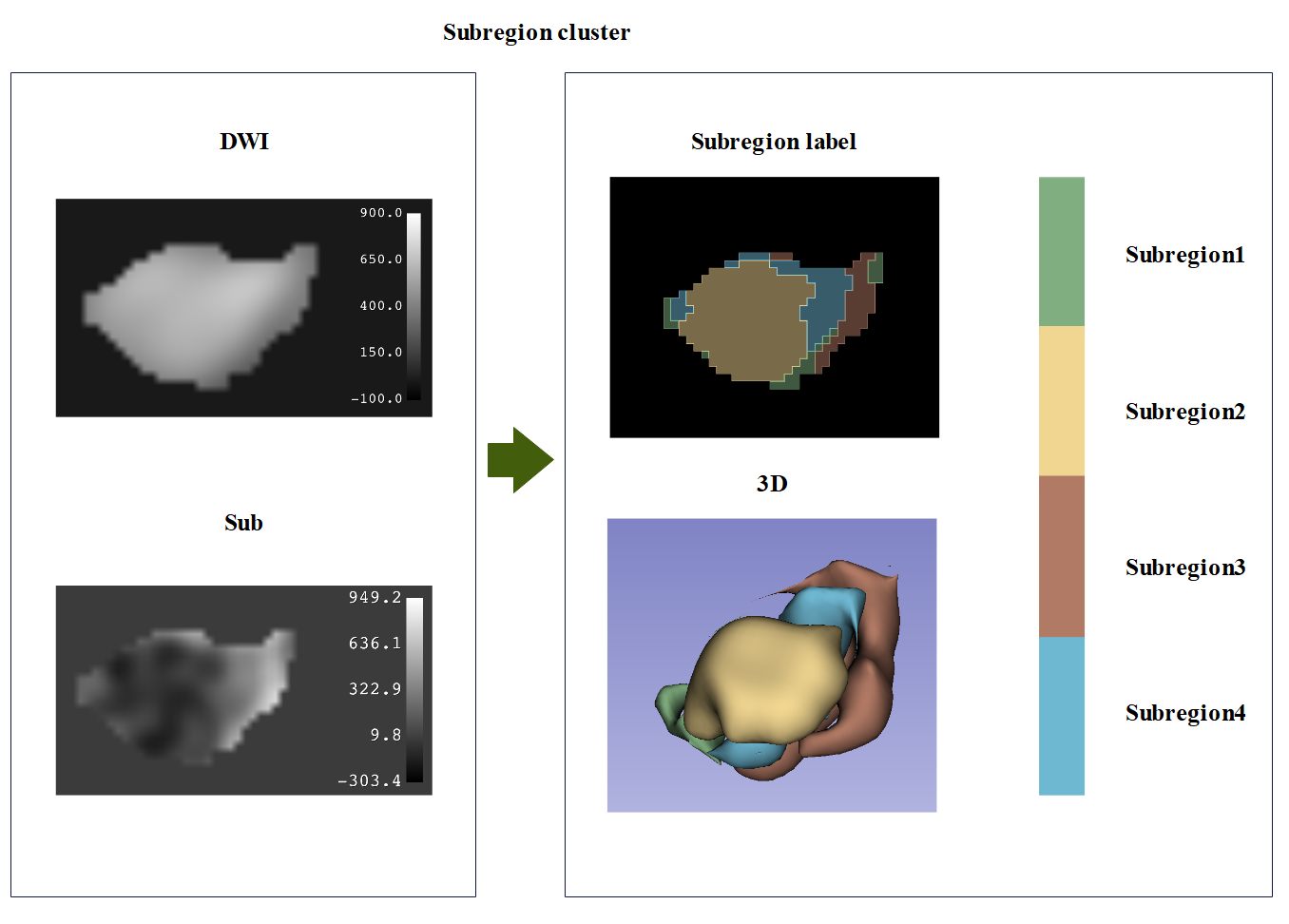
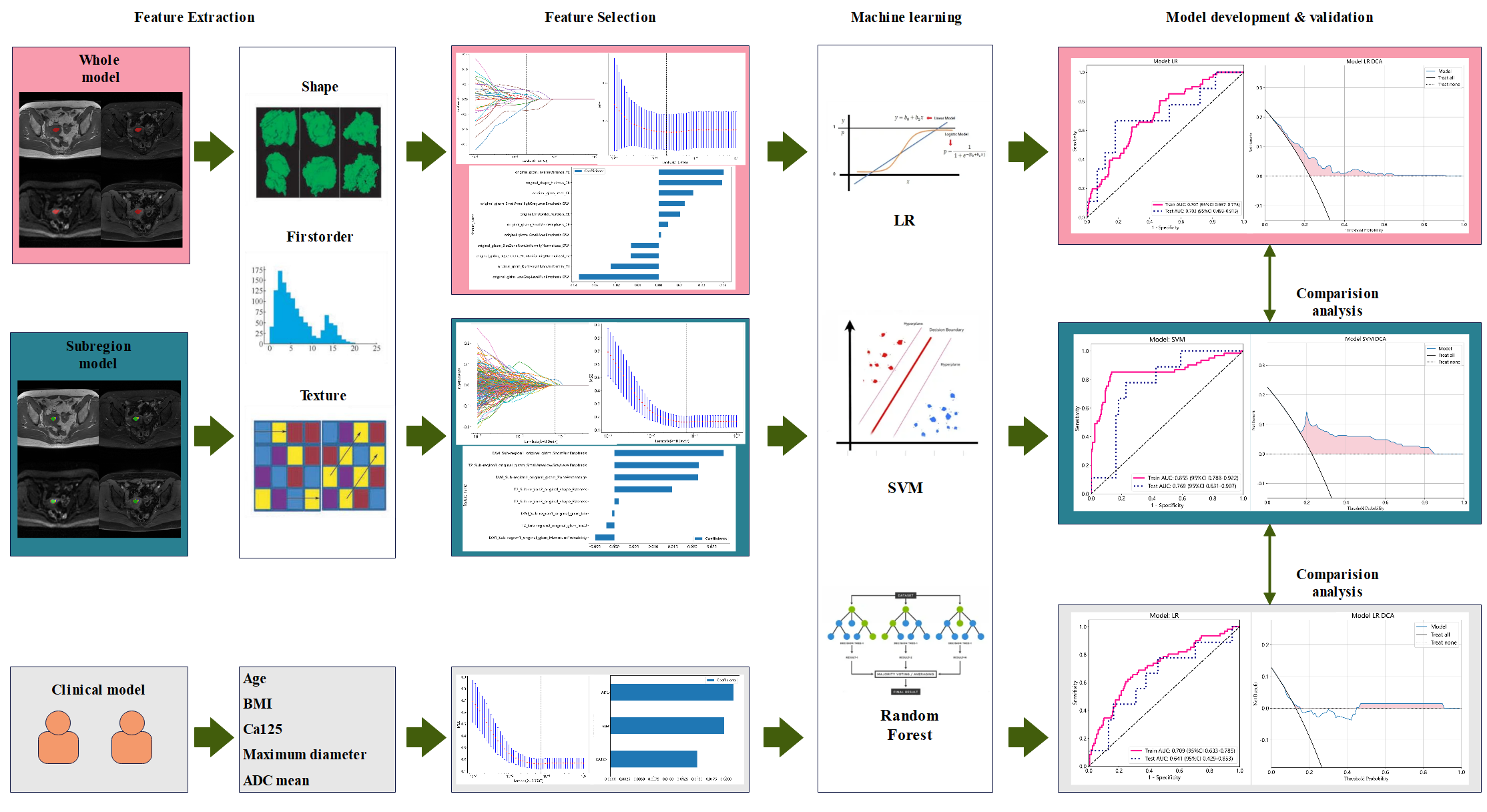
Patients with pathologically proven EC from two hospitals were included for training (n=270) and test (n=70). Patients were classified into the p53abn subtype group and the other subtype group. The k-means was used to cluster habitats sub-regions according to DWI and subtraction contrast-enhanced (CE) images, with the optimal cluster number selected based on the Calinski-Harabasz (CH) value. Radiomic features were extracted from each sub-region from the T1-weighted, T2-weighted, DWI, and CE images. Following feature selection with Lasso regression, the finalized features were entered into Logistical regression (LR), Support Vector Machine (SVM), and Random Forest (RF) machine learning models for training and model construction. The models were both internally and externally validated using the training and test cohorts, respectively, with the model demonstrating the best comprehensive predictive performance chosen as the habitat prediction model for predicting the p53abn subtype. The same procedure was applied to establish a whole region radiomics model and a clinical model, with the performance differences between these models and the habitat prediction model statistically assessed using the DeLong test.Results
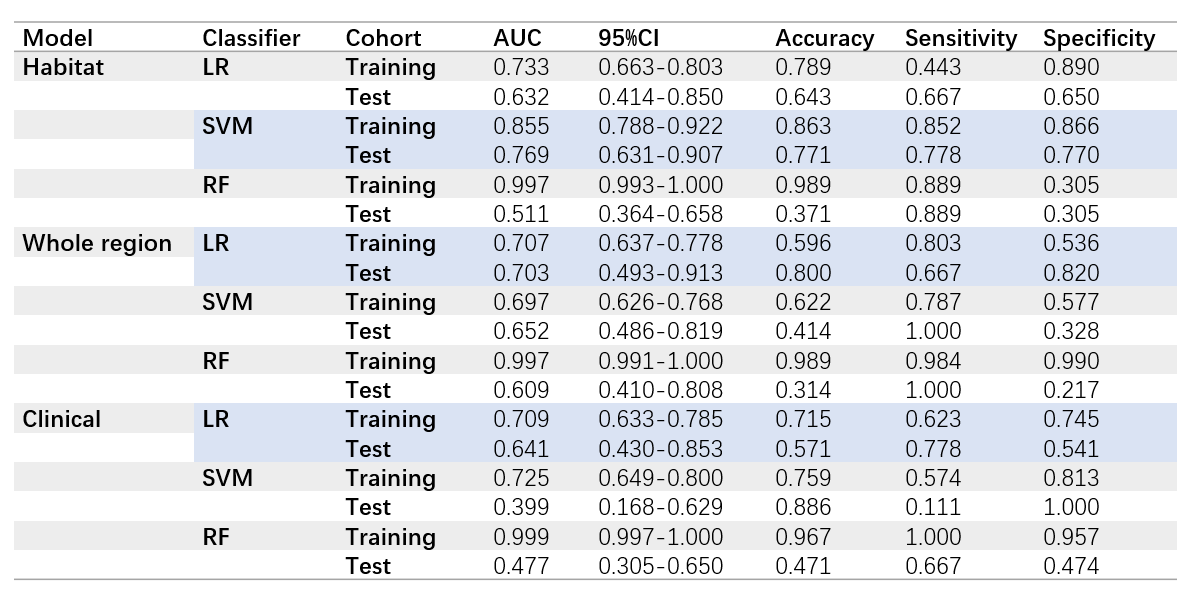
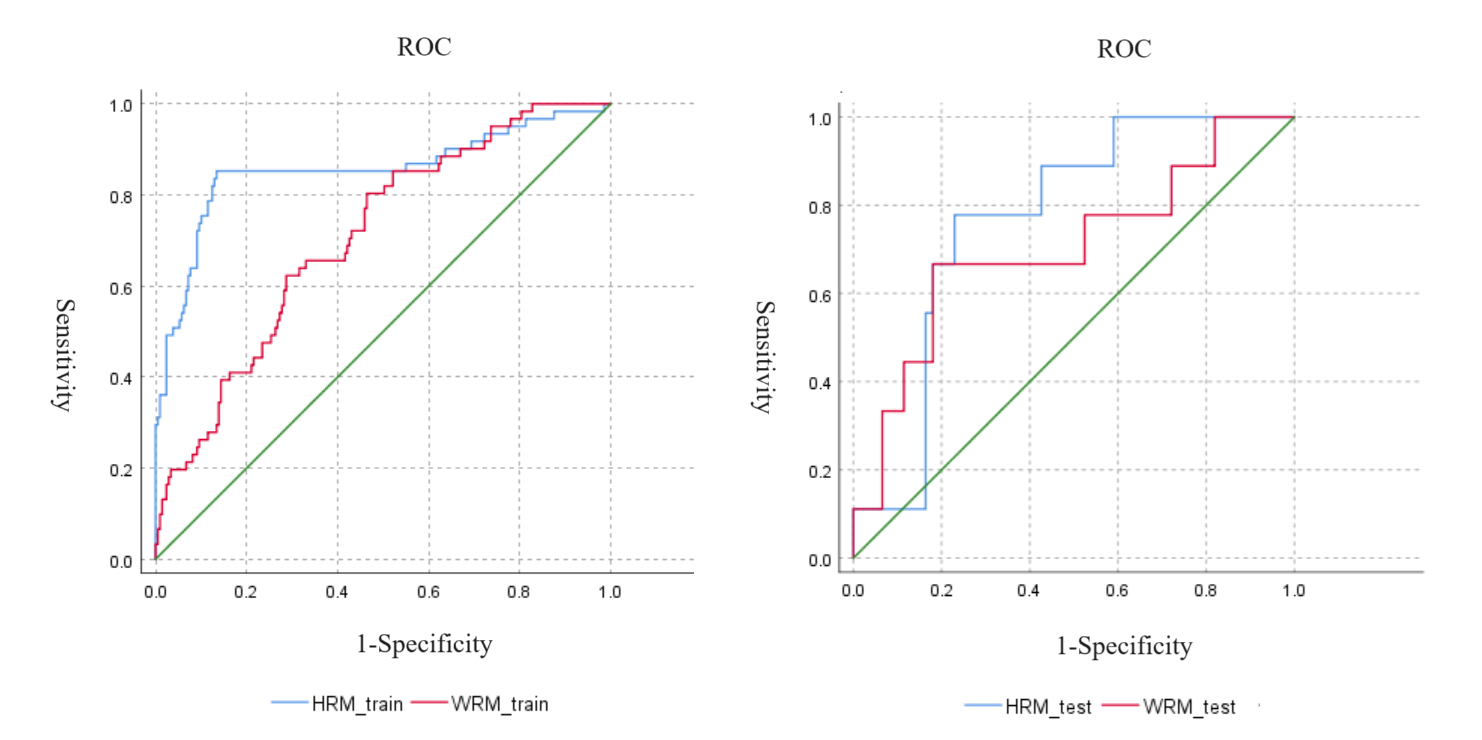
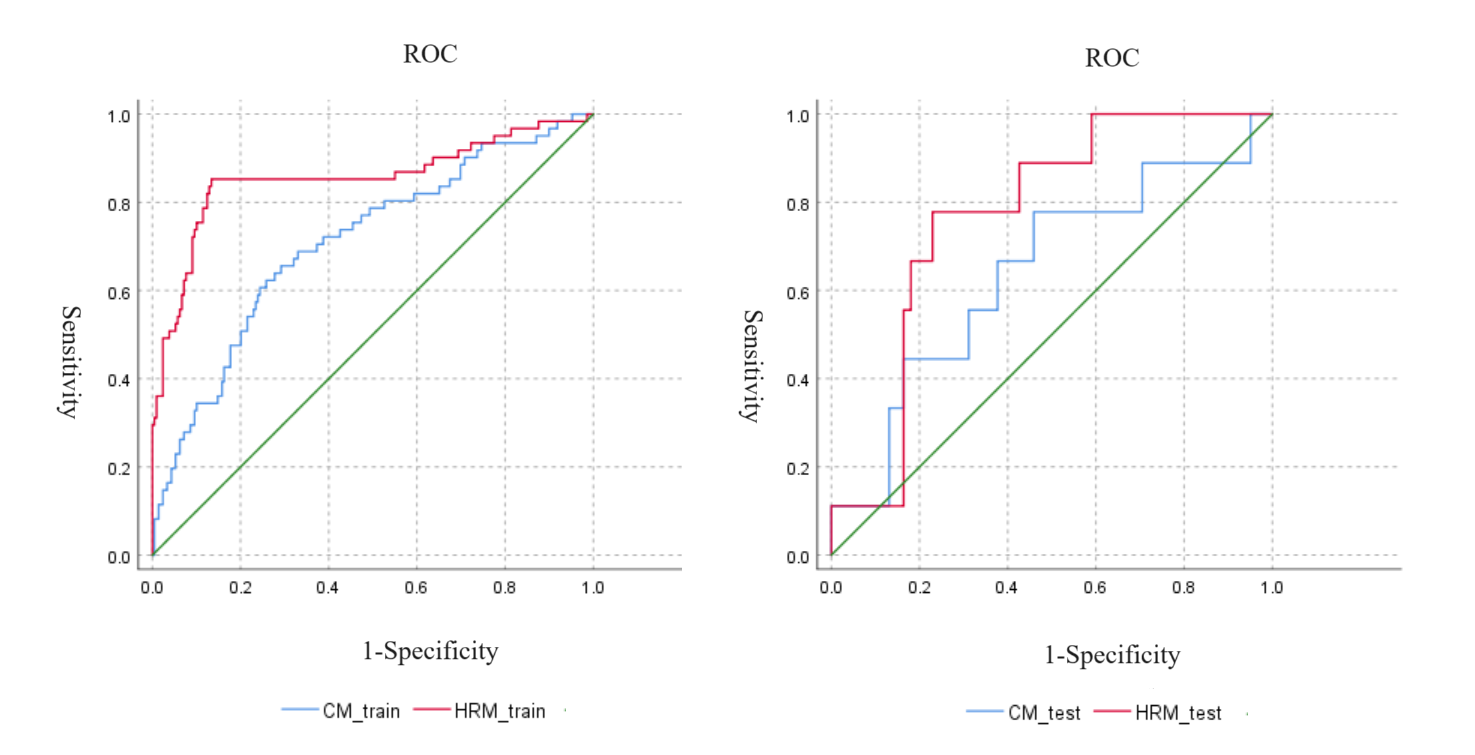
The number of habitat clusters was determined to be four based on the CH value. Imaging features were extracted from four subregions across four sequences, totaling 18,080 features. Through Lasso regression, eight final habitat features were selected for model building. These eight habitat features were input into LR, SVM, and RF models for training, with the SVM model exhibiting the best performance for predicting the p53abn subtype. The area under the curve (AUC) of internal validation was 0.855(0.788-0.922), and the AUC of external validation was 0.769 (0.631-0.906). The same method was used to establish and validate the performance of the whole region radiomics model and the clinical model. For the whole region radiomics models, the LR model showed the best predictive performance. The AUC of internal validation was 0.707(0.637-0.778), and the AUC of external validation was 0.703(0.493-0.913). For the clinical models, the LR model had the best predictive performance. The AUC of internal validation was 0.709(0.633-0.785), and the AUC of external validation was 0.641(0.430-0.853). Comparative analysis of the predictive performance between the habitat model and the whole region radiomics model revealed a statistically significant difference in diagnostic efficacy in the training cohort(p=0.001, DeLong), but not in the test cohort (p=0.543, DeLong). Comparative analysis of the predictive performance between the habitat model and the clinical model demonstrated a statistically significant difference in diagnostic efficacy in the training cohort (p=0.007, DeLong), but this difference was not statistically significant in the test cohort (p=0.233, DeLong).Conclusions
The habitats based multiparametric MRI radiomics model could accurately predict p53abn subtype of EC. The habitats model held certain advantages in predictive efficacy compared to the whole subregion radiomics and the clinical models.Acknowledgements
Gratitude was extended to Dr. He Zhang, Dr. Guofu Zhang, and Dr. Wentao Li for their invaluable support and contributions to this research.
References
- Cho HH, Kim H, Nam SY, et al. Measurement of Perfusion Heterogeneity within Tumor Habitats on Magnetic Resonance Imaging and Its Association with Prognosis in Breast Cancer Patients. Cancers (Basel). 2022. 14(8): 1858.
- Luo Y, Sun X, Kong X, et al. A DWI-based radiomics-clinical machine learning model to preoperatively predict the futile recanalization after endovascular treatment of acute basilar artery occlusion patients. Eur J Radiol. 2023. 161: 110731.
- Xie C, Yang P, Zhang X, et al. Sub-region based radiomics analysis for survival prediction in oesophageal tumours treated by definitive concurrent chemoradiotherapy. EBioMedicine. 2019. 44: 289-297.
- Satta S, Dolciami M, Celli V, et al. Quantitative diffusion and perfusion MRI in the evaluation of endometrial cancer: validation with histopathological parameters. Br J Radiol 2021;94:20210054.
- Schultheis AM, Martelotto LG, De Filippo MR, et al. TP53 Mutational Spectrum in Endometrioid and Serous Endometrial Cancers. Int J Gynecol Pathol 2016;35:289-300.
- Kurman RJ, Visvanathan K, Shih Ie M. Bokhman's dualistic model of endometrial carcinoma. Revisited. Gynecol Oncol 2013;129:271-272.
- Satta S, Dolciami M, Celli V, et al. Quantitative diffusion and perfusion MRI in the evaluation of endometrial cancer: validation with histopathological parameters. Br J Radiol 2021;94:20210054.
- Ma
X, Ren X, Shen M, et al. Volumetric ADC histogram analysis
for preoperative evaluation of LVSI status in stage I endometrioid
adenocarcinoma. Eur Radiol 2022;32:460-469
Figures
The construction and validation of habitats radiomics model