3522
7.0T CMR-TT evaluate quantitatively the effect of nicotinamide mononucleotide on experimental autoimmune myocarditis via ferroptosis1Sichuan Cancer Hospital & Institute, Sichuan Cancer Center, University of Electronic Science and Technology of China, Chenggdu, China, 2West China Hospital, Sichuan University, Chenggdu, China, 3Chengdu Medical College the First Affiliated Hospital, Chenggdu, China
Synopsis
Keywords: Inflammation, Infiltration, Myocardium
Motivation: To evaluate the diagnosis and follow-up value of CMR-TT in myocarditis. To explore more treatment strategies for myocarditis and the potential mechanism.
Goal(s): Using 7.0T CMR-TT to evaluate the effect of nicotinamide mononucleotide (NMN) for experimental autoimmune myocarditis and exploring the potential mechanism.
Approach: Lewis rats were induced to be autoimmune myocarditis by porcine cardiac myosin and treated by NMN. The strains of rats were detected by 7.0T CMR-TT. Histopathology, biochemistry and ELISA were used for myocardial damage and ferroptosis.
Results: Strains reduction in EAM was alleviated by NMN. The changes of cardiac and ferroptosis biomarkers were relieved by NMN.
Impact: CMR-TT can provide the imaging evidence for the diagnosis and follow-up of myocarditis. The study will provide more options and targets for clinicians to treat myocarditis.
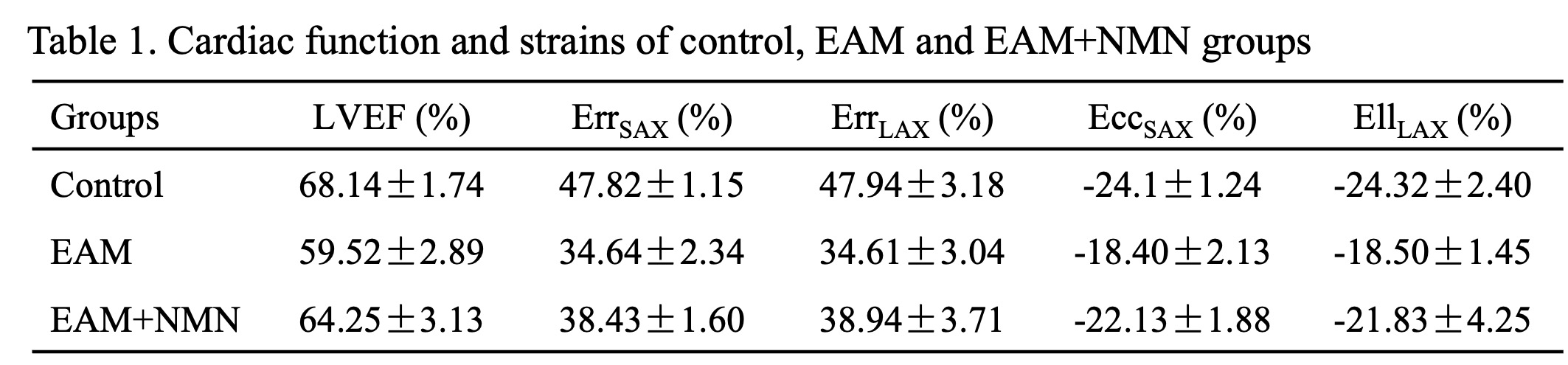
Methods: Forty-five male Lewis rats weighting 200-250g were randomized into three groups: control group (n = 15), EAM group (n = 15), and EAM+NMN (n = 15) group. EAM induction was performed as previous study at day 0 and day 71. NMN (500 mg/kg, i.p., every 3 days) was administered for 3 weeks before the first immunization and until the termination of the study. All the rats underwent 7.0T CMR at day 21 and were euthanatized for histopathology, biochemistry and enzyme-linked immunosorbent assay (ELISA). The CMR data collected included left ventricular ejection fraction (LVEF), global peak radial strain from the short axis (ErrSAX) and long axis (ErrLAX), global peak circumferential strain (EccSAX) from the short axis, and global peak longitudinal strain (EllLAX) from the long axis.
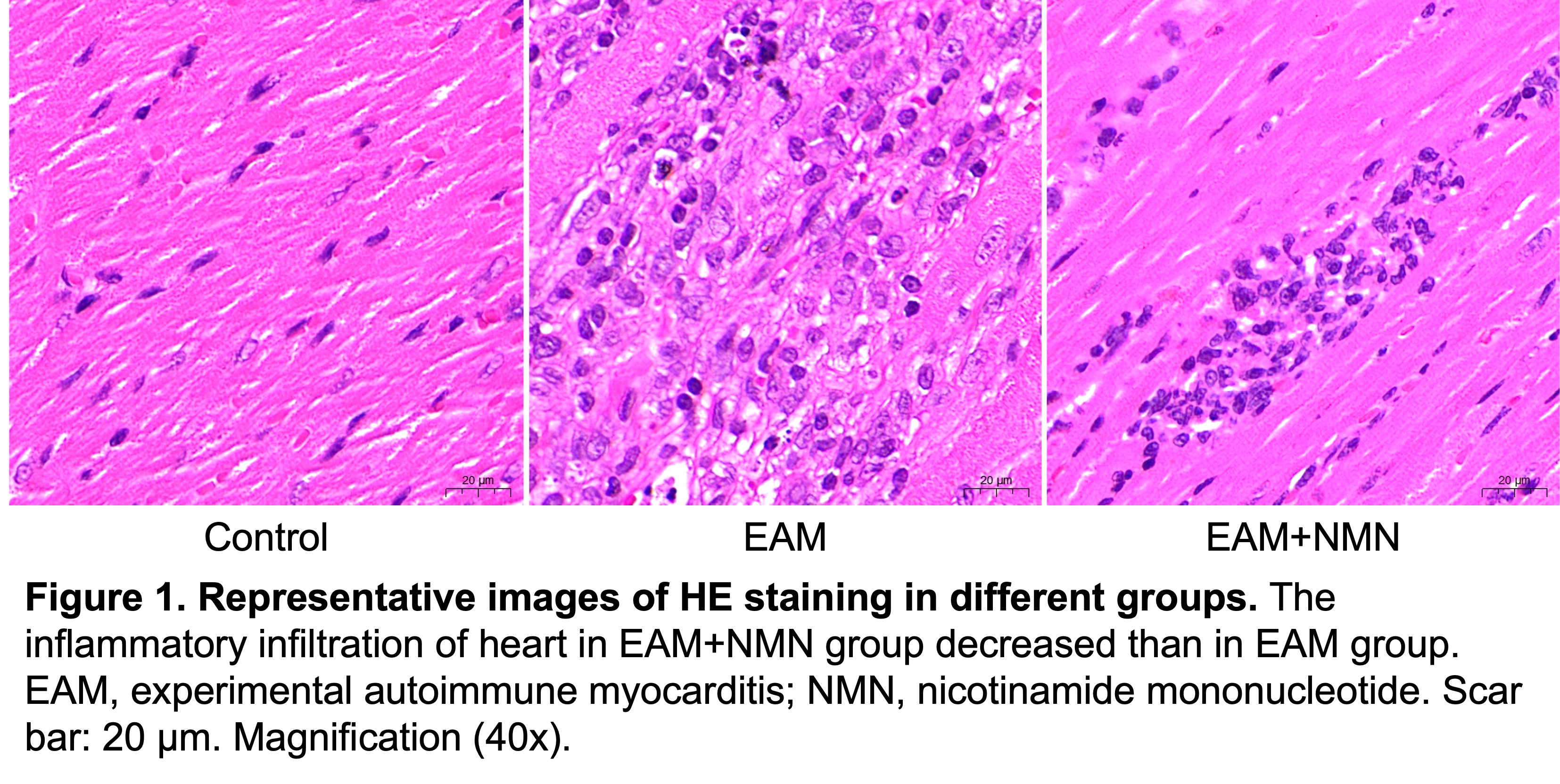
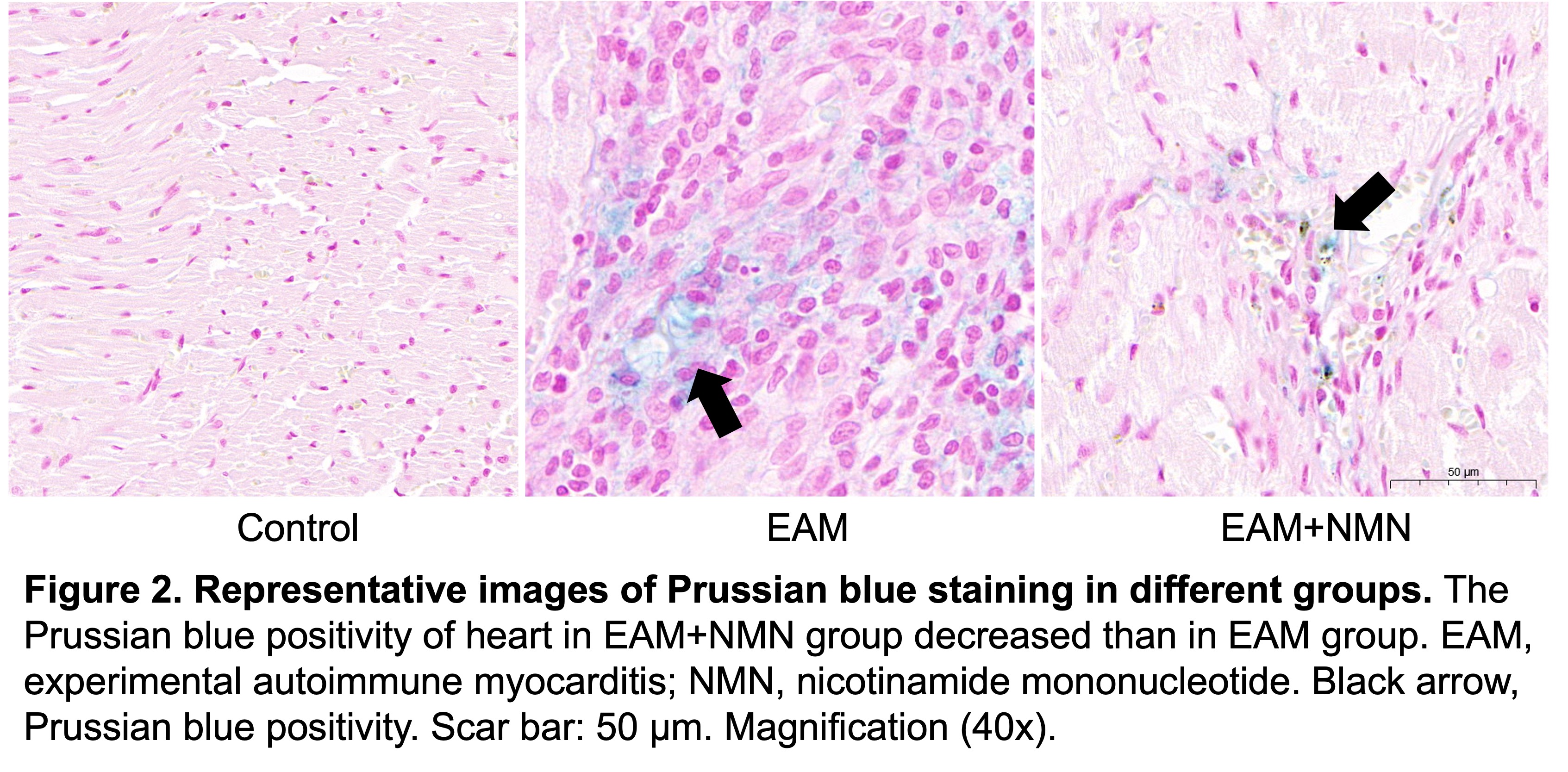
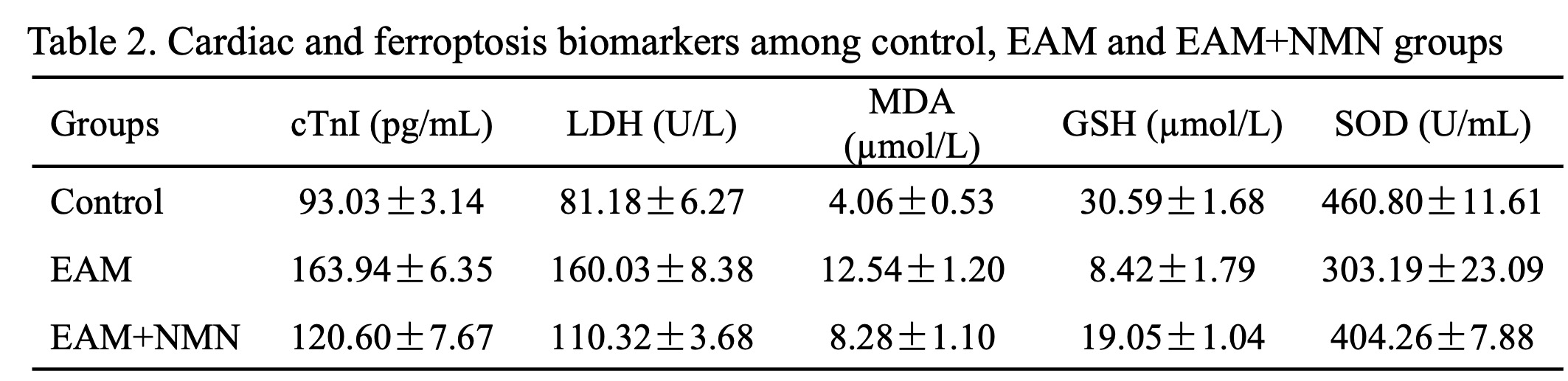
Results: The data of LVEF and strains are summarized in table 1. All strains declined in EAM group compared with control group, but the decreases of strains were relieved in the EAM+NMN group (all p < 0.05). As table 2 shown, the cardiac biomarkers in EAM+NMN group significantly decreased than in EAM group, while were higher than control group (all p < 0.05). Furthermore, the malondialdehyde (MDA), a ferroptosis biomarker, significantly increased in EAM group compared with control group, while the increase was alleviated in EAM+NMN group (both p < 0.05). In contrast to MDA, glutathione (GSH) and superoxide dismutase (SOD) significantly increased in EAM+NMN group compared with EAM group (all p < 0.05). HE staining showed cardiac inflammatory infiltration in EAM group and the inflammatory infiltration was relieved in EAM+NMN group (Figure 1). The Prussian blue staining was positive in EAM group and the positivity reduced in EAM+NMN group (Figure 2).
Discussion: Myocarditis may lead to dilated cardiomyopathy, heart failure, and even sudden cardiac death in severe cases, but the etiological treatment strategies for myocarditis are limited. NMN, the nucleotide precursor of nicotinamide adenine dinucleotide, has been reported as a cardioprotective drug in different models2-4. Previous study has demonstrated that NMN can mitigate ferroptosis5. Our study demonstrated that NMN could relieve the cardiac injury by CMR-TT. Moreover, the results of Prussian blue staining and the ferroptosis biomarkers suggested that NMN may alleviate myocardial injury of EAM via ferroptosis. But further study is needed.
Conclusion: 7.0T CMR-TT has the potential to evaluate quantitatively the effect of NMN on EAM, and the NMN may alleviate myocardial injury of EAM via ferroptosis.
Acknowledgements
No acknowledgement found.References
1. Zhu J, Chen Y, Xu Z, et al. Non-invasive assessment of early and acute myocarditis in a rat model using cardiac magnetic resonance tissue tracking analysis of myocardial strain. Quant Imaging Med Surg, 2020. 10(11):2157-2167.
2. Zhang R, Shen Y, Zhou L, et al. Short-term administration of Nicotinamide Mononucleotide preserves cardiac mitochondrial homeostasis and prevents heart failure. J Mol Cell Cardiol, 2017. 112:64-73.
3. Wan Y, He B, Zhu D, Wang L, et al. Nicotinamide mononucleotide attenuates doxorubicin-induced cardiotoxicity by reducing oxidative stress, inflammation and apoptosis in rats. Arch Biochem Biophys, 2021. 712:109050.
4. Whitson JA, Johnson R, Wang L, et al. Age-related disruption of the proteome and acetylome in mouse hearts is associated with loss of function and attenuated by elamipretide (SS-31) and nicotinamide mononucleotide (NMN) treatment. Geroscience, 2022. 44(3):1621-1639.
5. Tan Q, Zhang X, Li S, et DMT1 differentially regulates mitochondrial complex activities to reduce glutathione loss and mitigate ferroptosis. Free Radic Biol Med, 2023. 207:32-44.
Figures