Zhimeng Cui1 and Jun Zhang1
1Department of Radiology, Huashan Hospital, Fudan University, shanghai, China
Synopsis
Keywords: Atherosclerosis, Atherosclerosis
Motivation: Acute care decisions, such as the initiation of anticoagulant therapy, are affected by infarction degree.
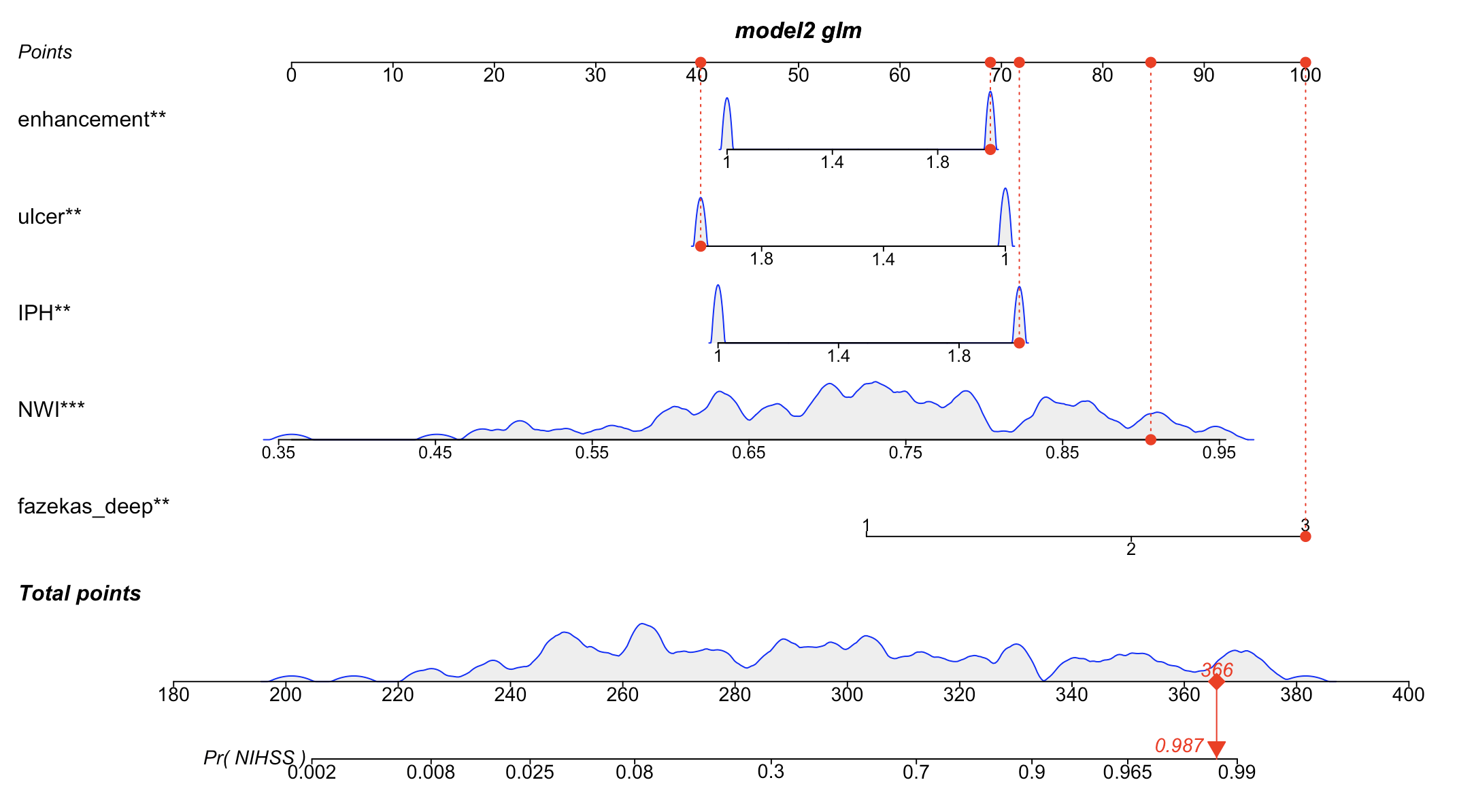
Goal(s): To assess the severity of ischemic stroke and prognosis in patients with symptomatic carotid artery stenosis, this study combined cerebral WMLs burden derived from FLAIR and carotid plaque characteristics based on HRVW-MRI to construct a noninvasive model.
Approach: Logistic regression analysis and LASSO regression analysis were utilized to develop predictive nomogram model.
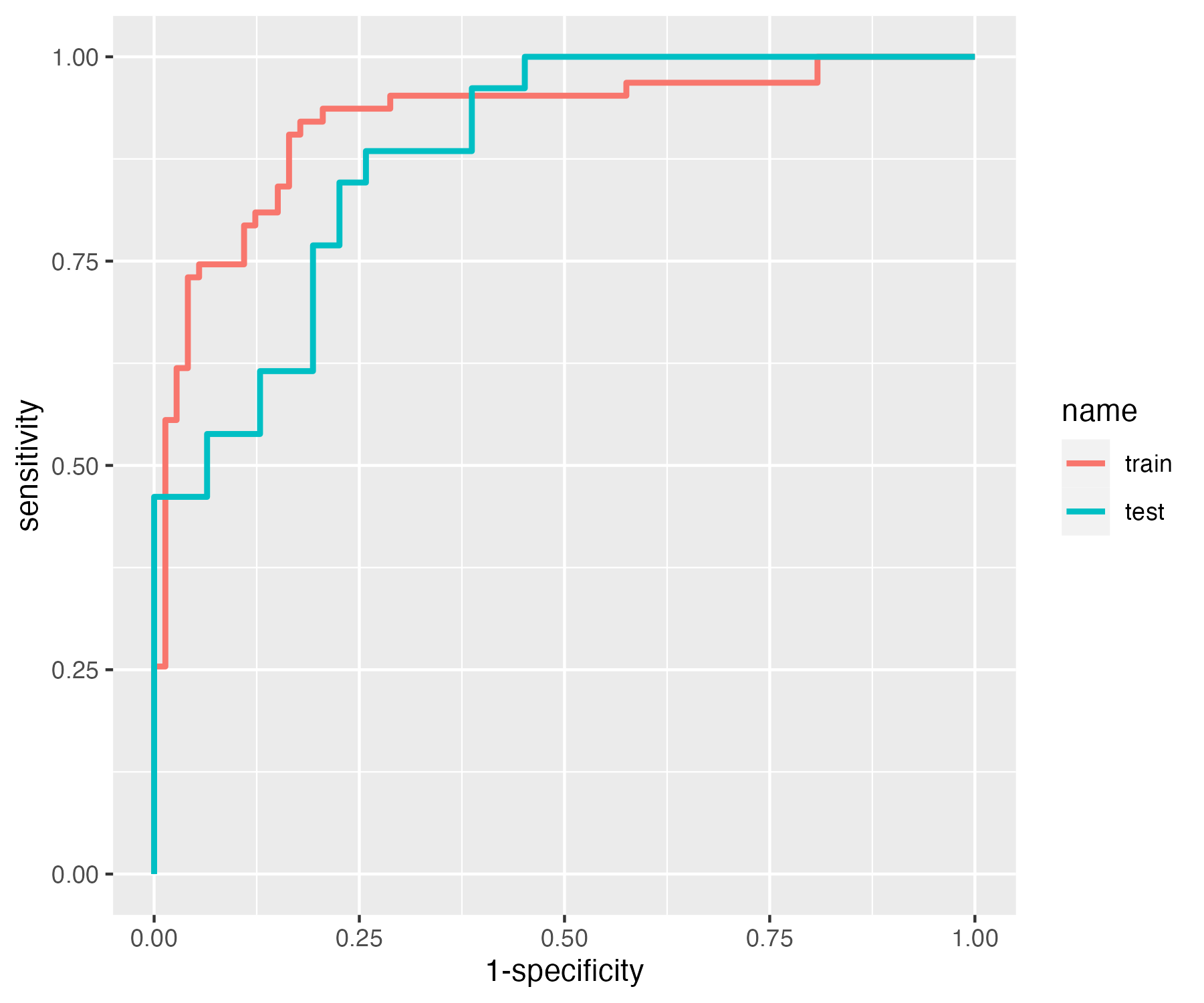
Results: The AUC of predictive model was 0.92 in the training and 0.88 in the validation cohort, and showed good clinical utility. The hybrid model-derived score was an independent predictor of mRS score.
Impact: The high discriminative ability indicates the potential of this model for classifying patients with nervous functional defect according to NIHSS score.The hybrid model-derived score is related to judge the neurological function recovery.
Background: Carotid atherosclerosis is one of the leading causes of ischemic stroke, while the relationship between plaque characteristics and the severity of ischemic stroke is poorly understood[1-3]. Meanwhile, there is growing evidence that white matter lesions (WMLs) burden diagnosed from MRI results are significantly associated with risk of ischemic stroke[4-5]. This study combined WMLs burden and carotid plaque features to construct a predictive model and investigate value of this model in evaluating the severity of ischemic stroke and prognosis in patients with symptomatic carotid artery stenosis. Methods: Symptomatic patients with carotid atherosclerotic plaques between January 2017 and October 2023 were prospectively selected for the study and underwent high resolution vessel wall magnetic resonance imaging (HRVW-MRI) and fluid-attenuated inversion recovery (FLAIR). The patients were randomly assigned into training and validation cohorts at a ratio of 5:2. In training and validation cohort, patients were respectively divided into two groups according to their National Institutes of Health Stroke Scale (NIHSS) scores (NIHSS ≤1 vs. NIHSS >1). Qualitative and Quantitative features of the plaques were assessed from high resolution vessel wall magnetic resonance imaging (HRVW-MRI) by two trained MRI readers independently. WMLs derived from FLAIR imageswere graded using the Fazekas scale score with visualization and were categorized into Absent-to-mild WMLs (Fazekas score 0-2) and moderate-severe WMLs (Fazekas score 3-6)[6]. The volumes of periventricularwhite matter lesions (PVWMLs), deep white matter lesions (DWMLs) , juxtacortical white matter lesions (JCWMLs) and juxtaventricular white matter lesions (JVWMLs) according to the KIM scoring system[7], were calculated separately by using a validated semi-automated protocol. In the training set, multivariable logistic regression analysis were employed to select significant independent factors and Least Absolute Shrinkage and Selection Operator (LASSO) regression analysis was utilized to develop predictive nomogram model. The discrimination efficacy, calibration efficacy, and clinical utility of the nomogram were assessed by receiver operating characteristics curve (ROC) analysis, decision curve analysis (DCA), calibration curve and clinical imaging curve (CIC) in both training and validation set. Logistic regression was preformed to explore the associations between the hybrid model–derived score and modified Rankin Scale (mRS) score at 90 days.Results: A total of 193 patients were divided into the training cohort (n = 136), internal test cohort (n = 57). In the training set, patients with NIHSS >1 had significantly larger total vessel area (TVA) (p < 0.05) and wall area (WA) (p < 0.001), greater NWI (p < 0.001), smaller lumen area (LA) (p < 0.05), higher prevalence of intraplaque hemorrhage (IPH) (p < 0.001) and plaque enhancement (PE) (p < 0.001) than patients with NIHSS ≤1. WMLs burden was significantly associated with stroke severity, such as the total PVWMLs, PVWMLs, JCWMLs, JCWMLs volumes were significantly greater and the frequency of Moderate-to-severe WMLs was significantly higher in NIHSS >1 group (P < 0.001).The nomogram was constructed using 5 selected features including IPH, PE, ulceration, NWI, and total Fazekas score in DWMLs. The area under the curve (AUC) of predictive model was 0.92 (95% confidence interval [CI]: 0.872 to 0.969) in the training and 0.88 (95% CI:0.797 to 0.965) in the validation cohort.The calibration curves of the predictive model showed good agreements in the training cohort and validation cohort, respectively. DCA indicated good net benefit was achieved in the predictive model. The CIC showed that the predictive model could target the immunotherapy response population. Furthermore, the hybrid model–derived score was an independent predictor of mRS score (OR=1.28; 95% CI: 1.06 to 1.53; p=0.009) after stroke.After adjusting for confounding variables, the hybrid model–derived score was independently associated with mRS score (OR=1.29, 1.32; 95%CI:1.07 to 1.55, 1.32 to 1.11; p=0.007,0.002 ).Conclusions: Our study showed that hybrid model constructed using the WMLs burden and plaque characteristics can be used as an effective non-invasive method to assess the severity of ischemic stroke. The high discriminative ability indicates the potential of this model for classifying patients with nervous functional defect according to NIHSS score.The hybrid model-derived score is related to judge the neurological function recovery.
Acknowledgements
No acknowledgement found.References
[1] Kim HW, Regenhardt RW, D'Amato SA, et al. Asymptomatic carotid artery stenosis: a summary of current state of evidence for revascularization and emerging high-risk features[J]. J Neurointerv Surg, 202, 15(7): 717-722.
[2] Catalano O, Bendotti G, Aloi TL, et al. Evidence of Carotid Atherosclerosis Vulnerability Regression in Real Life From Magnetic Resonance Imaging: Results of the MAGNETIC Prospective Study[J]. J Am Heart Assoc, 2023, 12(2): e026469.
[3] Homssi M, Saha A, Delgado D, et al. Extracranial Carotid Plaque Calcification and Cerebrovascular Ischemia: A Systematic Review and Meta-Analysis[J]. Stroke, 2023, 54(10): 2621-2628.
[4] Derraz I, Abdelrady M, Ahmed R, et al. Impact of White Matter Hyperintensity Burden on Outcome in Large-Vessel Occlusion Stroke[J]. Radiology, 2022 , 304(1): 145-152.
[5] Ottavi TP, Pepper E, Bateman G, et al. Consensus statement for the management of incidentally found brain white matter hyperintensities in general medical practice[J]. Med J Aust, 2023, 219(6): 278-284.
[6] Song J, Kim KH, Jeon P, et al. White matter hyperintensity determines ischemic stroke severity in symptomatic carotid artery stenosis[J]. Neurol Sci, 2021, 42(8): 3367-3374.