3358
Interleaved Flow-Sensitive Dephasing: Towards Enhanced Blood Flow Suppression and Preserved T1 Weighting and Overall Signals in 3D TSE Imaging1Department of Radiology, University of Southern California, Los Angeles, CA, United States, 2Department of Neurological Surgery, University of Southern California, Los Angeles, CA, United States, 3Department of Radiation Oncology, University of Southern California, Los Angeles, CA, United States
Synopsis
Keywords: Vessel Wall, Vessels, Vessel wall imaging, blood suppression
Motivation: The intrinsic “black-blood (BB)” property in 3D TSE is insufficient for vessel wall imaging and other neuroimaging applications. Additional blood suppression preparations can diminish T1 weighting and SNR.
Goal(s): To develop and validate a new approach compatible with 3D TSE to enhance BB effects while minimizing sacrifice in T1 weighting and overall SNR.
Approach: An interleaved flow-sensitive dephasing scheme was developed, and verified in healthy volunteers and assessed in 32 patients with one of four neurological diseases.
Results: iFSD-SPACE achieved the lowest lumen SNR and the highest wall-lumen CNR. iFSD-SPACE yielded significantly higher white-matter SNR and gray-to-white matter CNR than DANTE and MSDE.
Impact: iFSD is a 3D TSE-compatible blood flow suppression technique that overcomes the limitations of existing BB magnetization preparation methods and holds the potential to greatly enhance the performance of 3D TSE in several neuroimaging applications.
Introduction
The inherent flow-suppression capability makes T1-weighted 3D variable-flip-angle TSE useful for intra-/extra-cranial vessel wall1, cerebral venous sinus imaging2, and brain tumor imaging3. However, the “black-blood (BB)” property is more effective for relatively fast flow and when blood vessels are parallel to the readout direction4. Residual flow artifacts mimicking pathological features can happen due to insufficient blood flow suppression5. Additional magnetization preparations can mitigate the issue, such as delay alternating with nutation for tailored excitation6 (DANTE) and motion-sensitized driven equilibrium7 (MSDE). However, these approaches are associated with the reduction in overall signals and T1 weighting and have a “dead angle” in blood suppression, which may impair the diagnostic performance of 3D TSE. In this work, we developed an interleaved flow-sensitive dephasing (iFSD) scheme to address the above limitations.Methods
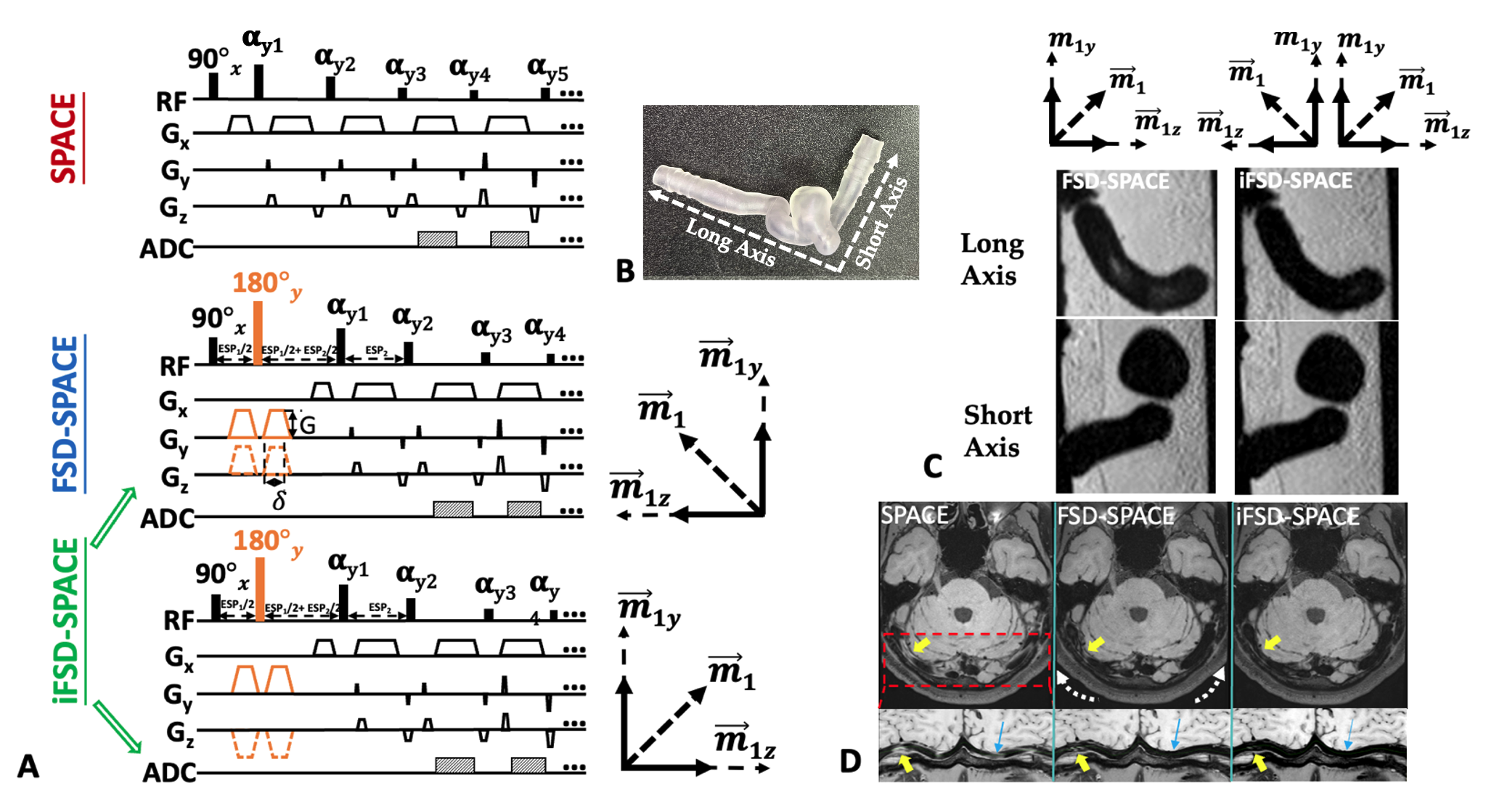
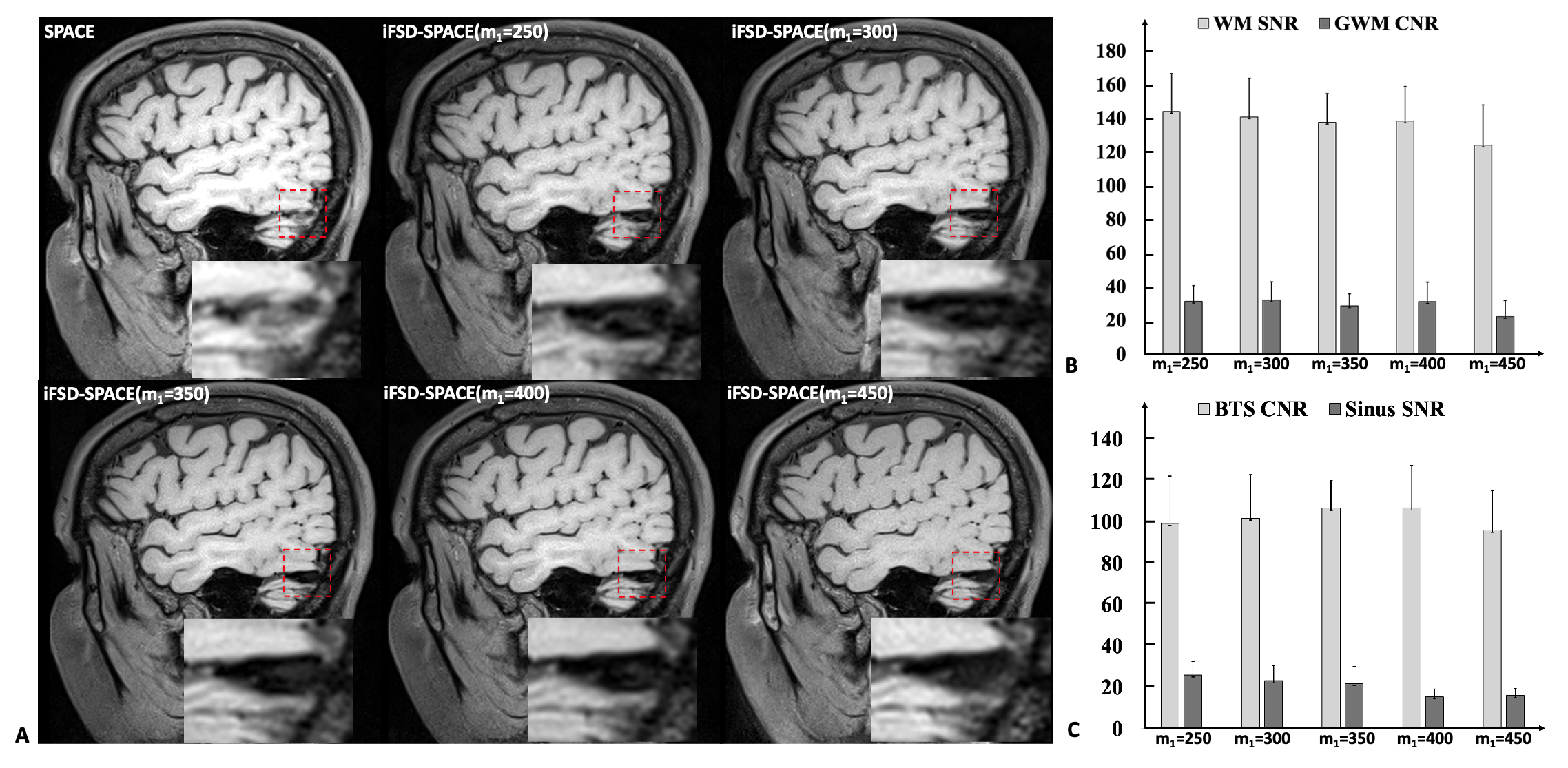
The iFSD approach requires the following modifications in the commercial T1-weighted TSE (or SPACE by Siemens) sequence: 1) adding a 180° RF pulse between the 90° excitation RF pulse and the originally first refocusing RF pulse, 2) adding a pair of unipolar FSD gradient pulses around the 180° RF pulse in both the phase-encoding and partition-encoding directions to exert the first-order gradient moment (m1), and 3) the polarity of FSD gradients in the partition direction is toggled every TR to exert cumulative m1 in orthogonal angles (Fig. 1A). In an aneurysmal flow phantom (Fig. 1B) and 3 healthy volunteers, we first compared SPACE, FSD-SPACE, and iFSD-SPACE with a fixed m1 (300 mT·ms2/m per axis). In 6 healthy subjects, m1 was optimized at the slow-flow transverse venous sinus based on the balance among blood flow suppression (measured by venous sinus SNR and brain tissue-to-sinus [BTS] CNR), T1-weighted contrast (measured by gray-to-white matter [GWM] CNR), and overall signals (measured by white-matter [WM] SNR). Additionally, the optimized iFSD-SPACE was compared with DANTE-SPACE, MSDE-SPACE, and SPACE in another 9 healthy subjects and 32 patients (15 atherosclerosis, 7 aneurysms, 8 metastases, and 2 arteriovenous malformations (AVMs)). All scans were performed on a 3T MR system equipped with a 20-channel head-neck coil. The paired t-test was used to compare all SNR and CNR among sequences. All statistical analyses were performed using commercial software (SPSS 22.0, IBM).Results
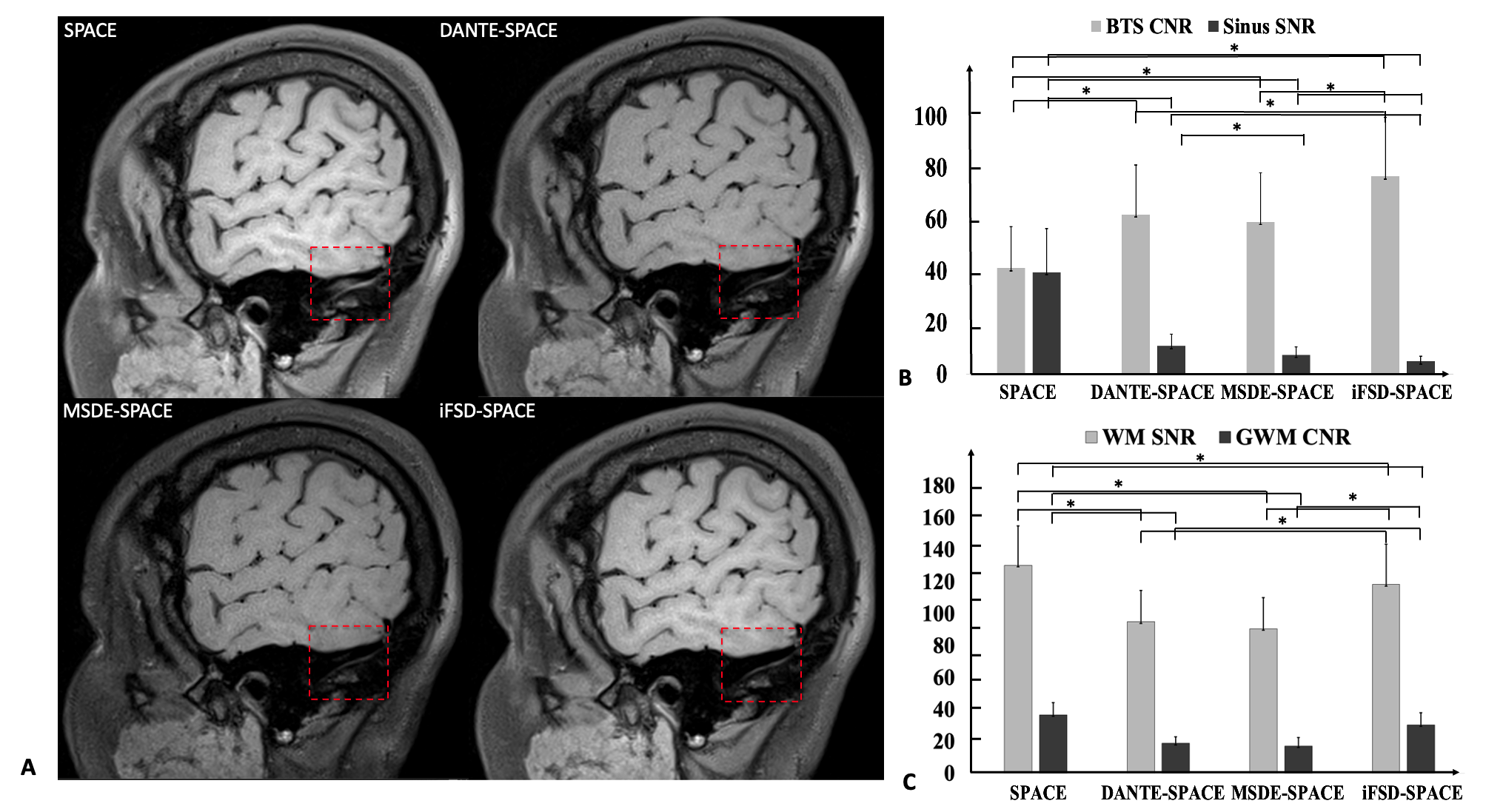
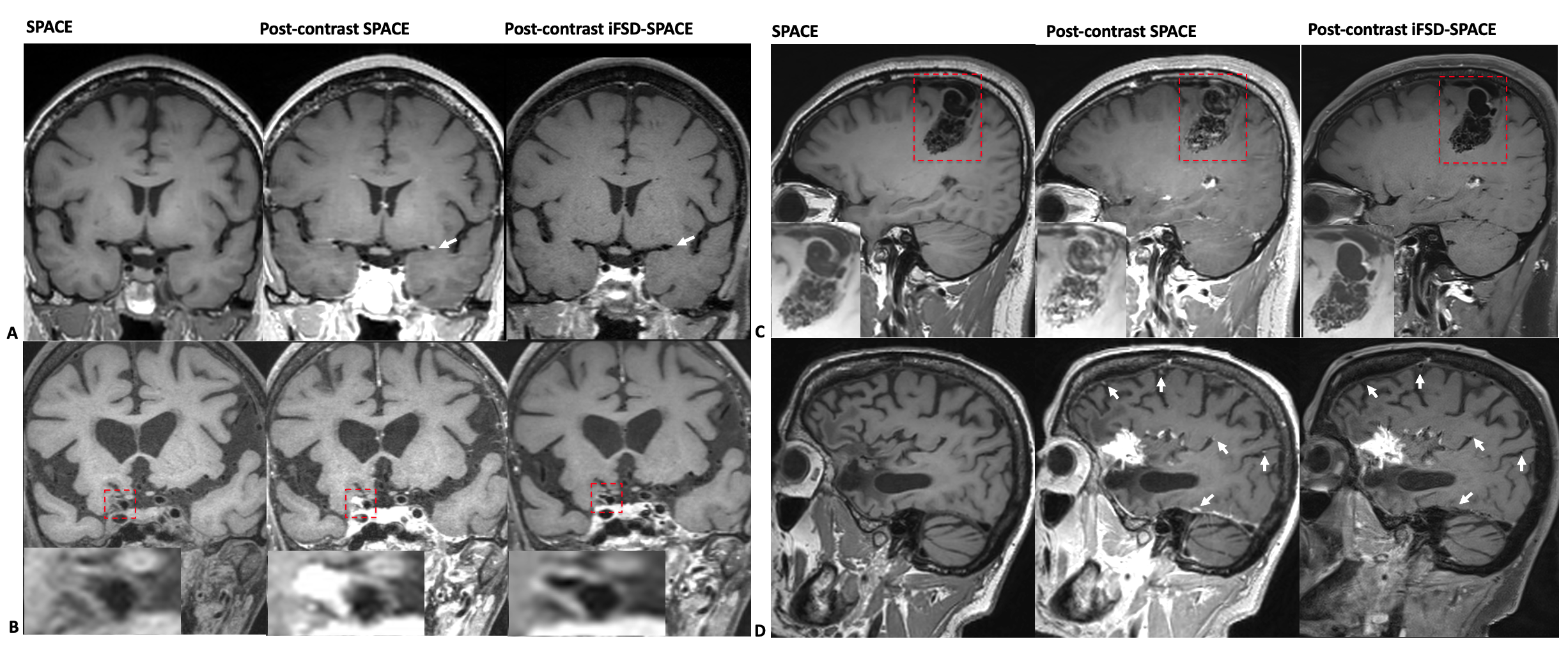
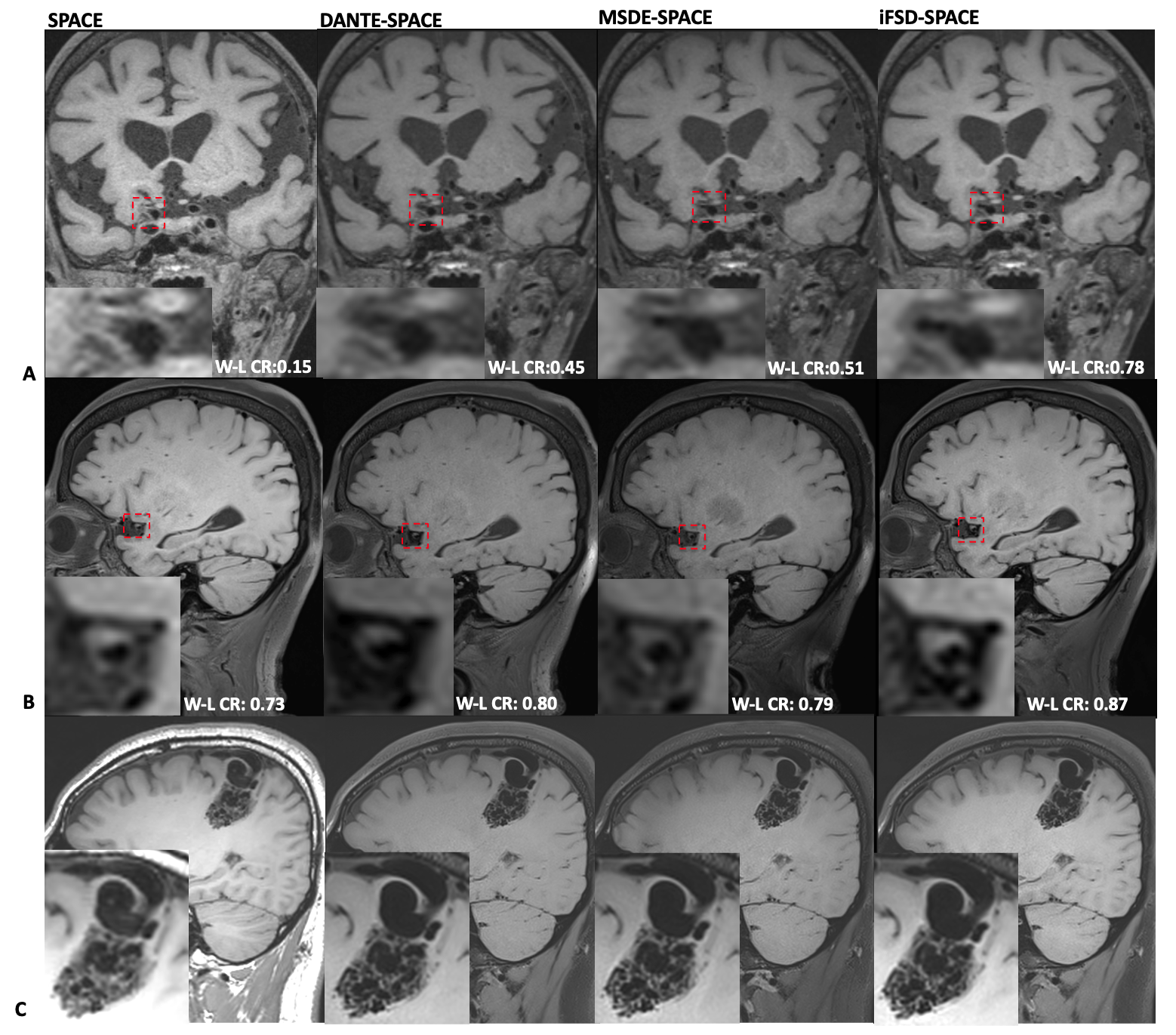
Fig. 1 C&D demonstrates that iFSD outperforms FSD in achieving multi-directional flow suppression. The best m1 in the iFSD module was chosen as 400 mT·ms2/m per axis (Fig. 2A). In healthy subjects, at the right transverse venous sinus where blood flow was perpendicular (i.e., the dead angle) to the sum vector of simultaneously applied flow-sensitized gradients in FSD/DANTE/MSDE modules, iFSD-SPACE achieved the lowest sinus SNR and highest BTS CNR among the four sequences (Fig. 3). iFSD-SPACE yielded WM SNR (118.1±25.2) and GWM CNR (30.3±78.6) that were slightly lower than those of SPACE (130.1±24.6 and 36.6±7.4) but significantly higher than those of DANTE-SPACE (94.8±19.7 and 18.7±4.1) and MSDE-SPACE (90.5±19.4 and 17.0±5.5). At the lesions of atherosclerosis and aneurysms patients, iFSD-SPACE yielded the highest wall-lumen CNR (46.7±18.1) among the three magnetization-prepared sequences (DANTE-SPACE (43.4±14.3), MSDE-SPACE (40.9±15.6)), all of which performed significantly better than SPACE (33.9±14.9). In contrast enhanced patients, compared to SPACE, iFSD-SPACE more effectively suppressed slow-flow artifacts that often mimicked an atherosclerotic lesion, strongly-enhancing aneurysmal/artery wall, or enhancing brain metastasis lesion (Fig. 4). Compared to DANTE- and MSDE-SPACE, iFSD-SPACE provided much cleaner lumen and better delineation of the arterial wall/plaque (Fig. 5).Discussion
In this study, we designed an iFSD scheme for 3D TSE and successfully enhanced its performance by eliminating 'dead angles' in flow suppression while preserving overall SNR and T1 weighting. iFSD was systematically compared with various BB techniques. This comparison was set within the context of healthy volunteers and four major neuroimaging applications: intracranial atherosclerotic disease, aneurysms, brain metastases, and AVMs. Our findings showed that the iFSD-SPACE achieved the lowest lumen SNR and the highest wall-lumen CNR among all sequences tested for patients with atherosclerosis, aneurysms, and AVMs. Our research introduces a novel technique that enhances blood flow suppression in T1w 3D TSE, paving the way for more reliable diagnoses and reducing the time burden on radiologists.Conclusion
iFSD is a promising flow-suppression approach compatible with 3D TSE for enhanced blood flow suppression and preserved T1 weighting and overall signals. More rigorous clinical validation of its advantages is warranted.Acknowledgements
No acknowledgement found.References
1. Fan Z, Yang Q, Deng Z, et al. Whole‐brain intracranial vessel wall imaging at 3 Tesla using cerebrospinal fluid– attenuated T1‐weighted 3 D turbo spin echo[J]. Magnetic resonance in medicine, 2017;77(3): 1142-1150.
2. Yang Q, Duan J, Fan Z, et al. Early detection and quantification of cerebral venous thrombosis by magnetic resonance black-blood thrombus imaging[J]. Stroke;2016;47(2): 404-409.
3. Kaufmann, T. J., Smits, M., Boxerman, J., et al. Consensus recommendations for a standardized brain tumor imaging protocol for clinical trials in brain metastases. Neuro-oncology; 2020;22(6), 757-772.
4. Jara H, Yu BC, Caruthers SD, Melhem ER, et al. Voxel sensitivity function description of flow‐induced signal loss in MR imaging: implications for black‐blood MR angiography with turbo spin‐echo sequences. MRM; 1999;41(3):575-90.
5. Kang N, Qiao Y, Wasserman BA. Essentials for interpreting intracranial vessel wall MRI results: state of the art. Radiology; 2021;300(3):492-505.
6. Li L, Miller K L, Jezzard P. DANTE‐prepared pulse trains: a novel approach to motion‐sensitized and motion‐ suppressed quantitative magnetic resonance imaging[J]. Magnetic resonance in medicine; 2012;68(5): 1423-1438.
7. Wang J, Yarnykh V L, Hatsukami T, et al. Improved suppression of plaque‐mimicking artifacts in black‐blood carotid atherosclerosis imaging using a multislice motion‐sensitized driven‐equilibrium (MSDE) turbo spin‐echo (TSE) sequence[J]. Magnetic Resonance in Medicine: An Official Journal of the International Society for Magnetic Resonance in Medicine, 2007;58(5): 973-981.
Figures