3345
A multi-modality model for predicting postoperative biochemical recurrence in prostate cancer based on whole slide images and bi-parametric MRI1The First Affiliated Hospital of Soochow University, Suzhou, China, 2Siemens Healthineers Ltd., Suzhou, China
Synopsis
Keywords: Prostate, Prostate, radiomics; pathomics; biochemical recurrence;multi-modality
Motivation: Prostate cancer (PCa) biochemical recurrence (BCR) following prostatectomy (RP) is correlated with a higher risk of distant metastasis, local recurrence, and even PCa-specific death
Goal(s): To develop and validate a machine learning multi-modality model based on preoperative magnetic resonance imaging (MRI), surgical whole-slide images (WSIs) and clinical variables for predicting PCa BCR following RP.
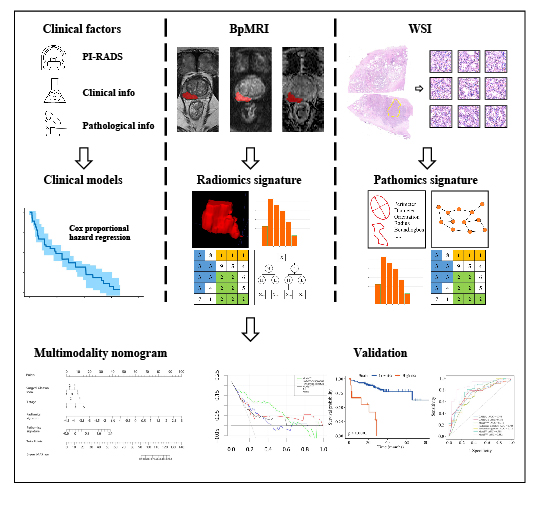
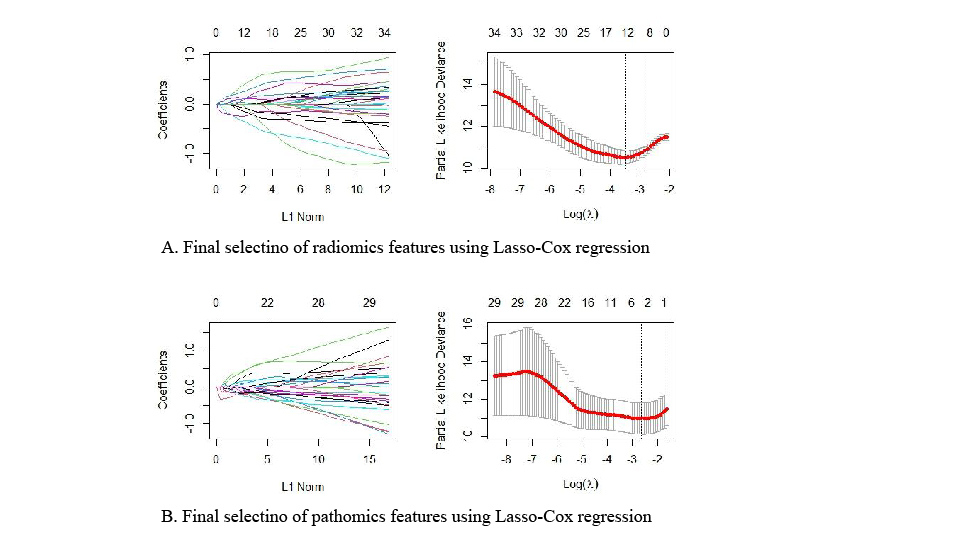
Approach: Radiomics signature and pathomics signature were constructed using preoperative MRI and surgical WSI, respectively. A multi-modality model was constructed by combining radiomics signature, pathomics signature and clinical factors.
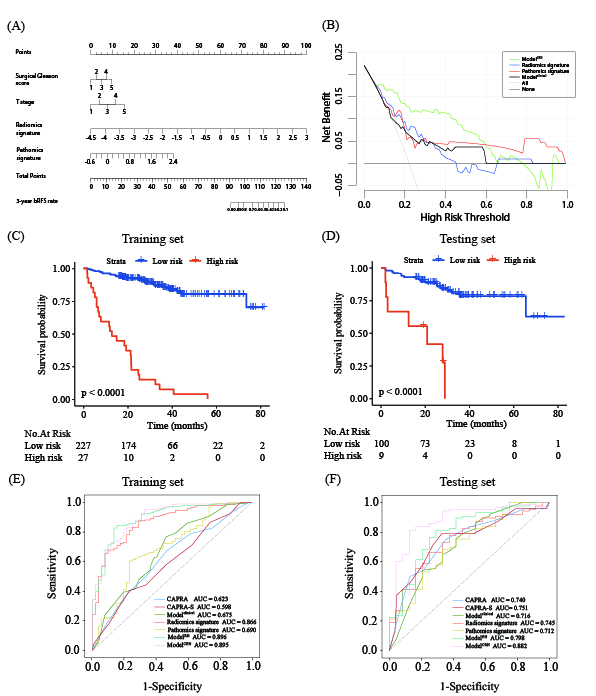
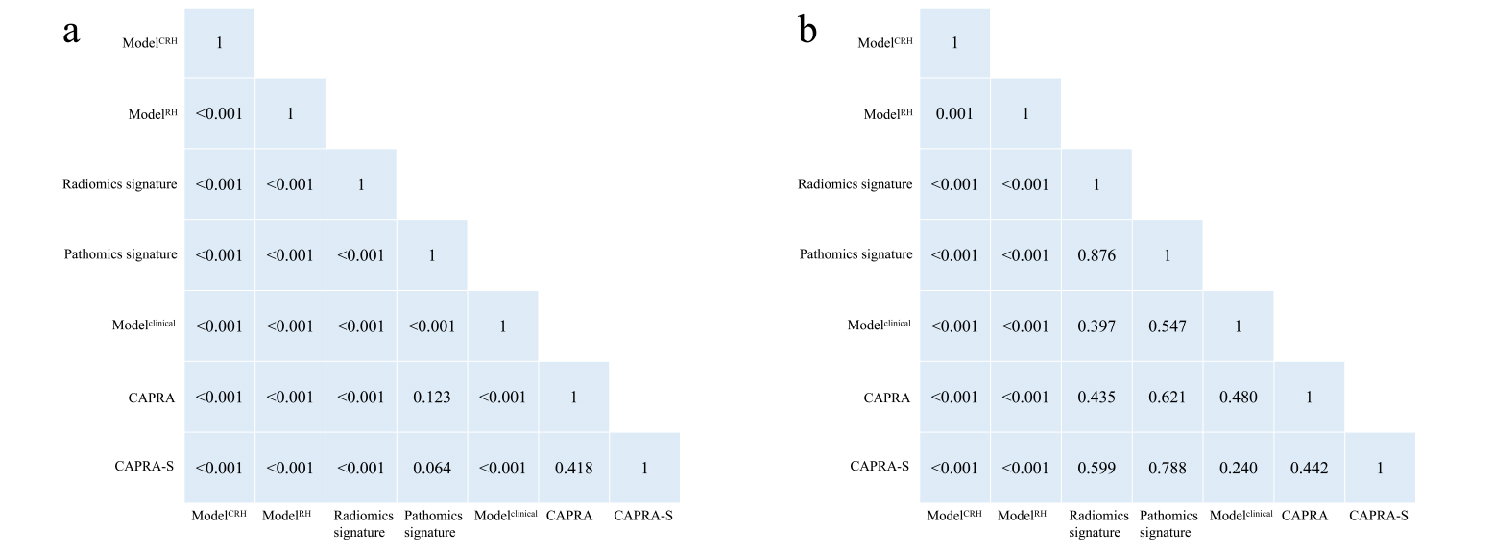
Results: The multi-modality model exhibited the best predictive efficacy, which is significantly higher than all single-modality models.
Impact: Our research could provide an innovative and useful tool for facilitating precision decision-making and personalized treatment in PCa patients. Future studies could utilizing deep learning to analyses mpMRI and WSIs.
Introduction
Following Radical prostatectomy (RP), approximately 30-50% of PCa patients suffer a rise of prostate-specific antigen (PSA) within 10 years, commonly called biochemical recurrence (BCR). There have been lots of researches indicating that BCR is correlated with a higher risk of distant metastasis, local recurrence, and even PCa-specific death. Thus, accurate prediction of BCR after RP could facilitate early recognition of patients who might benefit from adjuvant therapy, allowing for more precise prognostic evaluation and treatment management.Methods
We retrospectively enrolled 363 eligible PCa patients and then divided them into training (n=254) and testing (n=109) sets at a ratio of 7:3. The primary endpoint was biochemical recurrence free survival (bRFS). Cox regression analyses were performed to select independent clinical variables and build clinical model. Radiomics signature and pathomics signature were constructed using preoperative MRI and surgical WSI, respectively. A multi-modality model was constructed by combining radiomics signature, pathomics signature and clinical factors. Using concordance index (C-index), the predictive efficacy of multi-modality model was assessed and compared with all single-modality models, including radiomics signature, pathomics signature and clinical model.Results
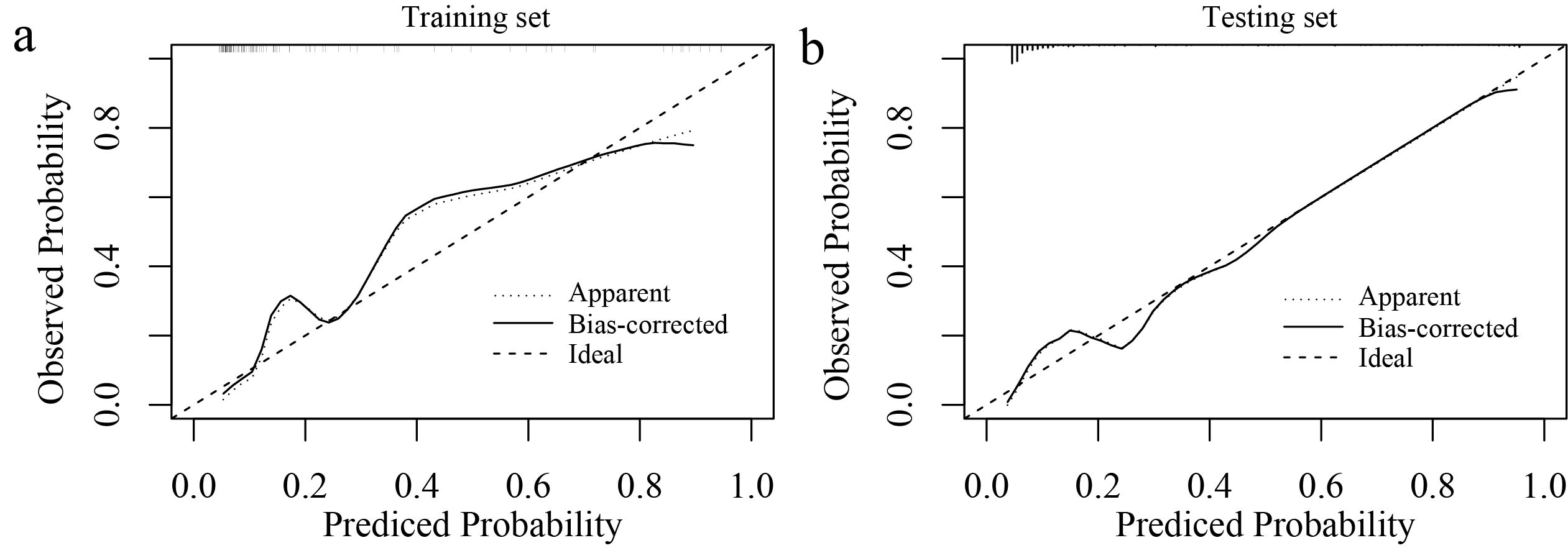
Both radiomics and pathomics signatures achieved good prognosis prediction ability (C-index: 0.742 and 0.730, respectively) in the testing cohort. The multi-modality model exhibited the best predictive efficacy with a C-index of 0.871 in the testing set, which is significantly higher than all single-modality models (all p < 0.001).Discussion
It is of great significance for PCa patients to precisely predict BCR following RP. Given the ongoing debate surrounding the effectiveness of adjuvant therapy, the accurate anticipation of patients at low risk of suffering from BCR could empower doctors with greater confidence to defer additional treatments. Nevertheless, radiological, pathological diagnostic conclusions and clinical characteristics, commonly employed for long-term prognostic estimation in routine practice, showed unsatisfactory performance in predicting BCR after definite treatment. In light of the intricate biologic traits of cancers, we developed and validated a multi-modality model for anticipating BCR after definite surgery by integrating radiomics features, pathomics features, and clinical factors. The multi-modality model demonstrated the best efficacy compared to all single modality models in terms of C-indexes, indicating the information from mpMRI, WSI, and clinical tests is complementary for evaluating post-operative prognosis. As far as we know, this is the first study combining pathomics and radiomics in the research field of PCa.Conclusion
The multi-modality model could effectively predict BCR following RP and may therefore provide a novel and accurate tool to assist post-operative individualized treatment.Acknowledgements
The authors thank all those who helped us during the writing of this research. We also thank the Department of Ultrasound, Urology and Pathology of our hospital for their valuable help and feedback.References
1. Tourinho-Barbosa R, Srougi V, Nunes-Silva I, et al. Biochemical recurrence after radical prostatectomy: what does it mean? Int Braz J Urol 2018;44(1):14-21. doi: 10.1590/s1677-5538.Ibju.2016.0656.
2. Freedland SJ, Humphreys EB, Mangold LA, et al. Risk of prostate cancer-specific mortality following biochemical recurrence after radical prostatectomy. JAMA-J Am Med Assoc 2005;294(4):433-439. doi: 10.1001/jama.294.4.433.
3. Williams S. Surrogate endpoints in early prostate cancer research. Transl Androl Urol 2018;7(3):472-482. doi: 10.21037/tau.2018.05.10.
4. Li L, Shiradkar R, Leo P, et al. A novel imaging based Nomogram for predicting post-surgical biochemical recurrence and adverse pathology of prostate cancer from pre-operative bi-parametric MRI. EBioMedicine 2021;63:10. doi: 10.1016/j.ebiom.2020.103163.
5. Leo P, Chandramouli S, Farre X, et al. Computationally Derived Cribriform Area Index from Prostate Cancer Hematoxylin and Eosin Images Is Associated with Biochemical Recurrence Following Radical Prostatectomy and Is Most Prognostic in Gleason Grade Group 2. Eur Urol Focus 2021;7(4):722-732. doi: 10.1016/j.euf.2021.04.016.
Figures