3212
Comparison of Relaxivity and Image Quality of Brand name vs Generic Ferumoxytol: phantom and in vivo results1Radiology, University of Wisconsin-Madison, Madison, WI, United States, 2Radiology and Nuclear Medicine, Erasmus University Medical Center, Rotterdam, Netherlands, 3Mechanical engineering, University of Wisconsin-Madison, Madison, WI, United States, 4Medical Physics, University of Wisconsin-Madison, Madison, WI, United States, 5Biomedical Engineering, University of Wisconsin-Madison, Madison, WI, United States, 6Medicine, University of Wisconsin-Madison, Madison, WI, United States, 7Emergency Medicine, University of Wisconsin-Madison, Madison, WI, United States
Synopsis
Keywords: Contrast Agents, Vessels, Vascular
Motivation: Ferumoxytol is a superparamagnetic iron-oxide agent increasingly used for MR angiography. Cost can potentially be reduced by using a newly introduced generic ferumoxytol, so long as the relaxivity and image quality are similar.
Goal(s): To compare the relaxivity and image quality of brand name ferumoxytol (Feraheme®, AMAG Pharmaceuticals) with generic ferumoxytol (Sandoz), and determine optimal dose and acquisition parameters.
Approach: Phantom experiment and in-vivo dose accumulation with flip angle optimization, using an intra-individual cross-over design.
Results: No clinically relevant differences in relaxivity and MR angiography image quality were observed between ferumoxytol agents. The optimal flip angle and dose are 20° and 5mg/kg, respectively.
Impact: Brand name ferumoxytol (Feraheme®, AMAG Pharmaceuticals) and generic ferumoxytol (Sandoz) are interchangeable for MR angiography. The use of a generic agent may lead to reduction in cost.
Introduction
Ferumoxytol, a superparamagnetic iron-oxide, is increasingly used for MR angiography due to its favorable MR properties and long intravascular half-life.(1,2) Moreover, it has drawn increasing interest due to growing concerns over gadolinium-based contrast agent safety.3,4 Brand name agents have historically been more expensive than generic agents, which may present an opportunity to reduce cost if there are no clinically relevant differences in MR properties.Therefore, the purpose of this study was to compare the relaxivity and MR imaging performance of brand name ferumoxytol (Feraheme®, AMAG Pharmaceuticals) with generic ferumoxytol (Sandoz) through phantom and in-vivo experiments. The secondary purpose was to determine optimal flip angle and weight-based dose.
Methods
For all experiments both Feraheme®, AMAG Pharmaceuticals, Waltham, MA, USA and ferumoxytol, Sandoz Inc. Princeton, NJ, USA were used.Phantom experiment
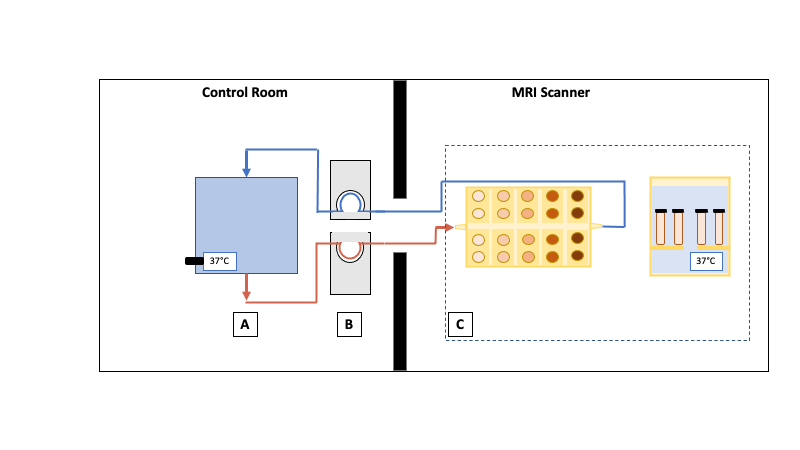
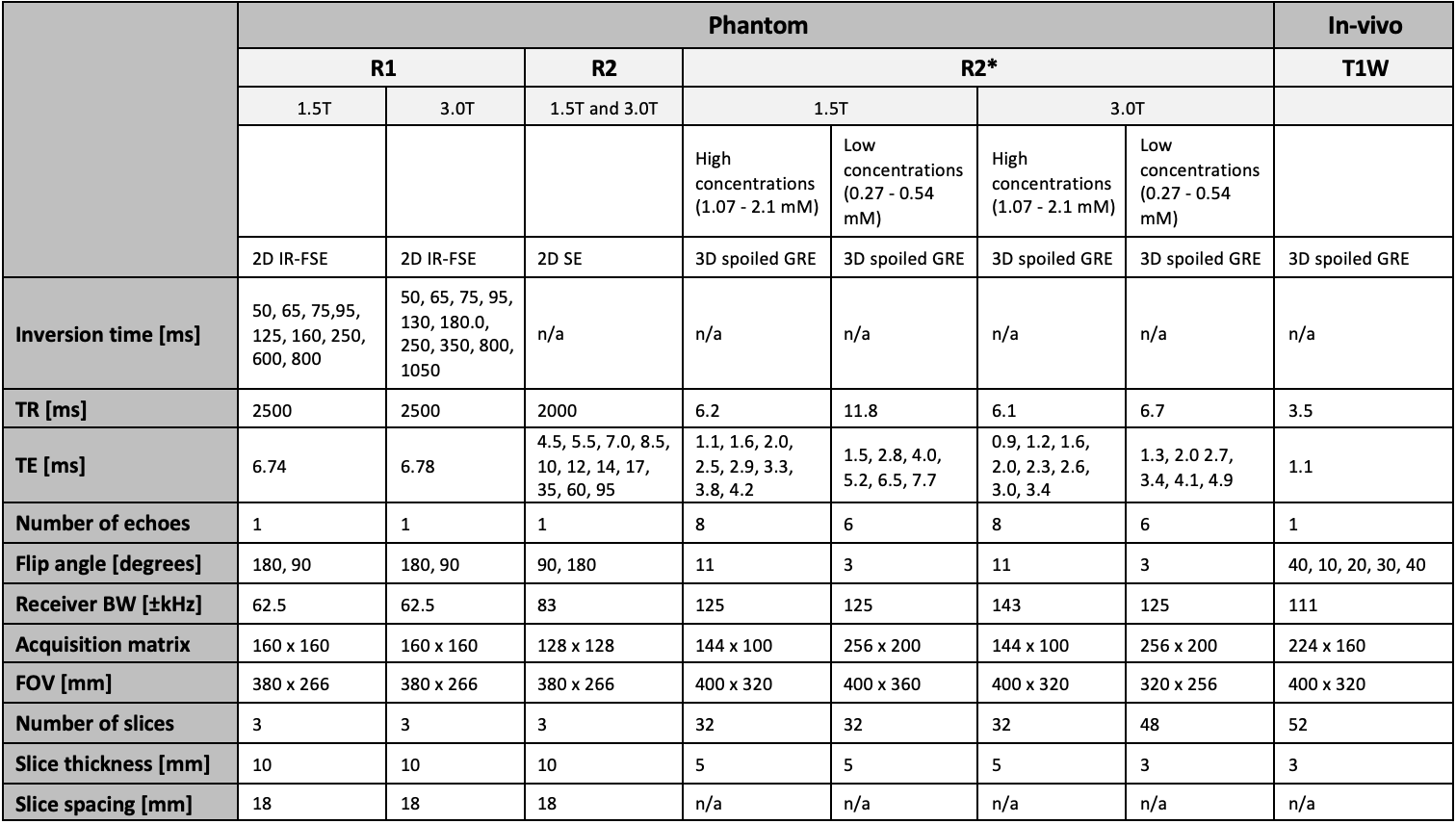
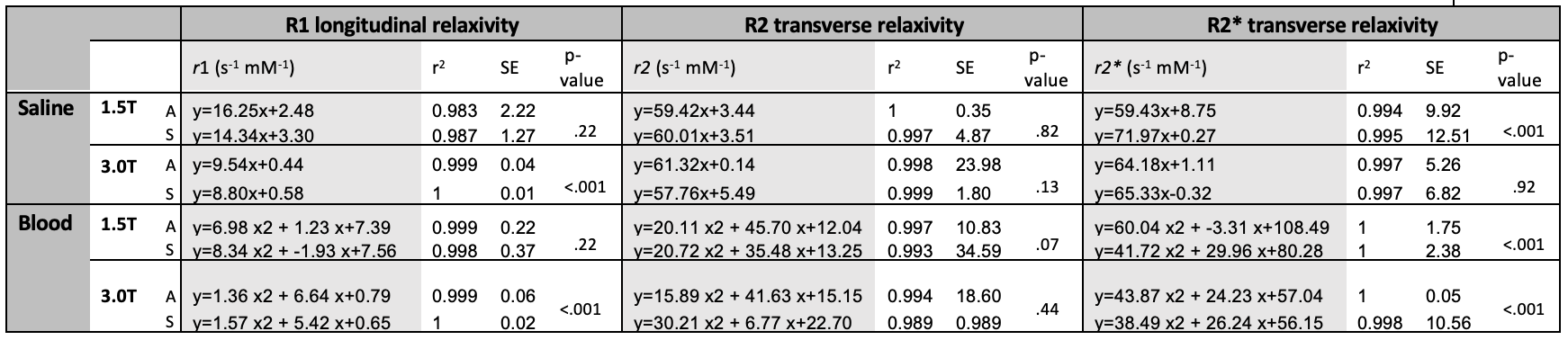
Each agent was diluted in 0.9% saline and also adult bovine whole blood at 5 concentrations (0.27; 0.54; 1.07; 1.61 and 2.15mM) within 30 ml vials, for a total of 20 vials. Vials were placed in an MR compatible water bath at 37°C (Fig 1) and imaged at 1.5T and 3.0T MRI systems (1.5T Artist, 3.0T Premier, GE Healthcare, Waukesha, WI) using a 32-channel phase array torso coil. The protocol consisted of coronal acquisitions 2D fast spin echo inversion recovery with multiple inversion times to quantify R1, 2D spin echo with multiple echoes to quantify R2, and 3D multi-echo spoiled gradient echo chemical shift-encoded imaging to quantify R2* (Fig 2). Relaxation rate constants, R1, R2, R2* were measured in a manually drawn region of interest (ROI) centrally located in each vial in three slices using Matlab. Regression lines were fit to estimate r1, r2, and r2* relaxivity values using first order polynomial fitting for saline and second order fitting for blood. Differences in relaxivity between the agents were statistically tested with Chi-square with 2 degrees of freedom for saline and 3 degrees of freedom for blood.
In-vivo study
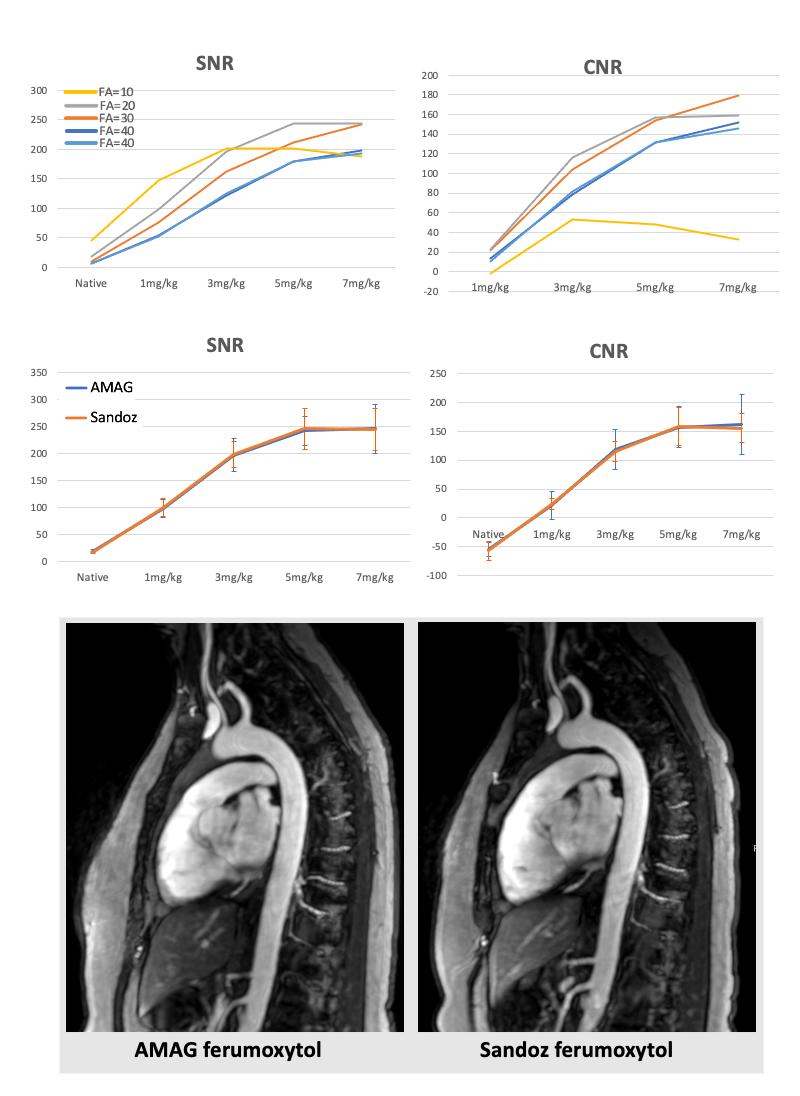
Six healthy volunteers were imaged after IRB approval and informed written consent. All subjects were imaged twice using a cross-over design, in which one agent was administered, followed by a 1 month washout5, and then a second exam with the other agent, all in random order. Cumulative doses of 1, 3, 5 and 7 mg/kg diluted ferumoxytol were administered during the exam. MR angiography of the chest was performed using a sagittal MRA acquisition on a 3.0T clinical MRI system (Premier, GE Healthcare, Waukesha, WI) with a 32-channel phased-array body coil before and after each contrast dose administration. For each incremental dose, the flip angle was varied from 10 to 40 degrees in 10-degree increments over 5 breath-holds (Fig 2). No parallel imaging was used to facilitate ROI-based signal-to-noise ratio (SNR) and contrast-to-noise ratio (CNR) measurements, including correction for noise rectification.6 For each MRA acquisition, ROIs were drawn in the aortic arch (1 cm2), the paraspinous muscles (1 cm2) and a noisy area outside of the patient free from obvious artifact (7.0 cm2), by a radiologist with 6 years of experience. Absolute SNR and CNR (aorta-muscle) values were calculated. The optimal flip angle was assessed using conglomerate data from all volunteer exams. Finally, the mean SNR and CNR of both ferumoxytol agents were compared at the optimal flip angle for each cumulative dose and plotted with corresponding 95% confidence intervals.
Results
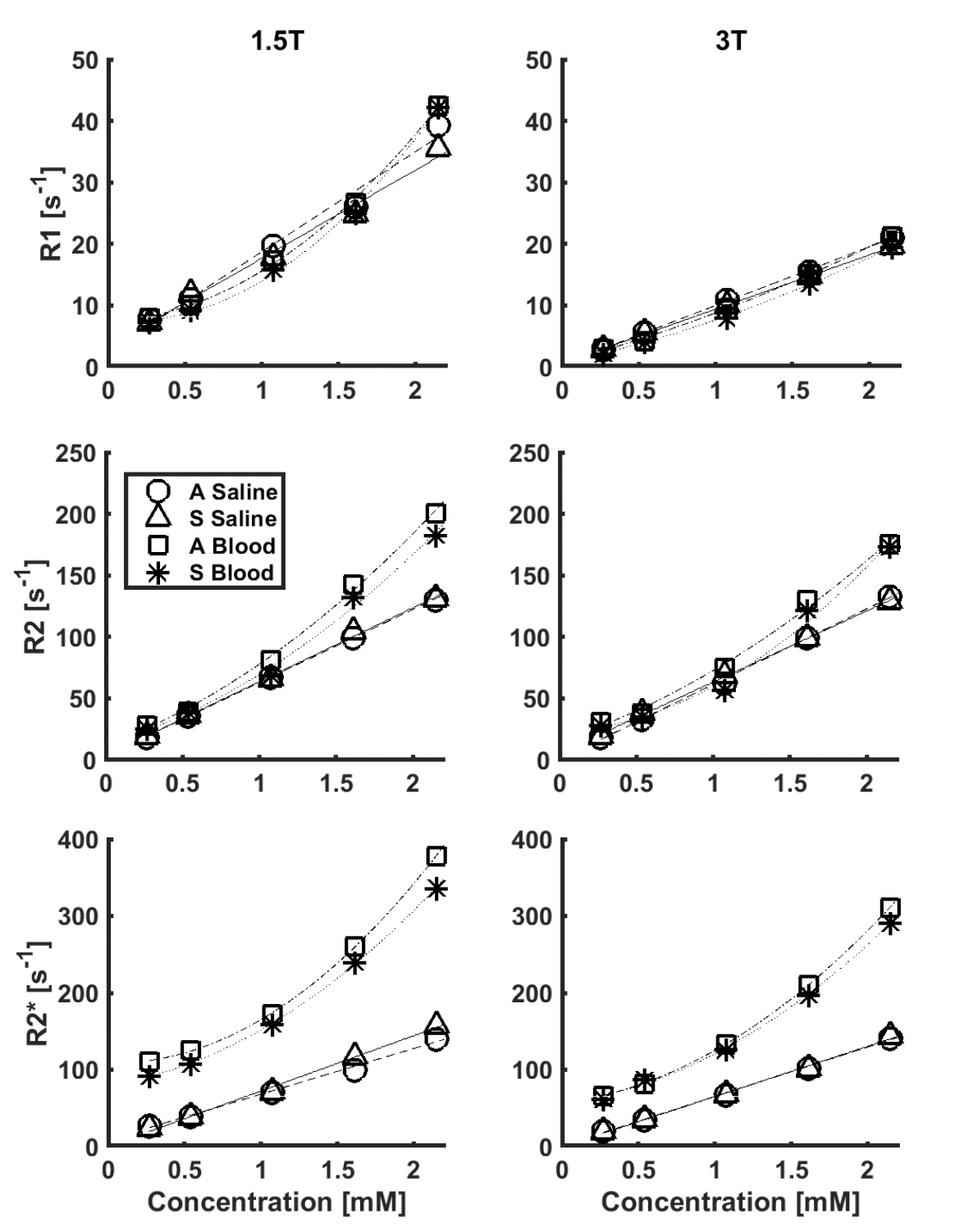
Phantom experimentThe dependence of R1, R2 and R2* on ferumoxytol concentrations was linear in saline and non-linear in blood (Fig 3). There were no statistically significant differences between most relaxivities (Fig 4), and those with statistical significance were small and of doubtful clinical relevance (Fig 3).
In-vivo study
6 healthy volunteers (3 female, 3 male) were included with an age range of 25-58 years and a BMI range of 19.6-25.9 kg/m2. A flip angle of 20° exhibited the optimal SNR and CNR (Fig 5). There were no significant differences in mean SNR and CNR between agents at the optimal flip angle of 20° (Fig 5). Optimal SNR and CNR for both agents were reached at a dose of 5mg/kg.
Discussion and Limitations
Unfortunately, human blood was not available for the phantom experiments, but adult bovine whole blood has fairly similar properties. The small differences in relaxivity values observed between agents was very small, and likely due to small errors in the phantom preparation.Conclusion
No clinically relevant differences were identified between brand name ferumoxytol (Feraheme®, AMAG Pharmaceuticals) and generic ferumoxytol (Sandoz) for MRI relaxation properties and MR angiography image quality. For both agents the optimal flip angle was 20° and optimal dose was 5mg/kg.Acknowledgements
We wish to acknowledge support from GE Healthcare and Bracco Diagnostics who provide research support to the University of Wisconsin. Dr. Reeder is the John. H Juhl Endowed Chair of Radiology. This project was supported by the Departments of Radiology and Medical Physics, University of Wisconsin.References
1. Bashir MR, Bhatti L, Marin D, Nelson RC. Emerging applications for ferumoxytol as a contrast agent in MRI. J Magn Reson Imaging JMRI. 2015 Apr;41(4):884–98.
2. Nguyen KL, Yoshida T, Kathuria-Prakash N, Zaki IH, Varallyay CG, Semple SI, et al. Multicenter Safety and Practice for Off-Label Diagnostic Use of Ferumoxytol in MRI. Radiology. 2019 Dec;293(3):554–64.
3. Fraum TJ, Ludwig DR, Bashir MR, Fowler KJ. Gadolinium-based contrast agents: A comprehensive risk assessment. J Magn Reson Imaging JMRI. 2017 Aug;46(2):338–53.
4. Starekova J, Nagle SK, Schiebler ML, Reeder SB, Meduri VN. Pulmonary MRA During Pregnancy: Early Experience With Ferumoxytol. J Magn Reson Imaging. 2023 Jun;57(6):1815–8.
5. Wells SA, Schubert T, Motosugi U, Sharma SD, Campo CA, Kinner S, et al. Pharmacokinetics of Ferumoxytol in the Abdomen and Pelvis: A Dosing Study with 1.5- and 3.0-T MRI Relaxometry. Radiology. 2020 Jan;294(1):108–16.
6. Dietrich O, Raya JG, Reeder SB, Reiser MF, Schoenberg SO. Measurement of signal-to-noise ratios in MR images: influence of multichannel coils, parallel imaging, and reconstruction filters. J Magn Reson Imaging JMRI. 2007 Aug;26(2):375–85.
Figures