3088
Predicting Postoperative Outcomes in MRI-Negative Refractory Temporal Lobe Epilepsy Patients Using Dynamic Regional Homogeneity1Department of Radiology, Xuanwu Hospital, Capital Medical University, beijing, China
Synopsis
Keywords: Epilepsy, Epilepsy
Motivation: This study is motivated by the need for better predictive indexs for postoperative outcomes in MRI-negative refractory temporal lobe epilepsy (TLE) patients.
Goal(s): To ascertain whether machine learning models using dynamic regional homogeneity (dReHo) can predict surgical success in these patients.
Approach: The approach involved analyzing resting-state fMRI data from TLE patients and healthy controls, calculating ReHo and dReHo values, and applying these as features in a support vector machine classifier.
Results: The classifier using dReHo achieved 73.3% accuracy in predicting postoperative outcomes, significantly outperforming the ReHo-based model.
Impact: The ability to predict postoperative outcomes using dReHo could guide clinical decision-making and patient counseling, potentially leading to improved management of TLE.
Objective
To investigate the predictive value of machine learning models based on dynamic regional homogeneity for postoperative outcomes in patients with MRI-negative refractory temporal lobe epilepsy (TLE).Methods
Resting-state functional MRI data were collected from 30 MRI-negative refractory TLE patients and 30 healthy controls. Regional homogeneity (ReHo) and its dynamic change over time (dReHo) were calculated to assess changes in local neuronal activity. The patient group was divided into a good prognosis group (TLE-G, 14 cases) and a poor prognosis group (TLE-P, 16 cases) based on the postoperative Engle classification. One-way ANOVA and post hoc tests were used to compare local neuronal activity differences among the three groups. Significant differences in brain regions for ReHo and dReHo values were used as features in a support vector machine classifier to construct a postoperative outcome prediction model for TLE patients. The efficiency of the model was evaluated using the receiver operating characteristic curve.Results
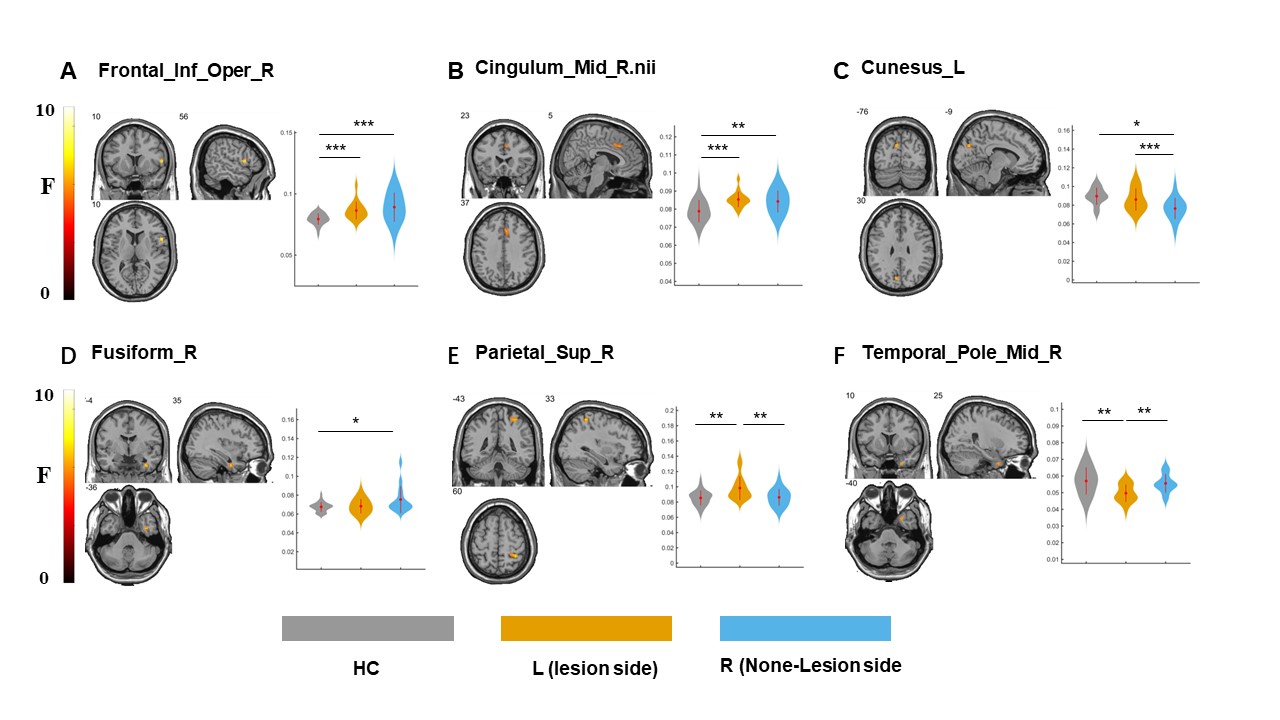
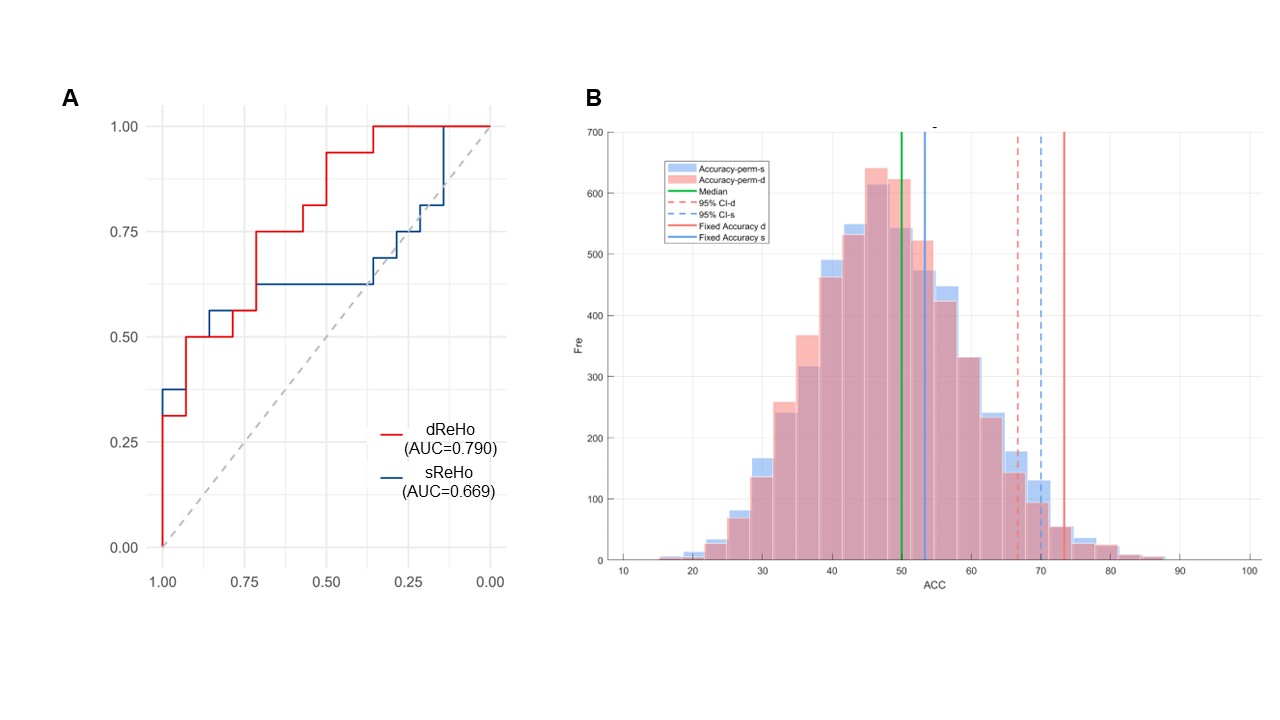
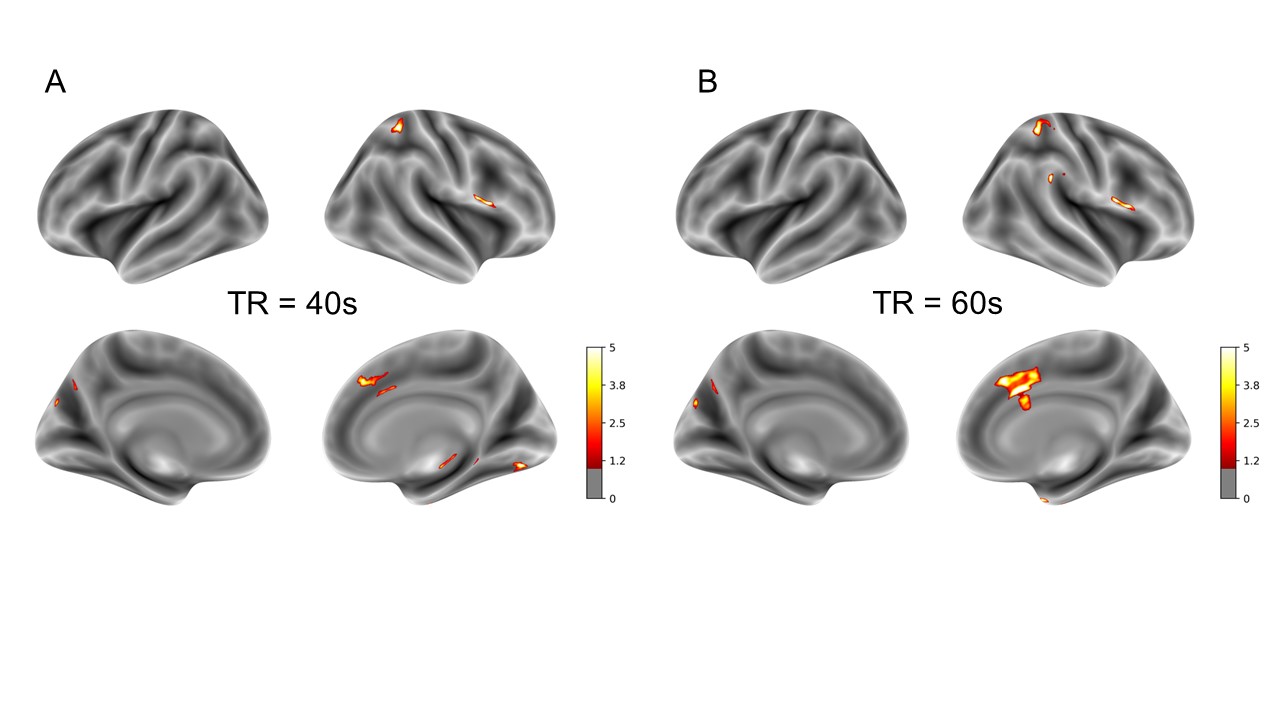
Compared with the normal group, the TLE-G group showed increased dReHo in the right fusiform gyrus, right opercular part of the inferior frontal gyrus, left cuneus, right medial and paracingulate gyrus, and right superior parietal gyrus, and decreased dReHo in the right middle temporal pole. The TLE-P group exhibited increased dReHo in the right fusiform gyrus, right opercular part of the inferior frontal gyrus, and right medial and paracingulate gyrus, and decreased dReHo in the left cuneus. Compared to the TLE-G group, the TLE-P group had increased dReHo in the right middle temporal pole and decreased dReHo in the left cuneus and right superior parietal lobule (Figure 1). The support vector machine classifier based on dReHo predicted postoperative outcomes in TLE patients with an accuracy of 73.3% and an area under the curve of 0.790, which is superior to the ReHo model (accuracy of 53.3% and AUC of 0.669, Figure 2). When window lengths of 40 TR and 60 TR were used, the significant differences in dReHo between the two groups were consistent with the main findings (Figure 3), with Dice coefficients of 0.681 and 0.789, respectively.Conclusion
Changes in dynamic brain activity in MRI-negative refractory TLE patients are related to postoperative outcomes, and machine learning models based on dReHo indicators can effectively predict postoperative outcomes.Acknowledgements
No acknowledgement found.References
No reference found.Figures