3067
Hyperpolarized 13C metabolic imaging of Alzheimer’s Disease: impact of sex, genotype and age in the hAPP-J20 mouse model1Radiology and Biomedical Imaging, University of California San Francisco, San Francisco, CA, United States, 2Department of Physical Therapy and Rehabilitation Science, University of California San Francisco, San Francisco, CA, United States, 3Gladstone Institute of Neurological Disease. Gladstone Institutes, San Francisco, CA, United States, 4Department of Neurology, University of California San Francisco, San Francisco, CA, United States
Synopsis
Keywords: Hyperpolarized MR (Non-Gas), Alzheimer's Disease, metabolism, hyperpolarized 13C
Motivation: The accelerating prevalence of Alzheimer's disease (AD) around the world urges the need not only for more effective treatment but also for improved non-invasive monitoring of onset and progression.
Goal(s): Our goal is to investigate if the clinically expanding HP 13C MR method could improve diagnosis and monitoring of AD.
Approach: hAPP-J20 AD mice and age-/sex-matched wild-type were imaged using HP 13C MR at 2-months-old (presymptomatic) and 14-months-old (amyloid plaques accumulation). The impact of sex, genotype, age, and their interactions, on the derived HP metrics was investigated.
Results: HP13C metabolic imaging can provide crucial information on sexual dimorphism and metabolic aging in AD.
Impact: Hyperpolarized 13C imaging provides unique metabolic information specific to sex and APP mutational status in an AD model. Upon clinical translation, such method could improve early diagnosis and patient-centric monitoring of AD progression, and potentially assessment of therapeutic response.
Introduction
Metabolic impairment is a major factor in most neurodegenerative diseases, including Alzheimer’s disease (AD)[1]. Although [18F]-FDG-PET visualizes reduced glucose uptake in AD[2], repeated use is limited by radiation and high background. Hyperpolarized (HP) 13C MR has been used for investigation of brain tumors[3], multiple sclerosis[4], trauma[5], and diet model of dementia[6], but has yet to be applied to AD. The growing prevalence of AD urges the need to test if the clinically expanding HP 13C MR method could improve diagnosis and monitoring of this disease.Here, male and female mice of the well-established hAPP-J20 (J20) AD model were imaged using HP 13C MR of [1–13C]pyruvate at two timepoints: pre-symptomatic (2-months-old) and after amyloid plaques formed (14-months-old). We also studied age- and sex-matched wild-type (WT) mice of the same background strain. We then investigated the impact of sex, genotype and age, and their interactions, on the derived HP metrics. Our results demonstrate that HP13C metabolic imaging can provide crucial information on sexual dimorphism and metabolic aging in AD.
Methods
Animals: 1) WT females (n=11) and males (n=11); 2) hAPP-J20 female (n=9) and male mice (n=8) (Fig.1A,B) were imaged at 2 months and 14 months [7,8].MR acquisitions: MR experiments were conducted on a 14.1T MR system (Agilent, USA) equipped with 100G/cm gradients and a 1H-13C volume coil (ØI=40mm). 24μl [1–13C]pyruvate (15mM OX63, 1.5mM Gad‐DOTA) and 55μl 13C urea (6.4M, 23mM OX63) were co-polarized for ~1h in a Hypersense polarizer (Oxford Instruments) and dissolved in a 4.5ml buffer (80mM NaOH). 300μl of this solution was injected via tail vein over 12s. 2D-13C MRSI data were acquired 18s after injection, using 2D-CSI sequence: TE/TR=0.56/68ms; SW 4006Hz; 256 points; FA=10°; FOV=30×30mm²; 5mm slice thickness (Fig.1C).
Data analysis: HP13C datasets were analyzed using SIVIC (http://sourceforge.net/apps/trac/sivic/) and MATLAB. The AUC of HP[1-13C]pyruvate (Pyr) and HP[1-13C]lactate (Lac) lorentzian fits were measured for each voxel. Lac, total-13C (Lac+Pyr), Lac/total-13C and Lac/Pyr were averaged over eight brain voxels (Fig.1C).
Statistical analysis: Paired data were analyzed using two-way ANOVA and unpaired data were analyzed using t-test (*p<0.05; **p<0.01; ***p<0.005).
Results
Impact of age and genotype. No significant impact of age, genotype or their interaction was observed between J20 and WT females (Fig.2A-D). Interestingly, the effect of this interaction was significant (p-value=0.0322) when compared HP13C-lactate levels between J20 and WT males (Fig.2E-H).Impact of age and sex. Significant effect of sex was observed on paired longitudinal levels of Lac/total-13C (p=0.0198) and Lac/Pyr (p=0.0228) ratios, and total-13C (p=0.0223) between J20 females and males (Fig.3F-H). In WT mice, similar differences in longitudinal changes of Lac/total-13C (p=0.0011) and Lac/Pyr (p=0.0020) ratios, and in total-13C (p=0.0049) between WT females and males were seen, although more pronounced than in J20 animals (Fig.3B-D). When looking at HP 13C-lactate, longitudinal values were significantly altered between females and males in the WT group, showing a significant age effect (p=0.0091) and significant interaction of age and sex (p=0.0222), but not effect of sex (p=0.5897) (Fig.3A,E). In contrast, no age, sex or interaction effects were seen in the J20 group.
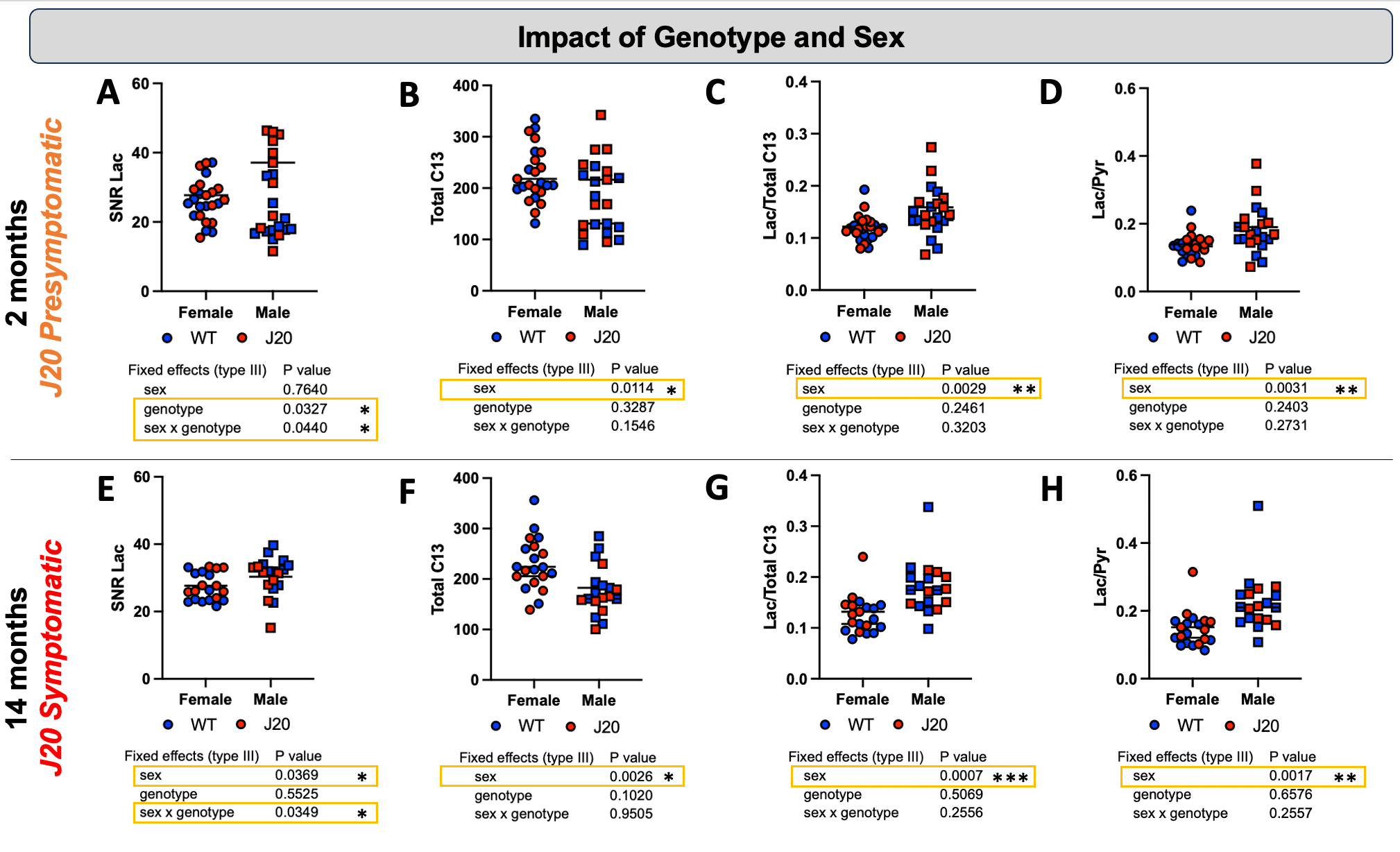
Impact of genotype and sex. A significant effect of sex was observed in 2- and 14-months-old mice for total-13C (p=0.0114, p=0.0026), Lac/total-13C (p=0.0029, p=0.0007) and Lac/Pyr (p=0.0031, p=0.0017) (Fig.4B-D). No effect of genotype or sex X genotype interaction were detected at either age for these parameters.
Looking at HP lactate SNR, we detected a significant sex X genotype interaction in 2-months-old (p=0.0440) and 14-months-old (p=0.0349) mice (Fig.4A,E). Furthermore, a significant impact of genotype (p=0.0327) was seen at 2 months, and a significant impact of sex at 14 months (p=0.0349).
Discussion
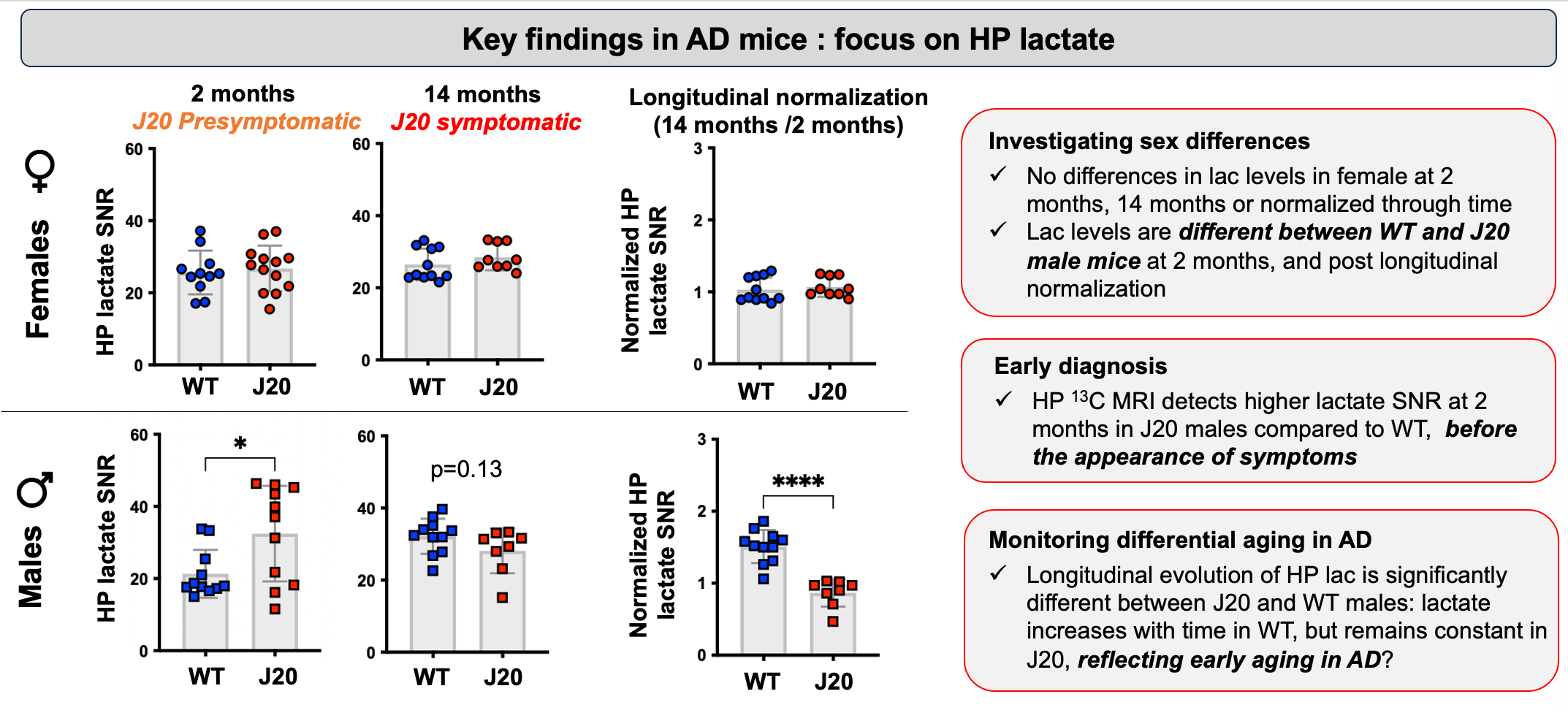
Our study shows that age, genotype and sex, and their interactions, have significant impacts on HP 13C metabolic imaging parameters. Key findings are summarized in Fig.5. First, whereas there are no differences in lactate levels in females at 2 months, 14 months or when normalized through time, HP lactate levels are different between WT and J20 males at 2 months, and post longitudinal normalization, indicating that HP13C imaging can investigate metabolic sexual dimorphism. Second, HP 13C MRI detects higher HP lactate level at 2 months in J20 males compared to WT, before the appearance of symptoms, indicating the potential of HP13C imaging for early diagnosis of AD. Finally, we show that evolution of HP lactate level is significantly different between J20 and WT males: HP lactate level increases with time in WT, but remains constant in J20, which possibly reflects early aging in AD. Altogether, our results highlight the potential of HP13C neuroimaging to improve understanding and monitoring of AD.Acknowledgements
MR and LLP contributed equally to this work. This work was supported by National Institutes of Health RF1 AG064170 (KN, MMC), R01 NS102156 (MMC) and R21 AI153749 (MMC, CG). It was also supported by the Alzheimer’s Association (HL, LLP), a Brightfocus Foundation Fellowship (LLP), Berkelhammer Award for Excellence in Neuroscience (YS) and the NIH Hyperpolarized MRI Technology Resource Center #P41EB013598.
References
1. L. Xu, R. Liu, Y. Qin, T. Wang. Brain metabolism in Alzheimer’s disease: biological mechanisms of exercise
Translational Neurodegeneration. 2023, volume 12, Article number: 33
2. Ya-Nan Ou, Wei Xu, Jie-Qiong Li, Yu Guo, Mei Cui, Ke-Liang Chen, Yu-Yuan Huang, Qiang Dong, Lan Tan & Jin-Tai Yu. FDG-PET as an independent biomarker for Alzheimer’s biological diagnosis: a longitudinal study
on behalf of Alzheimer’s Disease Neuroimaging Initiative. Alzheimer's Research & Therapy. 2019volume 11, Article number: 57
3. A.W. Autry, J.W. Gordon, H.-Y. Chen, M. LaFontaine, R. Bok, M. Van Criekinge, J.B. Slater, L. Carvajal, J.E. Villanueva-Meyer, S.M. Chang, J.L. Clarke, J.M. Lupo, D. Xu, P.E.Z. Larson, D.B. Vigneron, Y. Li. Characterization of serial hyperpolarized 13C metabolic imaging in patients with glioma. NeuroImage: Clinical. 2020, Volume 27, 102323
4. C. Guglielmetti, C. Najac, A. Didonna, A. Van der Linden, S.M. Ronen, M.M. Chaumeil. Hyperpolarized 13C MR metabolic imaging can detect neuroinflammation in vivo in a multiple sclerosis murine model. Proc Natl Acad Sci U S A. 2017 Aug 15; 114(33): E6982–E6991. doi: 10.1073/pnas.1613345114
5. C. Guglielmetti, A. Chou, K. Krukowski, C. Najac, X. Feng, L.-K. Riparip, S. Rosi, M.M. Chaumeil. In vivo metabolic imaging of Traumatic Brain Injury. Scientific Reports. 2017: volume 7, Article number: 17525
6. Y.-S. Choi, S. Kang, S.-Y. Ko, S. Lee, J.Y. Kim, H. Lee, J.E. Song, D.-H. Kim, E. Kim, C.H. Kim, L. Saksida, H.-T. Song, J.E. Lee. Hyperpolarized [1-13C] pyruvate MR spectroscopy detect altered glycolysis in the brain of a cognitively impaired mouse model fed high-fat diet. Mol Brain. 2018; 11: 74; doi: 10.1186/s13041-018-0415-2;
7. L. Mucke, E. Masliah, G.Q. Yu, M. Mallory, E.M. Rockenstein, G. Tatsuno, K. Hu, D. Kholodenko, K. Johnson-Wood, L. McConlogue. High-Level Neuronal Expression of Aβ1–42 in Wild-Type Human Amyloid Protein Precursor Transgenic Mice: Synaptotoxicity without Plaque Formation. J Neurosci. 2000; Jun 1; 20(11): 4050–4058; doi: 10.1523/JNEUROSCI.20-11-04050.2000
Figures
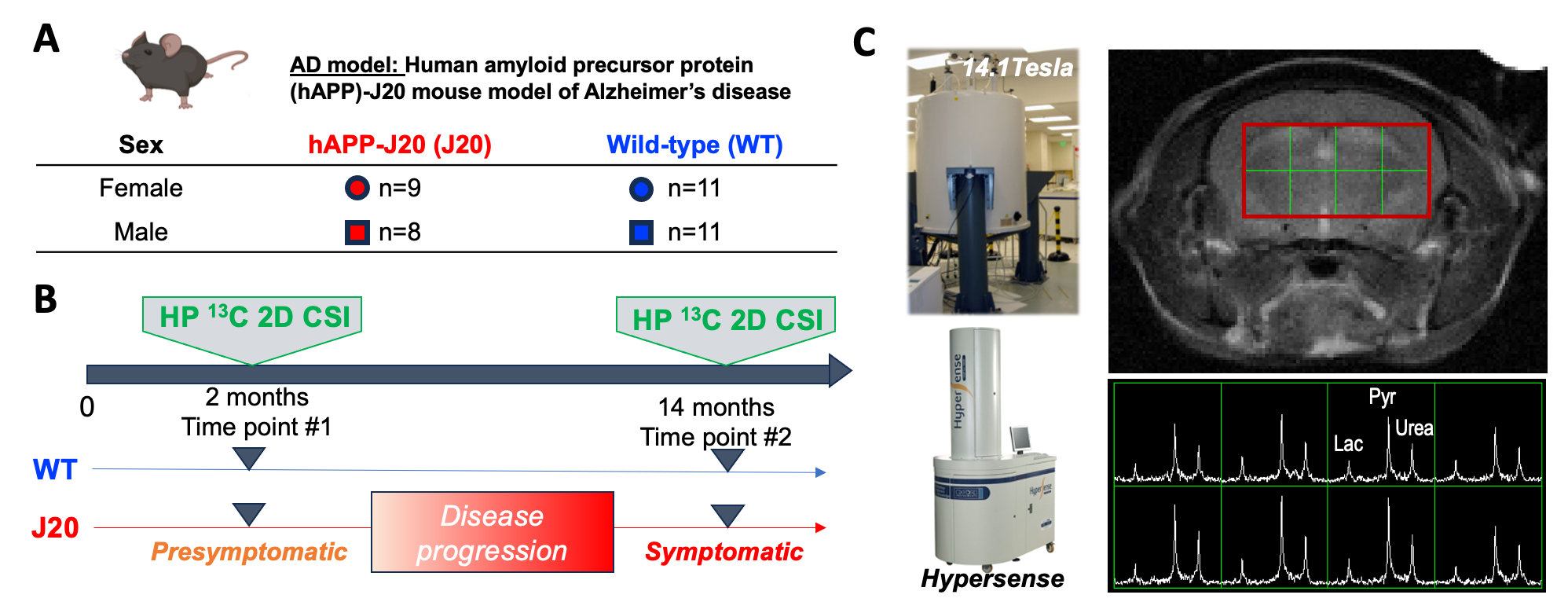
Figure 1 - Animal model (A) and study design (B). Typical T2 weighted axial image of a WT mouse with overlaying HP 13C 2D CSI grid and corresponding HP13C spectra (C).
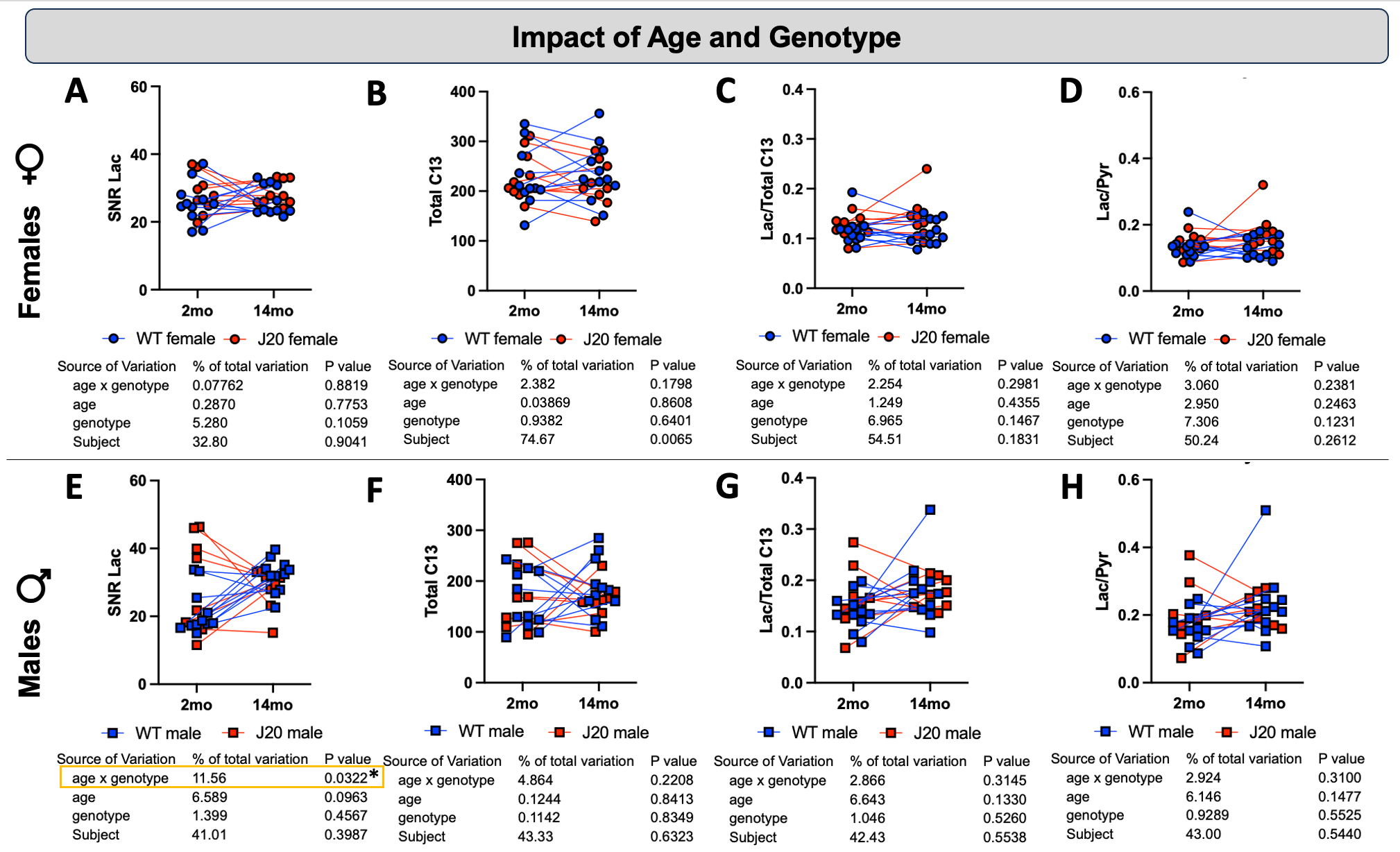
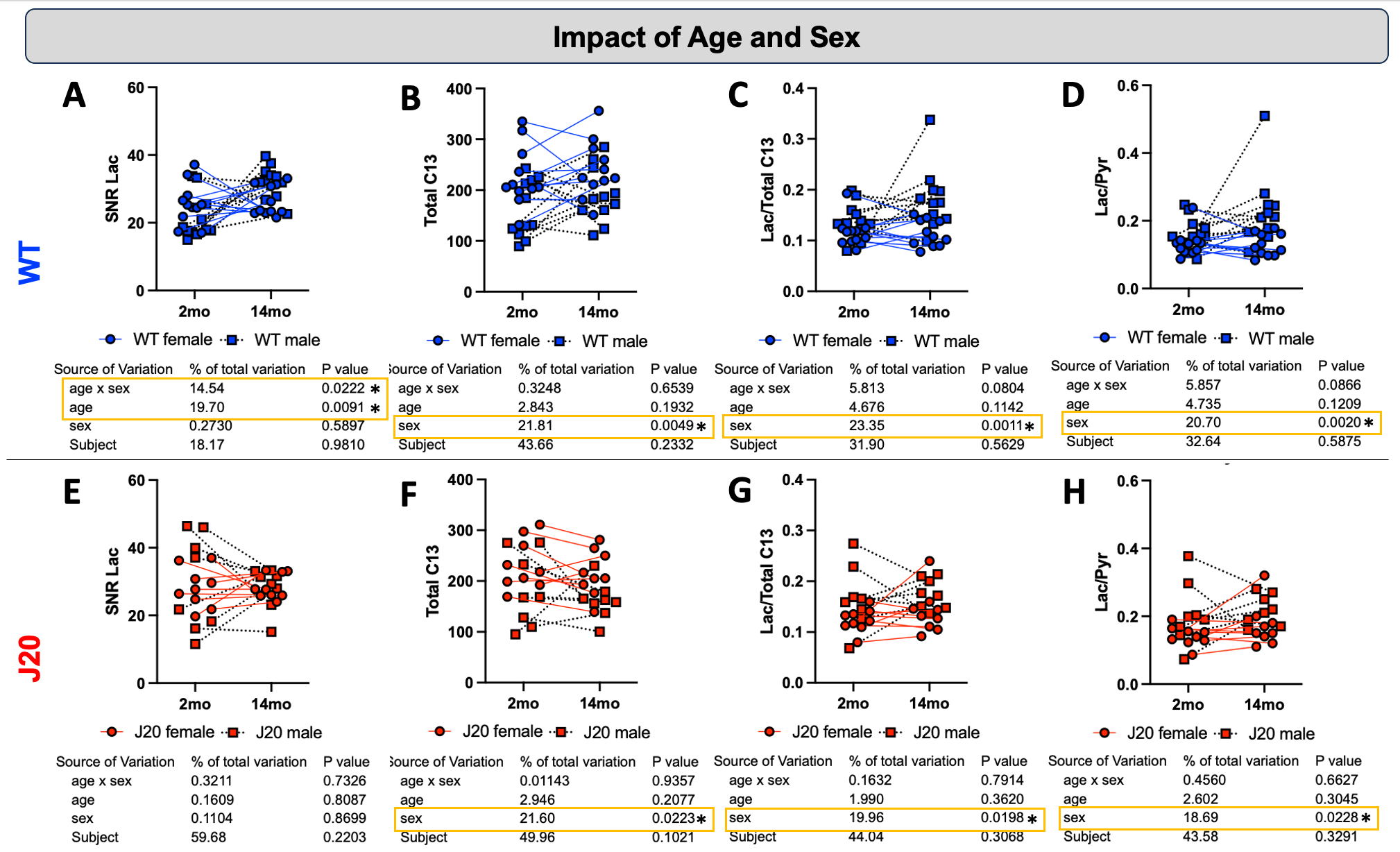
Figure 3 - 2-way anova analysis of age, sex and age x sex effects on metabolic metrics (Lac SNR, Lac/Pyr, total-13C, Lac/total-13C) in females (circle) and males (square) WT (top panel, A-D), and J20 (bottom panel, E-F) mice at 2 months- (2mo) and 14 months-old (14mo) time points.