3009
Challenges and recommendations for MRI protocol development in clinical practice: a UK based survey.1Department of Computer Science, University College London, London, United Kingdom, 2Lysholm Department of Neuroradiology, University College London Hospitals NHS Foundation Trust, London, United Kingdom, 3Department of Medical Physics and Bioengineering, University Hospitals Bristol and Weston NHS Foundation Trust, Bristol, United Kingdom, 4Department of Medical Physics and Clinical Engineering, Swansea Bay University Health Board, Swansea, United Kingdom
Synopsis
Keywords: Data Acquisition, MR Value, Protocol development
Motivation: MR protocol development in a clinical setting is essential for running an optimal MRI service within Radiology. However, there is no clear path to implementation.
Goal(s): The purpose of this study was to understand the varied nature of MR protocol development within the clinical setting in the UK.
Approach: We conducted a survey on MR protocol development, and approached MR Physicists, Radiographers and Radiologists within the UK.
Results: Results highlighted the current lack of resources, particularly scanner and staff time. Respondents also highlighted the importance of implementing processes, enabling communication and disseminating results.
Impact: Establishing good practice in MRI protocol development can lead to major improvements within the radiological workflow, including efficiency and image quality gains for higher quality diagnosis and increased patient throughput.
Introduction
Good practice in MRI protocol development can lead to major improvements within the radiological workflow, including efficiency gains (patient throughput) and a reduction in health inequalities. MR protocol development requires input from radiologists, radiographers, physicists and manufacturers. In concert with a conference on “MR protocol development: optimisation and standardisation” [1], organised by the Institute of Physics and Engineering in Medicine (IPEM), we evaluated the state of MR protocol development, mainly within the UK, through a survey that addresses some key issues. Within this abstract we present results from the survey, which were also reflected in the discussions that took place at the conference.Methods
We created a survey in Microsoft Forms, titled “MRI protocol development (clinical optimisation and standardisation): a survey”, containing eight multiple choice questions and five free text questions to sample the current state of practice in MRI protocol development, perceived benefits, and areas and suggestions for improvements. Free text answers were coded into themes. The survey was shared and promoted across various MRI professional networks in the UK: jiscmail MRI Physics mailing list (which hosts clinically focused discussions on MR Physics), British Institute of Radiology newsletter and British Association of Magnetic Resonance Radiographers annual conference.Results
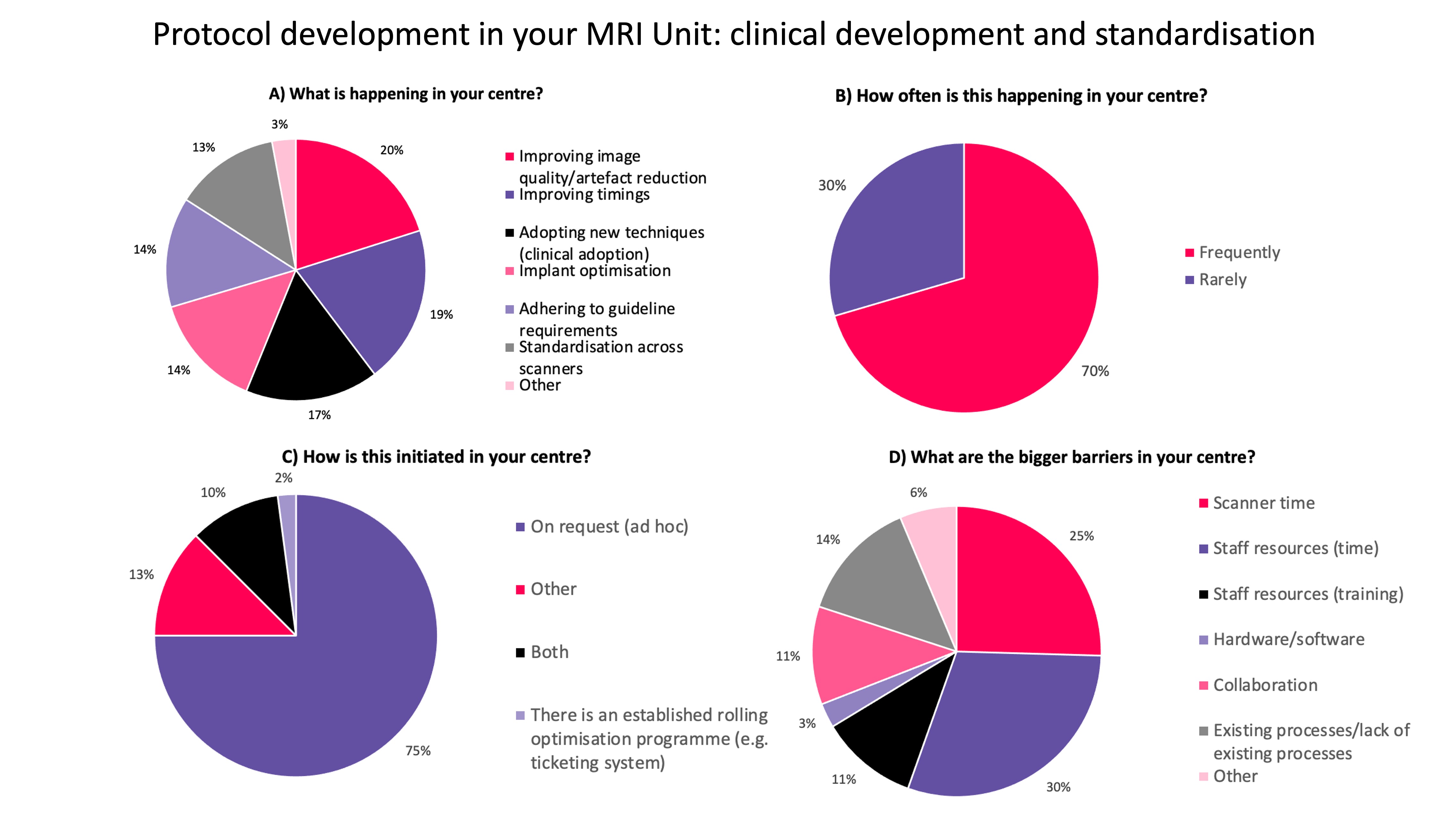
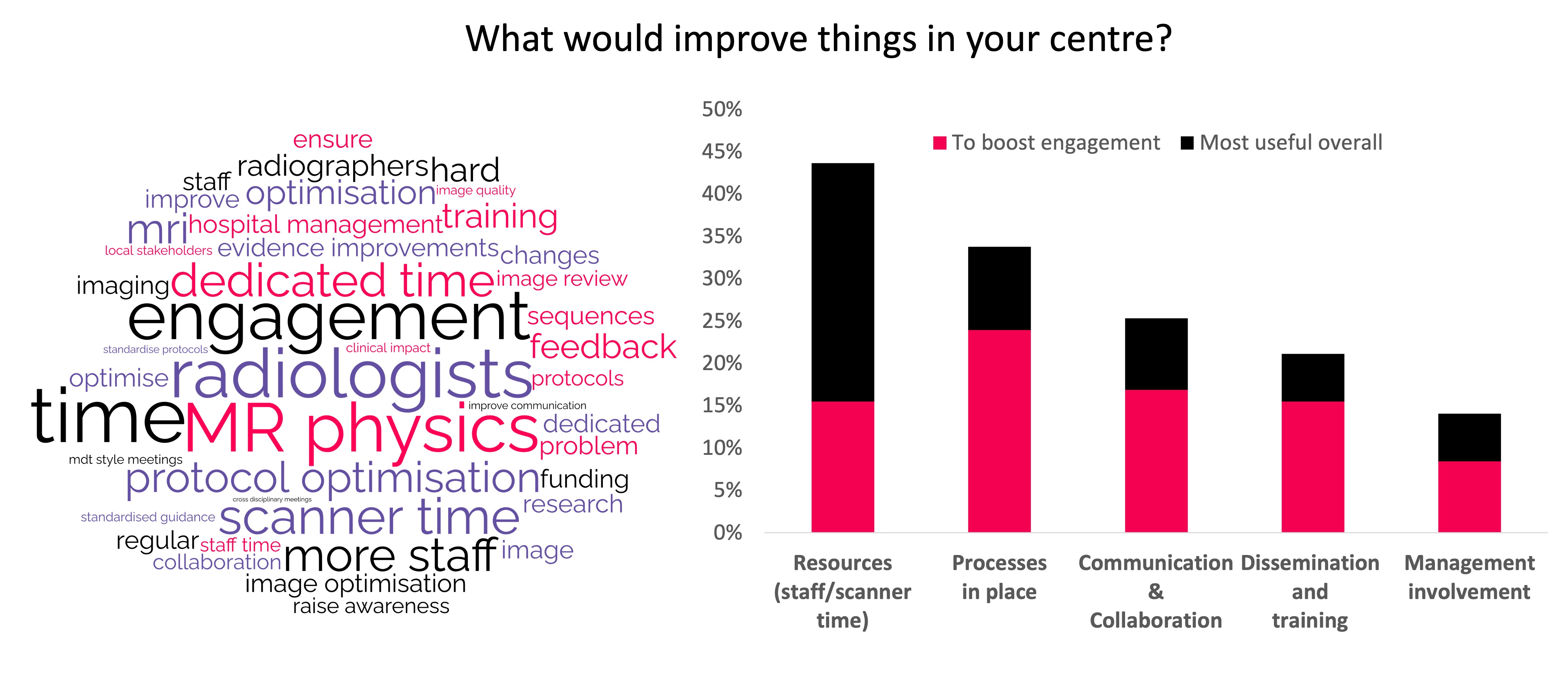
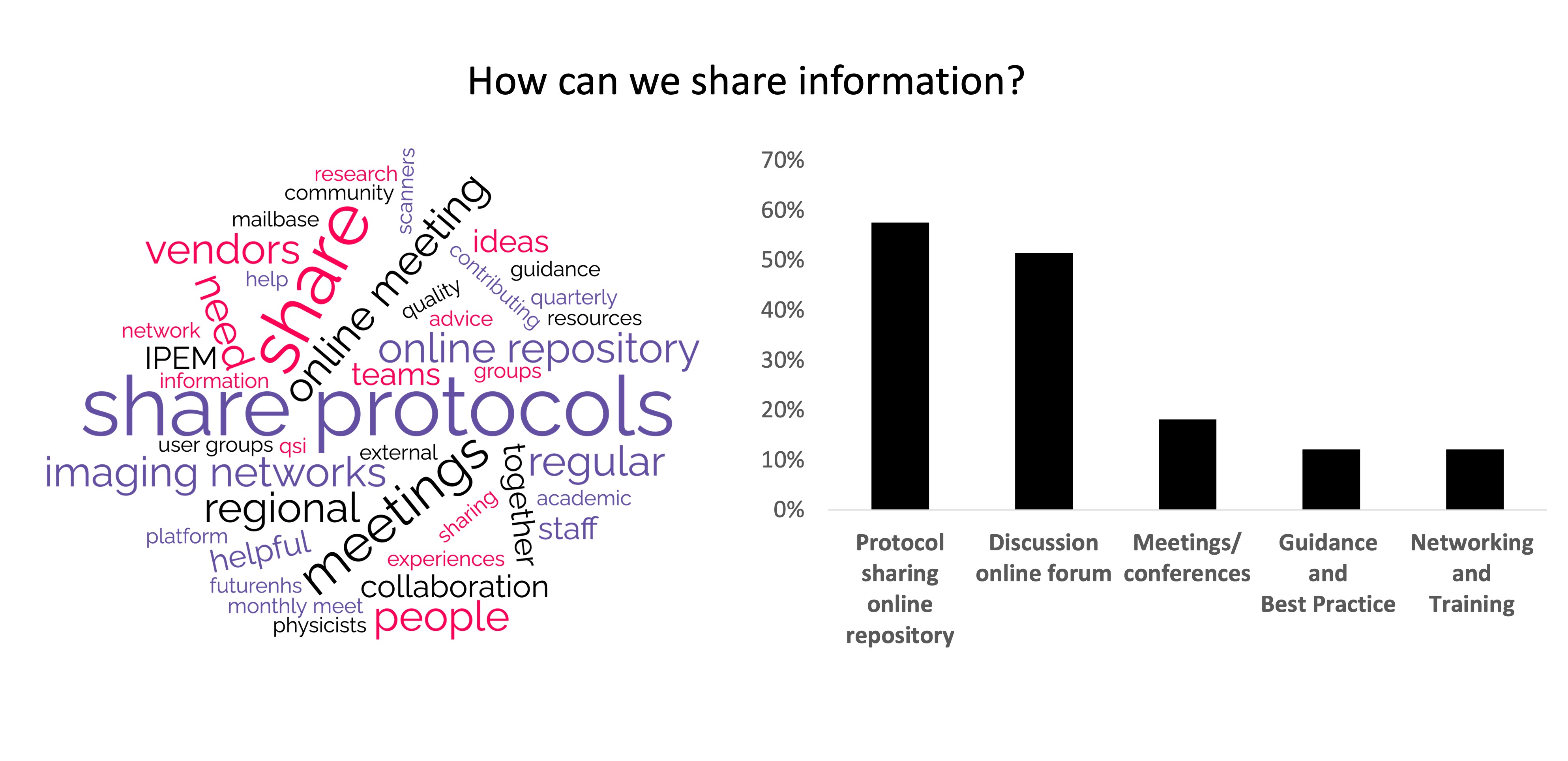
The survey had 44 respondents, of which 30 were MR Physicists, 9 were Radiographers and 3 were Radiologists. Figure 1 captures the current state of MR protocol development, including some of the barriers faced. Figures 2-5 show the themes raised by respondents, together with word clouds displaying common words and phrases.All participants stated that some protocol development activities were taking place at their centres. These were mostly ad hoc efforts, centred around improving image quality, reducing scanning times, adopting novel techniques, working around patients’ implants, and aiming to match current guidelines and standardisation endeavours.
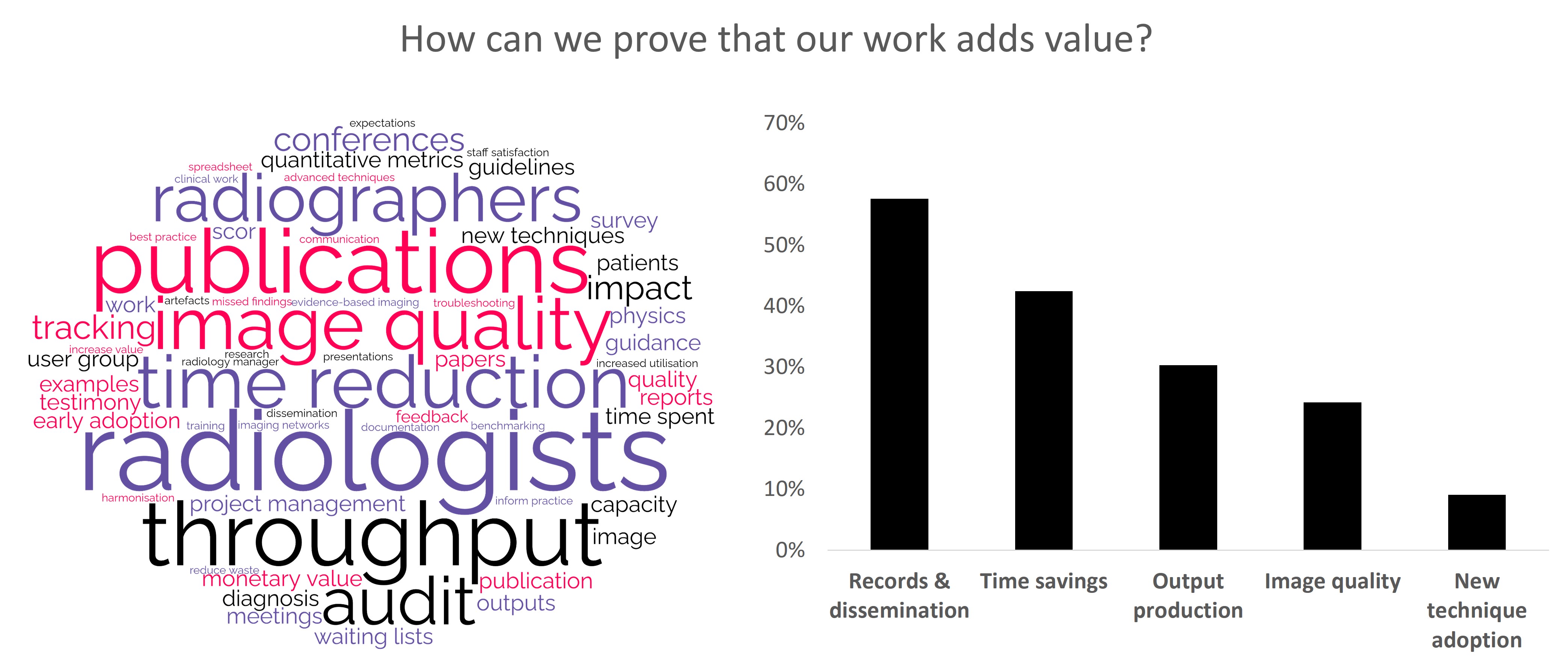
Challenges raised included shortage of resources (staff and scanner time), communication issues in a multidisciplinary clinical environment (between radiologists, radiographers and MRI Physicists), lack of existing processes and the difficulty in collecting appropriate evidence of service improvement. Respondents also identified the difficulty in standardising protocols and the tension between fully exploiting technological developments and maintaining consistency of diagnostic quality across an inhomogeneous scanner population.
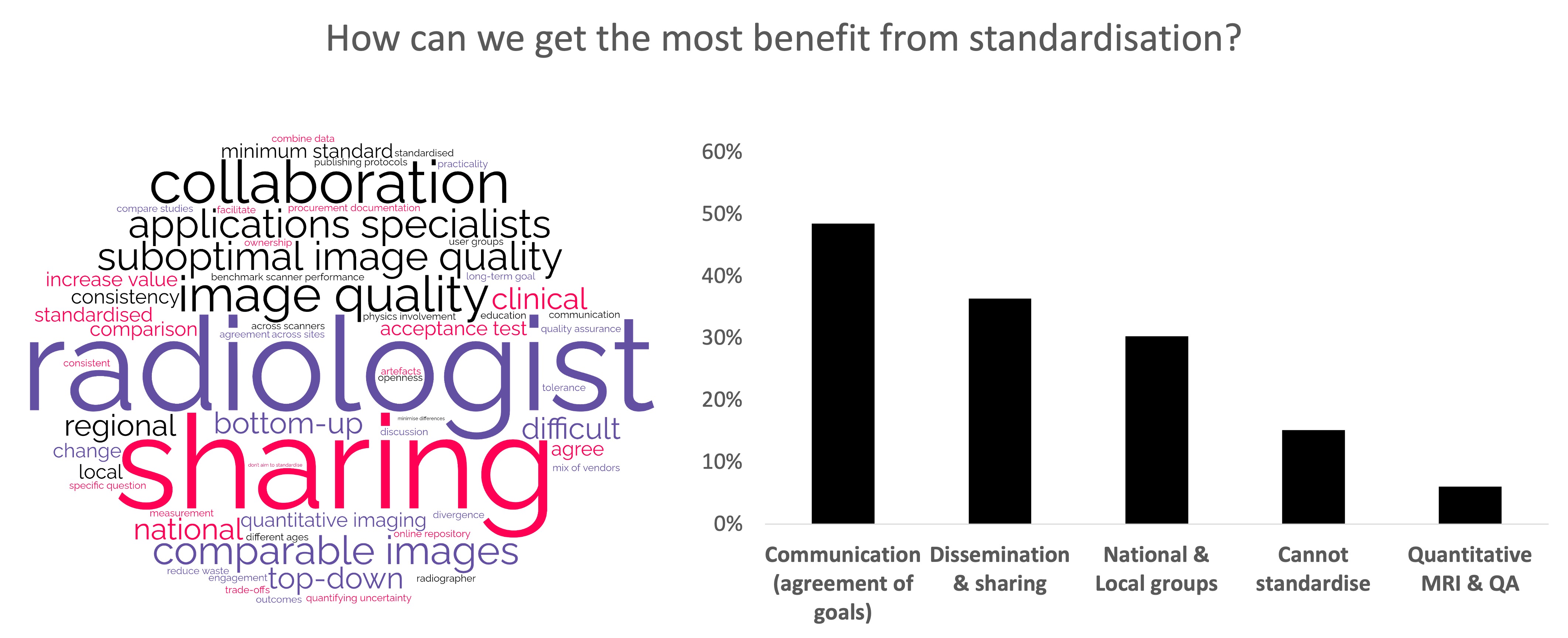
Suggested solutions were: stronger collaborations between teams, including regional and national efforts; avenues to share optimised protocols and lessons learned from optimisation projects; and improved interprofessional communication and project management of protocol development projects.
Discussion
Scanner and staff time/resources were cited as the biggest barrier by more than half of respondents (55%). This is consistent with clinical services reporting significant pressures, partly due to critical workforce issues for all three main staff groups involved in the UK [2-4]. Due to this difficult context, several respondents emphasized the need for raising the profile of protocol development and its clinical benefits to justify the allocation of resources to radiology managers.Absence of established processes (34% of respondents) and lack of engagement (25%) were also highly discussed. Protocol development is inherently multidisciplinary and complex; multiple stakeholders are required to work together to achieve the best clinical outcomes for patients. Primarily, radiologist engagement and availability were cited as a main obstacle, and several avenues were proposed to improve multidisciplinary work and communication, such as e.g. multi-disciplinary team meetings and/or a project management system. These would improve clarity around project goals and outcomes, promote tracking and recording, aid in responsive service provision, and collect evidence of improvement, all required to build engagement and trust with radiologists and radiology managers.
Sharing best practice was seen as a crucial way to overcome barriers and benefit from optimisation and standardisation (58%). A majority of responders identified an online protocol sharing repository (58%) or forum (52%) as the preferred resources. While there are existing mechanisms which partially fulfil these requirements, none of the current options are dedicated, searchable resources, nor are they easily accessible by a cross-professional userbase. Efforts are ongoing to provide a more suitable alternative, such as by IPEM’s MR Advanced Acceleration Techniques Task and Finish Group [5]. Furthermore, 30% of respondents identified the need for more formal and public information sharing, whether academic publications or best practice guidelines, to increase the impact and reach of protocol development work.
Conclusion
This survey highlights the challenges faced by centres attempting to optimise and standardise protocols. This is a complex, multi-profession process with mixed priorities being carried out by an under-resourced workforce. However, as a community, we can engender change by developing the necessary tools, disseminating practice, and raising awareness of the role of protocol development in improving patient care.Acknowledgements
We would like to thank the Institute of Physics and Engineering in Medicine (IPEM) MR Special Interest Group and the IPEM conference team, as well as respondents on the survey.References
[1] Institute of Physics and Engineering in Medicine, May 2023. MRI Protocol Development - Clinical Standardisation and Optimisation - IPEM. https://www.ipem.ac.uk/resources/past-conference-resources/mri-protocol-development-clinical-standardisation-and-optimisation/ [accessed 06/11/2023].
[2] Institute of Physics and Engineering in Medicine, Oct 2023. “MRI Physics Workforce Survey 2022” https://www.ipem.ac.uk/media/xa5clfln/mr-workforce-report-final-oct-2023.pdf [accessed 06/11/2023].
[3] The Royal College of Radiologists, 2022. “RCR Clinical Radiology Workforce Census 2022” https://www.rcr.ac.uk/clinical-radiology/rcr-clinical-radiology-workforce-census-2022 [accessed 06/11/2023].
[4] The College of Radiographers (CoR), 2021. “Diagnostic radiography workforce 2021 UK census” https://www.sor.org/CMSPages/GetFile.aspx?guid=9dbc9e49-4b03-4e6c-83cf-bade28aef1bb&versionhistoryid=40703 [accessed 06/11/2023].
[5] Institute of Physics and Engineering in Medicine, 2023. MR Advanced Acceleration Technology Experience Resource, MR AAT Task and Finish Group https://www.ipem.ac.uk/resources/mr-advanced-acceleration-technology-task-and-finish-group/mr-advanced-acceleration-technology/ [accessed 06/11/2023].
Figures