2872
IVIM-DWI prediction of pCR before neoadjuvant chemotherapy in breast cancer1Fujian Provincial Hospital,China, Fuzhou,Fujian, China, 2MR Research Collaboration, Siemens Healthineers, City, China, China, China
Synopsis
Keywords: IVIM, Breast
Motivation: A nomogram incorporated radiomics and morphology was developed to predict pCR.
Goal(s): This study developed a predictive model using baseline imaging of morphology and radiomics for the purpose of predicting the pCR to NACT.
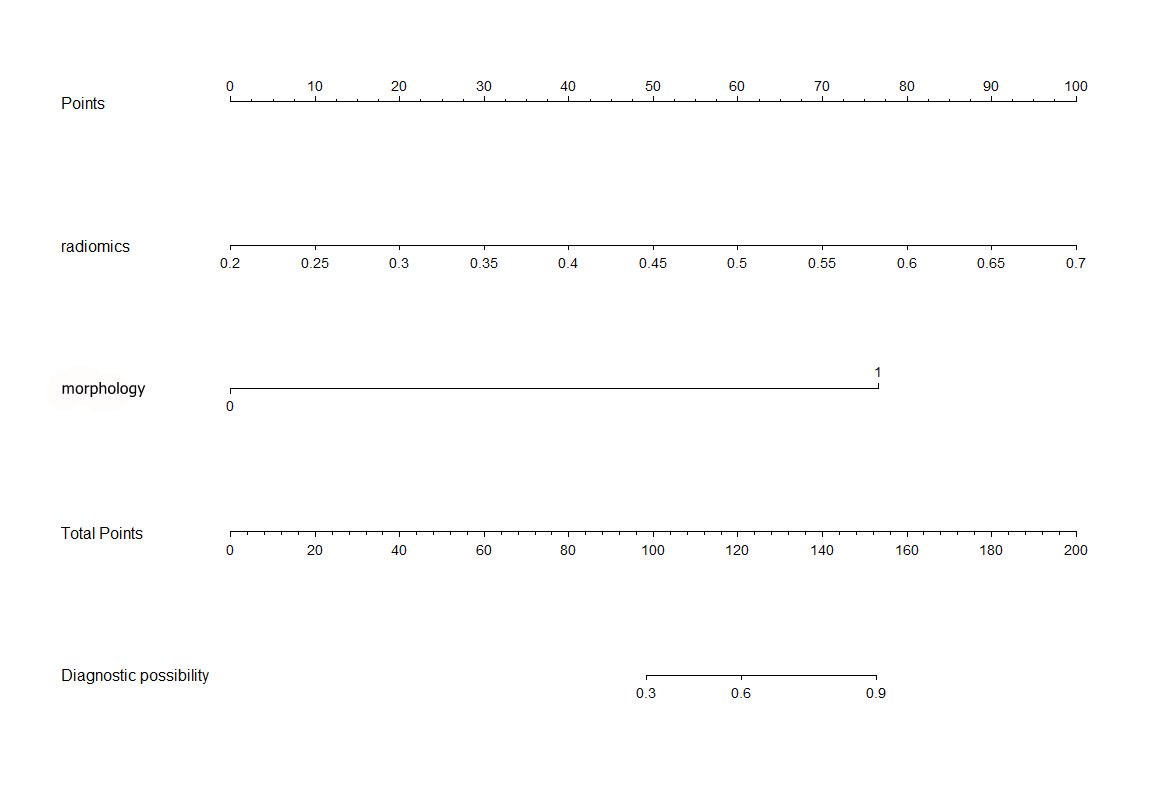
Approach: Radiomics and conventional magnetic resonance imaging signs analysis were performed. To build a nomogram model that integrates the radiomics signature and conventional imaging, a logistic regression method was employed.
Results: The nomogram showed good performance and was a valuable tool in clinic.
Impact: Through the validation process, the nomogram developed in this study showed good performance, effectively predicting pCR in breast cancer. Hence, it serves as a valuable tool for informing individualized treatment decision-making for breast cancer patients.
Introduction
Breast cancer accounts for approximately 30% of female cancers and has a mortality-to-incidence ratio of 15%. Medical professionals have established neoadjuvant chemotherapy (NACT) as the primary treatment for patients diagnosed with locally advanced breast cancer [1]. NACT aims to minimize the size of the primary tumor and decrease disease staging, thereby facilitating breast conservation[2]. Previous reports suggest that the rates of pCR in these patients varied from 45% to 6%, which were determined by the NACT regimen employed and the tumor subtype [3]. Therefore, timely detection of patients who will not respond to NACT would allow them to avoid taking ineffective therapies, while enabling personalized modifications to be made to their treatment plan. In accordance with the NCCN Clinical Practice Guidelines in Oncology-Breast Cancer (version 2.2022), Magnetic Resonance Imaging (MRI) is the recommended method for evaluating the response of breast cancer to NACT. An functional MRI technique, known as intravoxel incoherent motion (IVIM)-DWI, enables visualization of molecular diffusion and perfusion occurring in tissues. Moreover, it allows for the quantification of various perfusion parameters, including microvascular perfusion fraction (f) and incoherent perfusion-related microcirculation (D*) within capillary networks, as well as diffusion parameters such as the pure diffusion coefficient (D) within tissues.In 2012, Dutch researcher Lambin et al [4] initially introduced the concept of radiomics, which has emerged as a valuable tool in the field of oncology. Breast cancer tumors reveal strong temporal and spatial heterogeneity. Tumor heterogeneity analyses can be conducted using medical imaging techniques such as MRI, which eliminates the need for additional data collection. However, currently, there is no application that includes baseline IVIM radiomics data for predicting the effectiveness of NACT in breast cancer.This study aims to develop morphology and radiomics models based on IVIM DWI baseline imaging for the purpose of predicting the pCR to NACT in patients with breast cancer.
Methods
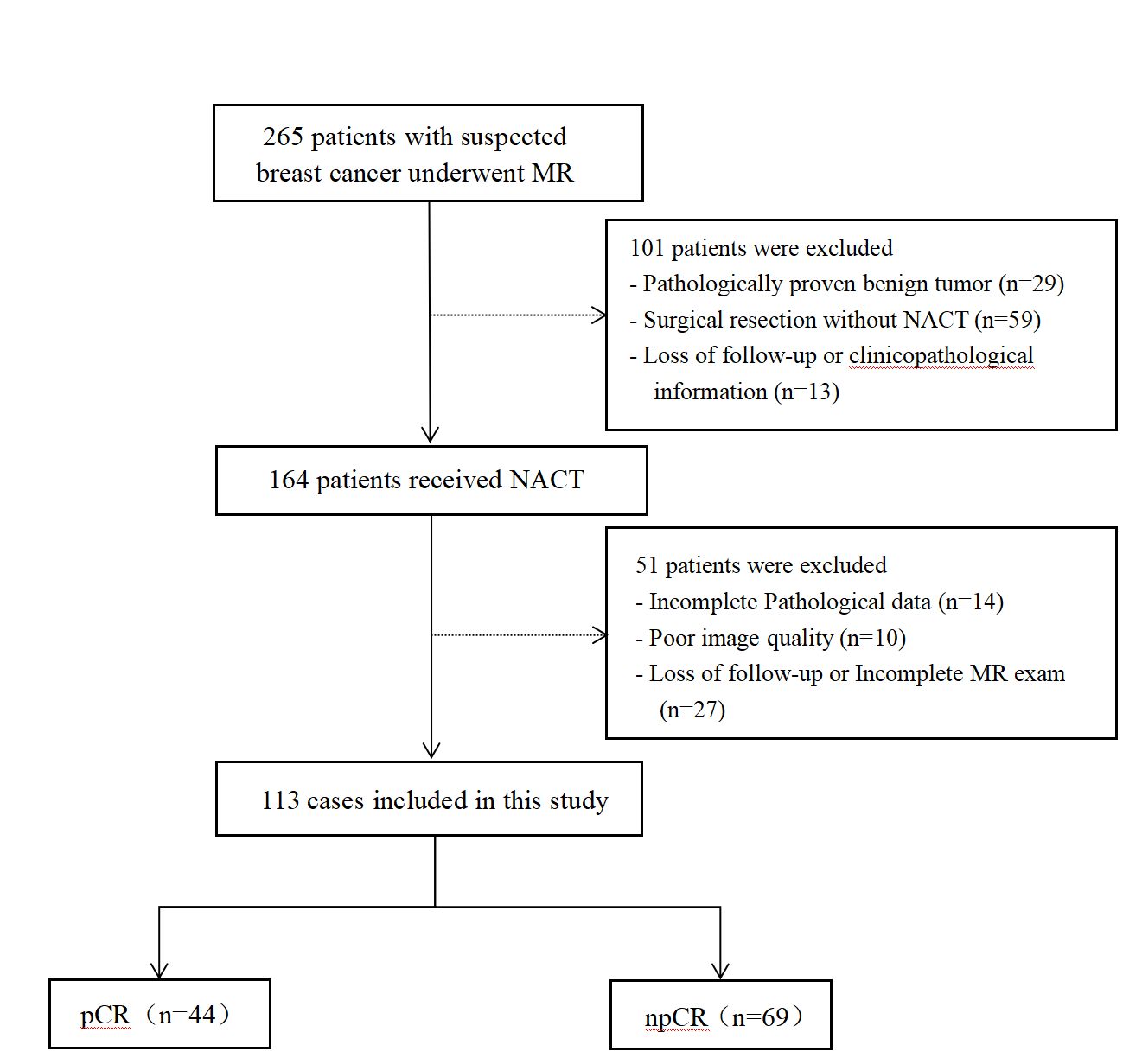
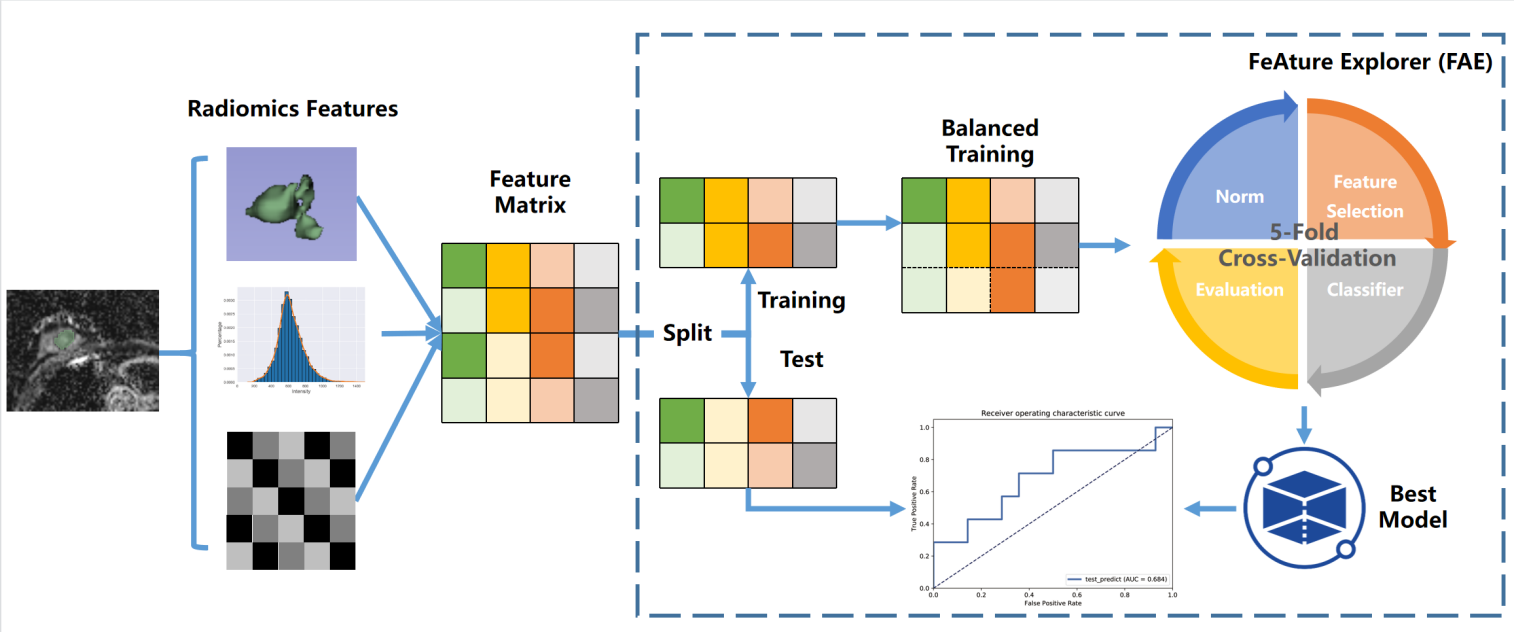
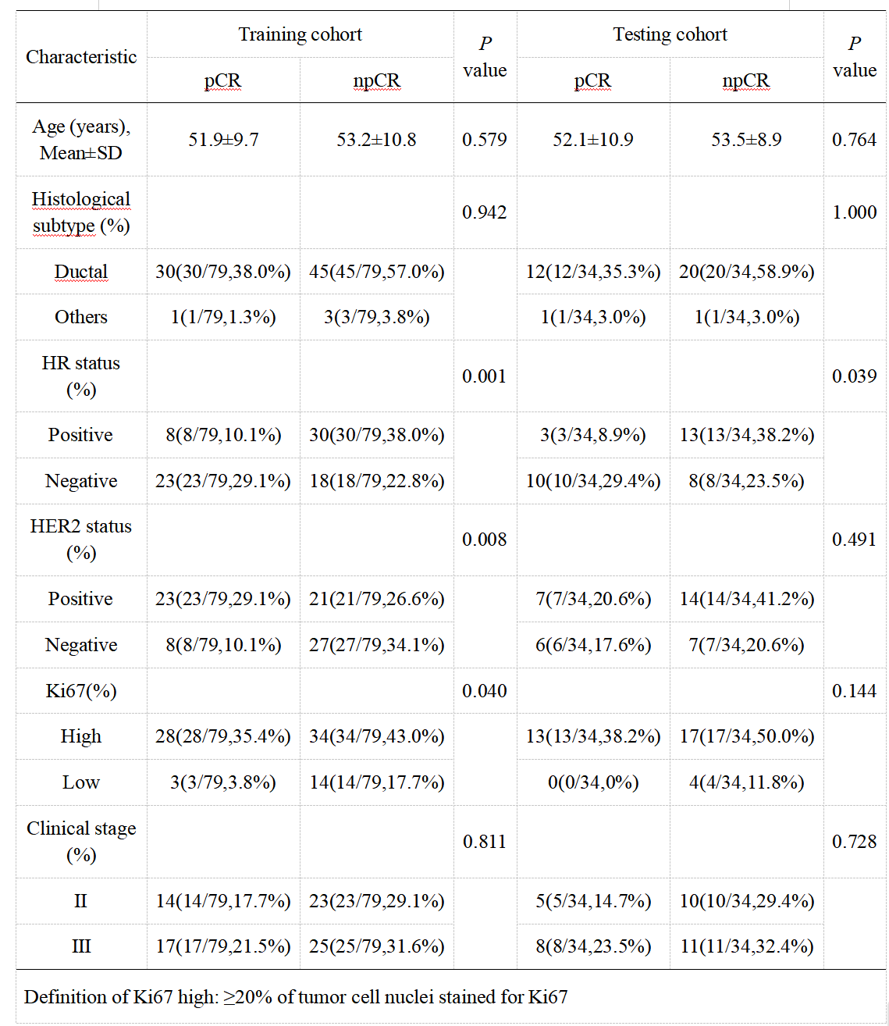
A total of 265 patients who underwent 3.0 T MRI ((MAGNETOM Prisma, Siemens Healthcare, Erlangen, Germany) scans before NACT were examined. Among them, 113 female patients with stage II–III breast cancer were included(Figure 1). The training data set consisted of 79 patients (31/48=pCR/Non-PCR, npCR), while the remaining 34 cases formed the validation cohort (13/21=pCR/npCR)(Table 1). Radiomics and conventional magnetic resonance imaging signs analysis were performed(Figure 2). To build a nomogram model that integrates the radiomics signature and conventional imaging, a logistic regression method was employed. The performance evaluation of the nomogram involved the area under the receiver operating characteristic curve (AUC), a decision curve analysis, and the calibration slope.Results
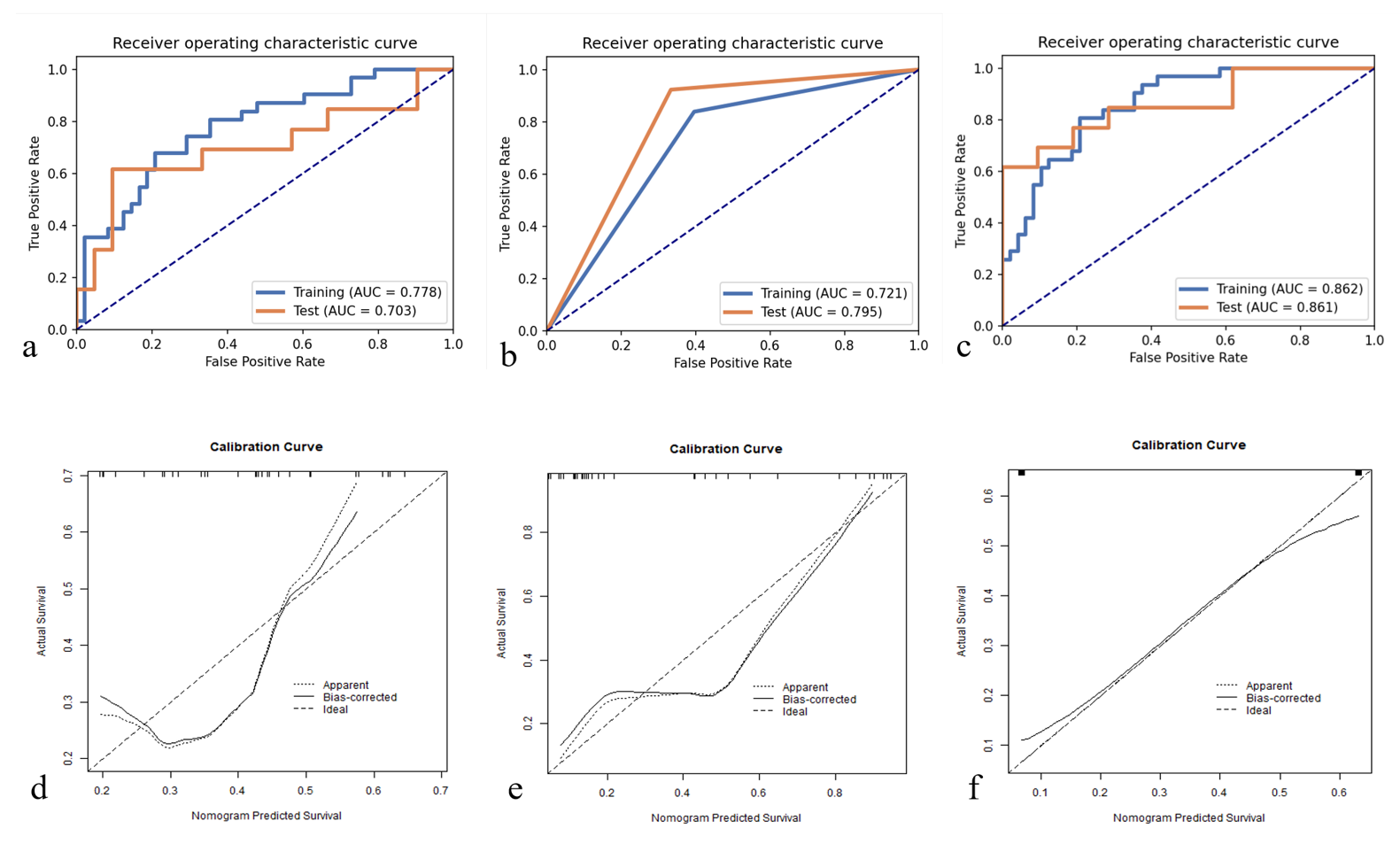
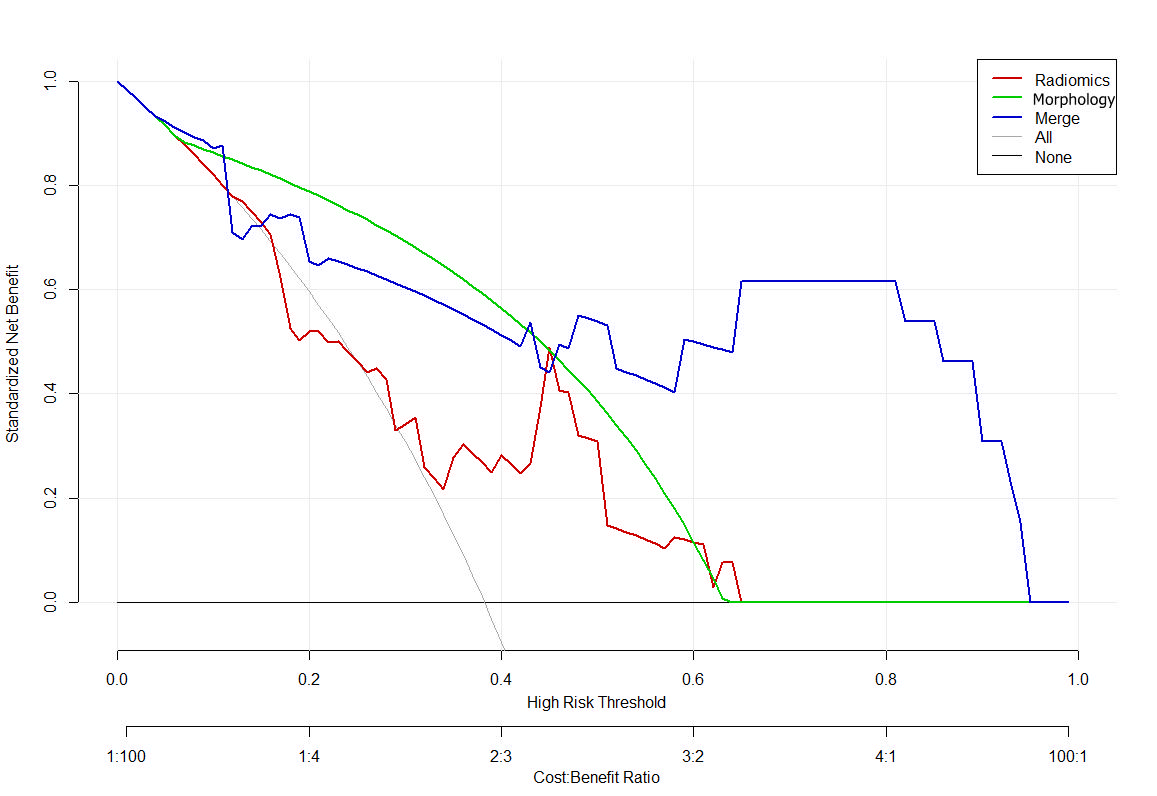
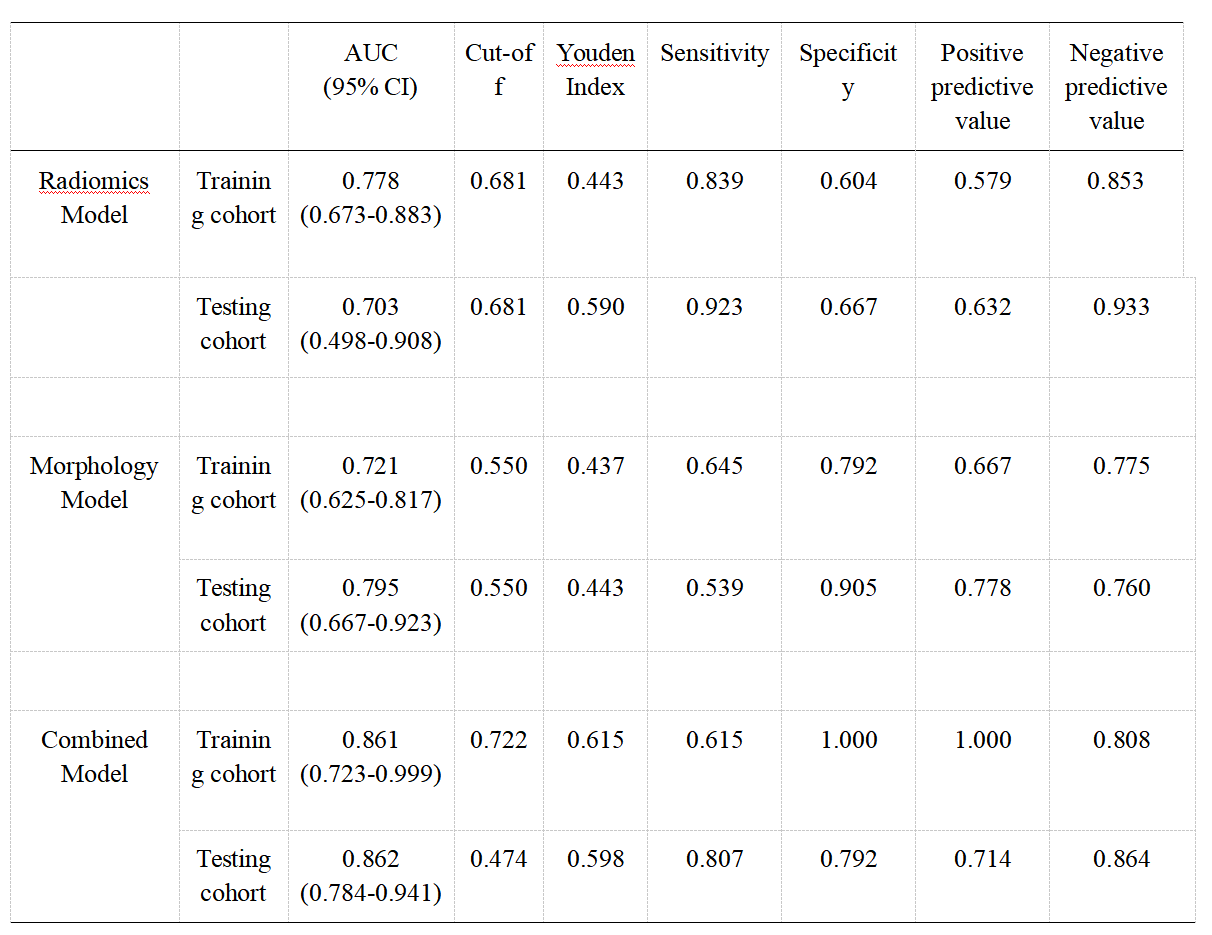
In an assessment for predicting pCR, the radiomics model displayed an AUC of 0.778 and 0.703 for the training and testing cohorts, respectively. Conversely, the morphology model exhibited an AUC of 0.721 and 0.795 for the training and testing cohorts, respectively. (Figure 3)The nomogram displayed superior predictive discrimination with an AUC of 0.862 for the training cohort and 0.861 for the testing cohort.(Figure 4, Table 2)Decision curve analyses indicated that the nomogram provided the highest clinical net benefit. (Figure 5)Discussion and Conclusion
Precise prediction of post-NACT pCR in breast cancer patients plays a vital role in treatment decision-making and patient prognosis. In our study, we selected nine b-values, ensuring that seven of them were below 200 s/mm2 to accurately capture water molecule diffusion and blood microcirculation perfusion. The IVIM map can reflect both diffusion information and perfusion signals. Tumor uptake of chemotherapy drugs depends on local blood perfusion and capillary permeability. IVIM MRI, a functional MRI technique, enables the visualization of molecular diffusion and perfusion in tissues and the quantification of specific perfusion parameters, without the need for contrast agent injection. The radiomics model based on relevant parameter maps of IVIM achieved an AUC of 0.778 in the training cohort and 0.703 in the testing cohort, indicating strong predictive capability. Earlier studies have demonstrated that in breast cancer, the baseline map of NACT reveals pCR more prominently in masses compared to NME[5]. The morphological signs of the baseline map of breast cancer are easy to assess with high agreement among different observers, and morphological prediction of the baseline map has a certain value. When combined with radiomic features, morphological information can improve the predictive efficacy of the model. In conclusion, performing a nomogram consisting of integrated morphology and radiomics assessment using IVIM-DWI before NACT enables effective prediction of pCR in breast cancer. This predictive model therefore can facilitate medical professionals in making individualized treatment decisions.Acknowledgements
· NACT is a Breast Cancer treatment that doesn’t always lead to pCR.
· A nomogram incorporated radiomics and morphology was developed to predict pCR.
· The nomogram showed good performance and was a valuable tool in clinic.
References
1. Burstein HJ, Curigliano G, Thürlimann B et al (2021) Customizing local and systemic therapies for women with early breast cancer: the St. Gallen International Consensus Guidelines for treatment of early breast cancer 2021. Ann Oncol 32:1216-1235. https://doi.org/10.1016/j.annonc.2021.06.023
2. Halberg AK, Gravesen CD, Cold S, Jensen JD (2020) Neoadjuvant chemotherapy for primary operable breast cancer. Dan Med J 67:A01200010.
3. Bonnefoi H, Litière S, Piccart M et al (2014) Pathological complete response after neoadjuvant chemotherapy is an independent predictive factor irrespective of simplified breast cancer intrinsic subtypes: a landmark and two-step approach analyses from the EORTC 10994/BIG 1-00 phase III trial. Ann Oncol 25:1128-1136. https://doi.org/10.1093/annonc/mdu118
4. Lambin P, Rios-Velazquez E, Leijenaar R et al (2012) Radiomics: extracting more information from medical images using advanced feature analysis. Eur J Cancer 48:441-446. https://doi.org/10.1016/j.ejca.2011.11.036
5. Reig B, Lewin AA, Du L et al (2021) Breast MRI for Evaluation of Response to Neoadjuvant Therapy. Radiographics 41:665-679. https://doi.org/10.1148/rg.2021200134
Figures