2859
Assessment of Glymphatic Function in Acute High Altitude Reaction: by diffusion tensor image analysis along the perivascular space (DTI-ALPS)1Department of Medical Imaging Center, Qinghai University Affiliated Hospital, Xining, China, 2United Imaging Research Institute of Intelligent Imaging, Beijing, China
Synopsis
Keywords: DWI/DTI/DKI, Brain, Diffusion tensor image analysis along the perivascular space (DTI-ALPS),Acute high altitude reaction
Motivation: Diffusion tensor image analysis along the perivascular space(DTI-ALPS) is a novel non-invasive assessment of the activity of the human brain's lymphoid system, which is currently being used to assess the function of the lymphoid system in patients with acute high altitude reaction(AHAR).
Goal(s): To evaluate the activity of the glymphatic system in patients with AHAR using DTI-ALPS, and explore the relationship between lymphoid function and disease severity.
Approach: Recruited 5 patients with AHAR and calculated ALPS index, Pearson correlation analysis were used for evaluating relationship between ALPS index and diagnostic scoring.
Results:
There was a significant correlation between DTI-ALPS and disease scores(r=-0.964 P=0.005).
Impact: DTI-ALPS is a novel non-invasive assessment of the activity of the human brain's lymphoid system, which is currently being used to assess the function of the lymphoid system in patients with AHAR.
INTRODUCTION
Acute Highland Reaction (AHAR), also known as Acute Mild Altitude Disease (AMAD), is a rapid adaptive response to the plateau stress environment after the body enters the high altitude area in order to make the various physiological functions of the body to reach a new equilibrium state.Symptoms of acute altitude reaction include dizziness, panic, loss of appetite, fatigue, nausea or vomiting, numbness and convulsions in the hands and feet, and other corresponding adaptive changes in the physiological functions of the body.
DTI-ALPS is a novel non-invasive assessment of the activity of the human brain's glymphatic system, which is currently being used to assess the function of the glymphatic system in patients with AHAR.
Therefore, this study aims to measure the changes of lymphoid function in acute high altitude reaction patients, and to explore the relationship between glymphatic function and disease severity by using DTI-ALPS.
METHODS
Five patients (Table 1) were recruited from the Affiliated Hospital of Qinghai University between August and November 2023 who were rushed into high altitude areas in accordance with the national military standard GJB 1098-91 diagnosed as acute plateau reaction by clinical rigor. The patients' symptoms were evaluated and scored according to the diagnostic criteria.Diffusion imaging was acquired by using a 3.0-T clinical scanner (uMR 880, United Imaging Healthcare, Shanghai, China). DTI sets with b= 0, b= 1000 were acquired simultaneously in addition to conventional morphology images. We calculated ALPS-index in order to evaluate the activity of the glymphatic system in individual cases. This index is provided by the ratio of two sets of diffusivity value which are perpendicular to dominant fibers in the tissue, that is the ratio of mean of x-axis diffusivity in the area of projection fibers (Dxproj) and x-axis diffusivity in the area of association fibers (Dxassoc) to the mean of y-axis diffusivity in the area of projection fibers (Dyproj) and z-axis diffusivity in the area of association fibers (Dzaccoc) as follows.ALPS index = mean (Dxproj, Dxassoc)/mean (Dyproj, Dzassoc).
As for mPLD-ASL image acquisition, labeling pulses with a duration of 1200 ms. The post-labeling delay (PLD) was set to 0/500/1000/1500/2000 ms. Images were obtained with FOV of 224 mm x 224 mm and matrix size of 64 x 64. 32 thin slices were acquired, with repetition time (TR) of 5786 ms and echo time (TE) of 13 ms. Each volunteer underwent data acquisition for a pair of label and control images.
RESULTS
In our study, we found that the activity of the glymphatic system could be effectively assessed using DTI-ALPS technology (Table 1). Correlation analysis results show that a significant negative correlation was observed between DTI-ALPS measurements and disease scores (r = -0.964, P = 0.005). This finding underscores to the potential clinical utility of DTI-ALPS in evaluating disease status and glymphatic system activity.For 2 patients underwent asl imaging, we conducted a detailed analysis of cerebral blood flow in white matter regions. Our observations revealed that patients with AHAR disease exhibited higher mean cerebral blood flow values throughout the white matter regions of the brain when compared to individuals in a normal state [ref]. This result suggests a potential association between AHAR disease and abnormal white matter perfusion.
CONCLUSION
There was a significant negative correlation between DTI-ALPS and disease scores, indicating a correlation with disease severity. Elevated CBF in whole brain white matter may also correlate with disease severity and DTI-ALPS.The clinical implications suggest that both DTI-ALPS and CBF may be involved in the pathogenesis and severity of AHAR.
Acknowledgements
We would like to thank all the patients in this study.References
[1]Junjun W ,Ying Z ,Kemeng Z , et al. Glymphatic function plays a protective role in ageing-related cognitive decline. [J]. Age and ageing, 2023, 52 (7):
[2]Xiaodan L ,Giuseppe B ,Xingfeng S , et al. Cross-Vendor Test-Retest Validation of Diffusion Tensor Image Analysis along the Perivascular Space (DTI-ALPS) for Evaluating Glymphatic System Function. [J]. Aging and disease, 2023,
[3]Jung Y B ,JongMin K ,Se B C , et al. Altered Brain Glymphatic Flow at Diffusion-Tensor MRI in Rapid Eye Movement Sleep Behavior Disorder. [J]. Radiology, 2023, 221848-221848.
[4] The Nomenclature, Classification and Diagnostic Criteria of High Altitude Disease in China [J]. Journal of High Altitude Medicine, 2010, 20 (01): 5-9.
[5] Wu, T.I.. A comprehensive review of the establishment of diagnostic criteria for altitude sickness in China [J]. Journal of High Altitude Medicine, 1995, (03): 3-8.
Figures
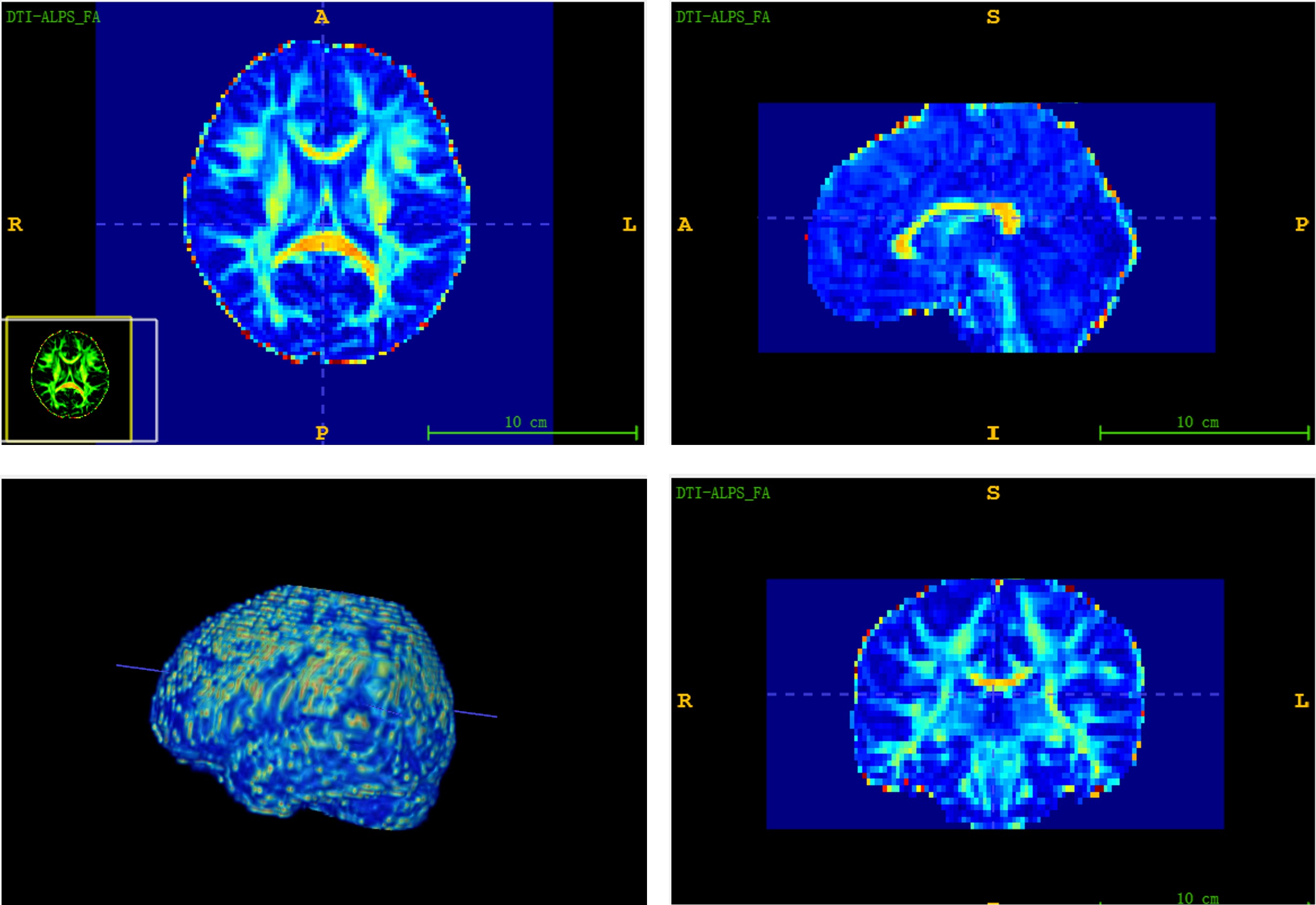
Figure 1:DTI-ALPS FA Value Chart.
ALPS index = mean (Dxproj, Dxassoc)/mean (Dyproj, Dzassoc)
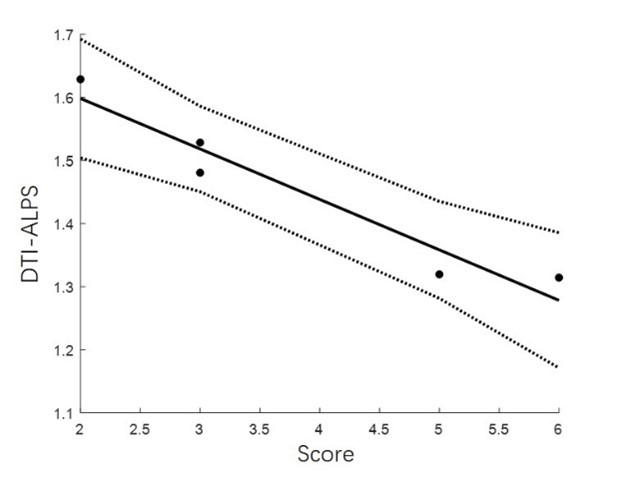
Figure 2:Correlation coefficient graph.
Correlation analysis results show that a significant negative correlation was observed between DTI-ALPS measurements and disease scores (r = -0.964, P = 0.005).
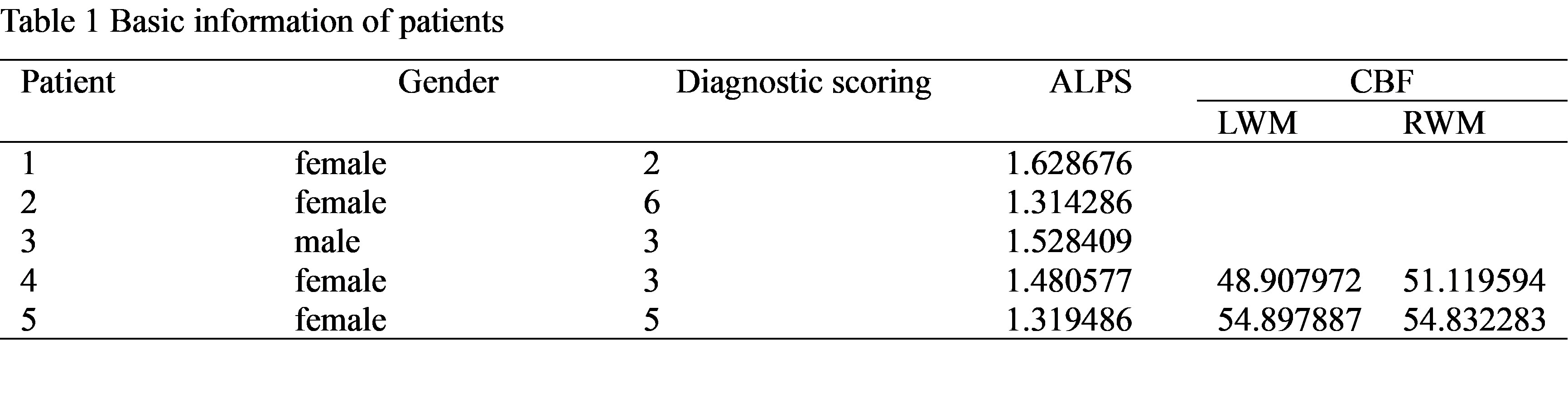
Table 1:Basic information of patients.
For 2 patients underwent asl imaging, we conducted a detailed analysis of cerebral blood flow in white matter regions. Our observations revealed that patients with AHAR disease exhibited higher mean cerebral blood flow values throughout the white matter regions of the brain when compared to individuals in a normal state.
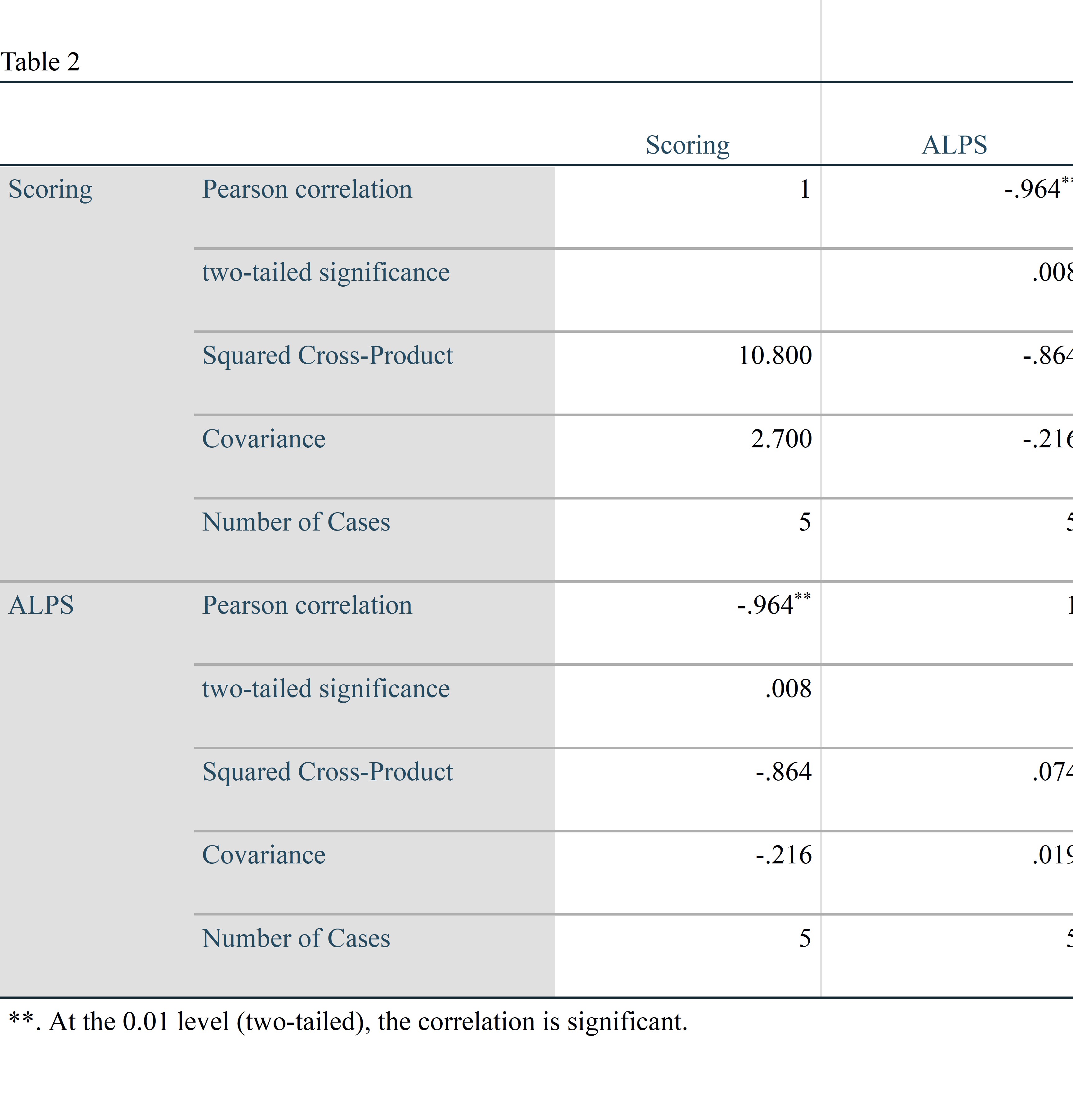
Table 2:Table of correlation coefficients.
Pearson correlation analysis were used for evaluating relationship between ALPS index and diagnostic scoring.