2806
CAMERA-NET: Cascade Multi-Level Wavelet neural network with data consistency for MRI Reconstruction
Gaojie Zhu1,2, Xiongjie Shen2, and Hua Guo1
1Department of Biomedical Engineering, School of Medicine, Tsinghua University, Center for Biomedical Imaging Research, Beijing, China, 2Anke High-tech Co., Ltd, Shenzhen, China
1Department of Biomedical Engineering, School of Medicine, Tsinghua University, Center for Biomedical Imaging Research, Beijing, China, 2Anke High-tech Co., Ltd, Shenzhen, China
Synopsis
Keywords: Machine Learning/Artificial Intelligence, Machine Learning/Artificial Intelligence
Motivation:
Goal(s):
Approach:
Results:
Impact: The improved reconstruction capabilities of CAMERA-Net have the potential to enhance precision and reliability when reconstructing under-sampled MRI data. This could result in more efficient clinical scans.
Introduction
The lengthy acquisition time of MRI due to physical constraints poses a notable obstacle for its clinical usage. Various methods, including parallel imaging and compressed sensing, have been proposed and employed for sparse MR signal recovery to enable under-sampled MRI acquisition and reconstruction (1, 2, 3). In recent years, extensive research and application of deep learning techniques have been applied in computer vision, speech processing, semantic understanding and signal processing. In addition, deep learning methods have been increasingly investigated for under-sampled MRI reconstruction, surpassing even compressed sensing techniques (4). Originally designed for the segmentation of biomedical images (5), U-Net's distinct encoding-decoding structure conserves spatial image details, allowing for pixel-level prediction through end-to-end processing. U-Net has, therefore, been successfully utilized to expedite MRI reconstruction with commendable performance (6). However, the pooling operation employed in the encoding layer may lead to a gridding effect, while the interpolation used in the decoding layer can result in image blurring and artifacts.In this study, wavelet transform and inverse wavelet transform are introduced to replace pooling and interpolation operations in order to maintain the spatial information of images during the encoding-decoding process within the neural network. With that, we present CAMERA-Net, a multi-level wavelet neural network developed for under-sampled MRI reconstruction.
Methods
The process of under-sampled MRI reconstruction is defined as finding $$$x$$$ from sub-sampled $$$y$$$ as follows: , $$y = SFx + e, [1]$$ Where $$$x$$$ is the target complex valued image, $$$F$$$ denotes Fourier transform, $$$S$$$ is the sub-sampling mask that selects points from k-space to be sampled, and $$$e$$$ represents the signal noise. Equation (1) represents a standard ill-posed inverse problem that must be resolved with a prior knowledge. The underdetermined optimization problem solution using the neural network approach can be represented as follows:$$argmin_{x} \{{\Vert x-f_{net}(y|\theta) \Vert}_2^2 + {\lambda} {\Vert SFx - y \Vert}_2^2 \} , [2]$$ Where $$$\theta$$$ represents all of the structural parameters that define the neural network, which may vary in size depending on the type of the network; $$$y$$$ denotes the subsampled k-space; and $$$f_{net}(y|\theta)$$$ denotes the forward mapping process of the neural network structure defined by $$$\theta$$$ with $$$y$$$ as input, with the aim of producing an image with reduced aliasing artifacts.Fig. 1 illustrates the CAMERA-Net structure proposed in this research. The method consists of three primary components. First, instead of using pooling and interpolation operations, we apply wavelet transform and inverse wavelet transform during the encoding-decoding process to ensure spatial information preservation. Second, the neural network implements a DC layer to combine predicted data with acquired k-space data for improved data consistency. Finally, the wavelet module and DC layer are executed in an iterative scheme to efficiently propagate the ill- posed inverse problem and allow for flexibility in terms of accuracy, efficiency and model size. Our experimental data is obtained from the fastMRI knee dataset, with the training set comprising 9154 slices and the test set comprising 1768 slices. To test the reconstruction task with R=4, CAMERA-NET adopts the typical SSIM as the loss function.
Results
Five experiments were conducted to evaluate the quantitative performance of CAMERA-NET. The assessment of the effect of DWT and IDWT was validated through a comparison of the performance of U-Net and Wavelet-Net in Table 1 and Fig.2. The PSNR, SSIM and NMSE show that the Wavelet-Net has better performance than U-Net with results of 32.95, 0.8649, and 0.0152 as opposed to 32.72, 0.8621, and 0.0167.The DC layer was observed to further enhance the reconstruction performance of Wavelet-Net for PSNR, SSIM, and NMSE, as reflected in Table 1, which improved to 33.88, 0.8713, and 0.0133 respectively.
Figure 3 illustrates the effect of the cascade number on reconstruction performance. The metrics for performance reconstruction, including SSIM, PSNR, and NMSE, improve as the number of cascades increases from 1 to 8.
Conclusion & Discussion
Drawing inspiration from both wavelet transform and convolutional neural network, we investigate a novel technique called CAMERA-NET intended for under-sampled MRI reconstruction. Our results demonstrates significant enhancement in reconstructing quality with public fastMRI knee dataset.Acknowledgements
No acknowledgement found.References
1. Pruessmann KP, Weiger M, Scheidegger MB, Boesiger P. SENSE: sensitivity encoding for fast MRI. Magn Reson Med. 1999;42:952-962 2. Griswold MA, Jakob PM, Heidemann RM, et al. Generalized autocalibrating partially parallel acquisitions (GRAPPA). Magn Reson Med. 2002 6;47:1202-1210 3. Lustig M, Donoho D, Pauly JM. Sparse MRI: the application of compressed sensing for rapid MR imaging. Magn Reson Med. 2007;58:1182-1195 4. Hammernik K, Klatzer T, Kobler E, et al. learning a variational network for reconstruction of accelerated MRI data. Magn Reson Med. 2018; 79:3055-3071. 5. Ronneberger O, Fischer P, Brox T. U-net: convolutional networks for biomedical image segmentation. In: Navab N, Hornegger J, Wells WM, Frangi AF, eds. International Conference on Medical Image Computing and Computer Assisted Intervention; 2015:234-241 6. Lee D, Yoo J, Tak S, Ye J. Deep residual learning for accelerated MRI using magnitude and phase networks. IEEE Trans Biomed Eng. 2018;65:1985-1995Figures
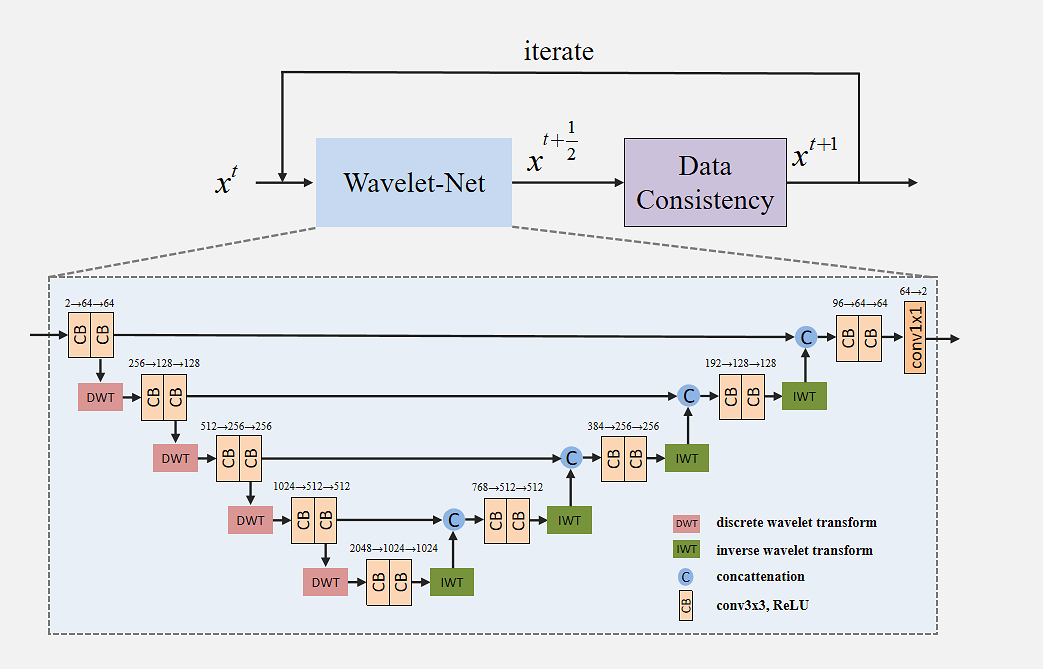
Fig. 1. Overview of the CAMERA-NET
framework. The core of CAMERA-Net is the Wavelet Net, which replaces pooling
and interpolation operations with wavelet transform and inverse wavelet
transform during the encoding-decoding process to ensure spatial information
preservation of the neural network. The output of the Wavelet-net is further
processed within the data consistency (DC) layer to merge predicted data with
acquired k-space data. An iterative scheme is proficiently utilized to
propagate the ill-posed inverse problem.
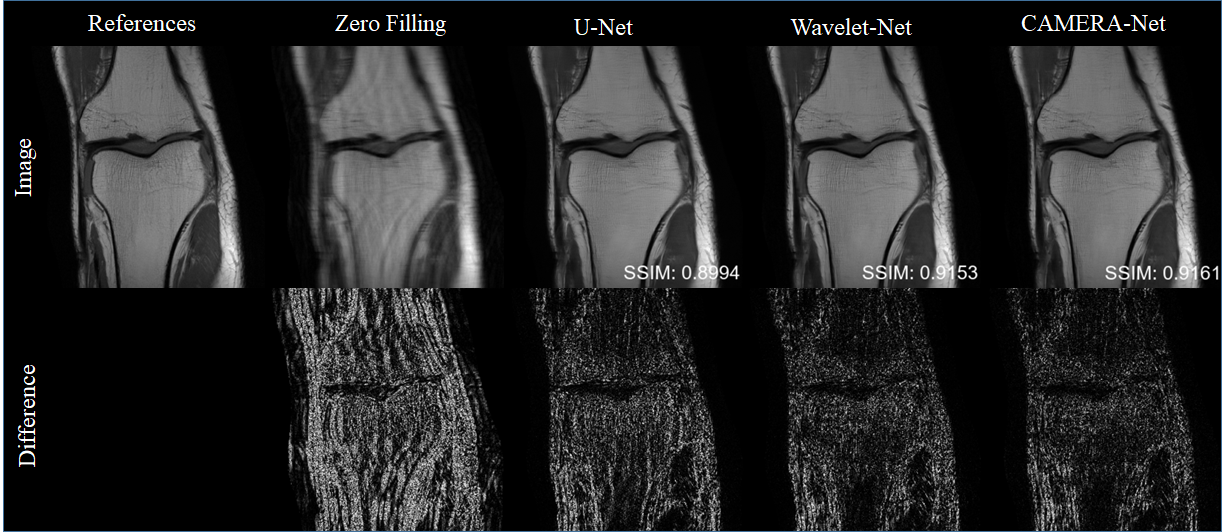
Fig. 2. Reconstruction results of coronal
PD-weighted scans from various models. The first row displays the reconstruction
results, and the second row shows the difference image in reference to the
fully sampled image. Wavelet-Net produces a higher SSIM value than U-Net, while
CAMERA-Net yields further improvement.
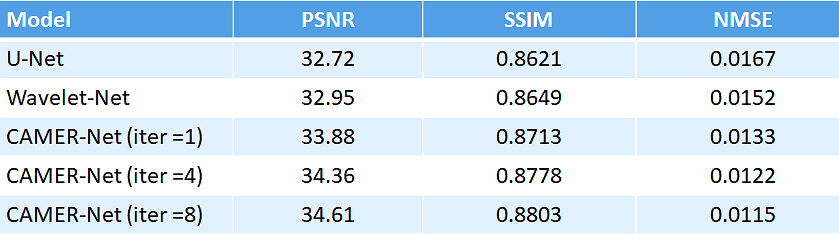
Table 1: Performance comparison between
different models and configurations.
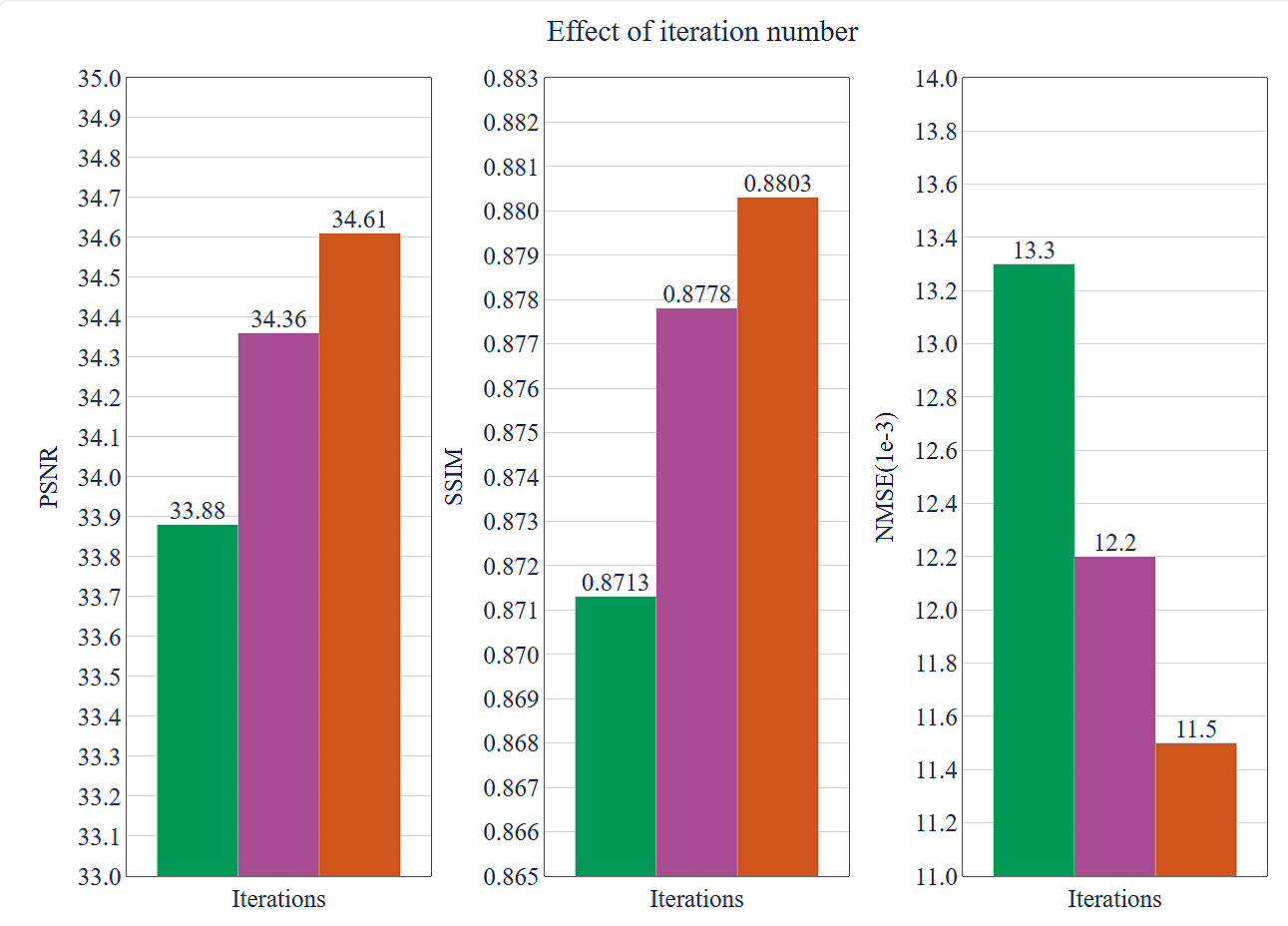
Fig. 3. The Impact of Increasing Iteration
Number on Reconstruction Performance. It can be observed that the performance
metrics, including PSNR, SSIM, and NMSE, improve with an increased number of
iterations.
DOI: https://doi.org/10.58530/2024/2806