Chengxia Liu1, Yuanhao Li1, Wenhao Zhu1, Shiqi Yang2, Yuanyuan Qin1, Tian Tian1, Jiaxuan Zhang1, Shun Zhang1, and Wenzhen Zhu1
1Tongji Hospital of Tongji Medical College of Huazhong University of Science and Technology, Wuhan, China, 2School of Biomedical Engineering and Imaging, Xianning Medical College, Hubei University of Science and Technology, Xianning, China
Synopsis
Keywords: Neurofluids, Brain, neurofluids
Motivation: While changes of neurofluid dynamic has been observed in CSVD, the potential inter-correlations between them are still unclear.
Goal(s): Our goal was to demonstrate the potential interactive dynamics of neurofluids including the parenchyma perfusion, the glymphatic pathway, and the intracranial CSF in CSVD patients.
Approach: Parenchyma perfusion was assessed with pASL, glymphatic dynamics was assessed with DTI- ALPS, and CSF volume of ventricles was also quantified.
Results: The interactive dynamics of neurofluids of CSVD patients is significantly altered compared with that of normal elderly.
Impact: Disruption of neurofluid dynamics may play an important role in the pathophysiology of CSVD.
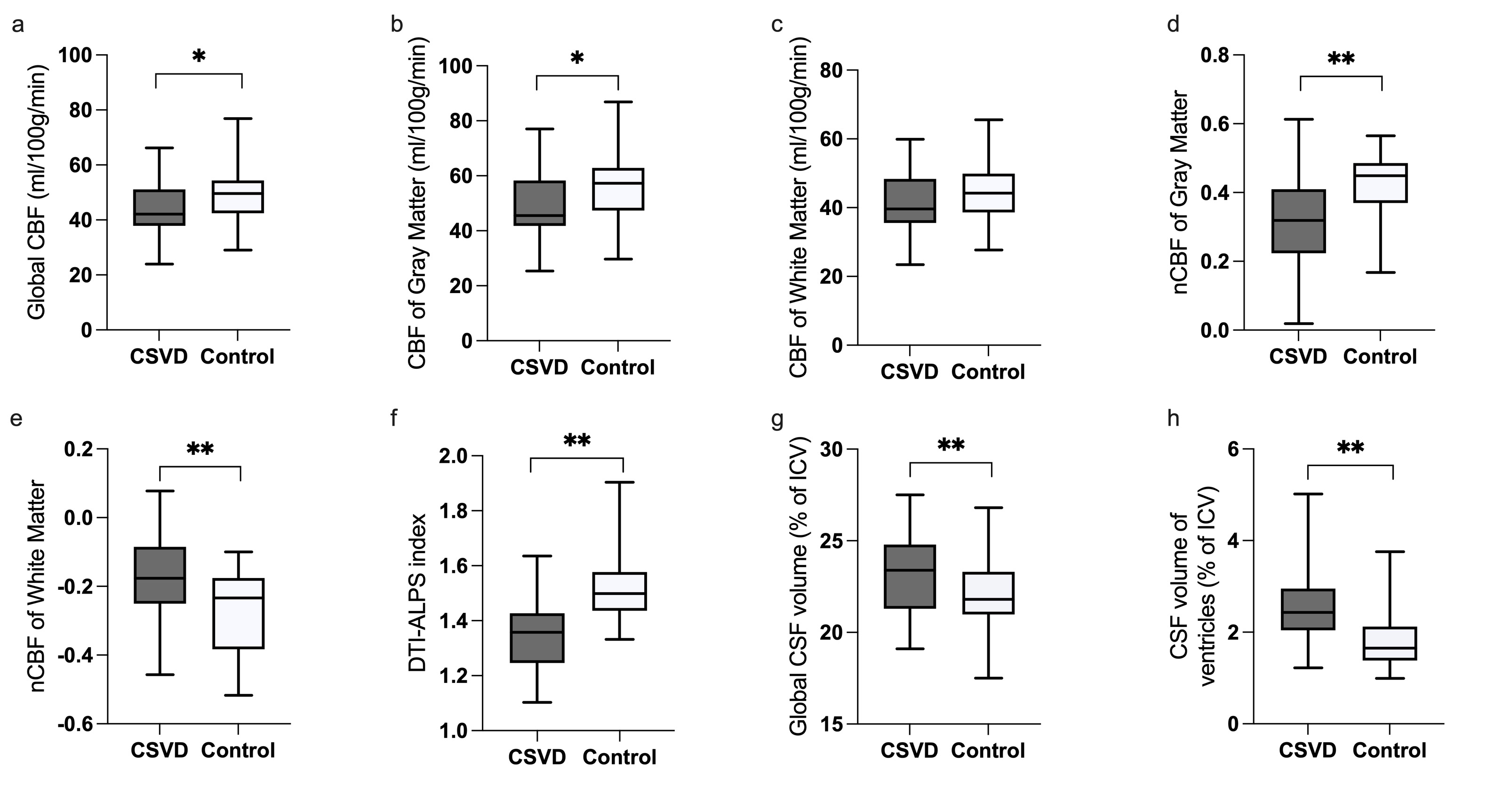
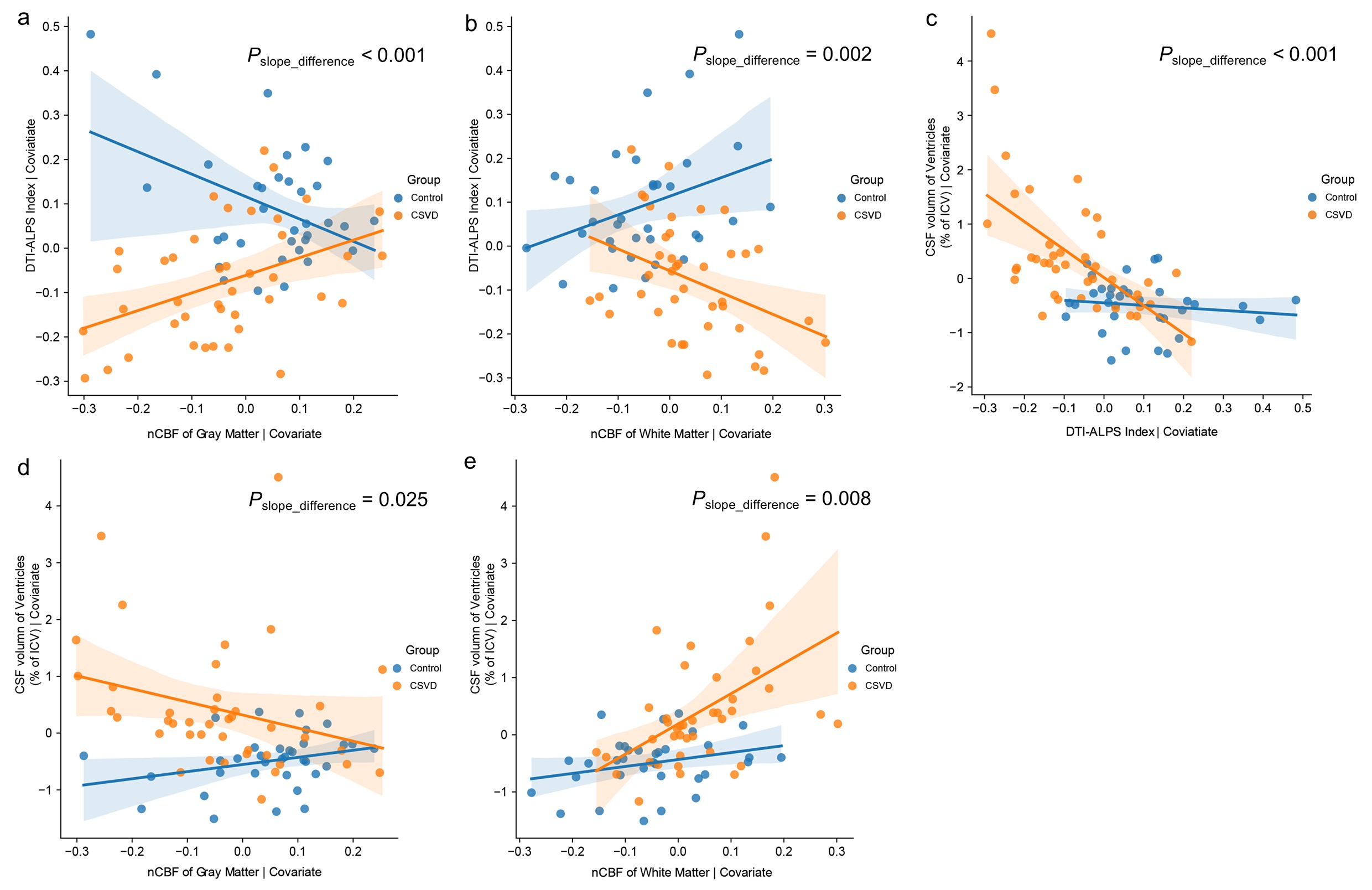
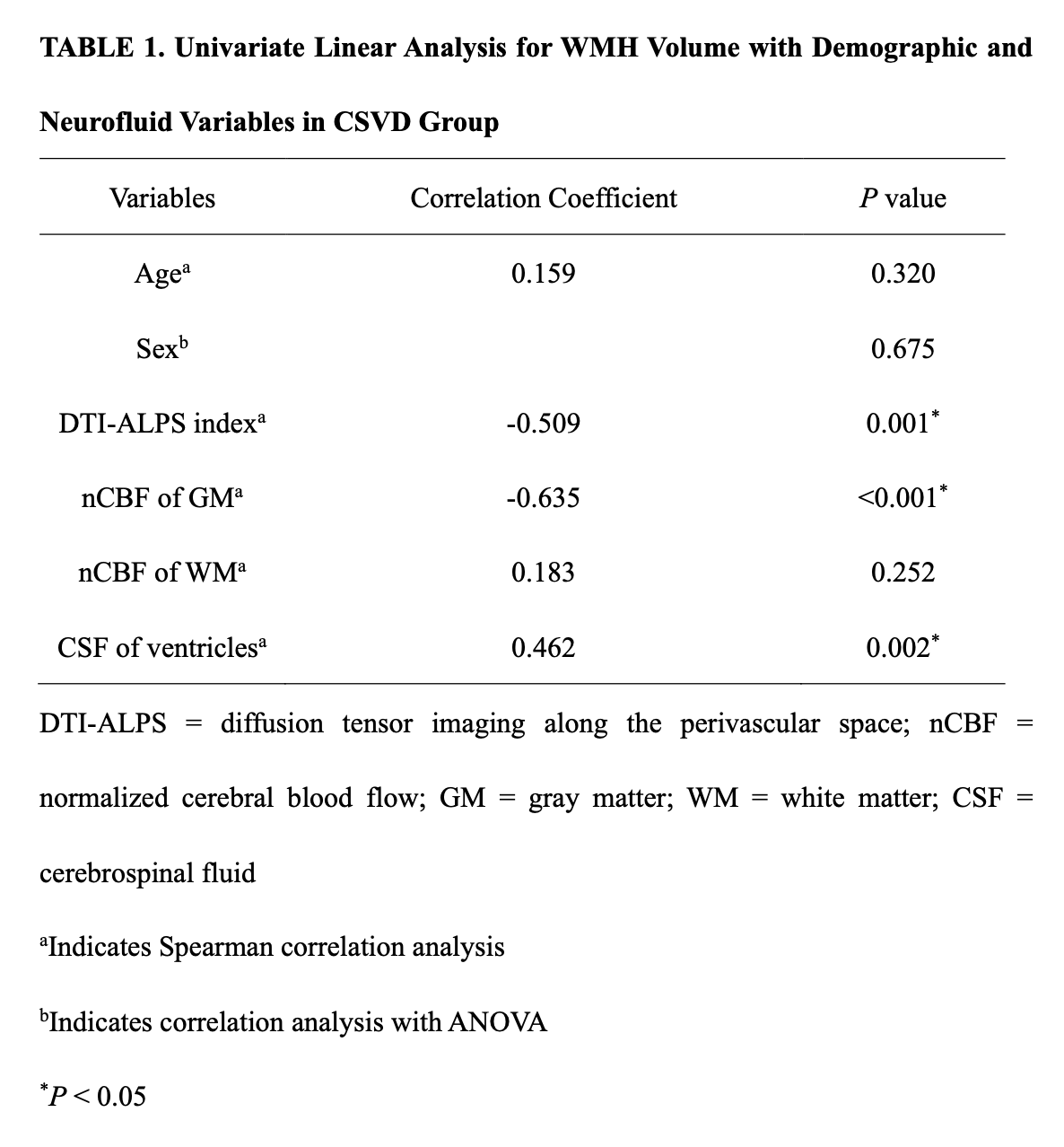
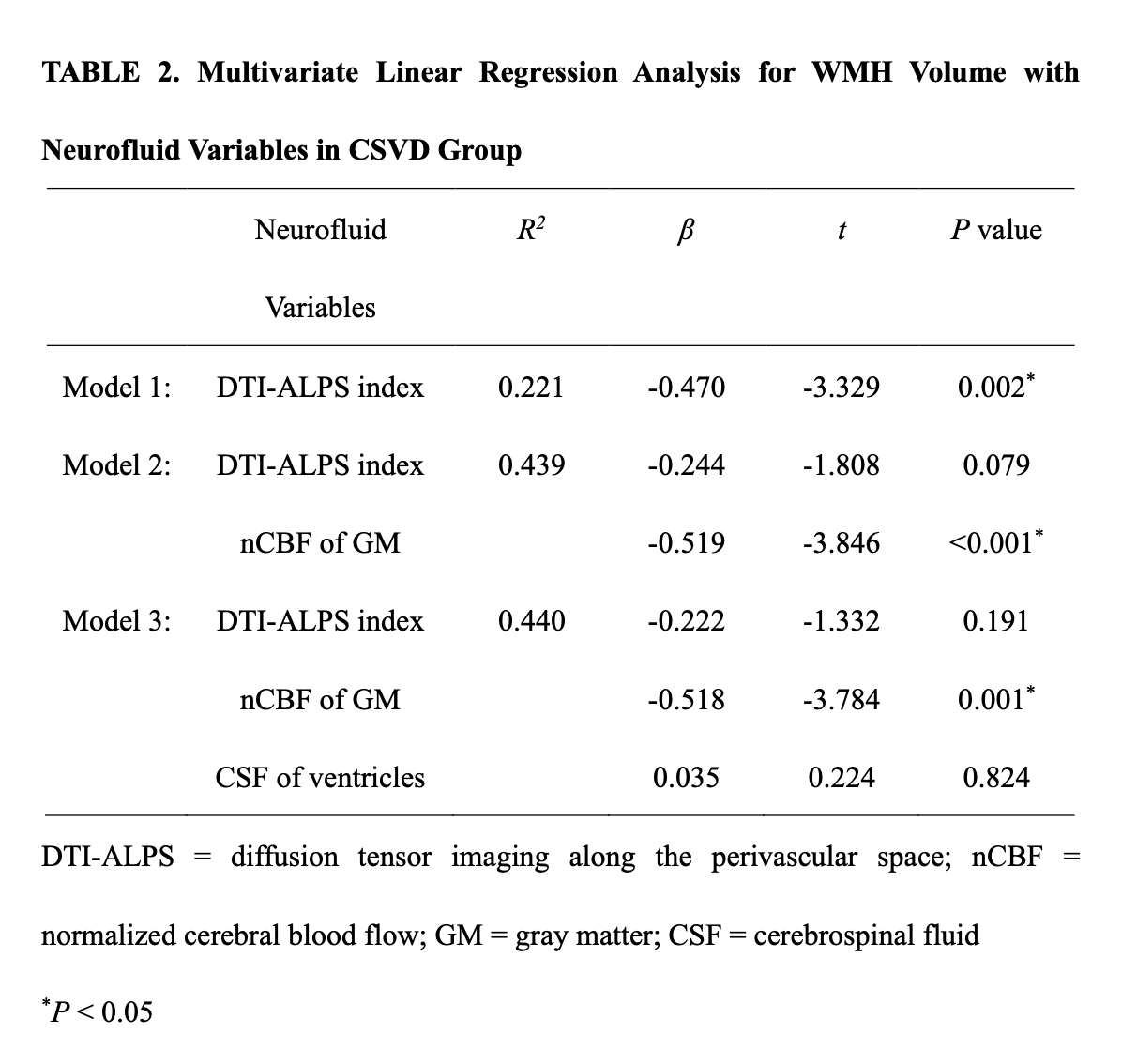
Background and purpose: Assessing the neurofluid dynamics may be helpful for understanding the pathophysiology of cerebral small vessel disease (CSVD)1,2. This study aims to investigate potential changes of interactive dynamics of neurofluids in CSVD.Materials and methods: Forty-one CSVD patients and 34 elderly controls, who were age, sex, and education matched, were enrolled. All subjects were scanned on a 3.0 T MRI scanner (Discovery 750, GE Medical Systems, Waukesha, WI) with a 32-channel head coil. Conventional MRI sequences included 3D T1WI, T2WI, T2 FLAIR, and DWI. Diffusion tensor imaging (DTI) and 3D pseudo-continuous arterial spin labeling (pASL) data was also acquired. Parenchyma perfusion was assessed with pASL, glymphatic dynamics was assessed with diffusion tensor image analysis along the perivascular space (DTI- ALPS), and CSF volume of ventricles was also quantified by an automatic software for brain segmentation and quantification. Multivariate linear regression with interaction analysis was performed with neurofluid variables between CSVD group and control group. Linear regression analysis for WMH volume was performed with age, sex, and neurofluid variables. Correlation between neurofluid variables and cognition was assessed with partial correlation.Results: Groupwise comparisons of the neurofluid variables, including the parenchymal CBF, the DTI-ALPS index, and the CSF volume, were shown in Fig. 1. Compared with the control group, the CSVD group showed significant reduction in the absolute CBF value of the gray matter (P < 0.05) but no significant reduction in the absolute CBF of the white matter (P > 0.05). The positive correlation between the DTI-ALPS index and the normalized CBF of the gray matter in the CSVD group was significantly changed as compared with the negative correlation between the two variables of the control group (CSVD group: slope = 0.411 ± 0.138, control group: slope = - 0.507 ± 0.187, slope difference = 0.907, P < 0.001) (Fig. 2a). Similar reversed correlation was also observed in the CSVD group between the DTI-ALPS index and the normalized CBF of the white matter as compared with the control group (CSVD group: slope = -0.406 ± 0.182, control group: slope = 0.379 ± 0.191, slope difference = -0.785, P = 0.002) (Fig. 2b). Moreover, the relatively low correlation between the CSF volume of ventricles and the DTI-ALPS index (Fig.2c), between the CSF volume of ventricles and the nCBF of the gray matter (Fig.2d), and between the CSF volume of ventricles and the nCBF of the white matter (Fig.2e) in the control group was significantly increased in the CSVD group. The nCBF of GM was significantly correlated with WMH volume (P = 0.001), while DTI-ALPS and CSF volume of ventricles were covariate out (Table 1 and Table 2). Neurofluid variables were significantly correlated with cognitive function after FDR correction (P < 0.05).Conclusion: The interactive dynamics of neurofluids of CSVD patients is significantly altered compared with that of normal elderly. Disruption of neurofluid dynamics may play an important role in the pathophysiology of CSVD.Acknowledgements
The authors would like to thank the patients who participated in this study and Wenhua Liu of Tongji Hospital of Tongji Medical College of Huazhong University of Science and Technology for statistical consultant.References
1,
Nivedita Agarwal ET, Christian Contarino (2019) Neurofluids: A holistic approach to their
physiology, interactive dynamics and clinical implications for neurological diseases. Veins and
Lymphatics 8:49-58
2,
Ter Telgte A, van Leijsen EMC, Wiegertjes K, Klijn CJM, Tuladhar AM, de Leeuw FE (2018)
Cerebral small vessel disease: from a focal to a global perspective. Nat Rev Neurol 14:387-398