2558
Exploring the role of HPG axis and age on the brain of peripubertal girls - a multimodal fusion imaging study using LICA1The Second Affiliated Hospital and Yuying Children’s Hospital of Wenzhou Medical University, Wenzhou, China, 2Philips Healthcare, Shanghai, China
Synopsis
Keywords: Adolescents, Endocrine
Motivation: The role of age in hypothalamic-pituitary-gonadal axis (HPG axis) reactivation on brain changes in girls remains unclear.
Goal(s): The aim of this study was to analyze the effects of HPG axis reactivation on the brains of girls of different ages through a multimodal perspective.
Approach: We used linked independent component analysis to decompose the girls' multimodal brain images and combined clinical hormones and age.
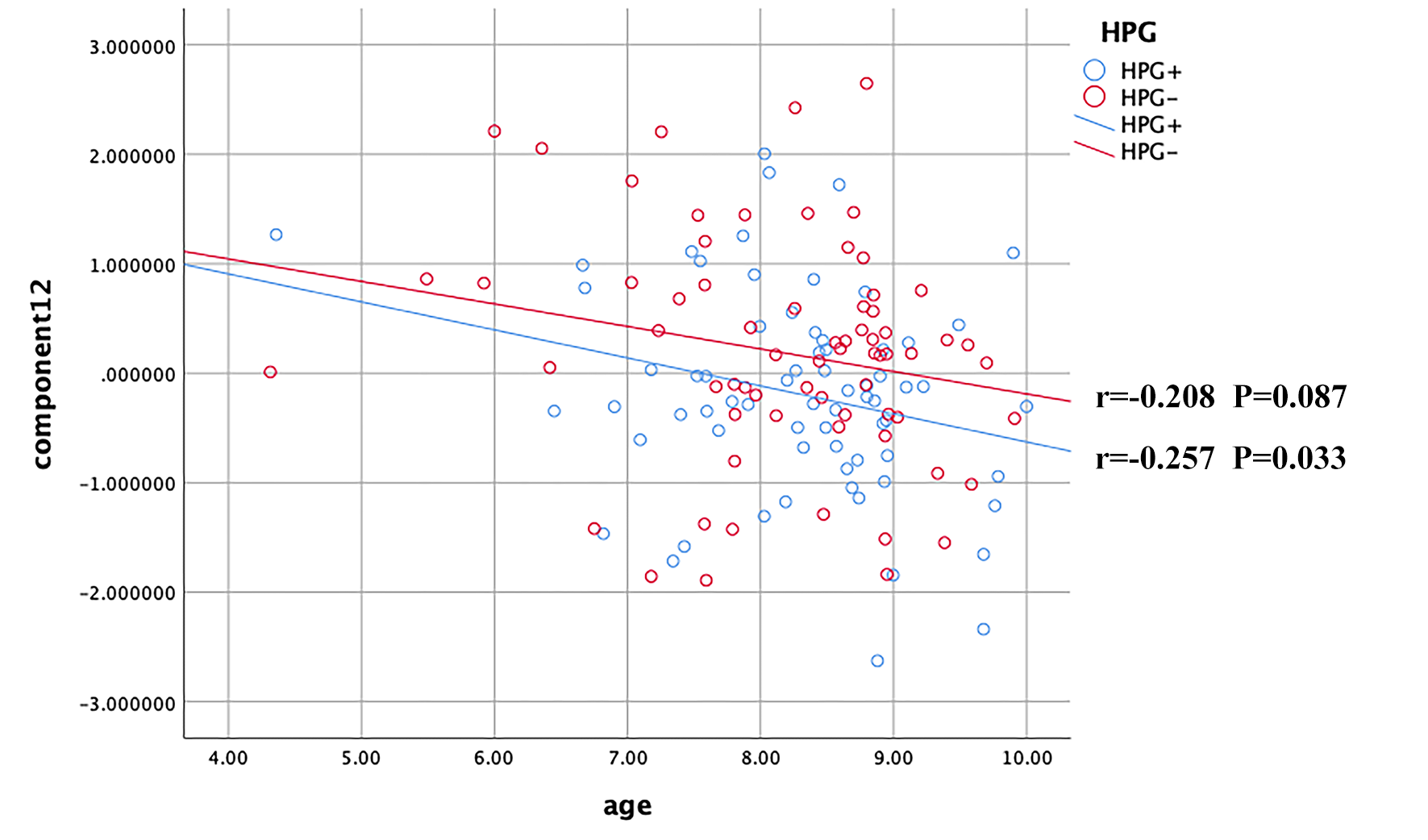
Results: We captured a multimodal component strongly associated with HPG reactivation, which includes structural and functional changes, mainly related to peak LH levels. Also, the degree of change in this multimodal component increased with age.
Impact: Our study may provide a new idea for subsequent brain studies concerning the reactivation of the HPG axis and a new direction for further exploration of the physiological mechanisms associated with pubertal brain development.
Introduction
Puberty is an important stage of human growth and development, and the onset of puberty is marked by the reactivation of the hypothalamic-pituitary-gonadal axis (HPG axis)1. Although there have been several studies exploring the effects of puberty on brain structure and function, especially in girls with precocious puberty2 or early puberty3. Most of the current studies on the effects of HPG axis reactivation on the brain are single-age, and there is a lack of research on the full age range of girls in whom puberty may be initiated.Materials and methods
We included 148 right-handed girls aged 4-10 years with signs of pubertal development, tested their HPG axis activation by GnRH stimulation test and divided them into two groups and compared their demographic, hormonal, and behavioral data. We then acquired and preprocessed multimodal MRI data from these girls, and then used Linked Independent Component Analysis (LICA)4 to decompose the multimodal MRI data into multimodal independent components, and the selected the components most associated with HPG axis reactivation and correlated them with clinical hormonal. Again on the basis of this, four groups were divided according to whether or not they were younger than 8 years of age, and the effect of HPG axis reactivation on this component was compared across the two age groups, and further extended to the whole age group.Results
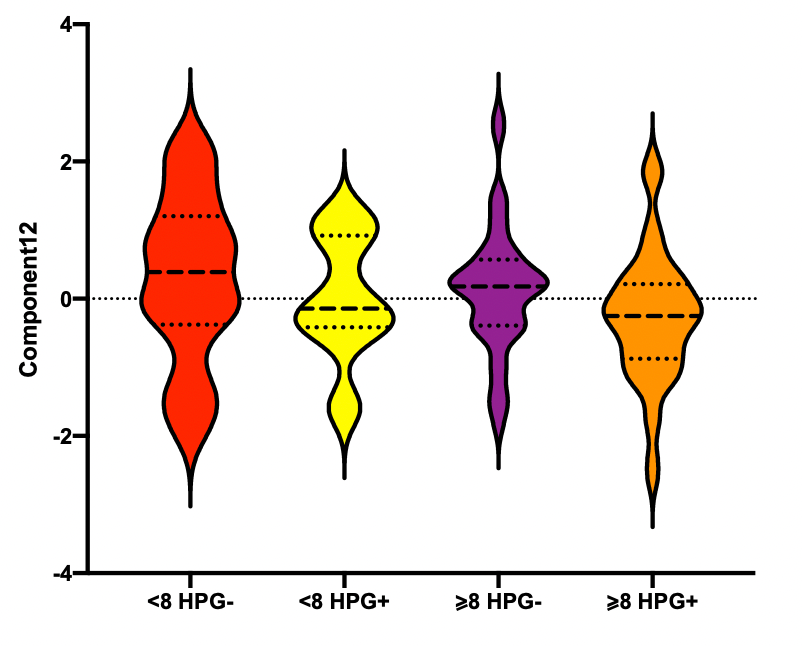
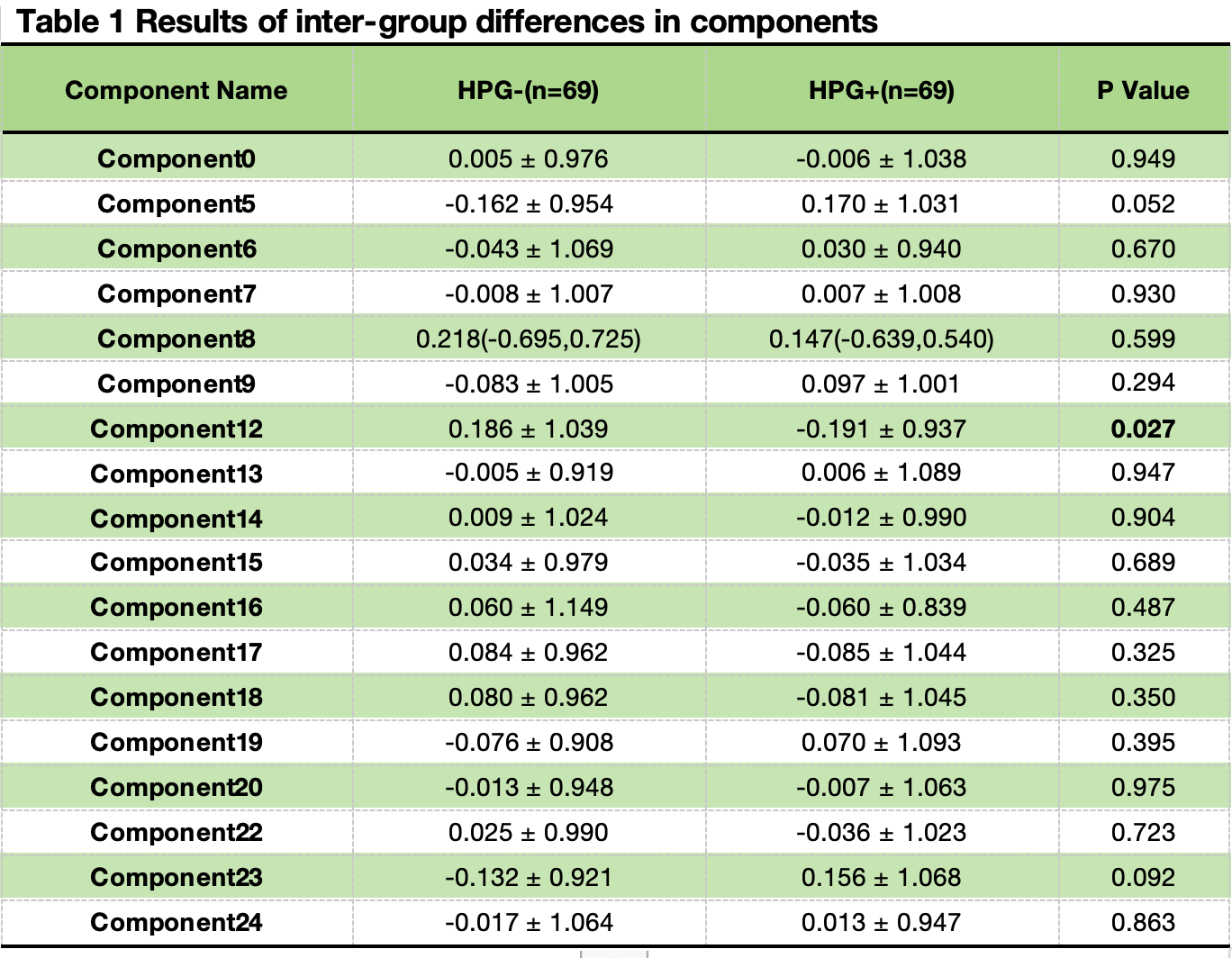
We obtained a total of 25 components, of which 7 were discarded due to excessive single-modal representation. The results of the between-group comparisons showed that subject loadings for only one constituent (constituent 12) differed significantly between the two groups, mainly concerning ALFF, FA, and whole-brain gray-white matter volume, and were negatively correlated with peak LH levels. The results of the between-subgroup comparisons then showed that subject loadings of this component were not significantly different between the two subgroups under 8 years of age and were significantly different between the two subgroups 8 years of age and older. Finally, a study of the all-age group showed no significant correlation between the loadings of subjects in the HPG- group and age, while in the HPG+ group there was a negative correlation with age. At the same time, their differences gradually increased with age.Discussion
In the present study, we used LICA to identify a multimodal component associated with HPG axis reactivation in girls, mainly involving changes in ALFF, FA, and whole-brain gray and white matter volume. We also found that the spatial distribution of this multimodal component was roughly consistent with previous studies5, which is convincing evidence of the reliability of multimodal brain imaging studies using LICA. However, there were some discrepancies, which may be due to the fact that most of the previous studies were influenced by age and were mostly single-modality studies. While this component was mainly associated with peak LH levels, and the effect of HPG axis reactivation on this component was age-related, older girls had greater brain changes after HPG axis reactivation than younger girls. We hypothesize that this may be related to the amount of kisspeptin expression, which regulates the secretion of the HPG axis and is reflected by peak LH levels6, and the exact mechanism needs to be further investigated.Conclusions
In the present study, we captured a multimodal component that is closely associated with HPG axis reactivation, which mainly involves changes in ALFF, FA, whole-brain gray and white matter volumes, and correlates with peak LH levels. Second, we found that the effect of HPG axis reactivation on this component was age-related, and that brain-related structural-functional changes after HPG axis reactivation increased with age.Acknowledgements
No acknowledgement foundReferences
1. Kuiri-Hänninen T, Sankilampi U, Dunkel L: Activation of the hypothalamic-pituitary-gonadal axis in infancy: minipuberty. Hormone research in paediatrics 2014, 82(2):73-80.
2. Chen T, Yu W, Xie X, Ge H, Fu Y, Yang D, Zhou L, Liu X, Yan Z: Influence of Gonadotropin Hormone Releasing Hormone Agonists on Interhemispheric Functional Connectivity in Girls With Idiopathic Central Precocious Puberty. Front Neurol 2020, 11:17.
3. Xie X, Liu P, Chen T, Wang Y, Liu X, Ye P, Xiang W, Yan Z: Influence of the hypothalamus-pituitary-gonadal axis reactivation and corresponding surging sex hormones on the amplitude of low-frequency oscillations in early pubertal girls: A resting state fMRI study. J Affect Disord 2019, 256:288-294.
4. Groves A, Beckmann C, Smith S, Woolrich M: Linked independent component analysis for multimodal data fusion. NeuroImage 2011, 54(3):2198-2217.
5. Herting MM, Kim R, Uban KA, Kan E, Binley A, Sowell ER: Longitudinal changes in pubertal maturation and white matter microstructure. Psychoneuroendocrinology 2017, 81:70-79.
6. Latronico A, Brito V, Carel J: Causes, diagnosis, and treatment of central precocious puberty. The lancet Diabetes & endocrinology 2016, 4(3):265-274.
Figures
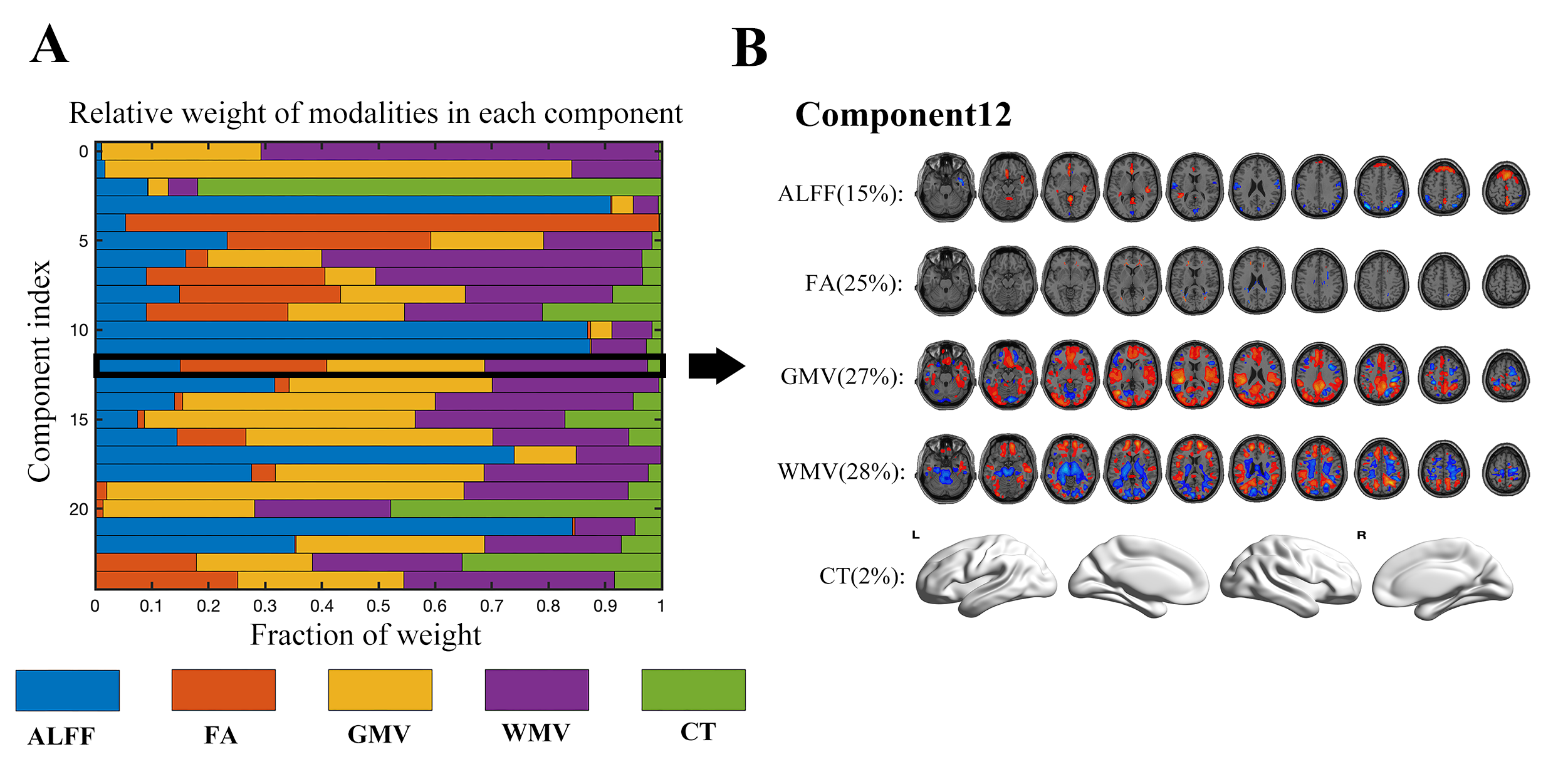
Picture 1.(A) The relative weights of each modality in each component, with component 12 labeled by the black bold border in the figure. (B) The spatial distribution of the MRI metrics for component 12.
Abbreviations:ALFF = Amplitude of Low Frequency Fluctuations. FA = fractional anisotropy. GMV = Gray matter volume. WMV = White matter volume. CT = Cortical thickness.