2434
Improved fat suppression of TSE-DWI in the head-neck using enhanced slice-selective gradient reversal (enhanced LIPO)1Radiology, Eastern Chiba Medical Center, Chiba, Japan, 2Philips Japan, Tokyo, Japan, 3Eastern Chiba Medical Center, Chiba, Japan, 4Philips Australia & New Zealand, North Ryde, Australia
Synopsis
Keywords: Diffusion Acquisition, Diffusion/other diffusion imaging techniques, fat suppresstion
Motivation: TSE-DWI provides distortion-free images, but it has a disadvantage in terms of its low signal-to-noise ratio (SNR). TSE-DWI basically requires several signal averages to obtain sufficient SNR, resulting in long scan time.
Goal(s): We modified and optimized the LIPO selective gradients (enhanced LIPO) to maximize the fat suppression effect for TSE-DWI in the neck, and compared with conventional methods (SPAIR TSE-DWI and LION TSE-DWI) to investigate its clinical usefulness.
Approach: SNR and CR were calculated with ROIs placed in parotid gland and fat around neck.
Results: Combining TSE-DWI with enhanced LION improves the robustness of fat suppression while maintaining better SNR.
Impact: The present findings suggest that both conventional and enhanced LION TSE-DWI showed improved SNR because it does not require fat suppression pre-pulse. Furthermore, enhanced LION further improved the robustness of fat suppression.
Purpose
TSE-DWI provides distortion-free images, but it has a disadvantage in terms of its low signal-to-noise ratio (SNR). [1] TSE-DWI basically requires several signal averages to obtain sufficient SNR, resulting in long scan time. Therefore, TSE-DWI imaging without worsening SNR is clinically desirable. Slice selection gradient reversal (SSGR, LIPO) [2] technique is commonly used in combination with fat suppression pre-pulse (SPIR/SPAIR) to increase the robustness of fat suppression at high fields. Recently, it has been demonstrated that using LIPO-only (LION) DWI could prevent the decreased SNR typically caused by the saturation effects of fat suppression pre-pulse. [3,4] We hypothesized that using LION DWI might be one of the best solutions to TSE-DWI if it is further optimized to increase the robustness of fat suppression. LION-DWI is expected to improve SNR because it does not require fat suppression pre-pulse.In this study, we modified and optimized the LIPO selective gradients (enhanced LIPO) to maximize the fat suppression effect for TSE-DWI in the neck, and compared with conventional methods (SPAIR TSE-DWI and LION TSE-DWI) to investigate its clinical usefulness.Methods
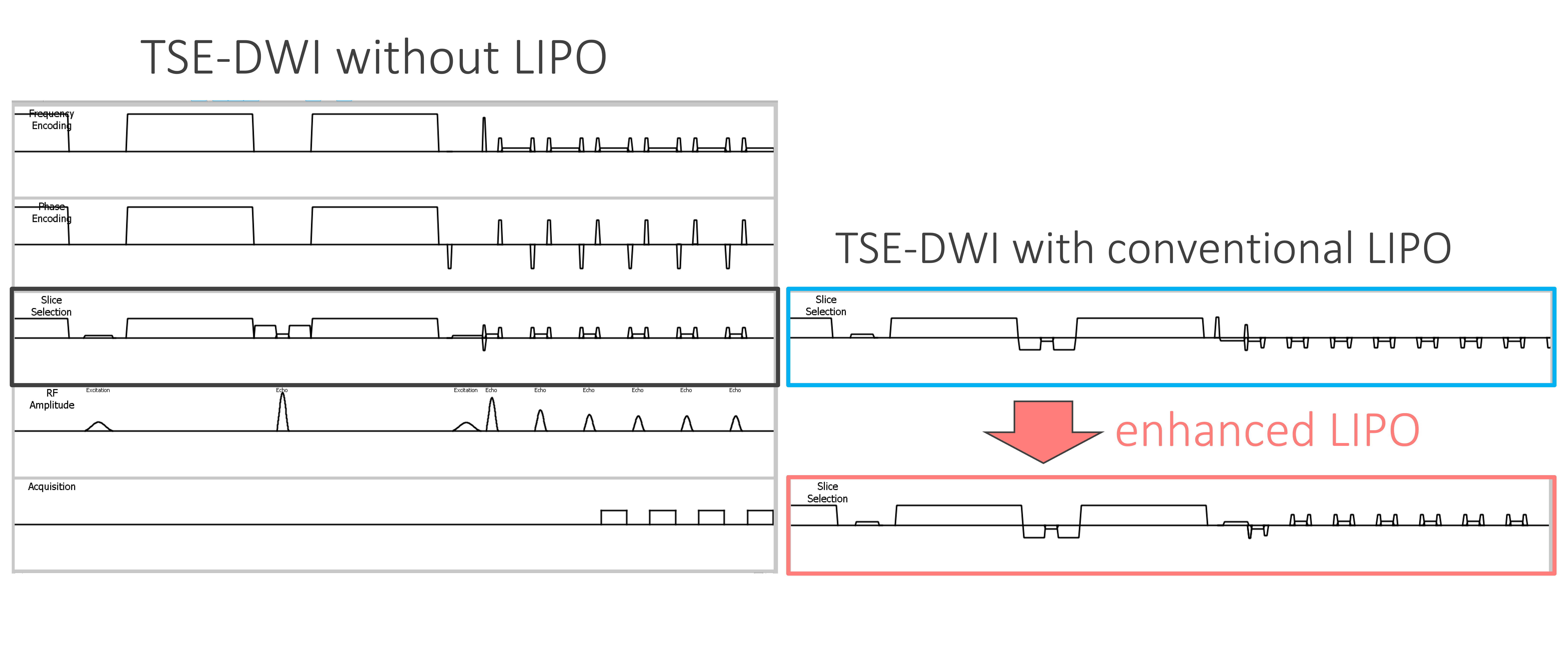
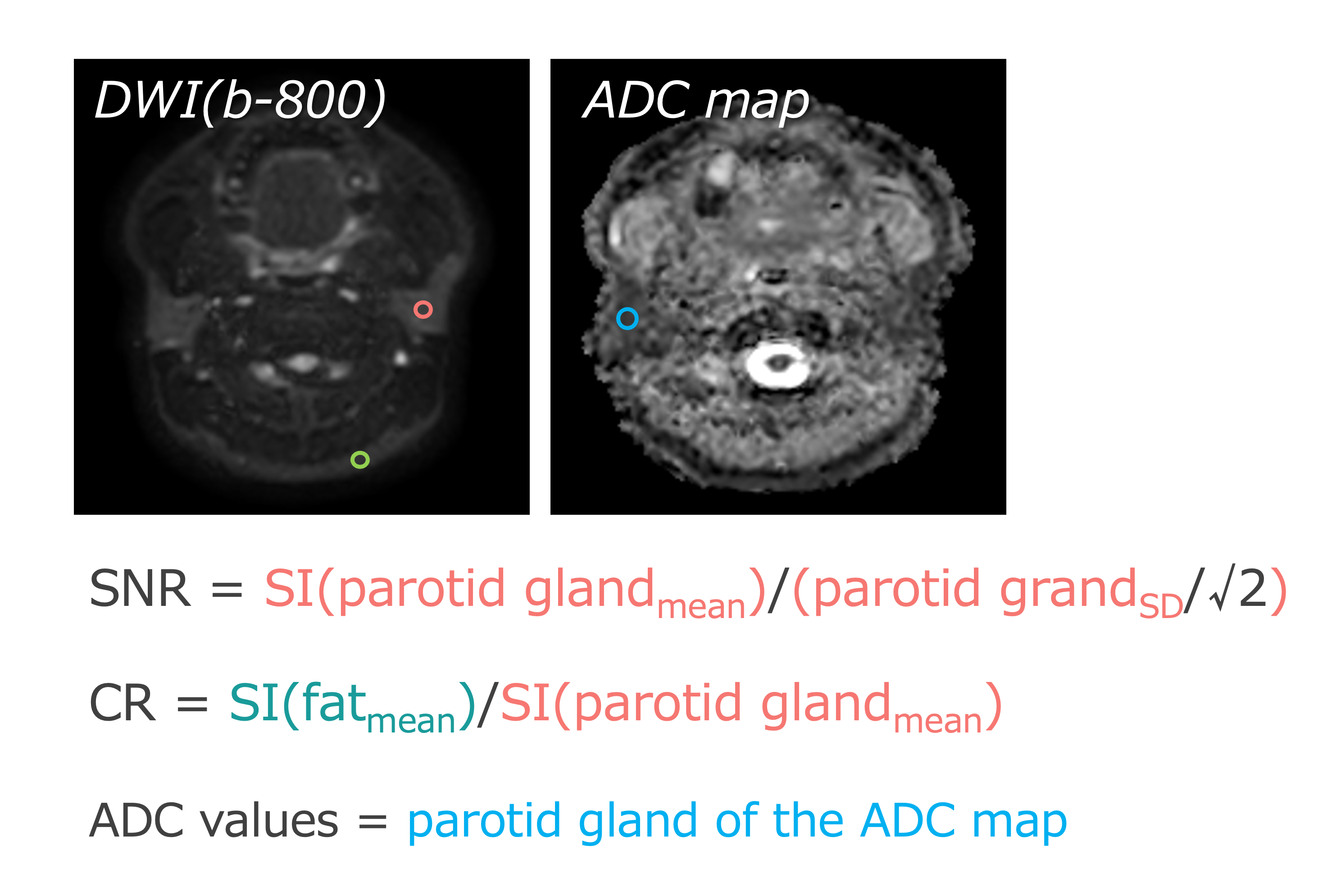
The extent of displacement of the fat slice relative to the water slice (D) is defined by D=∂*B0/Gz, where ∂ is relative chemical Shift (ppm), B0 is field strength (T), and Gz is slice selection gradient amplitude (mT/m). To prevent the B0 inhomogeneity effects for robust LIPO performance, the ratio between excitation and refocusing selection gradient strengths has been optimized to increase the fat slice shifts from the excitation and refocusing pulses with respect to water in this study.Furthermore, we have modified the slice selection gradient polarity was re-inverted after the second (Mx elimination) 90-degree excitation pulse (Fig.1) to further enhance the fat suppression during the echo train.Volunteers were examined on a 3.0T whole-body clinical system (Ingenia CX, Philips Healthcare, Best, the Netherland) with a 20ch Head-neck coil. The study was approved by the local IRB, and written informed consent was obtained from all subjects.A total of 6 volunteer underwent 3 datasets of Mx-eliminated TSE-DWI, including conventional SPAIR TSE-DWI, LION TSE-DWI, and enhanced LION TSE-DWI to evaluate the performance fat suppression. All TSE-DWI was acquired in the neck with transverse direction with the following parameters: TR = 8000 ms, TE = 199 ms, SENSE factor = 2, FOV = 230*230 mm2 , Matrix = 115*115 mm2, 24 slices, slice thickness = 4 mm, b-value = 800 s/mm2 .SNR were calculated with ROIs placed in parotid gland. Contrast ratio (CR) was calculated with ROIs placed in parotid gland and fat around neck. ADC values of parotid gland in neck were measured from the ADC-map. (Fig.2)Results and Discussion
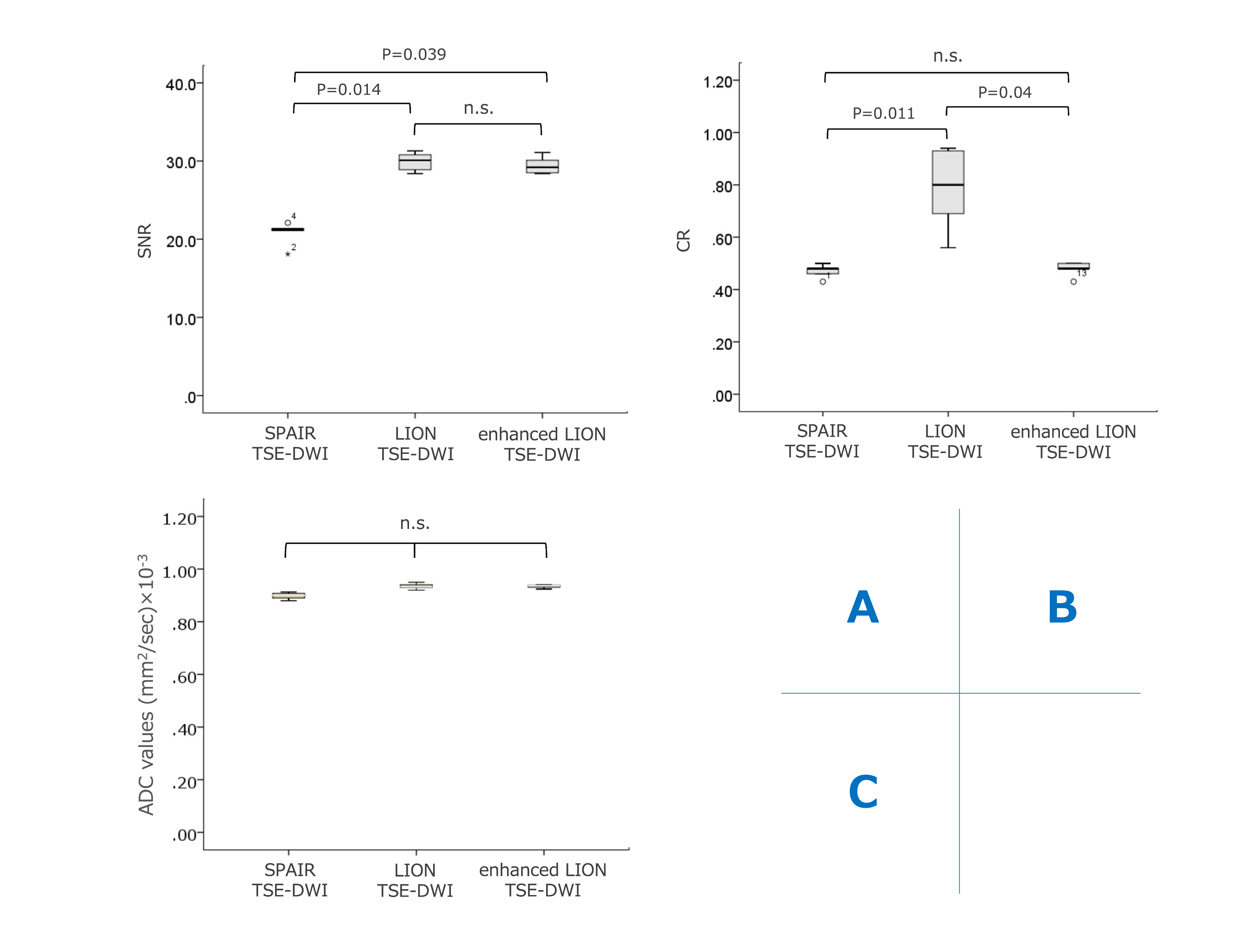
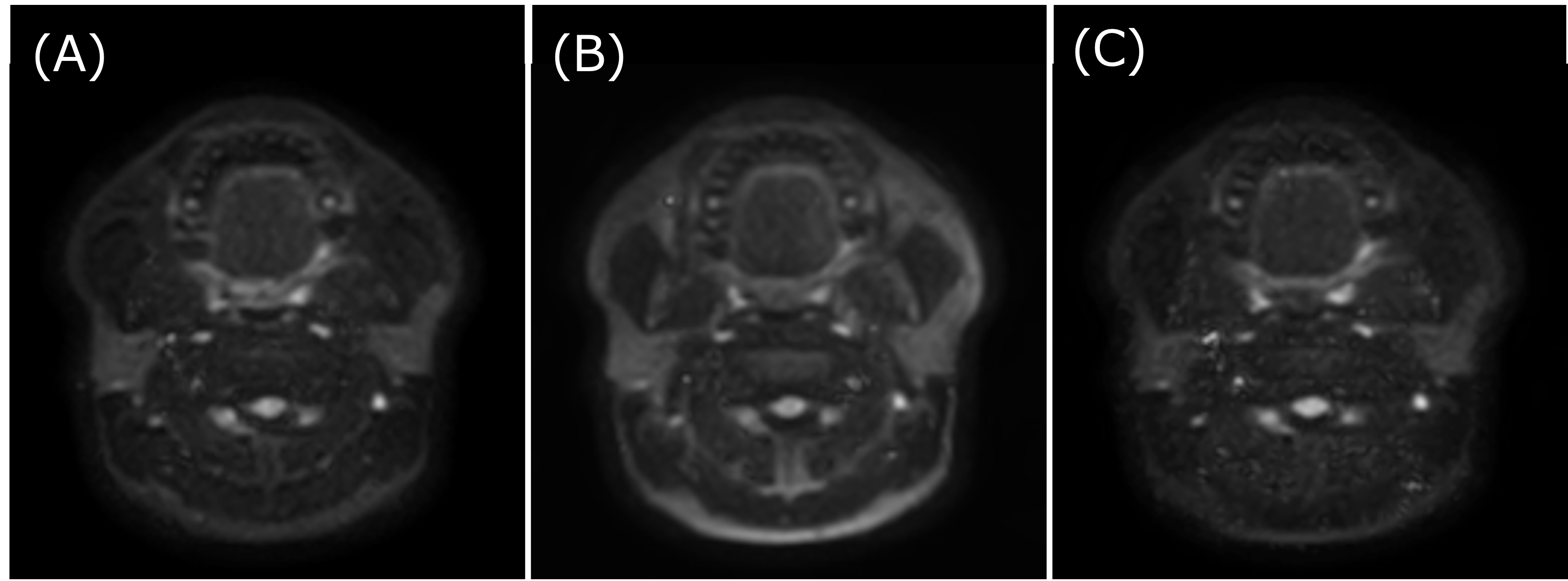
The CR of enhanced LION TSE-DWI was comparable with that of SPAIR TSE-DWI, whereas the CR of conventional LION TSE-DWI was significantly higher than that of SPAIR TSE-DWI. The SNR of both LION TSE-DWI and enhanced LION TSE-DWI was significantly higher than that of SPAIR TSE-DWI. These results suggest that enhanced LION TSE-DWI improved the robustness of fat suppression while maintaining better SNR. There were no significant differences in ADC values between the SPAIR TSE-DWI and LION TSE-DWI, enhanced LION TSE-DWI.The present findings suggest that both conventional and enhanced LION TSE-DWI showed improved SNR because it does not require fat suppression pre-pulse. Furthermore, enhanced LION further improved the robustness of fat suppression.Conclusion
Combining TSE-DWI with enhanced LION improves the robustness of fat suppression while maintaining better SNR.Acknowledgements
No acknowledgement found.References
1.YoshidaT, UrikuraA et al. Image quality assessment of single-shot turbo spin echo diffusion weighted imaging with parallel imaging technique : a phantom study. Br J Radiol. 2016 ; 89 : 20160512.
2.Nagy Z, Weiskopf N. Efficient fat suppression by slice-selection gradient reversal in twice-refocused diffusion encoding. Magn Reson Med. 2008 Nov;60(5):1256-60.
3.Murayama D. et al. Reduced acquisition time of female pelvis diffusion weighted imaging (DWI) using LIPO-only (LION) DWI. ISMRM2023; 2960.
4. Sakai T. et al. Volume isotropic thin-slice high-quality brain DWI with no fat-suppression pre-pulse. ISMRM2023; 3970.
Figures