2429
Fast susceptibility distortion correction for diffusion MRI using style transfer and nonrigid registration1Department of Intelligent Systems Engineering, Indiana University, Bloomington, IN, United States, 2Program in Neuroscience, Indiana University, Bloomington, IN, United States, 3Vanderbilt University Institute of Imaging Science, Vanderbilt University Medical Center, Nashville, TN, United States, 4Department of Electrical and Computer Engineering, Vanderbilt University, Nashville, TN, United States, 5Harvard Medical School, Boston, MA, United States, 6Department of Radiology, Boston Children’s Hospital, Boston, MA, United States
Synopsis
Keywords: Diffusion Analysis & Visualization, Susceptibility, Distortion correction, Nonrigid registration, Susceptibility distortion, Deep learning
Motivation: Diffusion MR images suffer from susceptibility distortion artifacts due to field inhomogenities and susceptibility changes at tissue interfaces. This results in a spatial mismatch of the MR signal. Current methods either use blip-up, blip-down acquisitions and/or are compute-intensive.
Goal(s): Our goal is to develop a fast registration-based susceptibility distortion correction method without the need to acquire an opposite phase-encode scan.
Approach: We use synthesized b0 volumes generated using synb0 as a registration target for SyN registration to correct susceptibility distortion.
Results: Our distortion correction method produces results that are qualitatively and quantitatively similar to state-of-the-art methods in a fraction of the time.
Impact: Our approach serves as a good starting point to explore registration based distortion correction methods. Faster correction methods will enable widespread use of dMRI in the clinical setting where accurate shape is needed for critical decisions like treatment planning.
Introduction
Diffusion MRI in practice uses Echo Planar Imaging (EPI) to limit scan time1. EPI is however sensitive to field inhomogeneities particularly along the phase-encode (PE) axis due to low bandwidth2. These distortions render the data unsuitable for comparisons among different acquisitions and make use of the data in standard processing pipelines error-prone3.The most accurate4 method of correcting for susceptibility distortion is to acquire two acquisitions in opposite phase-encode directions. The acquisitions will result in two “equivalent” images with distortion in opposite directions. The deformation field can then be modeled as an image “equidistant” from those images. This is computationally intensive and involves slow search methods5. Andersson et al.6 proposed an approximate estimation mode to make the computation more tractable and released it as part of FSL - TOPUP.
Image data with pairs of oppositely phase encoded gradients is not always available. To allow for processing of historical data without such pairs, Schilling et al. proposed Synb0-DisCo7. It uses CycleGANs to synthesize an undistorted diffusion weighted image from the structural image. It however relies on TOPUP for the final correction.
The field estimation via TOPUP is compute-intensive. Estimating the distortion field of a typical diffusion image pair with 5 b0 volumes using TOPUP without any subsampling can take upwards of an hour even on a modern processor.
Registration with an anatomical image is an alternate option. This however is error prone, due to mismatch in image contrasts and lack of bounded metrics like cross-correlation for cross-modal registration. DR-BUDDI8 is one notable exception to this with several loss functions to guide the registration.
Methods
The synthesized image from Synb0 is an anatomical image style-transferred to look like a b0 diffusion scan. This is “undistorted” and has the contrast characteristics similar to the other diffusion scan. This can be used as a registration target for correcting susceptibility distortion.The proposed method is as follows, we first pass the diffusion image that needs to be corrected along with a corresponding T1 image to Synb0. This generates an undistorted synthetic diffusion image. We then use Symmetric Diffeomorphic Registration9 with cross-correlation as the metric to register the distorted image to the synthetic diffusion image. We use the DIPY10 implementation of SyN. SyN is chosen as it can work with fundamentally different looking contours, which is required due to the nature of susceptibility distortion.
Results
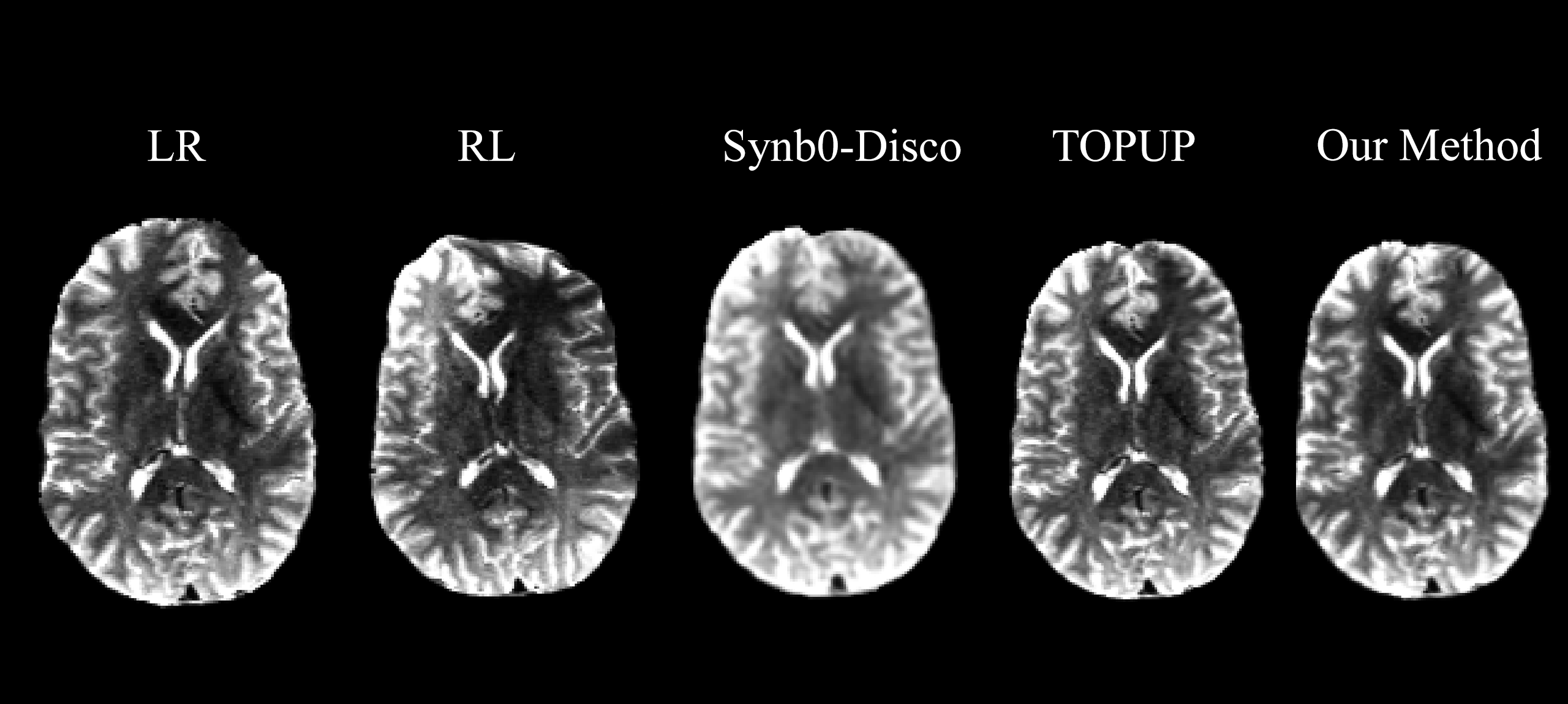
We include comparisons of our method with TOPUP and Synb0-DisCo. Distortion correction is performed using all three methods on 100 subjects from the HCP 1200 dataset11. All inputs are brain-masked using SynthStrip12 We have performed both qualitative and quantitative analyses to check the quality of distortion correctionFig. 1 shows a distorted image pair and the resulting undistorted diffusion image using our method, TOPUP and Synb0-DisCo.
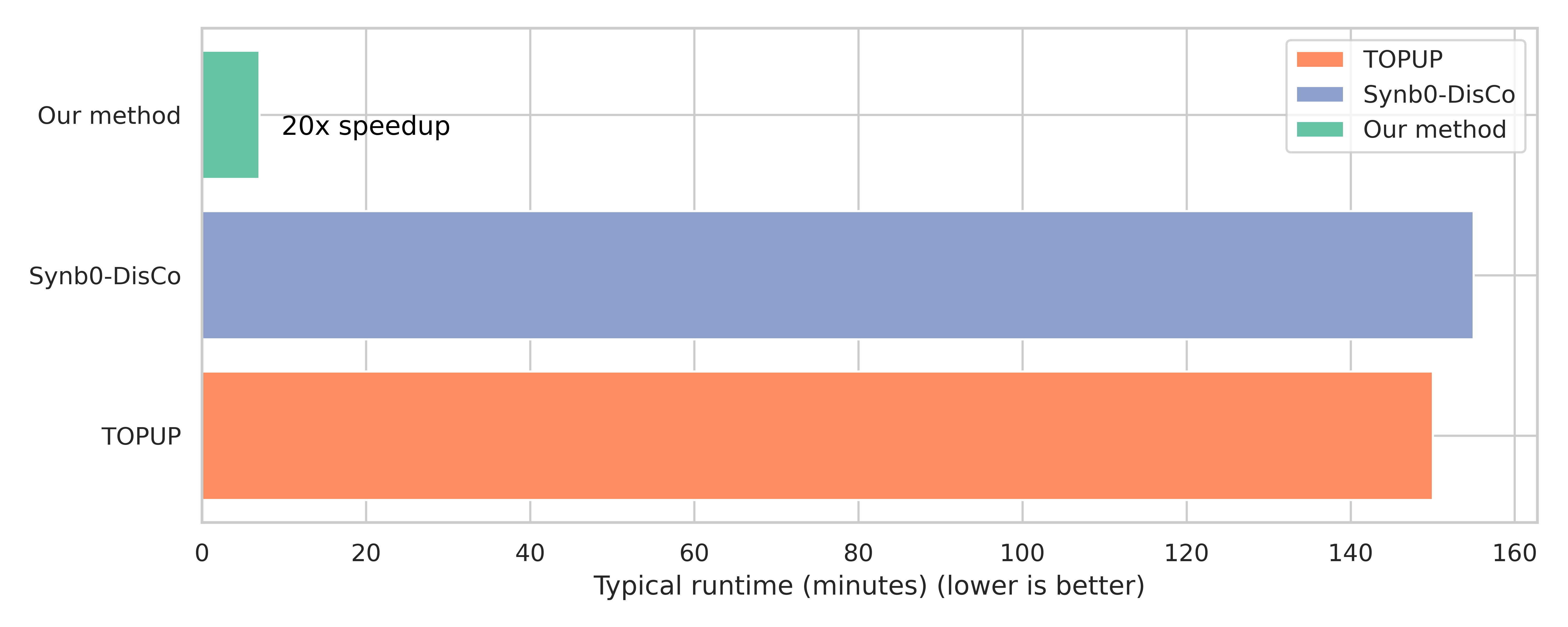
Fig. 2 shows typical run times for the three methods in consideration on a modern CPU.
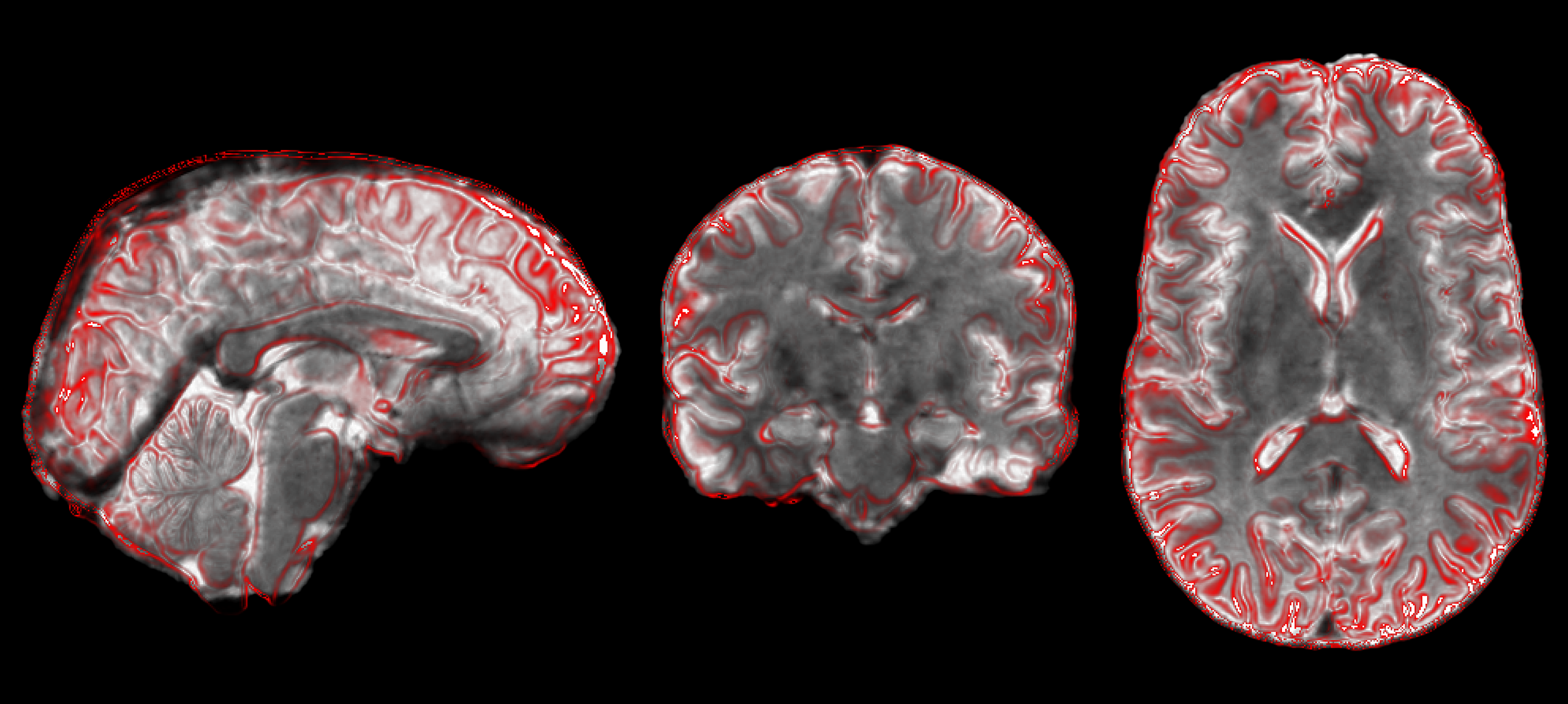
In Fig. 3, edge information from the T1 scan is compared with the distortion corrected image. The matching of the contours qualitatively demonstrates that our method corrects distortions.
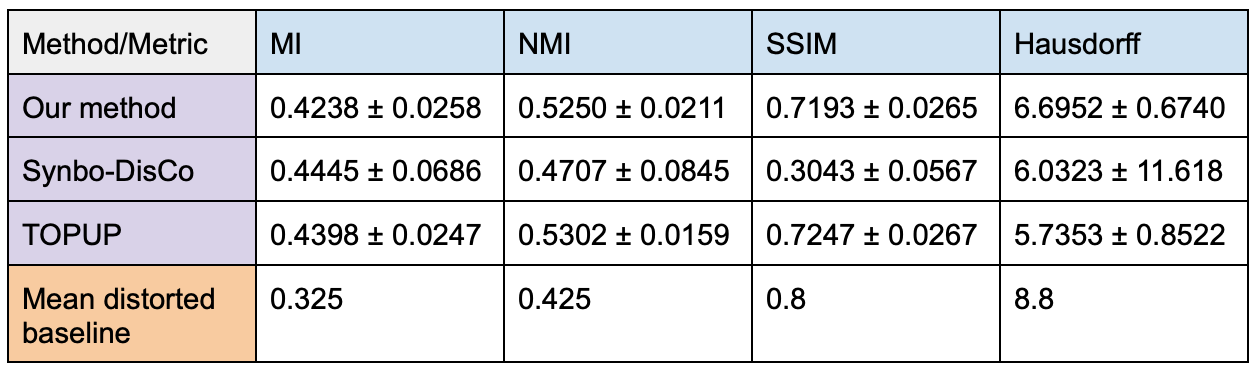
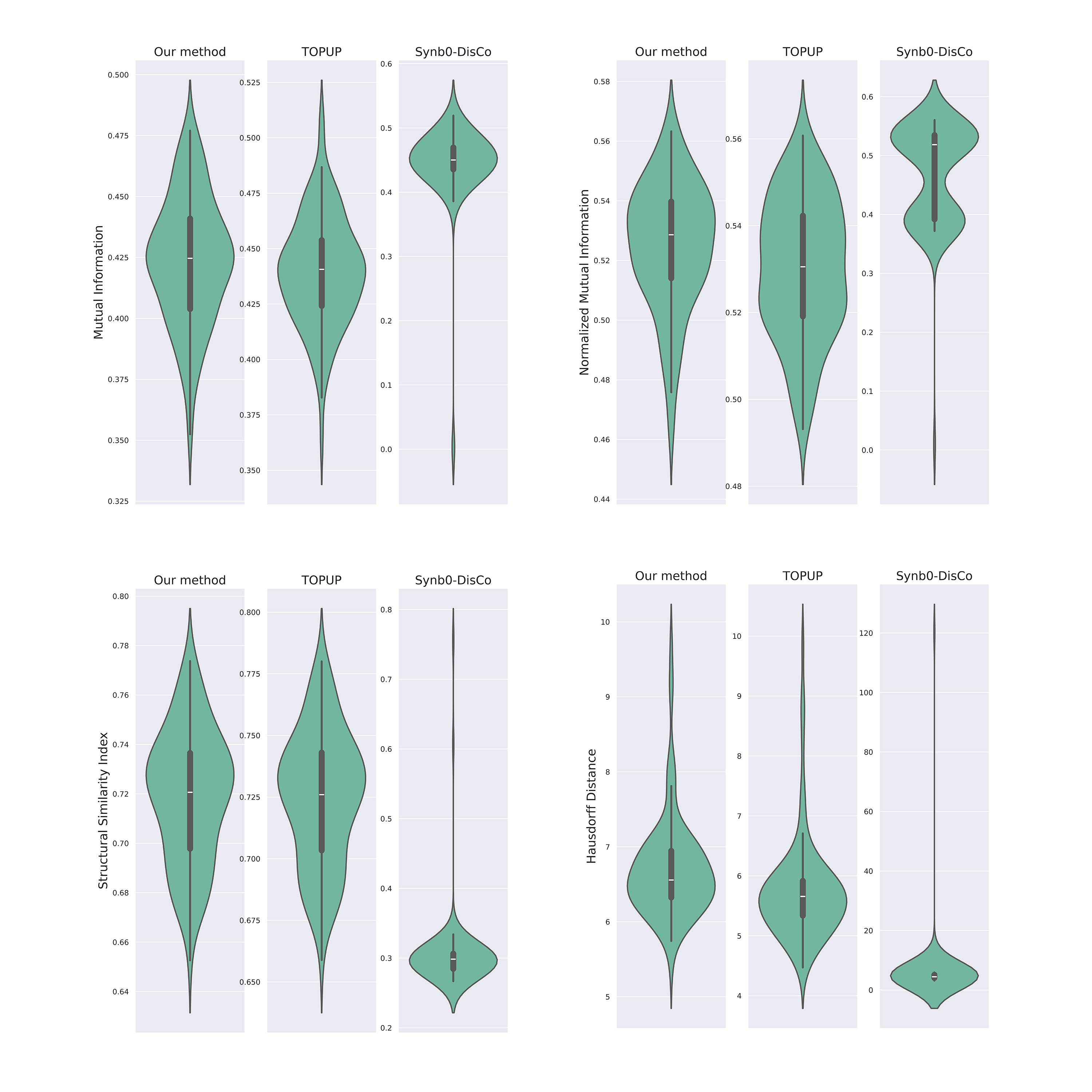
Surrogate measures are computed to assess the distortion correction qualitatively. Fig. 4 shows the means and standard deviations of the quantitative measures for all three methods being compared. Fig. 5 shows the distribution of the metrics across 100 subjects using violin plots.
Our method closely matches TOPUP on most metrics but lags behind on the Hausdorff distance metric. Indicating that there is still a scope of improvement on contour fitting. There is a 20x speedup compared to TOPUP.
Discussion
The metrics are closer in performance to TOPUP than to baseline undistorted image metrics. So, distortion correction occurs. The registration is “unguided”. Adding additional constraints to the registration process itself is a good direction to explore for further research.It provides a quick way to perform reasonable distortion correction. Current implementation uses three levels of optimization with [100,100,50] iterations respectively. These can be increased to improve results. Further analysis is needed to check the effect on downstream processing tasks such as tractography.
Conclusion
We presented a new method to correct susceptibility distortion without the need for an opposite phase-encode acquisition. It does so while achieving a high speedup for typical workflows and is able to closely match qualitatively and quantitatively the correction by state-of-the-art blip-up blip-down methods.We demonstrate qualitatively and via metrics that registration to a synthesized diffusion scan alone can correct susceptibility distortion to an extent. Faster correction methods like these will enable widespread use of dMRI in the clinical setting where accurate shape is needed for critical decisions like treatment planning.
Acknowledgements
We also acknowledge Indiana University for providing HPC compute through the Carbonate/Big Red 200 systems for running our methods/analyses.
Finally, we thank the Intelligent Systems Engineering department and Program in Neuroscience of Indiana University, Bloomington for sponsoring Sreekar Chigurupati through their graduate programs.
References
Ordidge, R. "The development of echo-planar imaging (EPI): 1977–1982." Magnetic Resonance Materials in Physics, Biology and Medicine 9.3 (1999): 117-121
Jezzard, Peter, and Robert S. Balaban. "Correction for geometric distortion in echo planar images from B0 field variations." Magnetic resonance in medicine 34.1 (1995): 65-73.
Irfanoglu, M. Okan, et al. "Effects of image distortions originating from susceptibility variations and concomitant fields on diffusion MRI tractography results." Neuroimage 61.1 (2012): 275-288.
Gu, Xuan, and Anders Eklund. "Evaluation of six phase encoding based susceptibility distortion correction methods for diffusion MRI." Frontiers in neuroinformatics 13 (2019): 76.
Powell, Michael JD. "An efficient method for finding the minimum of a function of several variables without calculating derivatives." The computer journal 7.2 (1964): 155-162.
Andersson, Jesper L R et al. “How to correct susceptibility distortions in spin-echo echo-planar images: application to diffusion tensor imaging.” NeuroImage vol. 20,2 (2003): 870-88. doi:10.1016/S1053-8119(03)00336-7
Schilling KG, Blaber J, Huo Y, Newton A, Hansen C, Nath V, Shafer AT, Williams O, Resnick SM, Rogers B, Anderson AW, Landman BA. Synthesized b0 for diffusion distortion correction (Synb0-DisCo). Magn Reson Imaging. 2019 Dec;64:62-70. doi: 10.1016/j.mri.2019.05.008. Epub 2019 May 7. PMID: 31075422; PMCID: PMC6834894.
Irfanoglu, M. Okan, et al. "DR-BUDDI (Diffeomorphic Registration for Blip-Up blip-Down Diffusion Imaging) method for correcting echo planar imaging distortions." Neuroimage 106 (2015): 284-299.
Avants BB, Epstein CL, Grossman M, Gee JC. Symmetric diffeomorphic image registration with cross-correlation: evaluating automated labeling of elderly and neurodegenerative brain. Med Image Anal. 2008 Feb;12(1):26-41. doi: 10.1016/j.media.2007.06.004. Epub 2007 Jun 23. PMID: 17659998; PMCID: PMC2276735.
Garyfallidis, Eleftherios, et al. "Dipy, a library for the analysis of diffusion MRI data." Frontiers in neuroinformatics 8 (2014): 8.
WU-Minn, H. C. P. "1200 subjects data release reference manual." URL https://www.humanconnectome.org 565 (2017).
Hoopes, Andrew, et al. "SynthStrip: Skull-stripping for any brain image." NeuroImage 260 (2022): 119474.
Figures