1928
Impact of Anesthetics on Excitatory and Inhibitory Neurotransmission in Brain1NMR Microimaging and Spectroscopy, CSIR-Centre for Cellular and Molecular Biology, Hyderabad, India
Synopsis
Keywords: Neurotransmission, Metabolism, Glutamate, GABA, Isoflurane, Urethane
Motivation: Anesthetics are routinely used in surgery, and neurometabolic analysis in different neurological conditions but their impact on brain energy metabolism is not well understood.
Goal(s): To evaluate the impact of anesthetics on excitatory and inhibitory neurotransmission in the brain.
Approach: Infuse [1,6-13C2]glucose in mice maintained under isoflurane (1.5%) or urethane (1.5 g/kg), and monitor 13C labeling of brain metabolites by 1H-[13C]-NMR spectroscopy.
Results: The glutamatergic and GABAergic neurometabolic activity was suppressed in isoflurane as well as in urethane anesthetized mice. The inhibitory and excitatory neurotransmission increase or decrease together with the brain activity.
Impact: These findings will have implications for the interpretation of function signals in the brain.
Methods: All animal experiments were approved by the Animal Ethics Committee of CCMB, Hyderabad. Three months old male C57BL6 mice (n=24) were divided into the following groups: Group A: Awake (n=8); Group B: Isoflurane (n=8); Group C. Urethane (n=8). Mice were fasted for 4 hours prior to study. The anesthesia in Group B animals was maintained by 1.5% isoflurane mixed in air while in Group C intraperitoneal administration of urethane (1.5 g/kg). Mice were infused [1,6-13C2]glucose post 45 min of anesthetics by a bolus variable infusion protocol4. The blood was withdrawn from the retro-orbital sinus at 8 min, and the cerebral metabolism was arrested using a Focused Beam Microwave Irradiation system (4 kW, 1 s), (MMW-05, Muromachi Kikai Co., Ltd. Japan) at 10 min after the [1,6-13C2]glucose administration. The 13C labeling of brain metabolites was measured in extracts of different brain regions by 1H-[13C]-NMR spectroscopy at 600 MHz NMR spectrometer (Bruker Biospin, Germany)5. The cerebral metabolic rates of glucose oxidations in glutamatergic and GABAergic neurons were evaluated by accumulation of 13C label into different neurometabolites6. One-way ANOVA analysis was carried out using GraphPad Prism to find the statistical significance of differences among groups. Values are presented as mean±SD. A P value less than 0.05 was considered significant.
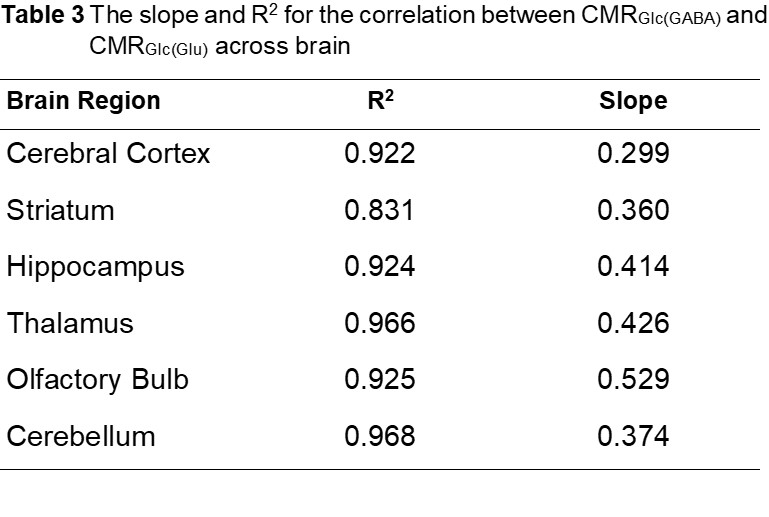
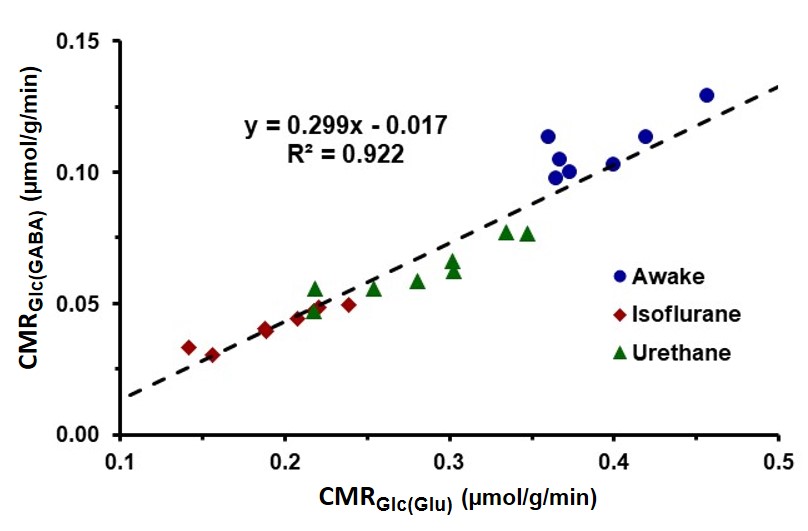
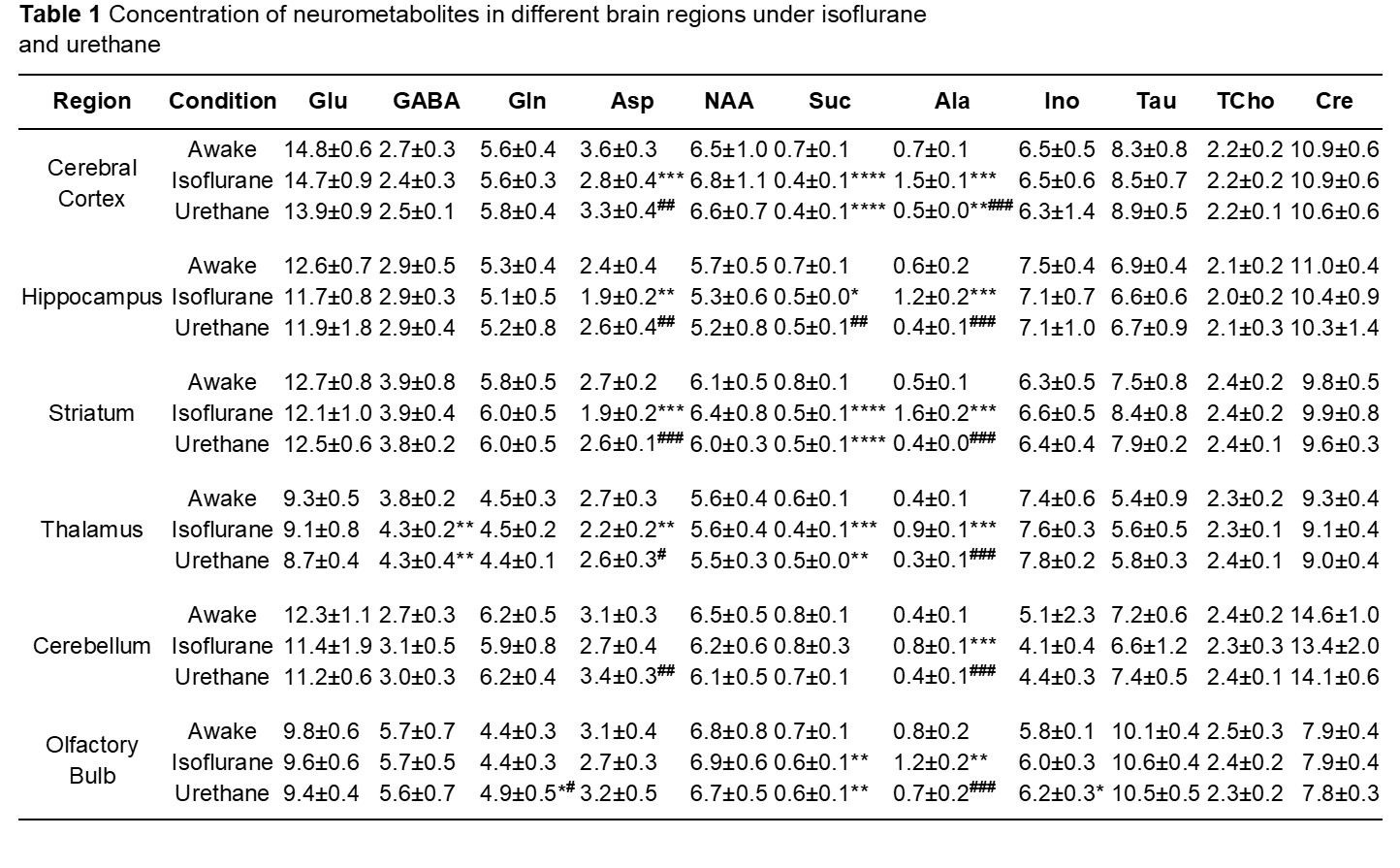
Results: 1H-[13C]-NMR spectra from the cerebral cortex under isoflurane and urethane are depicted in Fig. 1. The decreased 13C labeling of neurometabolites under isoflurane and urethane is clearly visible in 13C edited NMR spectrum (lower panel). The levels of neurometabolites were estimated from. The One-way ANOVA analysis of neurometabolites levels estimated from the un-edited (upper panel) spectrum indicated that isoflurane increased the level of alanine (p<0.001), and decreased the levels of aspartate (p<0.01) and succinate (p<0.01) in forebrain (Table 1). Urethane did not perturb neurometabolites homeostasis across the brain. The concentrations of 13C labeled AspC3 (p≤0.001), GluC4 (p≤0.01), GluC3 (p<0.01), GABAC2 (p≤0.05), and GlnC4 (p<0.01) were reduced significantly across the brain in mice maintained under isoflurane and urethane anesthetics when compared with awake (Table 2). Consequently, the estimated rates of glucose oxidation in glutamatergic neurons (CMRGlc(Glu)) were reduced across the brain in mice maintained under isoflurane (p≤0.001) and urethane (p≤0.001) (Fig. 2). Similarly, inhibitory neuronal metabolic activity (CMRGlc(GABA)) was also reduced severely under isoflurane (p≤0.001) and urethane (p≤0.001). Correlation analysis between inhibitory and excitatory neurometabolic rates indicates that CMRGlc(GABA) correlates positively (slope 0.299, R2 0.992) with CMRGlc(Glu) in the cerebral cortex across the brain (Fig. 3).
Discussion: Both isoflurane and urethane suppressed the excitatory and inhibitory activity associated with glutamatergic and GABAergic neurons across the brain. Additionally, AlaC3 was decreased in urethane-treated mice (0.12±0.02 µmol/g, p<0.001) when compared with awake (0.21±0.04 µmol/g). In contrast, the labeling of AlaC3 was increased (p<0.001) increase in the isoflurane group of mice (0.34±0.05 µmol/g) suggesting an uncoupling between glycolysis and oxidative phosphorylation under isoflurane. Most importantly, there was a positive correlation between CMRGlc(GABA) and CMRGlc(Glu) suggesting that the inhibitory and excitatory neurotransmission are in direct proportion with the brain activity.
Acknowledgements
This work was supported by the Council for Scientific and Industrial Research (CSIR), Government of India (Health Care Theme NCP/MLP0139).References
1. Sibson NR, Dhankhar A, Mason GF, Rothman DL, Behar KL, Shulman RG. Stoichiometric coupling of brain glucose metabolism and glutamatergic neuronal activity. Proc Natl Acad Sci U S A. 1998 Jan 6;95(1):316-21.
2. Liu X, Li R, Yang Z, Hudetz AG, Li SJ. Differential effect of isoflurane, medetomidine, and urethane on BOLD responses to acute levo-tetrahydropalmatine in the rat. Magn Reson Med. 2012 Aug;68(2):552-9.
3. Koblin DD. Urethane: help or hindrance? Anesth Analg. 2002 Feb;94(2):241-2.
4. Tiwari V, Ambadipudi S, Patel AB. Glutamatergic and GABAergic TCA cycle and neurotransmitter cycling fluxes in different regions of mouse brain. J Cereb Blood Flow Metab. 2013 Oct;33(10):1523-31.
5. de Graaf RA, Brown PB, Mason GF, Rothman DL, Behar KL. Detection of [1,6-13C2]-glucose metabolism in rat brain by in vivo 1H-[13C]-NMR spectroscopy. Magn Reson Med. 2003 Jan;49(1):37-46.
6. Mishra PK, Kumar A, Behar KL, Patel AB. Subanesthetic ketamine reverses neuronal and astroglial metabolic activity deficits in a social defeat model of depression. J Neurochem. 2018 Sep;146(6):722-734.
Figures
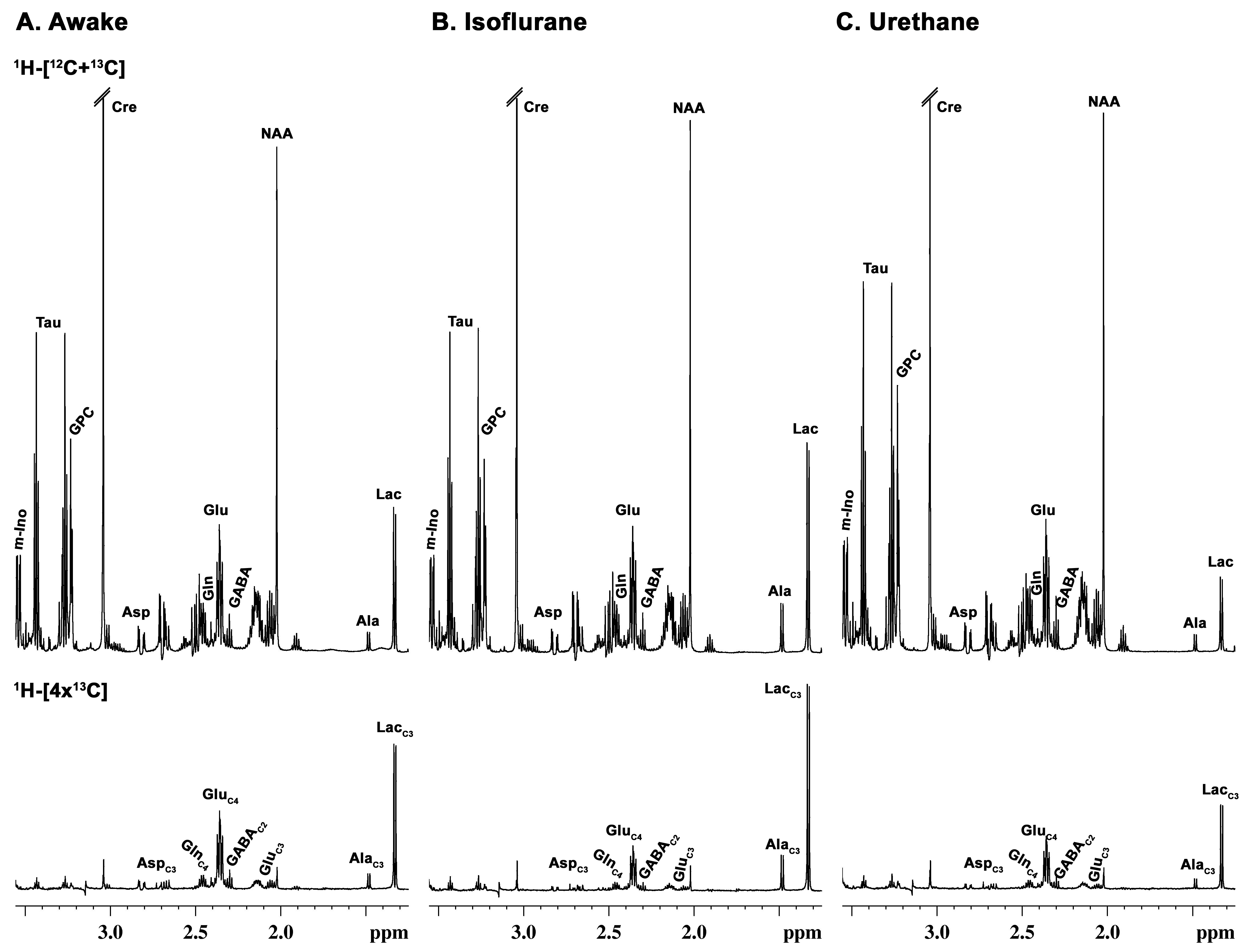
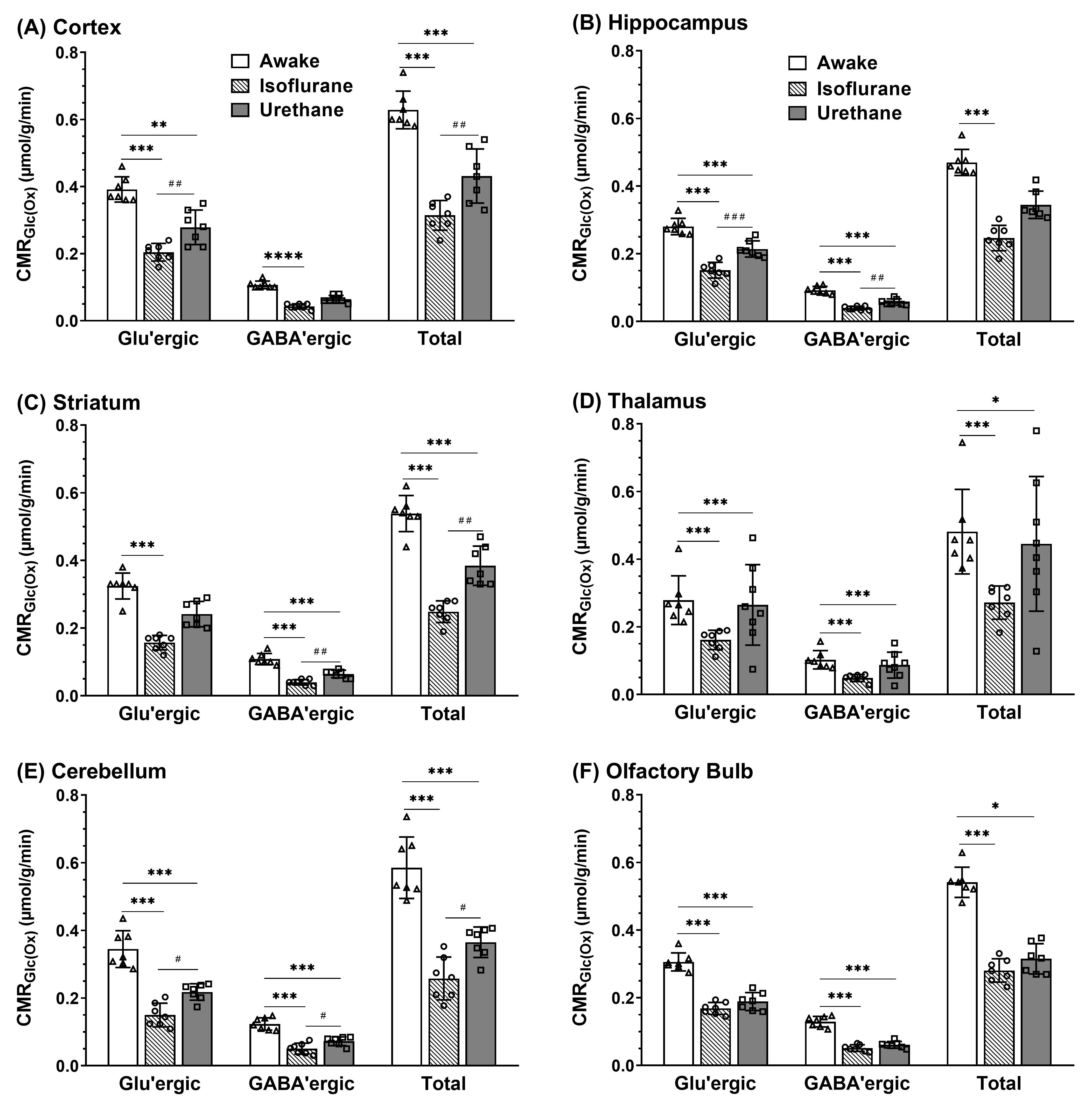
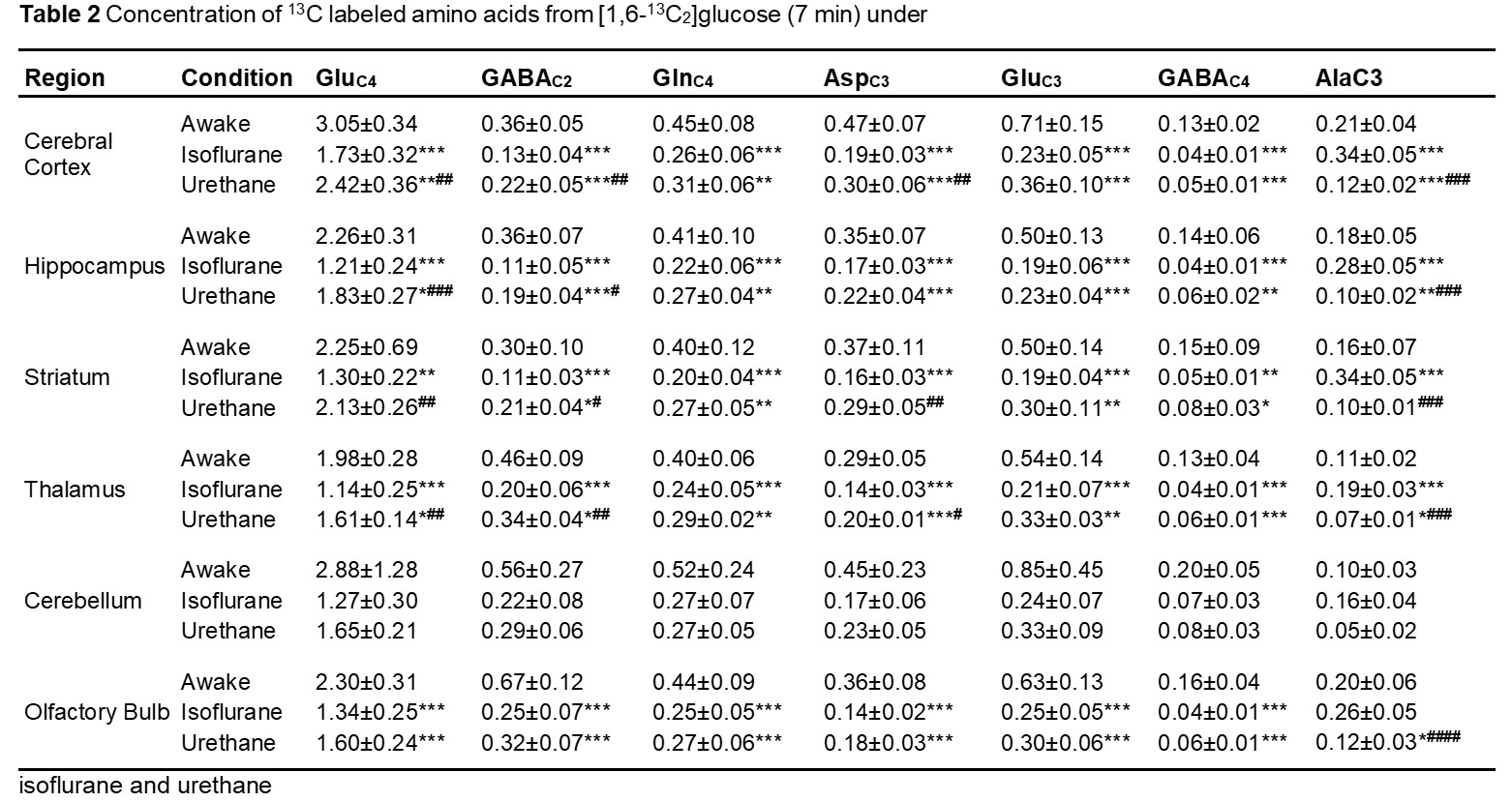
Mice were infused with [1,6-13C2]glucose for 7 min, and concentrations of 13C labeled amino acids were measured in brain tissue extracts by 1H-[13C]-NMR spectroscopy using [2-13C]glycine as reference. Values are presented as mean±SD; *p<0.05, **p<0.01, ***p<0.001, ****p<0.0001