1864
Dual use of nitroxyl radicals as a polarizing agent in hyperpolarization 13C-MRS and as a redox probe in EPR spectroscopy to study acute kidney injury1Department of Radiology, Frontier Science for imaging, Gifu University, Gifu, Japan, 2Department of Food Hygiene and Control, Faculty of Veterinary Medicine, Suez Canal University, Ismailia, Egypt, 3Animal Health Research Institute, Zagazig Provincial Laboratory, Zagazig, Egypt, 4Center for One Medicine Innovative Translational Research (COMIT), Institute for Advanced Study, Gifu University, Gifu, Japan, 5Department of Radiology, Gifu University, Gifu, Japan, 6Department of Radiology, School of Medicine, Gifu University, Gifu, Japan, 7Gifu University, Gifu, Japan
Synopsis
Keywords: Hyperpolarized MR (Non-Gas), Metabolism, Electron Paramagnetic Resonance, Ex vivo Molecular Imaging
Motivation: Trityl radicals are the main polarizing agents used for hyperpolarization. However parallel monitoring of metabolic and redox conditions is an unmet need.
Goal(s): To use nitroxides as a polarizing agent and as a redox probe simultaneously for the same sample.
Approach: Four nitroxyl probes were tested. HyperSense DNP polarizer was used for 13C-pyruvate hyperpolarization.13C-MRS and EPR measurements were performed using same samples.
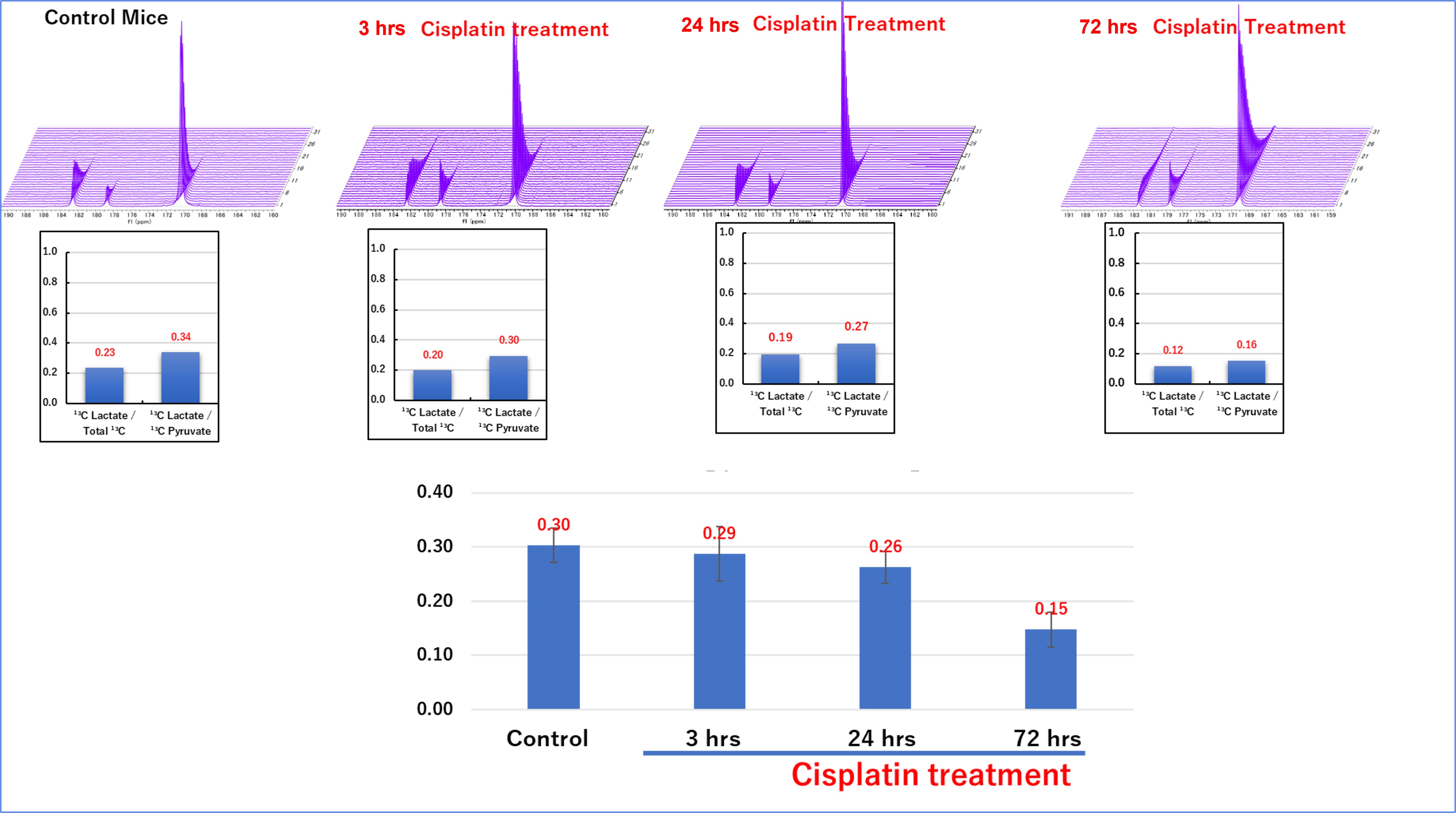
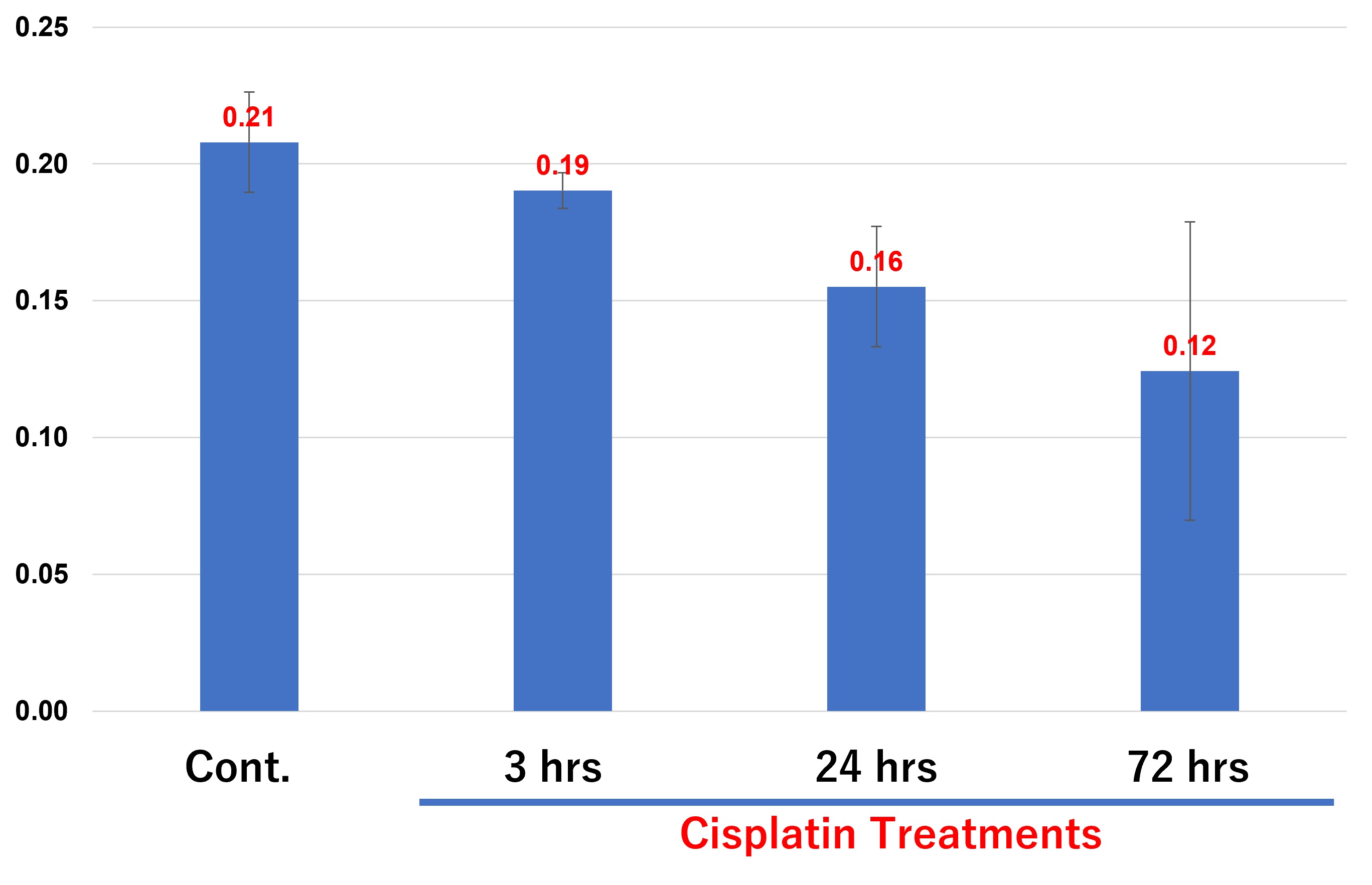
Results: CmP showed the highest hyperpolarization signal. A significant reduction in 13C lactate production and EPR decay rates of CmP during disease progression were confirmed.
Impact: We described successful application of nitroxyl radicals for simultaneous assessment of energy metabolism and redox status.
Abstract
IntroductionNitroxyl radicals, also known as aminoxyl radicals, are small chemical compounds that possess a stabilized free radical. Due to having unpaired electron spin, they exhibit distinct sensitivity to diverse conditions, allowing an extensive array of uses. They are utilized as imaging probes in biomedicine and materials research, as medicinal antioxidants, and as energy storage1. Owing to the usefulness of nitroxides as paramagnetic probes, nitroxyl radicals have been widely used as a probe for low-frequency EPR experiments in vivo and ex vivo using electron paramagnetic resonance (EPR) spectroscopy and EPR imaging (EPRI) to investigate redox conditions. EPR spectroscopy using nitroxyl contrast agents has been used as a redox-sensitive technology2. Dynamic nuclear polarization (DNP) is one of the most successful technique to increase the sensitivity of nuclear magnetic resonance (NMR). It can increase the signal by more than 10000 times, allowing for greater insight into the tissue real-time metabolic activity3. Hyperpolarization carbon 13 magnetic resonance spectroscopy (13C-MRS) is the most prominent application of this technology which has been used to study real-time metabolic activities in tissues. OX063, a triaryl methyl (trityl) radical is so far the gold standard polarizing agent used for hyperpolarization that has been extensively used. Trityl radicals including OX063 exhibit unmatched properties, such as a single-line EPR spectrum, ultra-narrow linewidth (<200 mG), long relaxation times, and good water solubility. So, they are widely used as polarizing agents for DNP. However, they are expensive and cannot be used for determining tissue redox status. Instead, the cheaper nitroxyl radicals can be used both as a probe for EPR to investigate tissue redox status and for the hyperpolarization 13C-MRS to detect tissue metabolic conditions.
Purpose
This study aimed to determine the feasibility of using nitroxyl radicals both as alternatives to the OX063 in hyperpolarization 13C-MRS and also as a paramagnetic probe for the redox status of tissue at the same time for the same sample.
Methods
Acute kidney injury (AKI) model mice were prepared by injection of cisplatin into C57BL/6 mice. Four nitroxyl spin probes were tested as a polarizing agent, the five-member pyrrolidine nitroxyl radicals; MCPROXYL (MCP), Carbamoyl-PROXYL (CmP) and Carboxy-PROXYL(CxP), and the six-member piperidine nitroxyl radical; (TEMPOL). Hyperpolarization was done by a 3.3T HyperSense DNP polarizer (Oxford Instruments, UK) at 1.4 K. A volume of 22 µL of 11 M [1–13C]-Pyruvate was mixed with the tested radicals at different concentrations. Immediately after dissolution, hyperpolarized 13C-pyruvate was mixed in a prewarmed NMR tube containing kidney homogenate. Ex vivo 13C signal acquisition was done by a 1.4 T Spinsolve 60 Carbon High-Performance benchtop NMR apparatus (Magritek, New Zealand). Soon after 13C-MRS, The EPR measurements of the same homogenate samples were performed using an X-band EPR spectrometer (JEOL 3Ltd. Tokyo, Japan) at 37 ◦C.
Results
and Discussion Carbon 13 signals of hyperpolarized pyruvate were detectable at good signal-to-noise ratios (SNR) in all cases of using the tested probes. The best concentration of nitroxyl radicals which induced the highest signal intensity was 50 mM. The highest signal intensity was observed when CmP was used as a polarizing agent while the lowest one was when TEMPOL was used. Ex vivo data of hyperpolarized 13C-MRS confirmed that the relative production of 13C lactate showed a significant decrease during the progression of the kidney injury and also a significant reduction in the decay rates of the redox probe CmP. CmP radicals were successfully used for the simultaneous assessment of energy metabolism and redox status in AKI tissue homogenates. We described the application of nitroxyl radicals for simultaneous ex vivo assessment of real-time energy metabolism and monitoring of tissue redox status. The technique was successfully applied to AKI model mice.
Conclusion
In this study, we described the applicability of using nitroxyl radicals for simultaneous real-time monitoring of tissue energy metabolism and the assessment of redox status. Our data introduces a cheaper and more practical method for the simultaneous monitoring of metabolic and redox conditions. Using this approach can be further implemented for non-invasive in vivo imaging of disease theranostics by monitoring early metabolic and redox changes.
Acknowledgements
No acknowledgement found.References
1. Matsumoto S, Mori N, Tsuchihashi N, Ogata T, Lin Y, Yokoyama H, and Ishida S. Enhancement of nitroxide-reducing activity in rats after chronic administration of vitamin E, vitamin C, and idebenone examined by an in vivo electron spin resonance technique. Magn Reson Med 40: 330–333, 1998.
2. Krishna MC, Devasahayam N, Cook JA, Subramanian S, Kuppusamy P, and Mitchell JB. Electron paramagnetic resonance for small animal imaging applications. ILAR J 42: 209–218, 2001.
3. Ardenkjaer-Larsen JH, Fridlund B, Gram A, et al. Increase in signal-to-noise ratio of 10,000 times in liquid-state NMR. Proc Natl Acad Sci U S A 2003;100(18): 10158–10163.
Figures