1832
Weight loss predicts the modulation of dACC glutamate during inhibitory control that is specific to food-cues: Evidence from ¹H fMRS1Translational Neuroscience Program, Wayne State University, Detroit, MI, United States, 2Brain Imaging Research Division, Psychiatry and Behavioral Neuroscience, Wayne State University, Detroit, MI, United States, 3Department of Nutrition and Food Science, Wayne State University, Detroit, MI, United States, 4Division of Metabolism, Endocrinology, and Diabetes, Department of Internal Medicine, University of Michigan, Ann Arbor, MI, United States
Synopsis
Keywords: Spectroscopy, Spectroscopy, fMRS, 1H MRS
Motivation: The neurobiological mechanisms involved in poor weight loss maintenance are not understood.
Goal(s): Our goal was to investigate neurobiological differences in glutamate modulation across different motor/inhibitory control responses after completion of a clinical weight loss program.
Approach: 1H fMRS was conducted in a pilot sample who had completed a clinical weight loss program.
Results: The presence of food cues as the stimuli influenced the glutamate modulation during inhibitory control responses.
Impact: With further investigation, our preliminary evidence of a food-cue specific difference in glutamate modulation may fuel better treatment plans to support more successful maintenance of weight loss.
Introduction
Weight loss programs such as the MEND Weight Management Clinic (MEND Clinic) effectively reduce weight in individuals with obesity (~86% succeed); however, approximately 25% are unable to maintain weight loss long-term (>6 months)1. There is evidence associating poor top-down inhibitory control with poor weight loss maintenance (WLM)2,3, but the neurobiological mechanisms are not fully understood. This understanding is vital for improving treatment strategies supporting long-term WLM. Inhibitory control can be conceptualized as the ability to selectively withhold ‘prepotent’ motor responses, which involves motor control and inhibition processes, and with the dorsal anterior cortex (dACC) playing a central role4–6. These processes are driven by highly integrated glutamatergic and GABAergic neurotransmission, forming distinct steady-states in the excitatory/inhibitory (E/I) balance across multiple microcircuits7. These shifts in glutamate neurotransmission (both increasing and decreasing) under task conditions are detectable using 1H fMRS8. Here, we investigated differences in dACC glutamate modulation under task conditions with or without inhibitory motor control, utilizing neutral squares and food/non-food stimuli, and associations with the weight loss ability.Methods
Data were acquired from 13 individuals with obesity or overweightness following the MEND Clinic (5F; mean age: 50.1±5.2yrs). A Siemens 3T Verio system with 32-channel volume head coil was used for 1H fMRS. After collection of MPRAGE T1-weighted structural images, a single voxel was defined (midline dACC; 20x17x12mm3), utilizing the AVP approach9. The visually-guided motor tapping task involved both “Non-Selective” (motor control only) and “Selective” (motor + inhibitory control) task modes and squares or food/non-food stimuli conditions. Following the baseline control condition scan (fixation crosshair), a separate ¹H fMRS scan was conducted for each task mode and stimuli type (4 total), with four 32s task blocks interspersed with 16s rest blocks. Flashing probes (0.8s-1.5s interstimulus duration) of red/green squares or food/non-food items were presented, respectively. During Non-Selective, participants were instructed to respond to all probes (50%/50% distribution), whereas respond to green/food probes (80% distribution) and inhibit on red/non-food probes (20% distribution) during Selective (Figure 1). Twelve consecutive measurements (16s temporal resolution) were acquired per scan (PRESS, TR=4.0s, TE=23ms, 4 averages/measurement, scan time=3:19/scan). The two 1H fMRS spectra per task block were averaged, with phase and frequency shift correction occurring following averaging. Quantification utilized LCModel. Glutamate changes were assessed across stimuli type (task modes pooled) using a repeated measures generalizing estimating equations (GEE) approach (SAS GENMOD; SAS Institute Inc). The correlation between glutamate during the Selective task mode with food/non-food stimuli and percentage of weight lost during the MEND Clinic was also assessed.Results
While the stimuli type model term was not significant (χ2=3.50, p=0.174), post hoc analysis indicated a significant increase in glutamate during the squares stimuli (z=-1.99, p=0.046) and a non-significant change in glutamate during the food/non-food stimuli (z=-1.39, p=0.163; Figure 2) both relative to baseline. A trending correlation between decreasing dACC glutamate modulation during the Selective task with food/non-food stimuli and decreasing percentage of weight lost during the clinical program was observed (R2=0.274, F(1,11)=4.15, p=0.07; Figure 3).Discussion
Increased glutamate modulation in the dACC during Non-Selective and Selective tasks with neutral square stimuli is consistent with previous work10. This suggests that processes related to motor control with or without inhibitory control lead to net increases in glutamatergic neurotransmission (positive shift in the E/I balance). Switching the stimuli to appetitive food cues leads to a non-significant change in the dACC glutamate modulation independent of inhibitory or motor alone responses. This indicates an influence by emotionally valanced food cues on motor and inhibitory control processes, potentially due to interference by bottom-up processes related to affect regulation. The potential association between decreasing dACC glutamate modulation during inhibitory “Selective” control in the presence of food cues and poorer ability in losing weight provides encouraging preliminary support that emotionally valanced food cues (bottom-up processes) may impact inhibitory control ability (top-down processes). Furthermore, this may predict ones’ inability to lose weight or maintain weight loss long-term. More investigation is needed to probe these associations in obesity and long-term WLM.Conclusions
Results support the potential influence of emotionally valanced food cues on inhibitory control, evidenced by the lack of increased dACC glutamate, and that the extent of the influences may be related to one’s ability to maintain weight loss. With further investigation, these results could provide greater understanding of the neurobiological mechanisms underlying top-down inhibitory processes influenced by affect and difficulties with weight loss, potentially fueling better treatment for successful long-term WLM in obesity.Acknowledgements
This work was supported by pilot funds from the Michigan Diabetes Research Center (PB), the NIMH under award number R01MH59299 (DRR and VAD), the Children’s Hospital of Michigan Foundation, Miriam Hamburger Endowed Chair, Paul and Anita Strauss Endowment, and by the Lycaki-Young Funds from the State of Michigan.References
1. Lobstein T, Jackson-Leach R, Powis J, Brinsden H, Gray M. World Obesity Atlas 2023. World Obesity Federation. Available from: https://data.worldobesity.org/publications/?cat=19
2. Klerk MT de, Smeets PAM, Fleur SE la. Inhibitory control as a potential treatment target for obesity. Nutr Neurosci. 2022;1–16. PMID: 35343884
3. Ziauddeen H, Alonso-Alonso M, Hill JO, Kelley M, Khan NA. Obesity and the Neurocognitive Basis of Food Reward and the Control of Intake. Adv Nutr. 2015;6(4):474–486. PMCID: PMC4496739
4. Botvinick MM, Cohen JD, Carter CS. Conflict monitoring and anterior cingulate cortex: an update. Trends Cogn Sci. 2004;8(12):539–546. PMID: 15556023
5. Asemi A, Ramaseshan K, Burgess A, Diwadkar VA, Bressler SL. Dorsal anterior cingulate cortex modulates supplementary motor area in coordinated unimanual motor behavior. Front Hum Neurosci. 2015;9:309. PMCID: PMC4454840
6. Paus T. Primate anterior cingulate cortex: Where motor control, drive and cognition interface. Nat Rev Neurosci. 2001;2(6):417–424. PMID: 11389475
7. Tatti R, Haley MS, Swanson OK, Tselha T, Maffei A. Neurophysiology and Regulation of the Balance Between Excitation and Inhibition in Neocortical Circuits. Biol Psychiat. 2017;81(10):821–831. PMCID: PMC5374043
8. Stanley JA, Raz N. Functional Magnetic Resonance Spectroscopy: The “New” MRS for Cognitive Neuroscience and Psychiatry Research. Frontiers Psychiatry. 2018;9:76. PMCID: PMC5857528
9. Woodcock EA, Arshad M, Khatib D, Stanley JA. Automated Voxel Placement: A Linux-based Suite of Tools for Accurate and Reliable Single Voxel Coregistration. J Neuroimaging Psychiatry Neurology. 2018;3(1):1–8. PMCID: PMC5998677
10. Eichstaedt JM, Khatib D, Easter P, Rosenberg DR, Diwadkar VA, Stanley JA. 1H fMRS detects changes in dorsal anterior cingulate cortex glutamate driven by inhibitory control. 2023 ISMRM & ISMRT Annual Meeting and Exhibition. Toronto, Ontario, Canada; 2023.
Figures
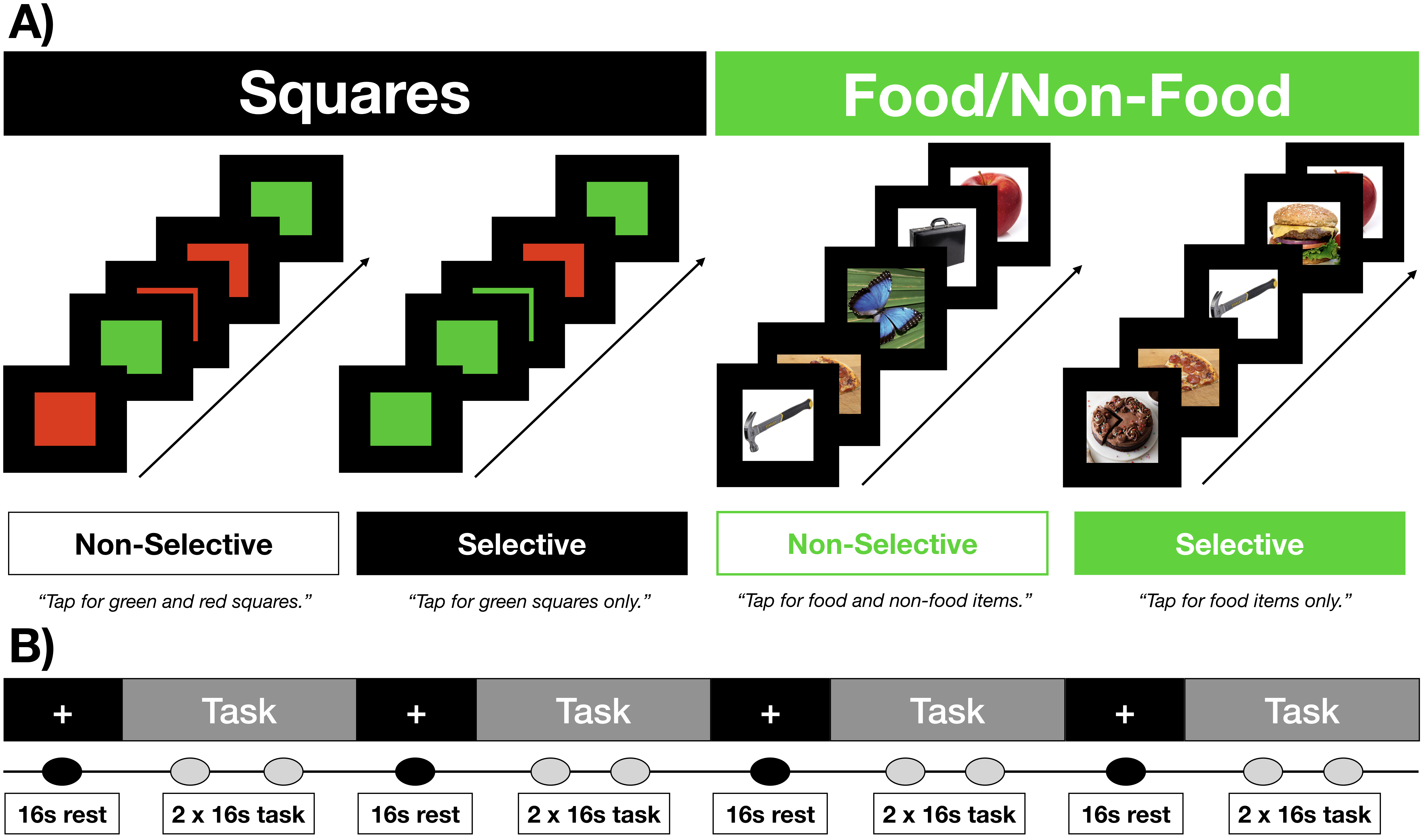
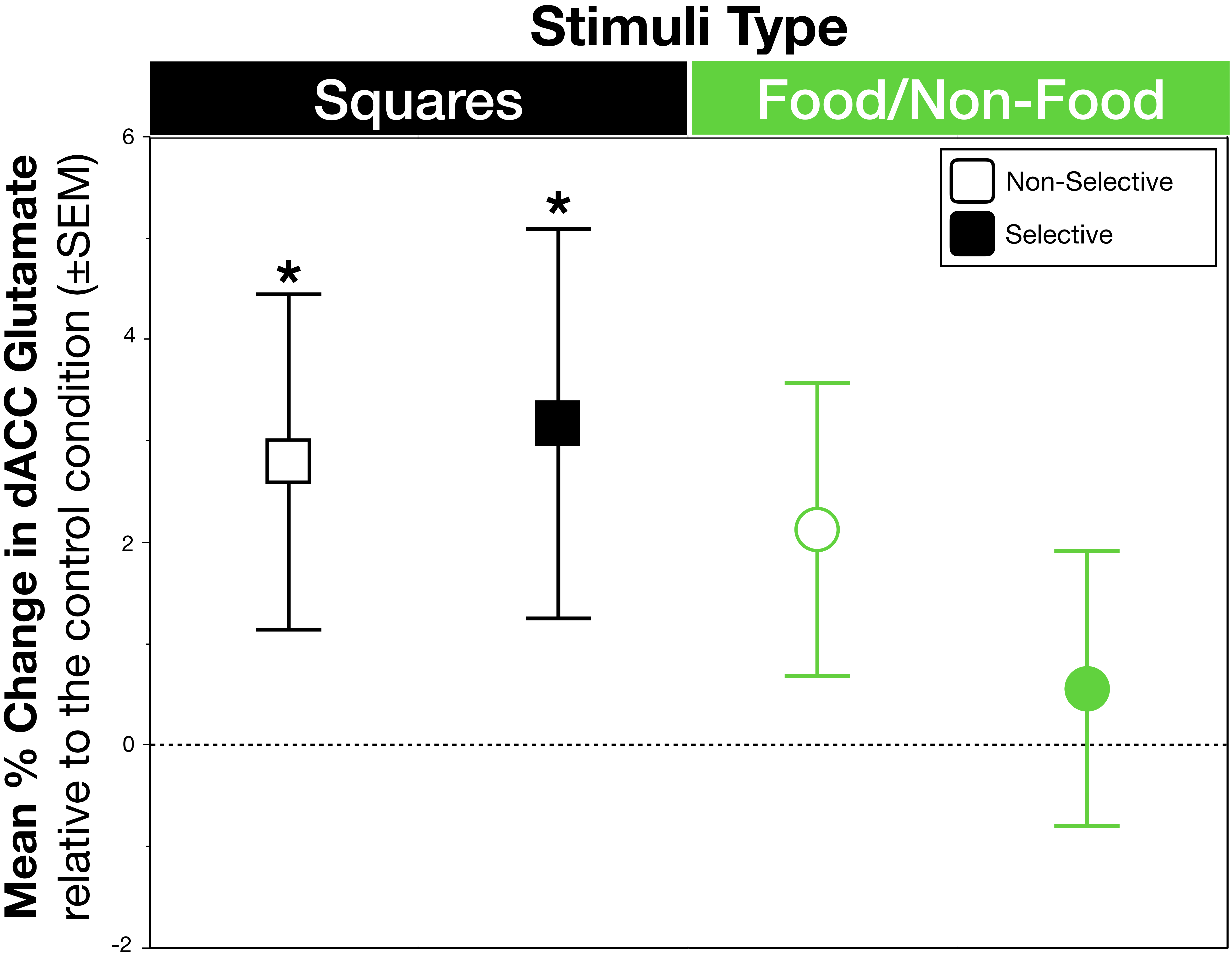
Figure 2. Mean % difference in glutamate relative to the baseline condition across stimuli types: Squares (black) and Food/Non-Food (green), with open shapes for the Non-Selective task mode and closed for the Selective task mode. The combined squares stimuli type glutamate modulation was significantly increased relative to baseline, while the food/non-food was not. Error bars represent ±SEM.
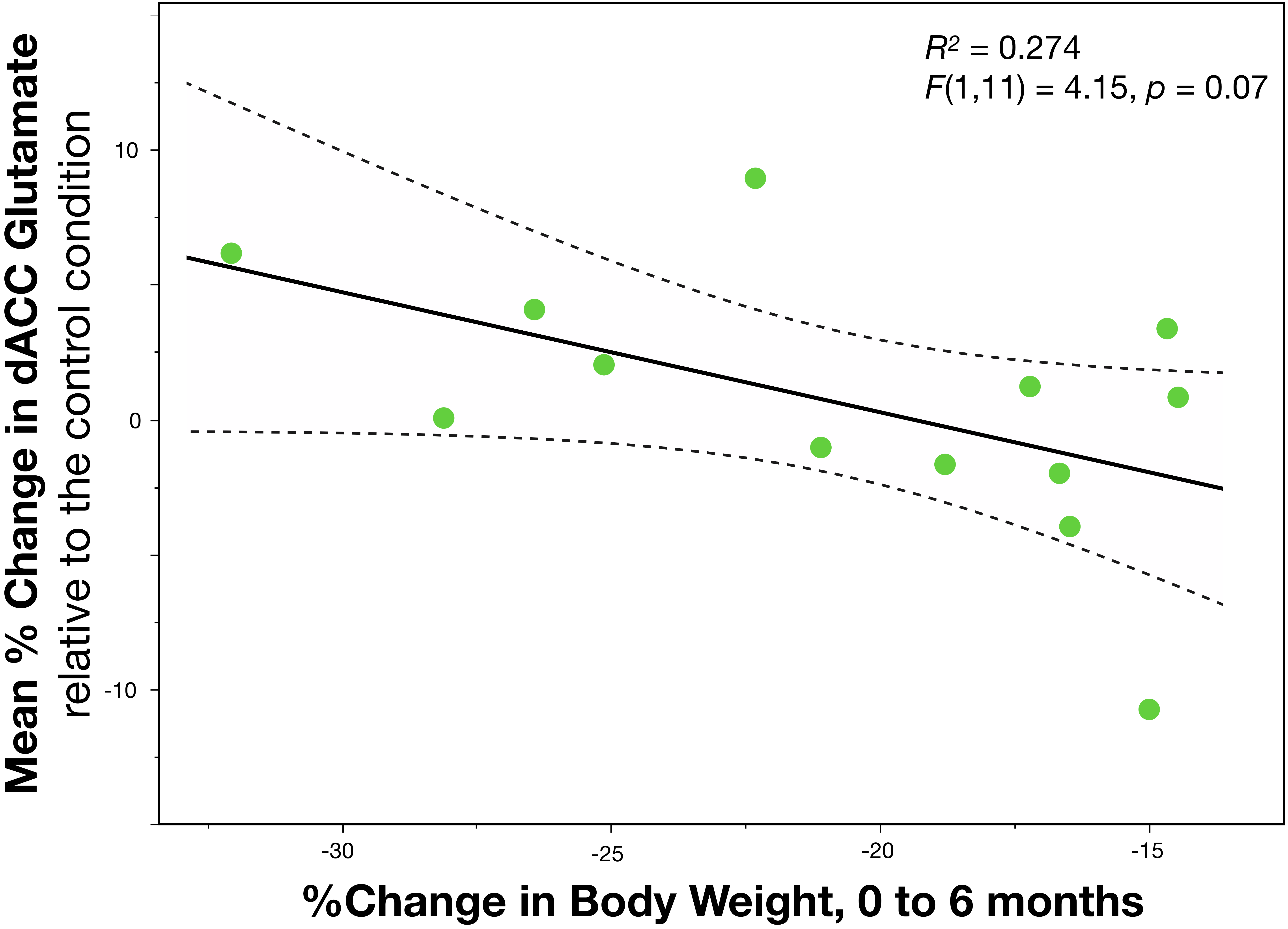
Figure 3. Correlation between the mean % change in glutamate in the Selective mode with food/non-food stimuli and the % change in body weight during the clinical weight loss program. Results indicated a trending correlation such that greater glutamate modulation was consistent with a greater percentage of weight lost during the clinical program.