1738
Transcriptional and Cellular Decoding of Cortical Morphometric Changes in Chronic Insomnia Disorder1School of Acupuncture and Tuina, Chengdu University of Traditional Chinese Medicine, Chengdu, China
Synopsis
Keywords: Psychiatric Disorders, Neuro, Morphometric similarity
Motivation: Chronic Insomnia Disorder (CID) influences various levels of brain organization, spanning macroscopic structures to microscopic genomics, the connection between genomic variations and structural brain alterations in CID was not clear.
Goal(s): This study analyzed structural brain alterations-related genomes in CID.
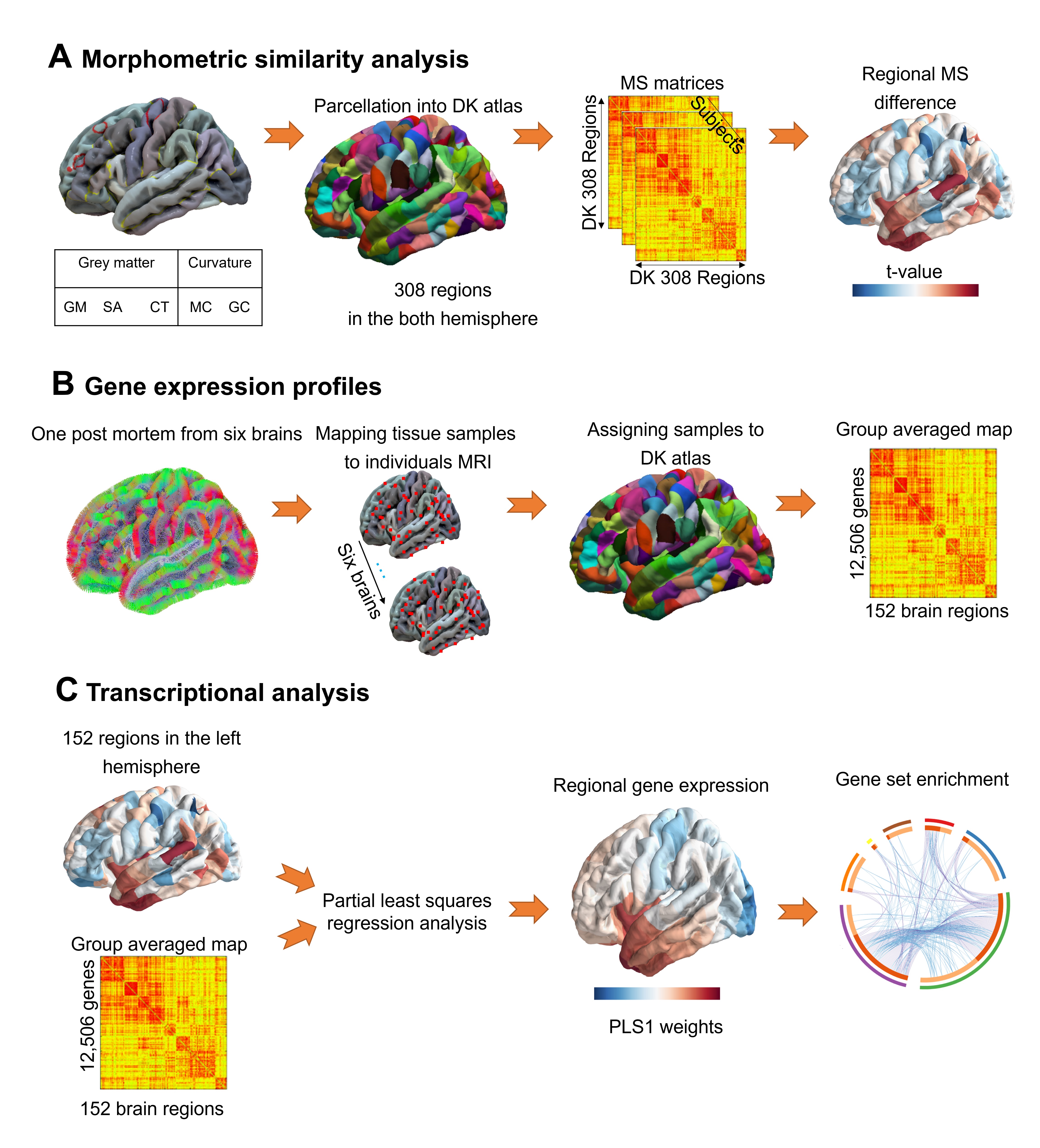
Approach: Using and morphometric similarity (MS) and imaging-transcription alanalysis
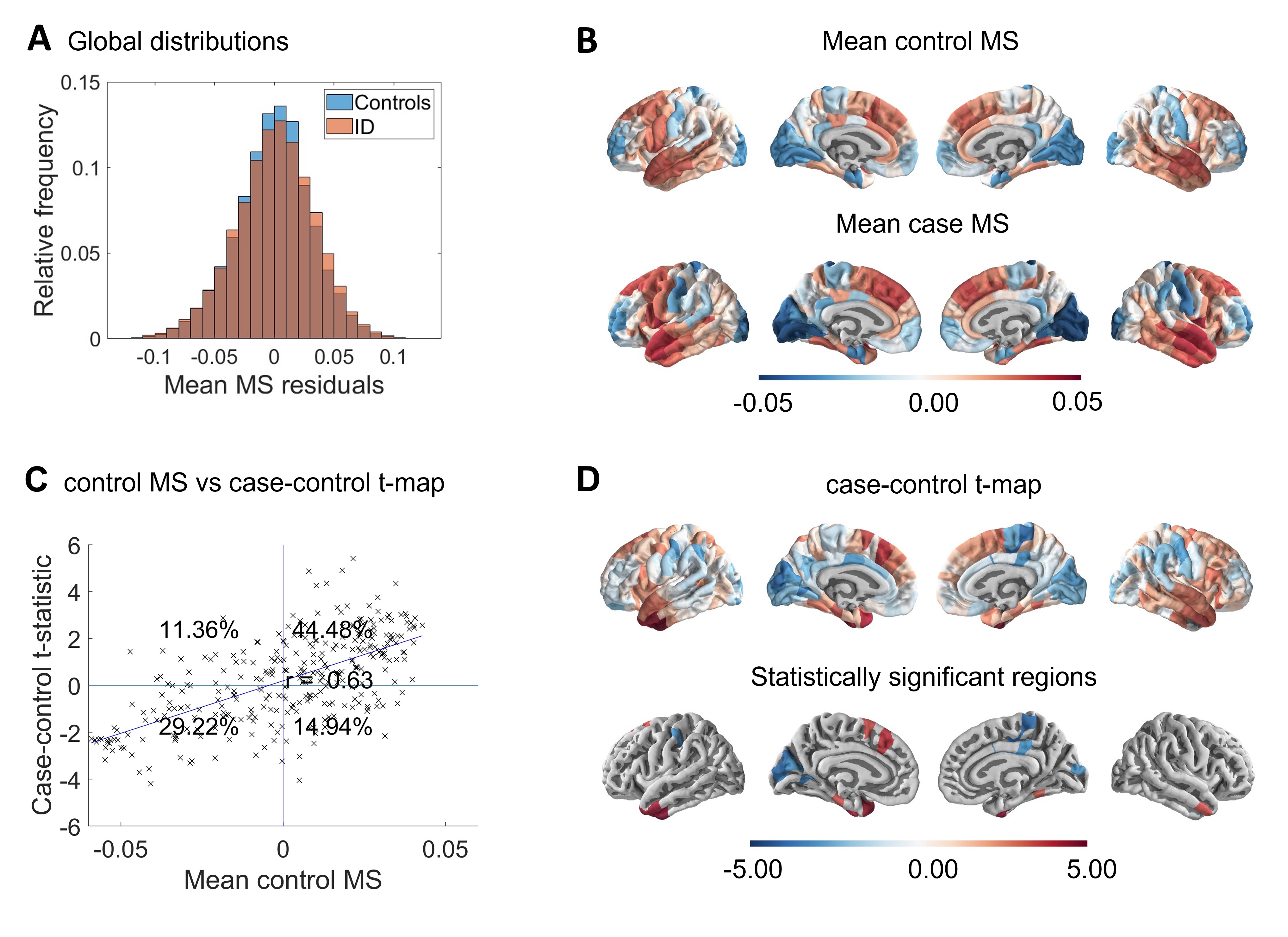
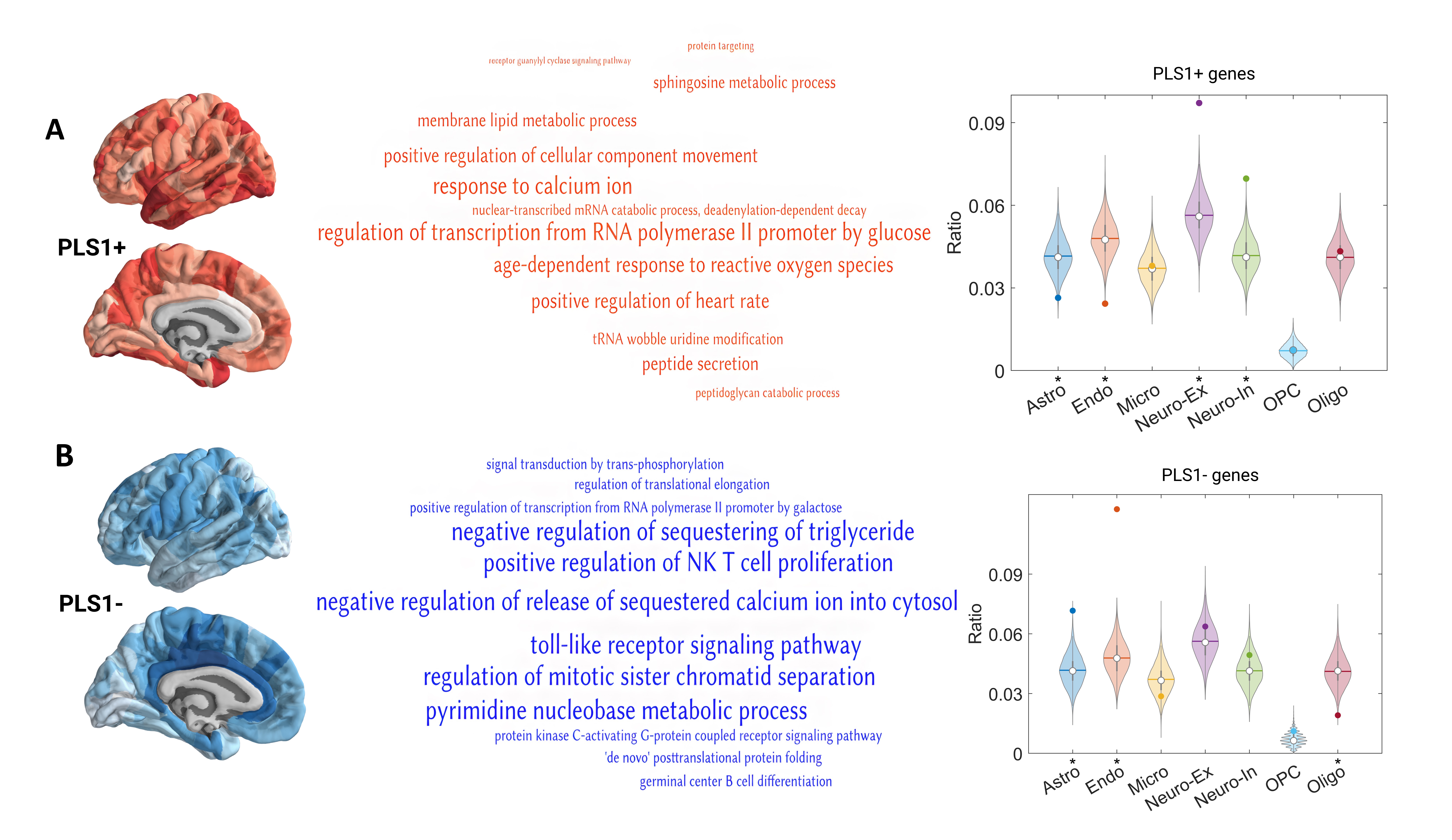
Results: The study identified MS reductions in the parietal and limbic regions, as well as enhancements in the temporal and frontal regions in CID patients. The study also discovered spatial correlations between MS alterations and genes associated with excitatory and inhibitory neurons, as well as genes implicated in chronic neuroinflammation processes.
Impact: This study bridges the gap between cortical structural changes and the molecular mechanisms in Chronic Insomnia Disorder (CID), shedding light on the genetic basis and brain alterations associated with CID.
Aims
Chronic Insomnia Disorder (CID) is a common mental disorder with considerable genetic basis. While previous studies suggested that CID influences various levels of brain organization, spanning macroscopic structures 1 to microscopic genomics 2, the connection between genomic variations and structural brain alterations in CID was not clear. This study further looked into the differences of brain structure in CID at the whole brain level and analyzed the difference-related genomes.Methods
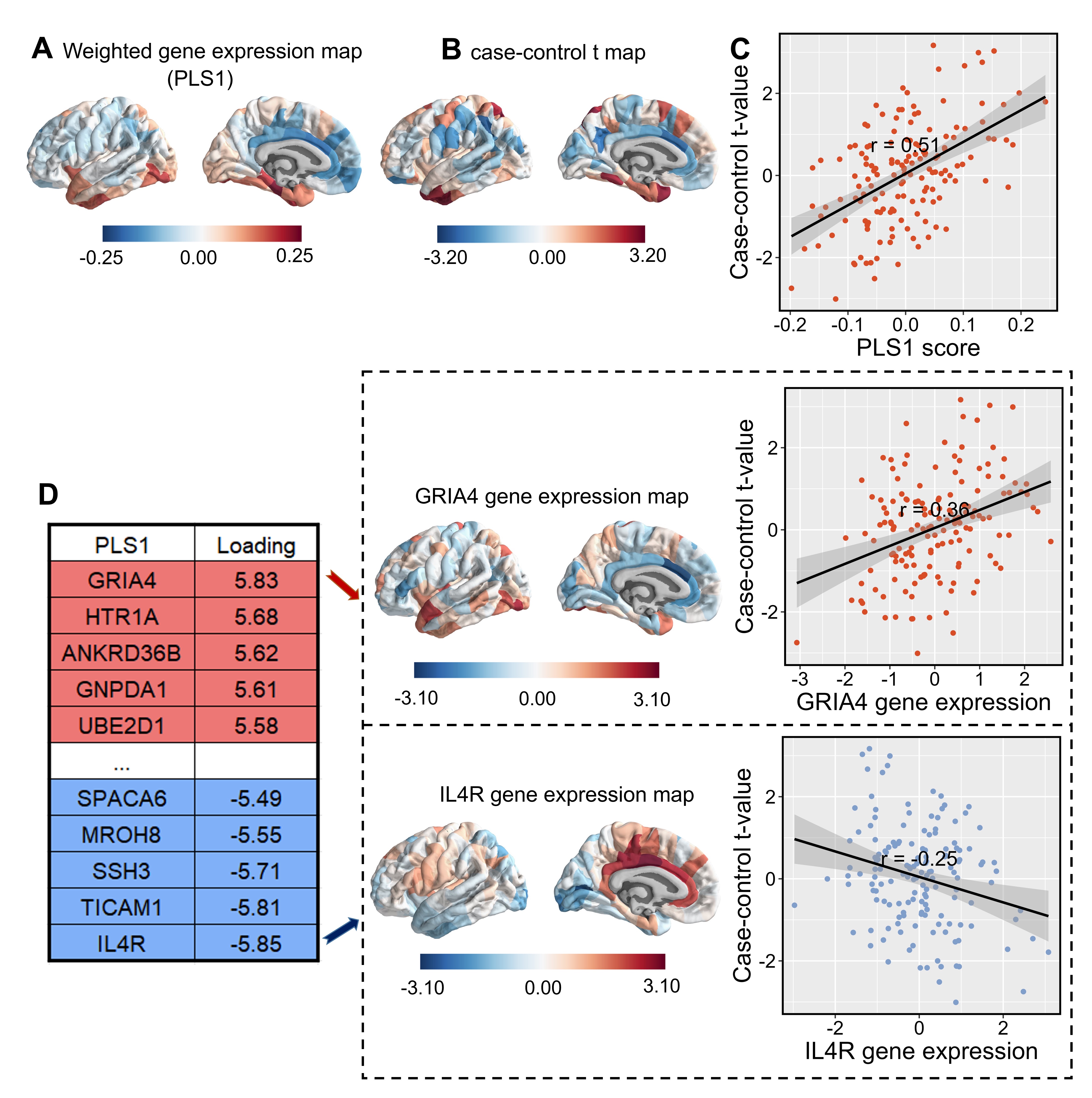
Brain structural data from 104 CID patients and 102 matched healthy controls (HC) were acquired to examine cortical structural alterations using morphometric similarity (MS) analysis 3 Partial least squares (PLS) regression and transcriptome data were used to extract genomes related to brain structural differences. Gene set enrichment analysis (GSEA) was used to identify potential molecular mechanisms behind the observed structural changes. To mitigate the risk of false positives due to cortical autocorrelation, a spatial permutation test was applied in both PLS and GSEA.Results
We found that CID patients exhibited MS reductions in the parietal and limbic regions, along with enhancements in the temporal and frontal regions, compared to HCs. We also observed a positive correlation between MS values in the frontal and limbic regions and poor sleep quality within the CID group. In the subsequent analysis, we observed that the MS alterations in CID spatially correlated with genes associated with excitatory and inhibitory neurons, as well as with genes implicated in chronic neuroinflammation processes.Conclusion
This imaging-transcriptional study bridges the gap between cortical structural changes and the molecular mechanisms in CID patients.Acknowledgements
This work was supported by the National Natural Science Foundation of China (No.82374590 and No.82004488); the Sichuan Provincial Science and Technology Department project in China (No.2021YJ0176); the Chengdu University of Traditional Chinese Medicine Xinglin Scholar Discipline Talent Research and Improvement Plan (No.QJRC2022036); the China Postdoctoral Science Foundation (No.2022MD713705) and the Natural Science Foundation of Chongqing (No. cstc2021jcyj-bshX0144).References
1. Van Someren, E.J.W., 2021. Brain mechanisms of insomnia: new perspectives on causes and consequences. Physiol Rev 101(3), 995-1046.
2. Watanabe K, Jansen PR, Savage JE, et al. Genome-wide meta-analysis of insomnia prioritizes genes associated with metabolic and psychiatric pathways. Nat Genet. 2022;54(8):1125-1132.
Figures