1726
Multilayer network analysis reveals instability of brain dynamics in untreated first-episode schizophrenia1Department of Radiology, West China Hospital of Sichuan University, Chengdu, China, 2West China Hospital of Sichuan University, Chengdu, China, 3University of Cincinnati College of Medicine, Cincinnati, OH, United States
Synopsis
Keywords: Psychiatric Disorders, Psychiatric Disorders, schizophrenia, multilayer network analysis, switching rate, antipsychotics, dynamic functional connectivity
Motivation: Although aberrant static functional connectome in schizophrenia has been reported, little is known about how the neural dynamics change in first-episode schizophrenia and are modulated by antipsychotic treatment.
Goal(s): We aim to characterize dynamic topological reconfiguration of brain connectome in schizophrenia.
Approach: Multilayer network analysis was applied to calculate the network switching rates between brain states. We compared switching rates of patients and controls at baseline, and tested for changes after one-year of treatment.
Results: Significantly increased network switching rates were found in patients at baseline, mainly in the sensorimotor and dorsal attention networks. Switching rates were reduced after treatment.
Impact: The findings of excessive neural flexibility in patients extend our understanding for the disease-related brain dynamics aberrance in schizophrenia, and the normalization of network switching rates further illustrate the biological mechanism underlying antipsychotic treatment from a perspective of neural dynamics.
Introduction
Schizophrenia, a severe and debilitating mental illness, has been conceptualized as a dysconnectivity syndrome1. Previous neuroimaging studies in schizophrenia mainly focused on the aberrant static functional connectivity, the time-varying interactions in brain connectome still remains unclear2. Multilayer network analysis evaluates the dynamic configuration of functional connectome across space and time3, and network switching rates calculating based on this method can reflect flexibility and stability of brain states4, 5. Here we explore network switching rates alterations of schizophrenia and characterized changes of switching rates after antipsychotic treatment for comprehensive understanding of how aberrant neural dynamics play a role in the pathophysiology of schizophrenia.Methods
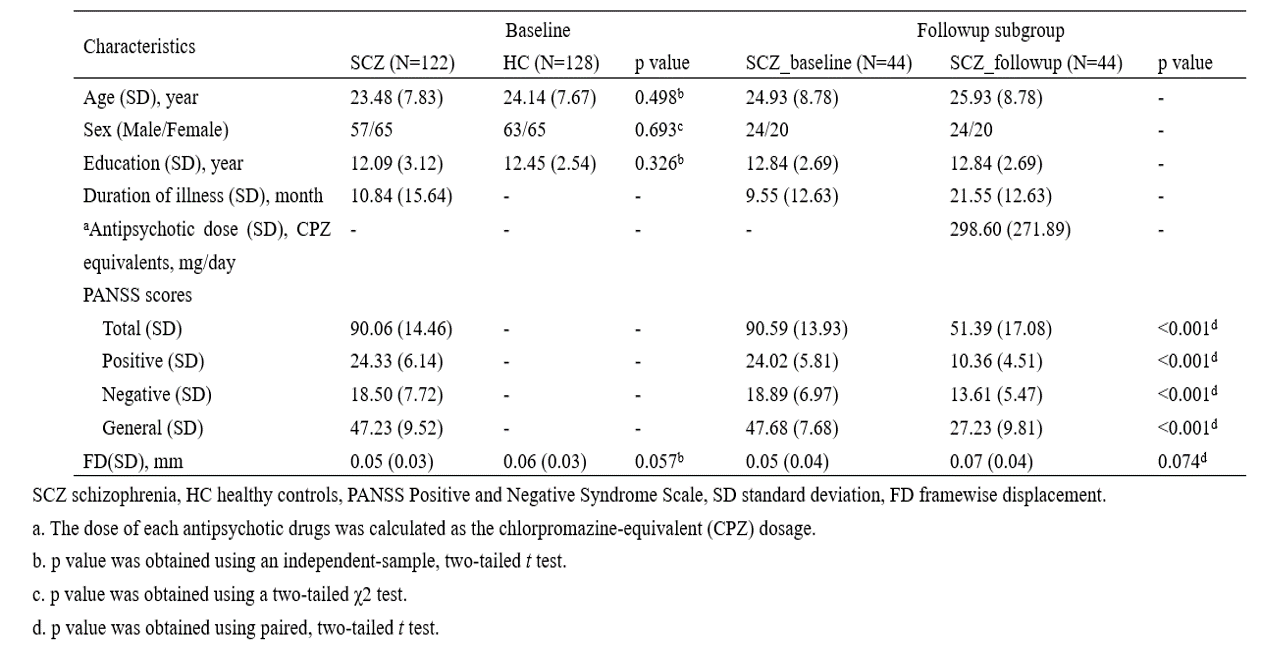
ParticipantsThe study was approved by the ethics committee of West China Hospital of Sichuan University, and written informed consent was provided by all study participants. First-episode schizophrenia patients (n=122) without any prior antipsychotic treatment and demographically matched healthy controls (n=128) were recruited. Each patient was evaluated for clinical symptoms severity via the Positive and Negative Syndrome Scale (PANSS). Furthermore, we rescanned a subgroup of 44 patients after one-year treatment with second-generation antipsychotics. Details of demographic information are in Figure 1.
Image acquisition and dynamic network construction
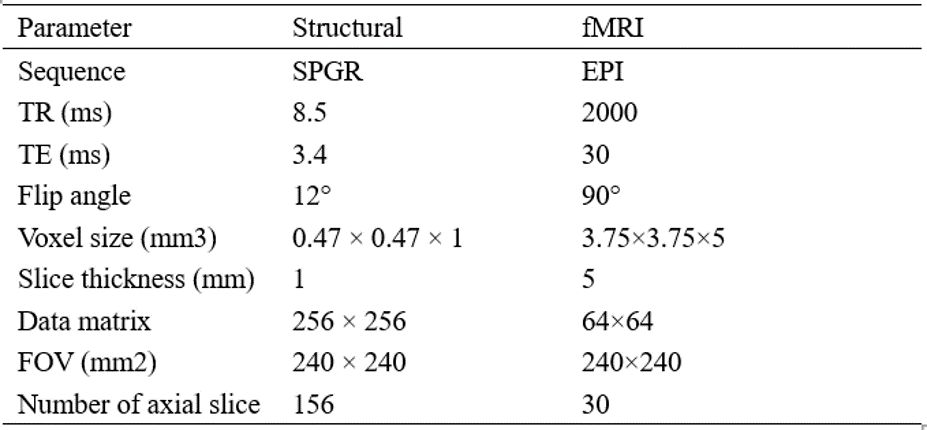
Three-dimensional T1-weighted images and fMRI data for all participants were obtained using a 3.0 T Signa EXCITE scanner (General Electric, Milwaukee, USA) with an 8-channel head coil (details in Figure 2). Standard fMRI data preprocessing was performed using DPABI software6. We constructed the functional connectome by calculating the Pearson’s correlation between extracted time series of nodes from the Brainnetome atlas7, which contains 246 nodes assigned to eight functional networks. The dynamic functional brain network for each participant was generated using a sliding window approach.
Network switching rate calculation
To characterize the spatiotemporal reconfiguration of brain modules, an iterative multilayer-variant Louvain algorithm was employed to track time-varying community structures3. Switching rate for a node was calculated as the proportion of time windows when a node switched between different community assignments5.
Statistical analysis
Two sample t tests were conducted to compare baseline data of patients and controls. For those network switching rates which showed significant group differences in baseline analyses, paired t-tests were performed between patients at baseline and follow-up in the longitudinal subgroup. Pearson correlation analyses were conducted between the altered network switching rates at baseline and reduction rate of PANSS score.
Results
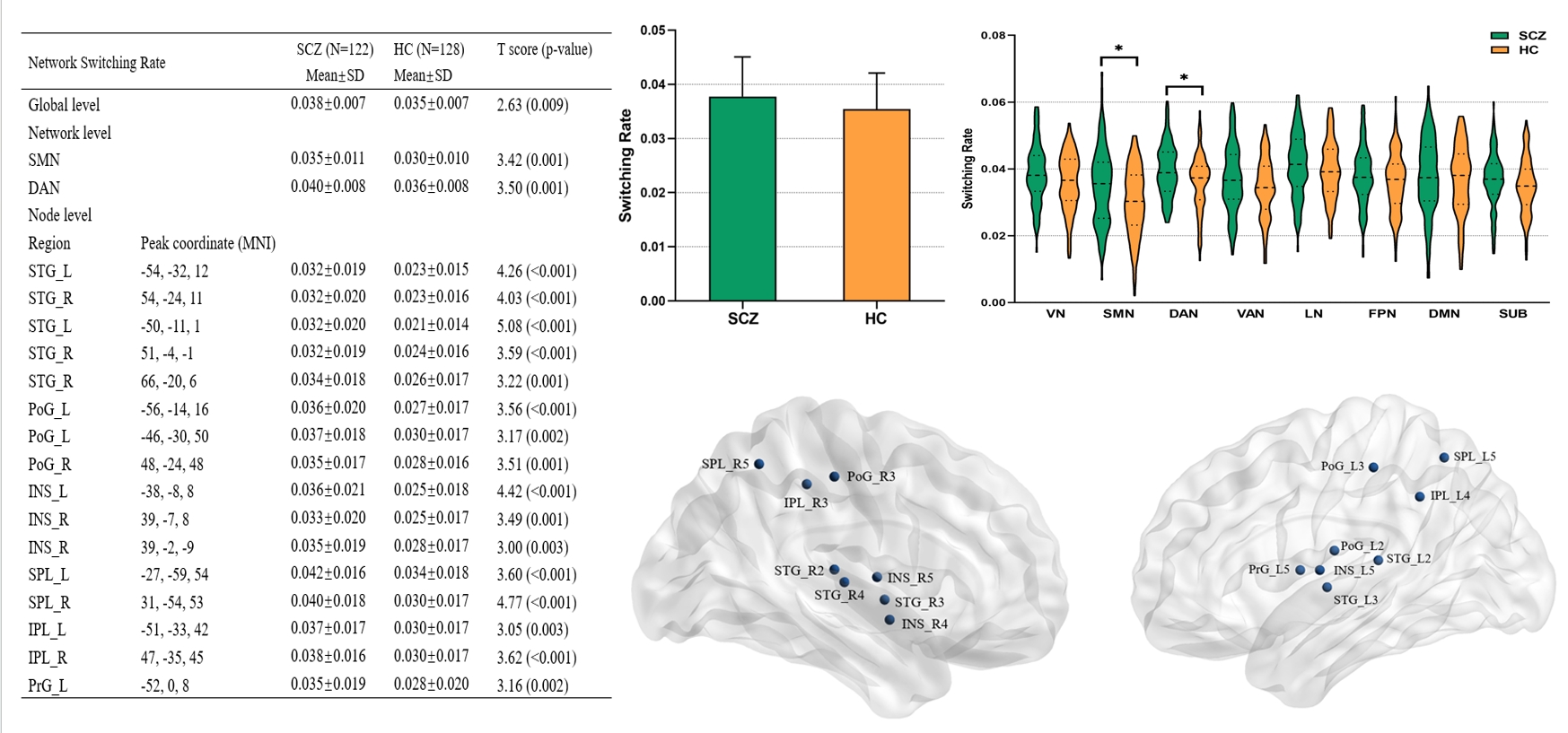
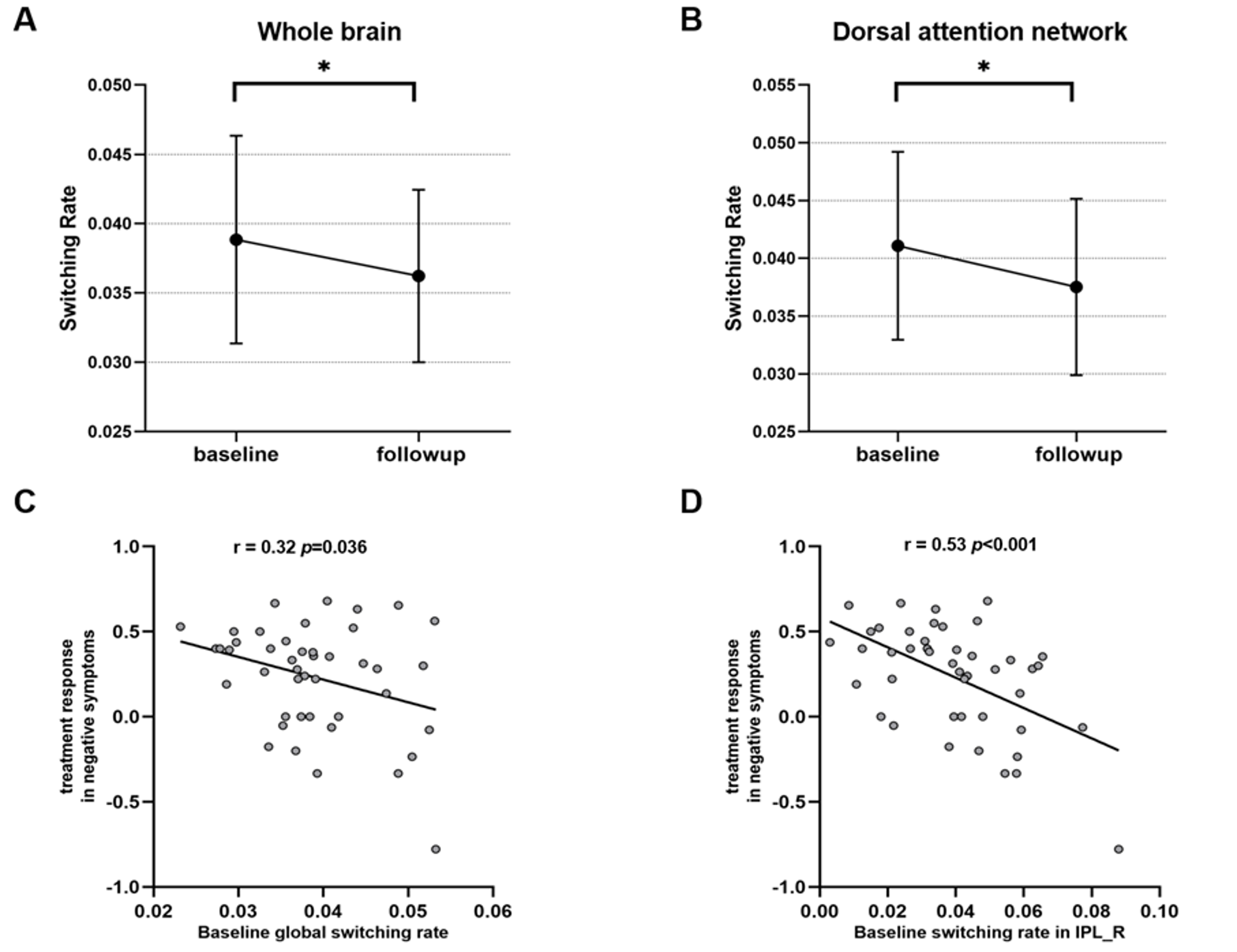
Compared with healthy controls, schizophrenia exhibited significantly higher network switching rates at the global level (t=2.63, p =0.009). At the subnetwork level, the patient group had significantly greater switching rates than the HC group in the sensorimotor network (SMN) and dorsal attention network (DAN) (t=3.42, p=0.001; t=3.50, p=0.001, respectively, FDR correction). At the nodal level, the patient group showed significantly increased switching rates in bilateral superior temporal gyrus, postcentral gyrus, insula, superior and inferior parietal lobules, and left precentral gyrus (all t≥3, p< 0.05, FDR correction) (Figure 3).After one-year of antipsychotic treatment, the network switching rate at the global level was significantly reduced (t=2.26, p=0.029). When considering subnetwork and nodal switching rates that showed group differences at baseline, the switching rate of DAN was significantly decreased after treatment (t=2.48, p=0.014, FDR correction, Figure 4A-4B).
Furthermore, higher baseline switching rates at the global level and of right inferior parietal lobule significantly were correlated with a greater reduction in negative symptoms at one-year follow-up (r=0.32, p=0.036; r=0.53, p<0.001, FDR correction, respectively, Figure 4C-4D).
Discussion
Using multilayer network analysis to explore the dynamic reconfiguration of the functional connectome, the study demonstrated that the brain dynamics in first-episode drug-naïve schizophrenia tend to stay in an unstable state. These findings are consistent with previous studies showing increased temporal variability of functional connectivity in fMRI studies of schizophrenia8, 9, indicating exaggerated rate of switching brain states during periods of acute psychosis may be related to difficulties patients experience in maintaining cognitive set and performing complex cognitive operations10. Moreover, the shift toward typical neural dynamics after antipsychotic treatment may reflect the pharmacological mechanisms of antipsychotics involving dopaminergic11 and serotonergic modulation12, 13. The correlation between switching rates at baseline and reduction of negative symptoms suggest that the loss of stabilization in neural dynamics might represent a critical factor in the treatment resistance of negative symptoms in schizophrenia.Conclusion
Our findings demonstrated that the elevated state switch rate in whole-brain dynamics, particularly in SMN and DAN subnetworks, may reflect an important and modifiable neurobiological aspect of acute psychosis in schizophrenia. As the instability of brain states was reduced by antipsychotics, our findings suggest a novel systems-level therapeutically relevant impact of antipsychotics on brain function.Acknowledgements
This study was supported by the National Natural Science Foundation of China (Project Nos. 82120108014, 82071908 and 81901705), CAMS Innovation Fund for Medical Sciences (CIFMS) (Project No. 2021-I2M-C&T-A-022), Chengdu Science and Technology Office, major technology application demonstration project (Project Nos. 2022-YF09-00062-SN, 2022-GH03-00017-HZ), 1.3.5 project for disciplines of excellence, West China Hospital, Sichuan University (Project No. ZYGD23003) , Sichuan Science and Technology Program (Project No. 2021JDTD0002 and 2020YFS0116), Post-Doctor Research Project, West China Hospital, Sichuan University (Project No. 2023HXBH025), Dr. Su Lui acknowledges the support from Humboldt Foundation Friedrich Wilhelm Bessel Research Award and Chang Jiang Scholars (Program No. T2019069).
References
1. Friston K, Brown HR, Siemerkus J, Stephan KE. The dysconnection hypothesis (2016). Schizophrenia research Oct 2016;176(2-3):83-94.
2. Calhoun VD, Miller R, Pearlson G, Adalı T. The chronnectome: time-varying connectivity networks as the next frontier in fMRI data discovery. Neuron Oct 22 2014;84(2):262-274.
3. Mucha PJ, Richardson T, Macon K, Porter MA, Onnela JP. Community structure in time-dependent, multiscale, and multiplex networks. Science (New York, NY) May 14 2010;328(5980):876-878.
4. Bassett DS, Porter MA, Wymbs NF, Grafton ST, Carlson JM, Mucha PJ. Robust detection of dynamic community structure in networks. Chaos (Woodbury, NY) Mar 2013;23(1):013142.
5. Pedersen M, Zalesky A, Omidvarnia A, Jackson GD. Multilayer network switching rate predicts brain performance. Proceedings of the National Academy of Sciences of the United States of America Dec 26 2018;115(52):13376-13381.
6. Yan CG, Wang XD, Zuo XN, Zang YF. DPABI: Data Processing & Analysis for (Resting-State) Brain Imaging. Neuroinformatics Jul 2016;14(3):339-351.
7. Fan L, Li H, Zhuo J, et al. The Human Brainnetome Atlas: A New Brain Atlas Based on Connectional Architecture. Cerebral cortex (New York, NY : 1991) Aug 2016;26(8):3508-3526.
8. Deng Y, Liu K, Cheng D, et al. Ventral and dorsal visual pathways exhibit abnormalities of static and dynamic connectivities, respectively, in patients with schizophrenia. Schizophrenia research Apr 2019;206:103-110.
9. Yue JL, Li P, Shi L, Lin X, Sun HQ, Lu L. Enhanced temporal variability of amygdala-frontal functional connectivity in patients with schizophrenia. NeuroImage Clinical 2018;18:527-532.
10. Reilly JL, Harris MS, Khine TT, Keshavan MS, Sweeney JA. Reduced attentional engagement contributes to deficits in prefrontal inhibitory control in schizophrenia. Biological psychiatry Apr 15 2008;63(8):776-783.
11. Garrett DD, Nagel IE, Preuschhof C, et al. Amphetamine modulates brain signal variability and working memory in younger and older adults. Proceedings of the National Academy of Sciences of the United States of America Jun 16 2015;112(24):7593-7598.
12. Daws RE, Timmermann C, Giribaldi B, et al. Increased global integration in the brain after psilocybin therapy for depression. Nature medicine Apr 2022;28(4):844-851.
13. Singleton SP, Luppi AI, Carhart-Harris RL, et al. Receptor-informed network control theory links LSD and psilocybin to a flattening of the brain's control energy landscape. Nature communications Oct 3 2022;13(1):5812.
Figures