1684
DCE-MRI and fatty acid metabolomics for evaluating endothelial progenitor cells function in diabetic rabbits with critical limb ischemia1Department of Radiology, Renmin Hospital of Wuhan University, Wuhan, China, 2MR Research, GE Healthcare, Beijing, China
Synopsis
Keywords: Bone, Diabetes, critical limb ischemia; endothelial progenitor cells; dynamic contrast enhanced magnetic resonance imaging; metabolomics
Motivation: Diabetic lipid metabolism induces impairments of bone marrow endothelial progenitor cells (EPCs) 1, accelerates microangiopathy of critical limb ischemia 2,3 and increases amputation rate 4.
Goal(s): To explore the effect of diabetes mellitus (DM) on EPCs function and fatty acid metabolism in rabbits with critical limb ischemia using DCE-MRI.
Approach: DISCO-acquired DCE-MRI, EPCs function assessment, fatty acid metabolomics and CD31 immunohistochemical staining of proximal femur were performed.
Results: DM increased the significant differences of microvascular permeability parameters among time points and those were correlated with mobilization, migration and angiogenesis of EPCs, and fatty acid anabolism indices in both experimental groups at week 4.
Impact: Early non-invasive evaluating bone marrow endothelial progenitor cell functions in diabetic rabbits with critical limb ischemia could monitor functions of bone marrow EPCs during lipid regulation using DISCO MRI and timely adjust treatment strategies to improve microcirculation and reduce amputation.
INTRODUCTION
Diabetes mellitus (DM) significantly increases amputation rate in critical limb ischemia (CLI) 4,5 Microangiopathy in DM combined with CLI (DM-CLI) has association with reserve depletion of bone marrow endothelial progenitor cell (EPCs), insufficient mobilization and dysfunction 6,7,8. Diabetic lipid metabolism disorder affects EPCs through polyunsaturated fatty acids, leading to endothelial cell dysfunction and new vessel formation in lower limbs 9,10. Dynamic contrast-enhanced magnetic resonance imaging (DCE-MRI) can assess bone marrow microvascular perfusion and permeability changes in T1DM together wtih CLI animal models 11,12. This study aimed to evaluate early bone marrow microvascular permeability, endothelial progenitor cell functions and fatty acid composition of proximal femur in early DM-CLI rabbits using DCE-MRI and fatty acid metabolomics.METHODS
18 rabbits were randomly selected from 36 male New Zealand big ear white rabbits to build diabetic model rabbits by intravenous injection of alloxan. Right femoral artery of 12 diabetic rabbits was ligated to establish critical limb ischemia model. Simple critical limb ischemia model was built in 12 non-diabetic rabbits using the same method. 3 non-diabetic rabbits underwent surgery to expose the right femoral artery without ligation as a sham operation control group. Digital subtraction angiography performed in the digital X-ray fluoroscopy system SONIALVISIONG4 (SHIMADZU, JAPAN) showed that the ligated right femoral artery was not recanalized in the DM-CLI group and CLI group. DISCO-based DCE-MRI examination on the right proximal femur was performed on a 3 Tesla MRI scanner (Signa Architect, GE Healthcare, Wuhan, China) in the three groups at week 0, 1, 2, 3 and 4 after successful modeling. The volume transfer constant (Ktrans), rate constant (Kep) and extravascular extracellular volume fraction (Ve) of right proximal femur were measured on OK (Omni-Kinetics) software of PHI research platform (GE Healthcare). At post-modelling week 4, CD31 immunohistochemistry staining and liquid chromatography-mass spectrometry was used to evaluate EPCs numbers, migration and angiogenesis abilities as well as the contents of bone marrow fatty acid (palmitoleic acid, docosatrienoic acid, lipogenesis index, activity index of stearyl CoA desaturase 1, elongase index, monounsaturated fatty acid and polyunsaturated fatty acid). Normality test were performed for each parameter on SPSS 26.0 software, and repeated measurement ANOVA or Friedman test were used to compare the differences in DCE-MRI quantitative permeability parameters between different time points. The unpaired t test or Mann-Whitney U test was used to compare the differences in parameters between groups at the same time point. Metabolomics was performed using R studio software (version 4.0.3), and metabolites with variable importance projection values <1 were selected, and significant different bone marrow fatty acid metabolites between the DM-CLI and CLI groups were identified. Spearman correlation analysis was used to evaluate the correlation among image, EPCs function and metabolic parameters.RESULTS
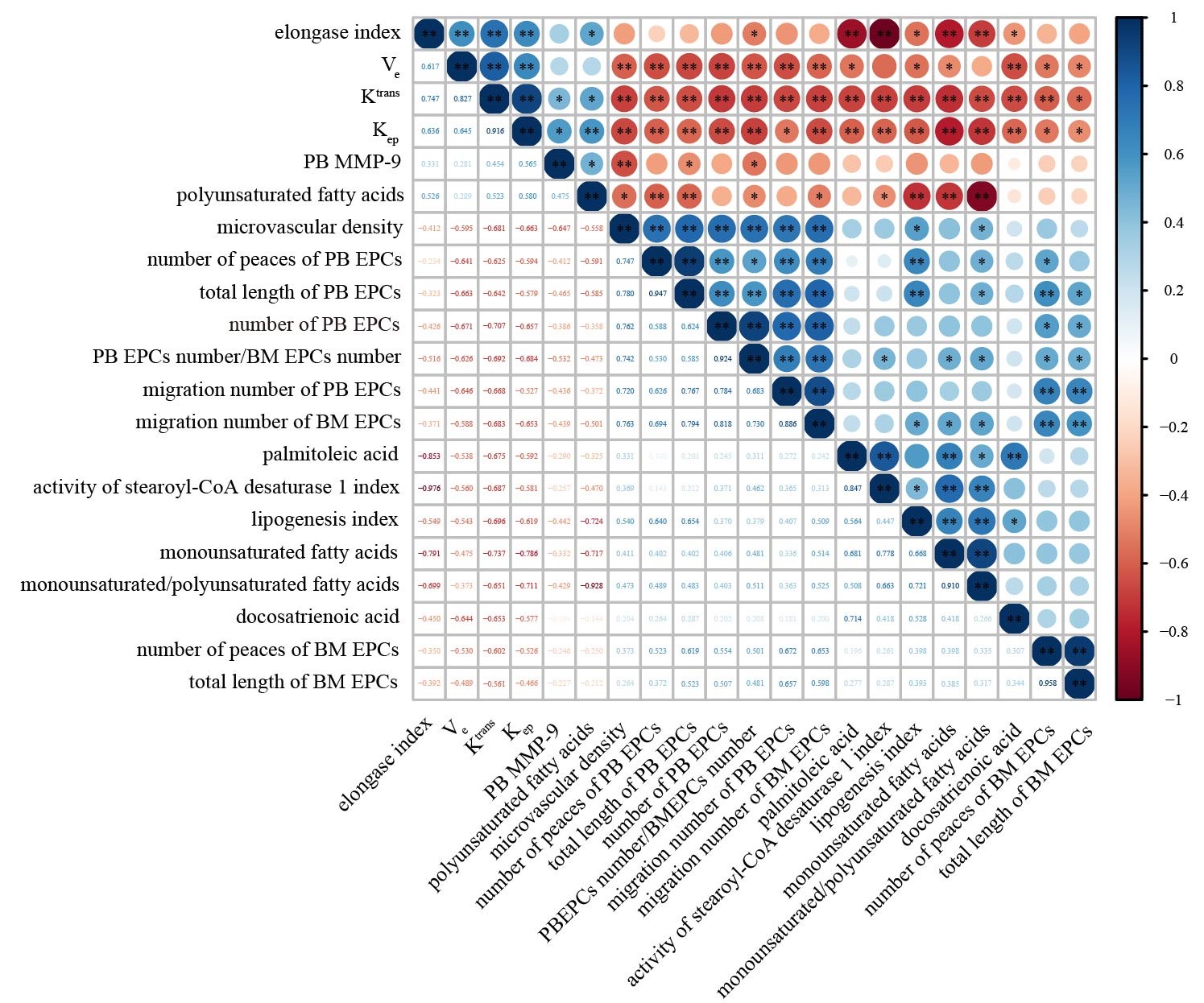
The Ktrans, Kep and Ve in right proximal femur gradually increased at week 0, 1, 2, 3 and 4 after successful modelling in both DM-CLI group and CLI group; except Ktrans (c2=19.360, 14.880; P <0.05) and Ve (c2=10.560, 10.160; P <0.05) in both DM-CLI and CLI groups, Kep were not statistically significant among different time points (F=2.965, 1.673, P>0.05). In the control group, Ktrans, Kep and Ve showed no significant change over time (F=1.216, 0.698, 0.460; P>0.05). The differences of Ktrans, Kep and Ve were significantly higher between the DM-CLI and control groups than between the CLI and control groups; those differences in DM-CLI group were significantly higher than in CLI group. At post-modelling week 4, Ktrans, Kep and Ve of the right proximal femur in the DM-CLI and CLI groups were correlated with bone marrow MVD, EPCs functions, and bone marrow fatty acid differential metabolites. The correlation of Ktrans, Kep and Ve in the right proximal femur, EPCs functions and fatty acid metabolomics were shown in Figure 5.DISCUSSION
DISCO-MRI technique can detect microvascular permeability of bone marrow in revealing of hyperglycemia-induced microvascular endothelium sustained inflammation. EPCs play an important role in the occurrence and development of DM-CLI microangiopathy 13,14. The negative correlation of DCE-MRI-derived microvascular permeability parameters for bone marrow of DM-CLI at the early stage and the number ratio of PBEPCs/BMEPCs as well as fatty acid contents respectively represented lower mobilization, migration and angiogenesis abilities of bone marrow EPCs instead of depleted reserve as well as metabolic and anabolic changes preceding EPCs depleted reserve in DM-CLI.CONCLUSION
Integration of DCE-MRI-derived quantitative permeability parameters and fatty acid metabolomics are helpful for early intervention of lipid-regulating treatment, cell therapies or promoting mobilization of bone marrow endothelial progenitor cells in hope of postponing microangiopathy progression in especially diabetes mellitus coexisted with critical limb and reducing its amputation rate.Acknowledgements
Funding: This project was supported by the National Natural Science Funds of China (Grants No. 82171895 and 81871332).
References
1. Azcona JA, Tang S, Berry E, et al. Neutrophil-derived myeloperoxidase and hypochlorous acid critically contribute to 20-hydroxyeicosatetraenoic acid increases that drive postischemic angiogenesis. J Pharmacol Exp Ther. 2022; 381(3): 204-216.
2. Creager MA, Matsushita K, Arya S, et al. Reducing nontraumatic lower-extremity amputations by 20% by 2030: time to get to our feet: A policy statement from the American Heart Association. Circulation. 2021; 143(17): e875-e891.
3. Conte MS, Bradbury AW, Kolh P, et al. Global vascular guidelines on the management of chronic limb-threatening ischemia. Eur J Vasc Endovasc Surg. 2019; 58(1S): S1-S109.
4. Ying AF, Tang TY, Jin A, et al. Diabetes and other vascular risk factors in association with the risk of lower extremity amputation in chronic limb-threatening ischemia: a prospective cohort study. Cardiovasc Diabetol. 2022; 21(1): 7.
5. Freisinger E, Malyar NM, Reinecke H, et al. Impact of diabetes on outcome in critical limb ischemia with tissue loss: a large-scaled routine data analysis. Cardiovasc Diabetol. 2017; 16(1): 41.
6. Gu Y, Rampin A, Alvino VV, et al. Cell therapy for critical limb ischemia: Advantages, limitations, and new perspectives for treatment of patients with critical diabetic vasculopathy. Curr Diab Rep. 2021; 21(3): 11.
7. Wang K, Sun S, Zhang G, et al. CXCR7 agonist TC14012 improves angiogenic function of endothelial progenitor cells via activating Akt/eNOS pathway and promotes ischemic angiogenesis in diabetic limb ischemia. Cardiovasc Drugs Ther. 2023; 37(5): 849-863.
8. Gremmels H, van Rhijn-Brouwer FCC, Papazova DA, et al. Exhaustion of the bone marrow progenitor cell reserve is associated with major events in severe limb ischemia. Angiogenesis. 2019; 22(3): 411-420.
9. Mallick R, Duttaroy AK. Modulation of endothelium function by fatty acids. Mol Cell Biochem. 2022; 477(1): 15-38.
10. Chiu SC, Chao CY, Chiang EI, et al. N-3 polyunsaturated fatty acids alleviate high glucose-mediated dysfunction of endothelial progenitor cells and prevent ischemic injuries both in vitro and in vivo. J Nutr Biochem. 2017; 42: 172-181.
11. Hu L, Zha YF, Wang L, et al. Quantitative evaluation of vertebral microvascular permeability and fat fraction in alloxan-induced diabetic rabbits. Radiology. 2018; 287(1): 128-136.
12. Yang Q, Li L, Zha Y, et al. Microvascular permeability and texture analysis of the skeletal muscle of diabetic rabbits with critical limb ischaemia based on DCE-MRI. Front Endocrinol (Lausanne). 2022; 13: 783163.
13. Dai Q, Fan X, Meng X, et al. FGF21 promotes ischaemic angiogenesis and endothelial progenitor cells function under diabetic conditions in an AMPK/NAD+-dependent manner. J Cell Mol Med. 2021; 25(6): 3091-3102.
14. Cai Y, Zang GY, Huang Y, et al. Advances in neovascularization after diabetic ischemia. World J Diabetes. 2022; 13(11): 926-939.
Figures
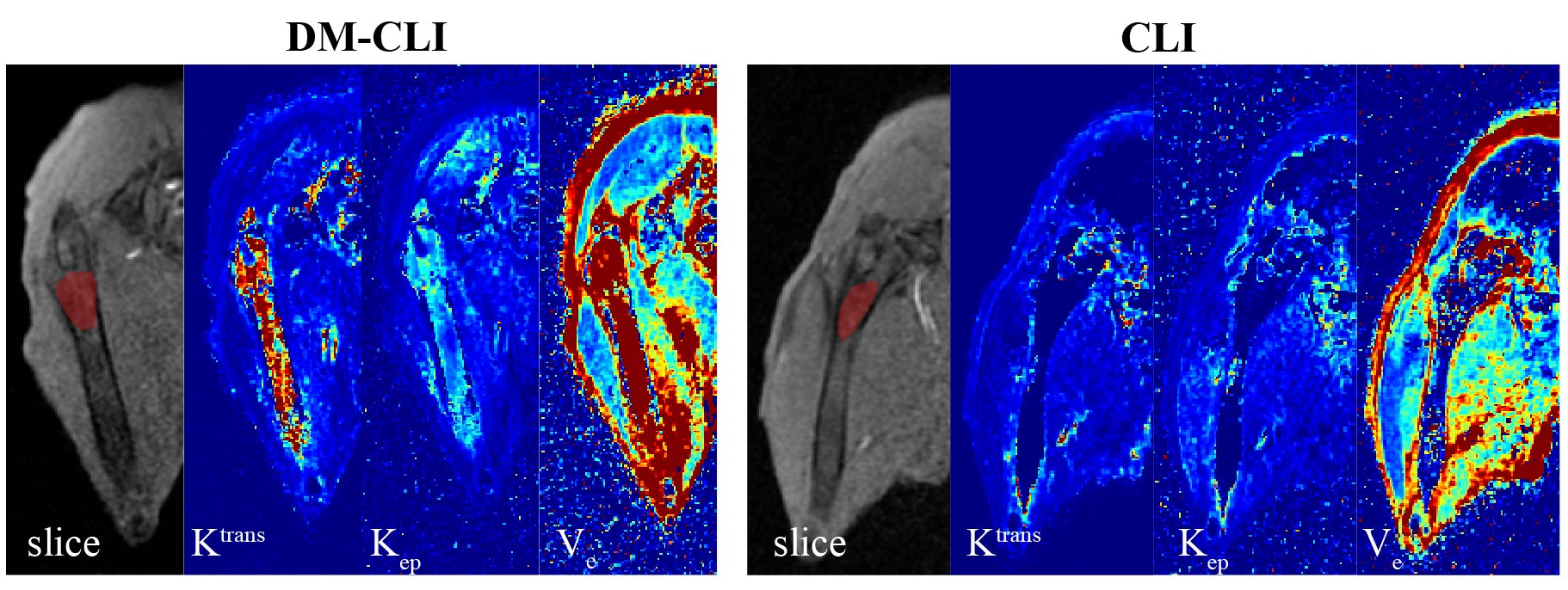
Figure 1: Oblique coronal DCE-MRI T1WI contrast enhanced image (slice) and pseudo-color maps of Ktrans, Kep, Ve of right femur in DM-CLI and CLI rabbit groups. The red area indicates manually-sketched ROIs of right proximal femur.
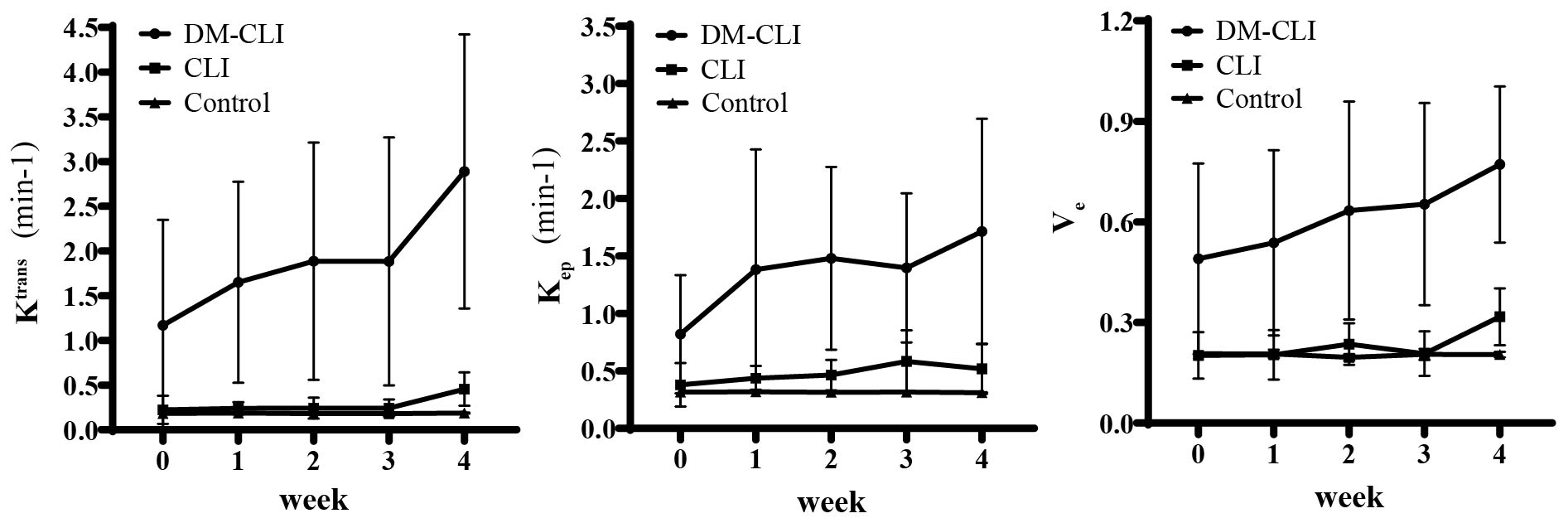
Figure 2: Line charts for Ktrans, Kep, Ve of right proximal femur in the three groups at different time points.
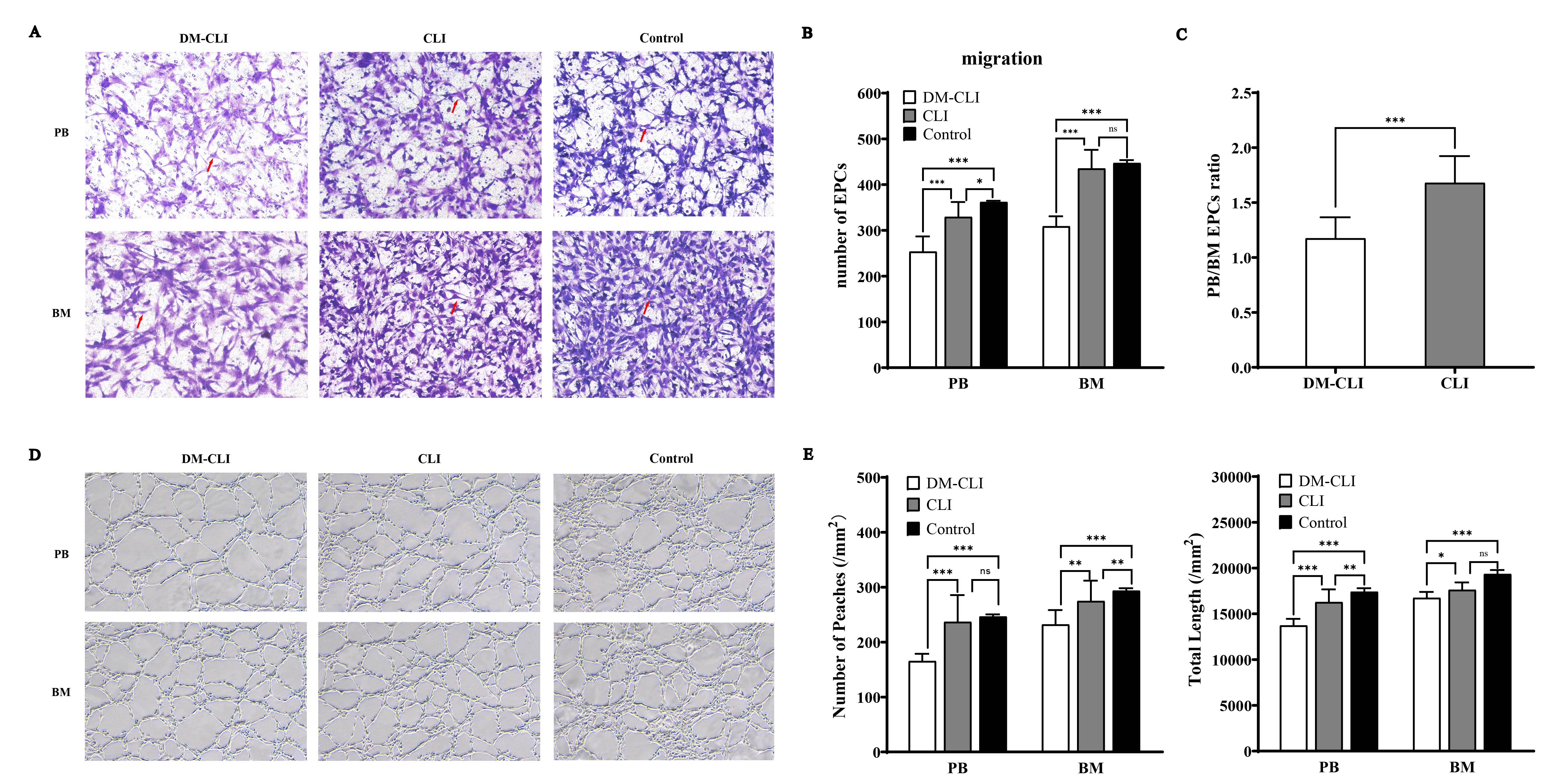
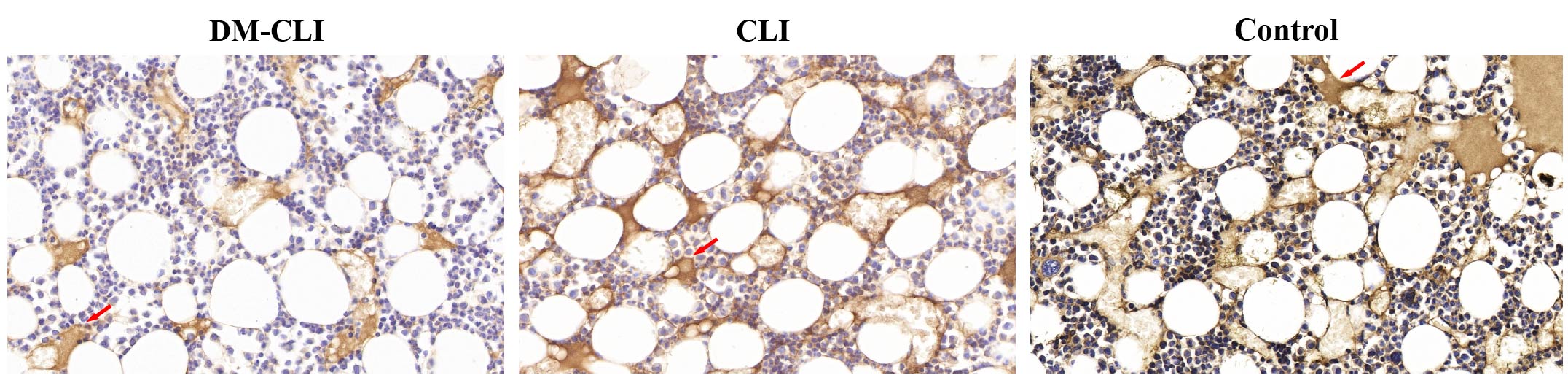
Figure 4: CD31 immunohistochemistry staining (×400) of bone marrow in the right proximal femur in DM-CLI, CLI group and control groups at week 4. The red arrow refers to microvessels.