1676
Insights from CMR Parameters and their Association with NT-proBNP Levels, A Retrospective Analysis.1The First Affiliated Hospital of Xi’an Jiaotong University, Xi'an, China, 2Philips Healthcare, Beijing, China
Synopsis
Keywords: Heart Failure, Cardiovascular
Motivation: To investigate the potential of different CMR parameters as non-invasive, indirect indicators of NT-proBNP levels in HEpEF patients and to assess their utility in enhancing disease prognosis and assessment.
Goal(s): The objective of this study is to explore the relationship between NT-proBNP and left ventricular functional parameters, T1 mapping, ECV, and myocardial strain parameters in CMR.
Approach: A retrospective study was conducted with a cohort of HEpEF patients. Advanced cardiac MRI techniques were utilized to ascertain each CMR parameter.
Results: A notable correlation was discerned between myocardial stress parameters and Native T1 values with serum NT-proBNP levels.
Impact: NT-proBNP is a fundamental biomarker for assessing and predicting alterations in left ventricular function. Myocardial stress parameters and Native T1 showcase potential as non-invasive indicators.Future research must focus on multi-center, prospective studies to validate and expand on these findings.
Introduction
Heart Failure with Preserved Ejection Fraction (HFpEF) represents a multifaceted syndrome with intricate etiology, often coexisting with various comorbidities. It is characterized by a high prevalence, constituting over 50% of all Heart Failure (HF) hospitalizations, and demonstrating an increasing trend[1].N-terminal pro B-type natriuretic peptide (NT-proBNP) is a commonly used biomarker in cardiovascular diseases, widely applied in the clinical setting for diagnosis and exclusion of heart failure[2,3].Recent research has explored the underlying mechanisms of NT-proBNP in HFpEF. In HFpEF patients, reduced levels of NT-proBNP are observed due to a relative state of NP deficiency.
Cardiac Magnetic Resonance (CMR) imaging has become an integral part of cardiovascular medicine, particularly in non-invasive assessing cardiac function and physiological changes. CMR not only offers structural and anatomical information but also quantifies a wealth of cardiac functional parameters such as left ventricular diastolic function, myocardial strain, extracellular volume (ECV), and T1 mapping. These parameters enable a deeper understanding of myocardial fiber relaxation properties and tissue characteristics, thereby accurately reflecting physiological and pathological changes within the heart[4,5].
With this background, the objective of this study is to explore the relationship between NT-proBNP and left ventricular functional parameters, T1 mapping, ECV, and myocardial strain parameters in CMR. Through this research, we aim to identify CMR indices that can indirectly reflect the NT-proBNP level, thereby offering a more efficient and convenient tool for the assessment of cardiovascular diseases.
Methods
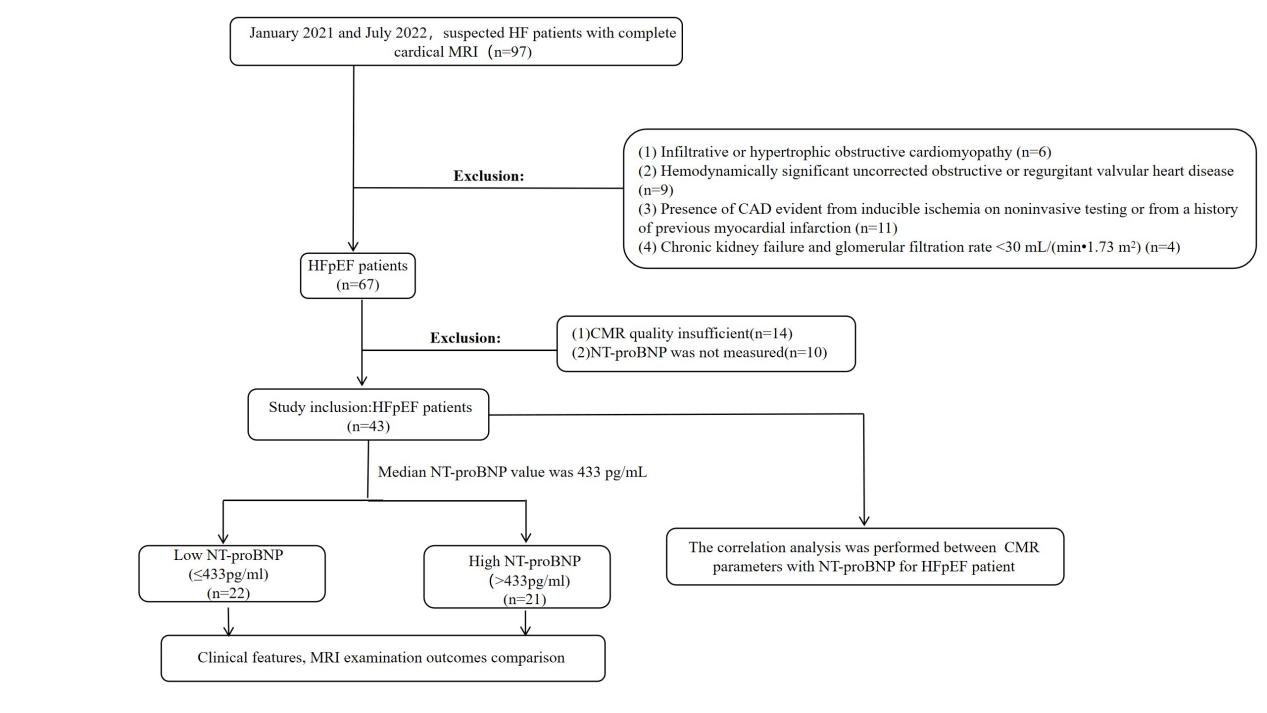
Study populationIn this retrospective study, patients with heart failure who underwent cardiovascular magnetic resonance (CMR) and echocardiography from January 2021 to July 2022 at our hospital were consecutively included(Figure 1).
Cardiovascular MRI acquisition and analysis
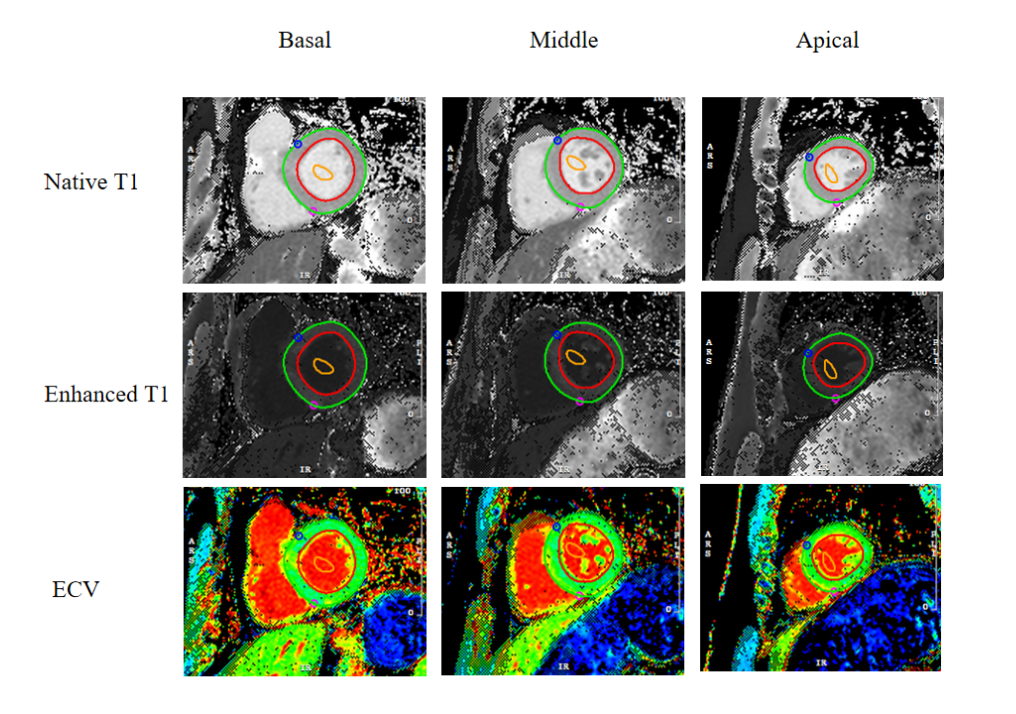
All CMR images were acquired using a 3.0 T scanner (IngeniaCX, Philips, The Netherlands ) with vector electrocardiographic gating and a 16-channel phased array surface coil combined with a 16-channel posterior coil.Data were analyzed offline using the commercially available software (cvi42; Circle Cardiovascular Imaging Inc. , Calgary, AB, Canada)(Figure.2).
Results
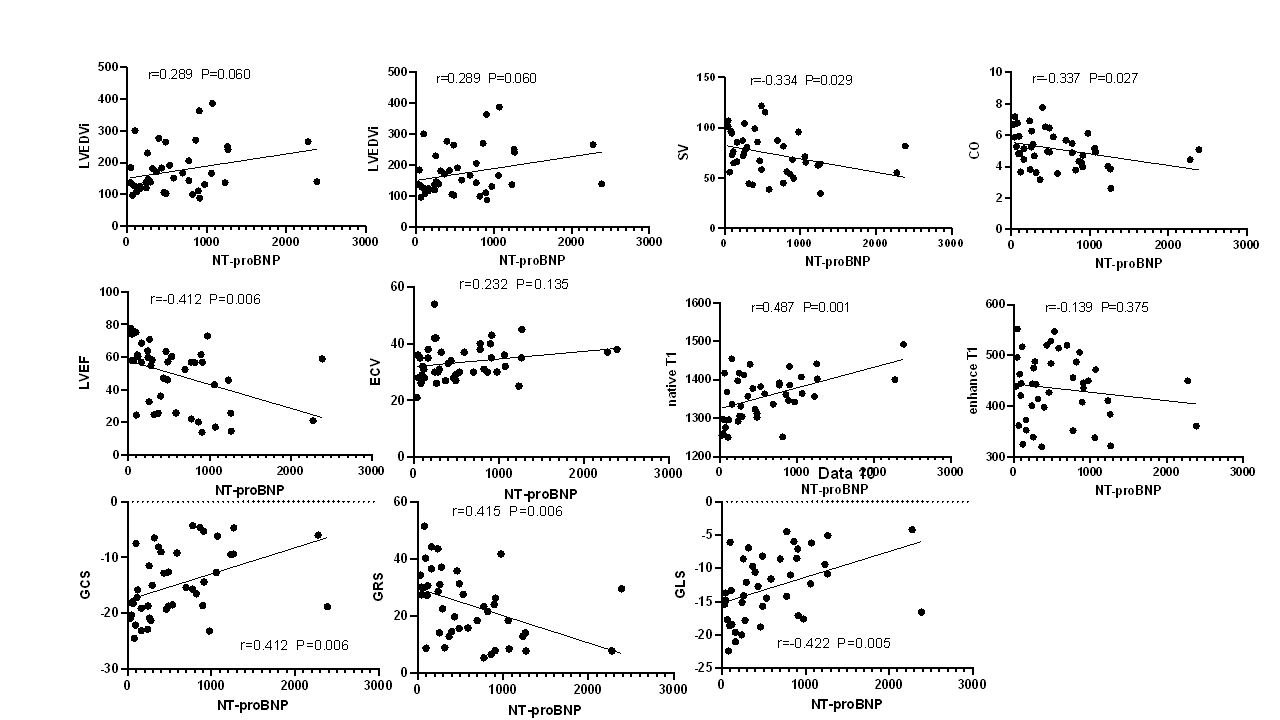
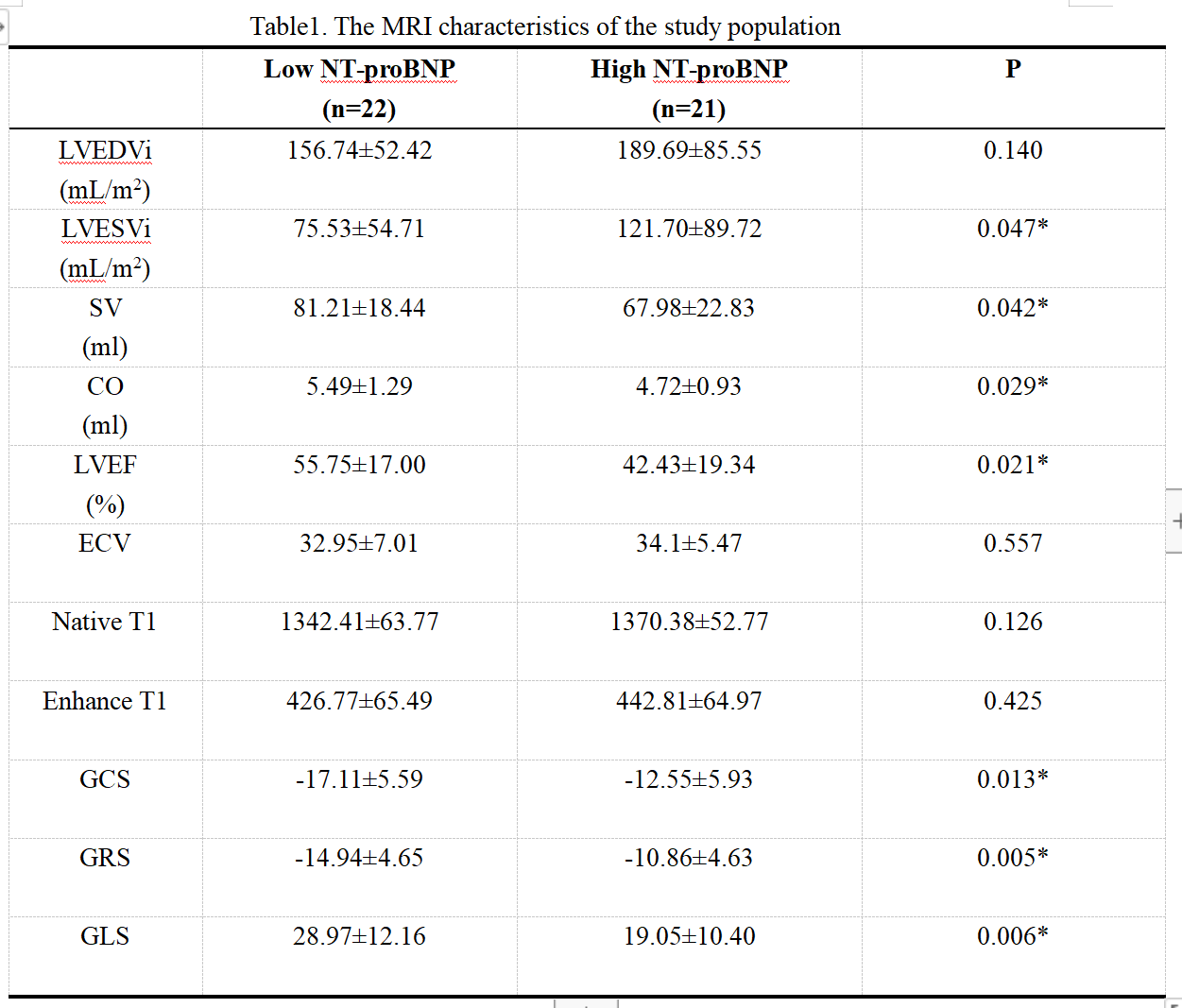
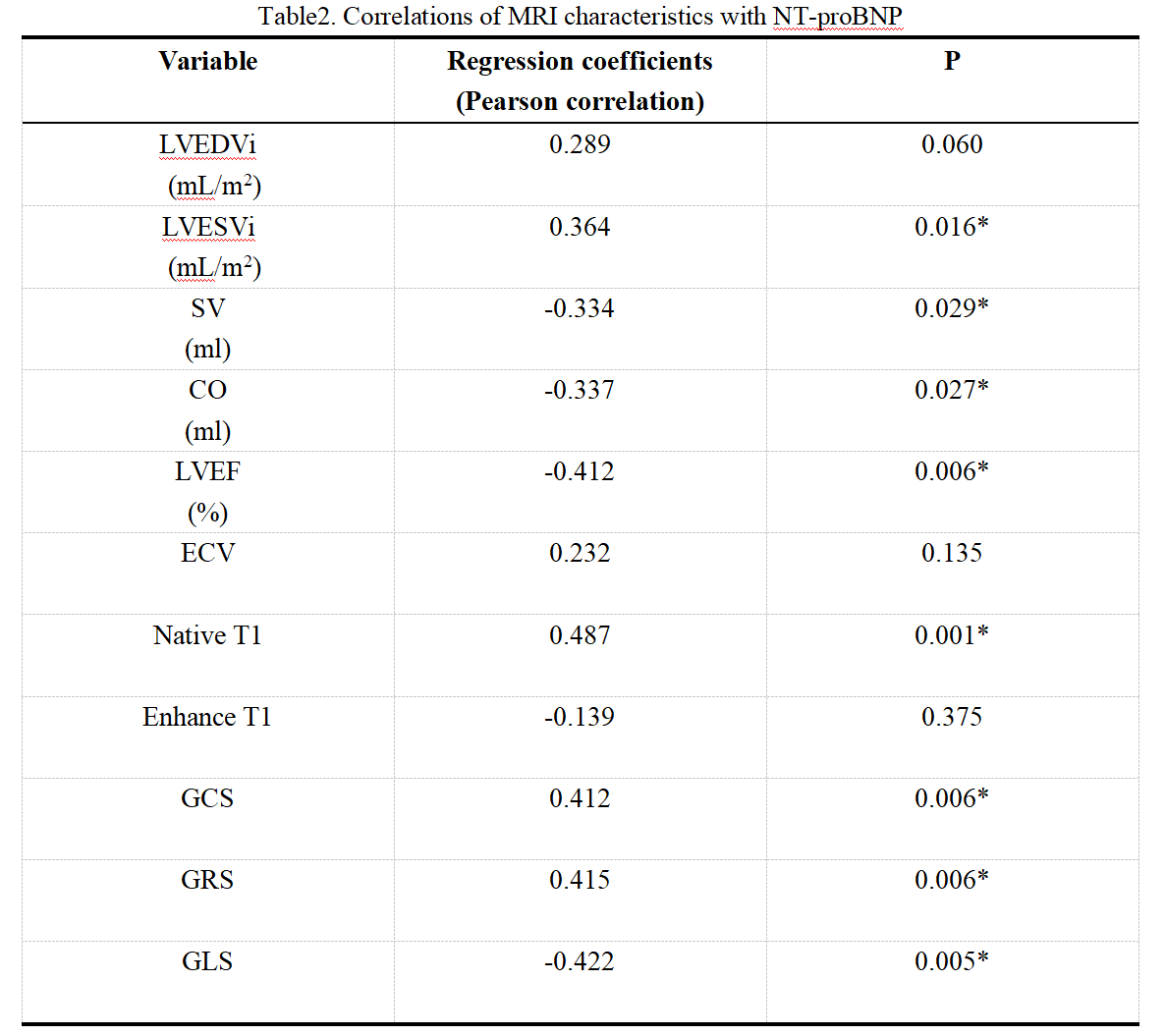
To detect differences in clinical and cardiac characteristics in relation to plasma NTproBNP levels, HFpEF patients were categorized into low or high NT-proBNP groups based on their NT-proBNP being lower or higher than the median value of 433 pg/mL(Tables 1). In fact,patients with NT-proBNP>433.0 pg/mL showed a significantly decreased SV,CO and LVEF, increased LVESVi , increased GCS,GRS and decreased GLS compared with those with NT-proBNP ≤433pg/mL.The correlation analysis was performed between myocardial ECV, native T1, myocardial strain and so on with NT-proBNP for all HFpEF patient to investigate the correlation between NT-proBNP and CMR parameters. The NT-proBNP was significantly correlated with the LVESVi (r=0.364, p=0.016), SV(r=-0.334, p=0.029), CO(r=-0.337, p=0.027), LVEF(r=-0.412, p=0.006), Native T1 (r=0.487,p=0.001), GCS (r=0.412,p=0.006), GRS(r=0.415, p=0.006), GLS(r=-0.422, p=0.005). There was no significant correlation between the NT-proBNP and ECV, LVEDVi.(Table2; Figure.3)
Discussion
In the present study, we undertook a comprehensive exploration of the disparities and correlations amongst high and low NT-proBNP groups within the context of the HEpEF population. The investigation focused on parameters of left ventricular function, T1 mapping, ECV, and myocardial stress, taking the median NT-proBNP group as the reference. The results of this study showed that compared with patients with lower NT-proBNP, patients with higher levels of NT-proBNP had higher LVESVi. On the surface of myocardial stress-related parameters, GCS, GRS and GLS were significantly reduced in patients with higher NT-proBNP level compared with patients with lower NT-proBNP level.Our analysis further explored the correlation between NT-proBNP and other parameters. In this investigation, a significant correlation was observed between three myocardial stress-related parameters (GCS, GRS, and GLS) and the levels of NT-proBNP. This relationship may be attributed to the stimulation of BNP release by myocardial pre-tension[6,7]. Consequently, these myocardial stress parameters can serve as an indirect reflection of the serum NT-proBNP concentrations. Similarly, Native T1 demonstrated a positive correlation with NT-proBNP levels. Native T1 provides a quantitative assessment of myocardial T1 values and is indicative of the degree of myocardial fibrosis[8]. Our study discerned a positive correlation between the increase in Native T1 values and the serum NT-proBNP levels. This underscores the potential of Native T1 as an indirect gauge of serum NT-proBNP levels, facilitating the evaluation of heart failure severity and subsequent survival rates in patients.
In summary, our study emphasizes that NT-proBNP serves as an essential biomarker in assessing and predicting changes in left ventricular function in HEpEF patients. The revelation that myocardial stress parameters and Native T1 can serve as Non-invasive indirect indicators of NT-proBNP levels.Future research will be geared towards exploring the application of these promising tools in the diagnosis and prognostic assessment of HEpEF.
Acknowledgements
No acknowledgement found.References
[1]Mosterd A, Hoes AW. Clinical epidemiology of heart failure. Heart. 2007 Sep;93(9):1137-46. doi: 10.1136/hrt.2003.025270. PMID: 17699180; PMCID: PMC1955040.
[2]4 Pieske B,Tschöpe C,de Boer RA,et al.How to diagnose heart failure with preserved ejection fraction:the HFA-PEFF diagnostic algorithm:a consensus recommendation from the Heart Failure Association(HFA) of the European Society of Cardiology(ESC) [J]. European Journal of Heart Failure,2019,40(40):3297-3317
[3]Khan MS,Kristensen SL,Vaduganathan M,et al.Natriuretic peptide plasma concentrations and risk of cardiovascular versus non-cardiovascular events in heart failure with reduced ejection fraction:Insights from the PARADIGM-HF and ATMOSPHERE trials[J].American Heart Journal,2021,237:45-53.
[4]Kim PK, Hong YJ, Im DJ, Suh YJ, Park CH, Kim JY, Chang S, Lee HJ, Hur J, Kim YJ, Choi BW. Myocardial T1 and T2 Mapping: Techniques and Clinical Applications. Korean J Radiol. 2017 Jan-Feb;18(1):113-131. doi: 10.3348/kjr.2017.18.1.113. Epub 2017 Jan 5. PMID: 28096723; PMCID: PMC5240500.
[5]Moon JC, Messroghli DR, Kellman P, Piechnik SK, Robson MD, Ugander M et al (2013) Myocardial T1 mapping and extracellular volume quantification: a Society for Cardiovascular Magnetic Resonance (SCMR) and CMR Working Group of the European Society of Cardiology consensus statement. J Cardiovasc Magn Reson. https://doi.org/10.1186/1532-429x-15-92 .
[6]Cunningham JW, Myhre PL. NT-proBNP Response to Heart Failure Therapies: An Imperfect Surrogate. J Am Coll Cardiol. 2021 Sep 28;78(13):1333-1336. doi: 10.1016/j.jacc.2021.07.045. PMID: 34556319.
[7]Chuang CP, Jong YS, Wu CY, et al. Impact of triiodothyronine and N-terminal pro-B-type natriuretic peptide on the long-term survival of critically ill patients with acute heart failure [J]. Am J Cardiol, 2014, 113(5): 845-850.
[8]Germain P, El Ghannudi S, Jeung MY, Ohlmann P, Epailly E, Roy C, Gangi A. Native T1 mapping of the heart - a pictorial review. Clin Med Insights Cardiol. 2014 Dec 1;8(Suppl 4):1-11. doi: 10.4137/CMC.S19005. PMID: 25525401; PMCID: PMC4251189.
Figures