1663
Prognostic Value of Left Atrial Strain Analysis by using CMR-FT for patients with Acute Myocarditis1The Second Affiliated Hospital of Harbin Medical University, Harbin, China, Harbin, China, 2Beihang University, Beijing, China, Beijing, China
Synopsis
Keywords: fMRI Analysis, Myocardium, acute myocarditis;feature tracking; LA strain
Motivation: The prognostic significance of left atrial strain (LA) in acute myocarditis (AM) remains unknown.
Goal(s): This study aimed to conduct a quantitative evaluation of the LA function in AM patients and explore whether LA strain parameters can predict the outcomes of AM patients.
Approach: LA strain was assessed by using cardiovascular magnetic resonance feature tracking (CMR-FT) in this study.
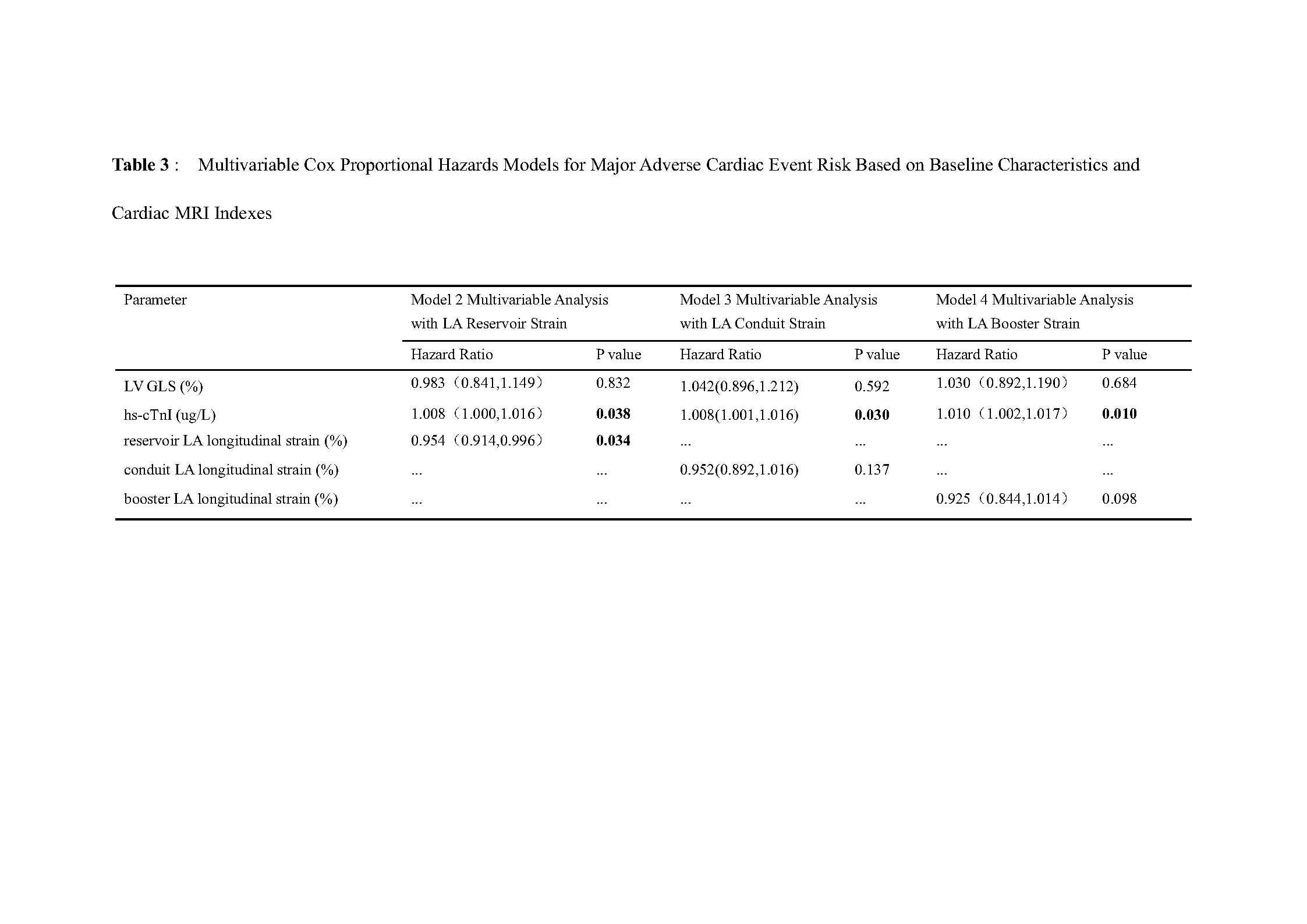
Results: LA strain parameters were significantly impaired in AM patients with major adverse cardiovascular events (MACEs) and reservoir LA longitudinal strain was found to be an independent predictor of MACEs, with a hazard ratio per 1% increase of 0.954 (P<0.05).
Impact: LA reservoir strain may serve as a useful tool to predict the adverse prognosis of AM and have the potential to guide the distant therapy of patients with acute myocarditis.
Instruction
The presentation and prognosis of patients with AM exhibit high variability[1]. Early identification and risk stratification would be invaluable. CMR-FT is a rapidly developing technique that has capable to identify subclinical myocardial strain in various clinical conditions [2] . It has been recognized as the superior method for evaluating myocardial strain due to its objectivity, stability, and excellent reproducibility, uninfluenced by factors such as magnetic resonance field strength[3, 4]. Recent research has confirmed the significance of LA strain in the early detection and prognosis of various cardiovascular disorders[5-7]. The objective of this study was to measure the LA function in individuals suffering from AM and further investigate CMR-FT-derived LA strain parameters for predicting the outcome of acute myocarditis.Method
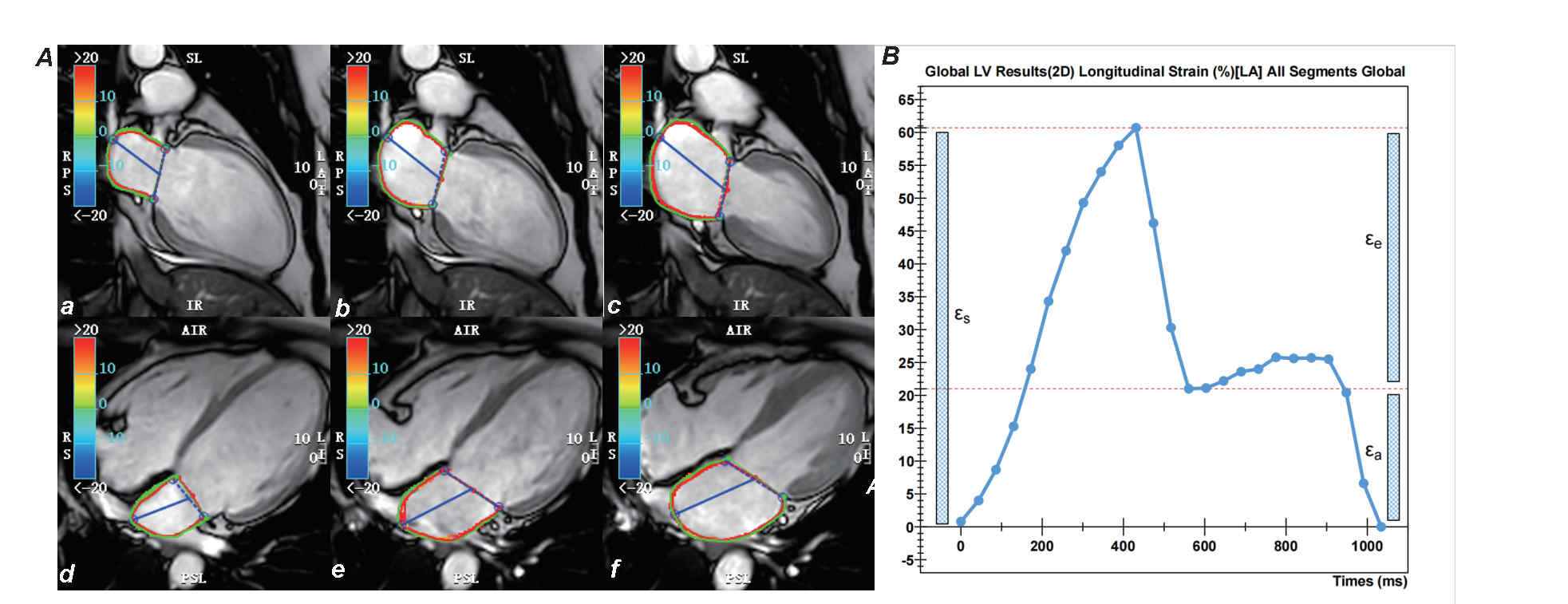
We retrospectively collected participants who underwent CMR examinations from September 2020 to June 2022. A one-year follow-up was then conducted and after that patients were categorised into two groups according to whether MACEs occured. MACEs were defined as 1) cardiovascular death, 2) hospitalization for heart failure, 3) severe arrhythmia and 4) dilated cardiomyopathy. CMR examinations were performed using a 3.0-Tesla system (Ingenia CX, Philips Healthcare, Netherlands) and analyzed by circle cardiovascular imaging42 (cvi42) software. FT was used to evaluate the LA myocardial strain parameters by a cardiologist with 3 years of experience. Finally, left atrial overall myocardial time-strain curve were generated including left atrial reservoir, conduit, and booster strains (Figure 1). Statistical analysis was calculated by SPSS 26.0. Comparisons of continuous variables were carried out using the Student's t-test or Mann-Whitney U-test according to the distribution state. The chi-square test was utilised for categorical variables. Kaplan–Meier survival curves were plotted to assess potential survival differences in AM patients with different LA strain values. P < 0.05 were deemed to be statistically significant.Results
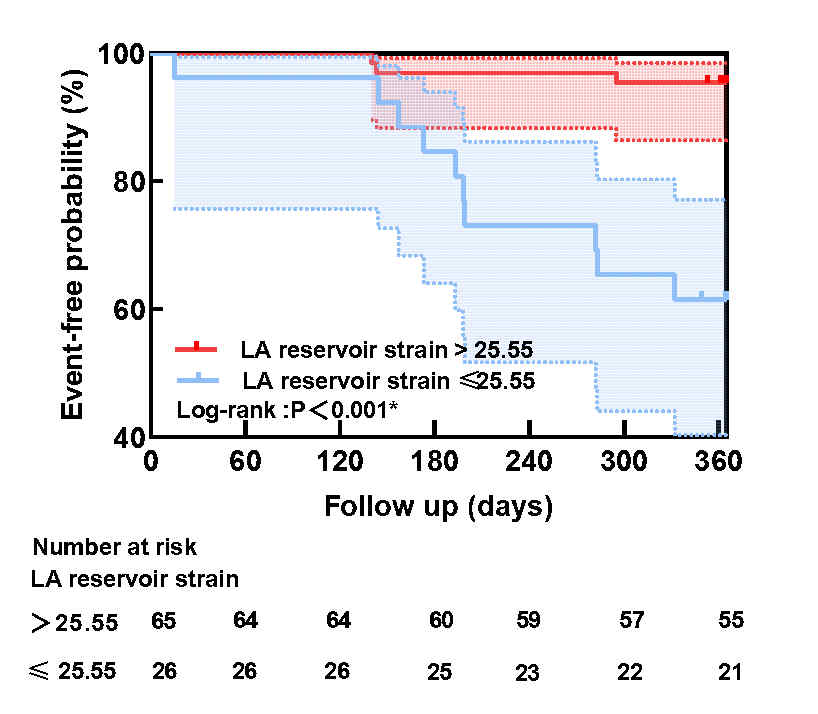
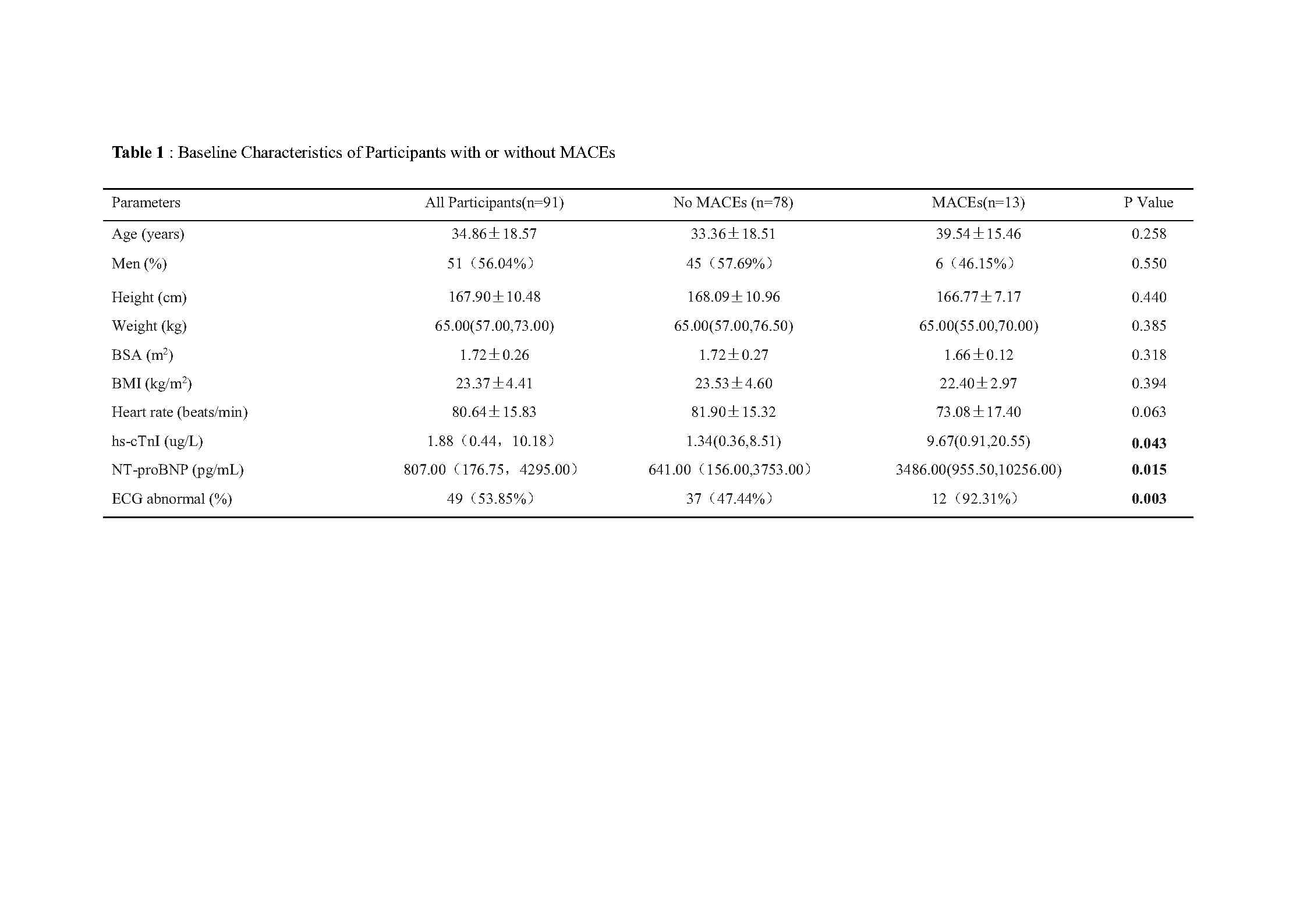
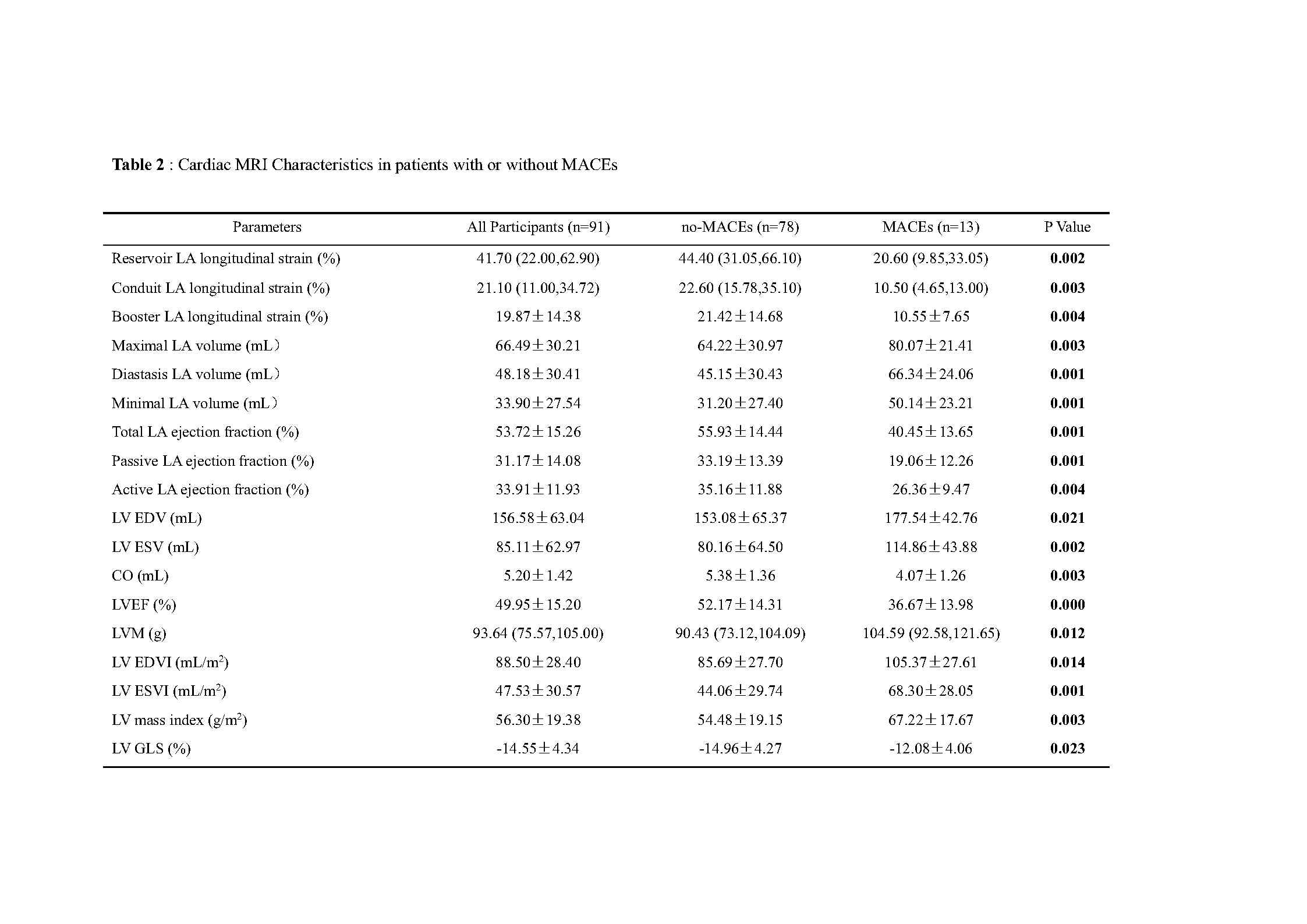
Ninety-one patients diagnosed with AM were ultimately enrolled. Out of these patients, 13 patients were assigned to the MACEs group (39.54±15.46 years, 46.15% male) and 78 patients formed the no-MACEs group (33.36±18.51 years, 57.69% male). Patients in the MACEs group had significantly higher levels of hs-cTnI and NT-proBNP, as well as a higher incidence of abnormal ECGs compared to those in the no-MACEs group (all P<0.05) (Table 1). Counterparts with MACEs also had significantly impaired LA strains (reservoir, conduit and booster LA longitudinal strain). In addition, LA ejection fractions (total, passive and active LAEF), LVEF, LV GLS, and CO were all significantly impaired among the MACEs patients (all P<0.05) (Table 2). In the Kaplan-Meier analysis, individuals with a reservoir strain of 25.55% or less were more likely to develop MACEs (log-rank P<0.001) (Figure 2). Additionally, after suffering from acute myocarditis, multivariate COX regression analysis identified both reservoir LA longitudinal strain (hazard ratio, 0.954; P<0.05) and cardiac troponin I (hazard ratio, 1.008; P<0.05) as independent predictors of MACEs (Table 3).Disscussion
Our findings suggested significant reductions in the LA reservoir strain and conduit strain in the MACEs group of AM patients, compared to the no-MACEs group. These findings were consistent with previous research[8, 9] and could be related to a diastole-restricted LA and reduced compliance resulting from myocyte necrosis and fibrous connective tissue proliferation in individuals with AM. Our study also showed that patients with AM suffered damage to their booster LA longitudinal strain, contrasting with prior findings of the preserved LA booster strain. It has been believed that in the early stages of left ventricular damage, the diastolic function of myocardial is impaired and left atrial pumping may still increase compensatorily to maintain the pressure difference between the systemic and pulmonary circulations. However, as the heart function continues to worsen, the LA pumping function decompensates and diminishes. Previous studies have indicated that the LA reservoir strain is a sensitive biomarker for predicting adverse cardiac events in patients with heart failure, irrespective of other cardiac dysfunction indicators[10]. Additionally, it is also an independent prognostic factor in patients with acute myocardial infarction[11]. However, there is insufficient systematic research on whether the atrial storage strain is linked to poor prognosis in AM patients. In our studies, one-year follow-up were conducted after the patients with acute myocarditis were discharged from the hospital and our research revealed that AM patients with a reservoir LA strain of 25.55% or lower were at a much greater risk of suffering from a major adverse cardiac event (MACEs) in the long run (log-rank P < 0.0001). In addition, injured reservoir LA longitudinal strain (hazard ratio, 0.954; P<0.05) provided added prognostic capability over cardiac troponin I (hazard ratio, 1.008; P<0.05).Acknowledgements
We appreciated Jianxiu Lian for the guidence in revising the article.References
[1]Tschöpe, Ammirati, Bozkurt, et al. Myocarditis and inflammatory cardiomyopathy: current evidence and future directions. Nat Rev Cardiol. 2021;3:169-193.
[2]Pedrizzetti, Claus, Kilner and Nagel. Principles of cardiovascular magnetic resonance feature tracking and echocardiographic speckle tracking for informed clinical use. J Cardiovasc Magn Reson. 2016;1:51.[3]Augustine, Lewandowski, Lazdam, et al. Global and regional left ventricular myocardial deformation measures by magnetic resonance feature tracking in healthy volunteers: comparison with tagging and relevance of gender. J Cardiovasc Magn Reson. 2013;1:8.
[4]Evin, Cluzel, Lamy, et al. Assessment of left atrial function by MRI myocardial feature tracking. J Magn Reson Imaging. 2015;2:379-389.
[5]Habibi, Lima, Khurram, et al. Association of left atrial function and left atrial enhancement in patients with atrial fibrillation: cardiac magnetic resonance study. Circ Cardiovasc Imaging. 2015;2:e002769.[6]Kowallick, Silva Vieira, Kutty, et al. Left Atrial Performance in the Course of Hypertrophic Cardiomyopathy: Relation to Left Ventricular Hypertrophy and Fibrosis. Invest Radiol. 2017;3:177-185.[7]Bo, Gao, Zhou, et al. Incremental prognostic value of left atrial strain in patients with heart failure. ESC Heart Fail. 2022;6:3942-3953.
[8]Dick, Schmidt, Michels, Bunck, Maintz and Baeßler. Left and right atrial feature tracking in acute myocarditis: A feasibility study. Eur J Radiol. 2017;72-80.
[9]Doerner, Bunck, Michels, Maintz and Baeßler. Incremental value of cardiovascular magnetic resonance feature tracking derived atrial and ventricular strain parameters in a comprehensive approach for the diagnosis of acute myocarditis. Eur J Radiol. 2018;120-128.
[10]Pellicori, Zhang, Lukaschuk, et al. Left atrial function measured by cardiac magnetic resonance imaging in patients with heart failure: clinical associations and prognostic value. Eur Heart J. 2015;12:733-742.
[11]Leng, Ge, He, et al. Long-term Prognostic Value of Cardiac MRI Left Atrial Strain in ST-Segment Elevation Myocardial Infarction. Radiology. 2020;2:299-309.
Figures