1423
Dielectric Constant Measurement Method for High Permittivity Metamaterial Design in MRI1Hangzhou Institute of Technology, Xidian University, Hangzhou, China, 2The University of Queensland, Brisbane, Australia, 3Zhejiang University, Hangzhou, China
Synopsis
Keywords: New Devices, New Devices, Metamaterials
Motivation: High permittivity metamaterials have shown benefits in UHF MRI. However, precise dielectric constant measurement method for metamaterials is in absence, which may lead to bias in field manipulation.
Goal(s): Developing a precise measurement method to better mimicking dielectric materials’ role in field manipulation, where samples are placed at the reactive near-field region.
Approach: A microstrip line resonator was used to measure resonances of metamaterials. The resonance of dielectric materials with particular properties were chosen as the reference. Their difference in resonance frequency is required to be minimized.
Results: Metamaterials designed using our approach exhibited superior accuracy in mimicking the target dielectric pad.
Impact: The proposed method leads to better mimicking dielectric materials’ role in field manipulation at reactive near region. Metamaterials designed with this method exhibit enhanced B1 field and lower SAR, signifying a significant advancement in UHF MRI and promising precise diagnoses.
INTRODUCTION
Ultra-high field (UHF) MRI has gained prominence due to its enhanced signal-to-noise ratio and higher resolution capabilities. However, the clinical applications of UHF MRI are hindered by issues such as B1 field inhomogeneity and elevated specific absorption rate (SAR). To address these challenges, researchers have explored various methods, one of which involves the incorporation of high-permittivity dielectric materials, and these materials have shown promise in improving the transmit fields and reducing SAR1. Notably, studies have indicated that the effects of high-permittivity dielectric materials can be replicated by using metamaterials2, which offer advantages such as easier fabrication and lower cost. This study presents a novel method for designing and evaluating the equivalent dielectric properties of metamaterials, bridging the gap between high-permittivity dielectric materials and metamaterials. Unlike conventional techniques based on far-field radiative theory, the proposed method accounts for near-field reactive effects typical in MRI's RF coils. Through numerical simulations and experimental analysis, it is demonstrated that the proposed method outperforms conventional techniques in achieving a more accurate match between high-permittivity dielectric materials and metamaterials, thereby enhancing their potential applications in UHF MRI.METHODS
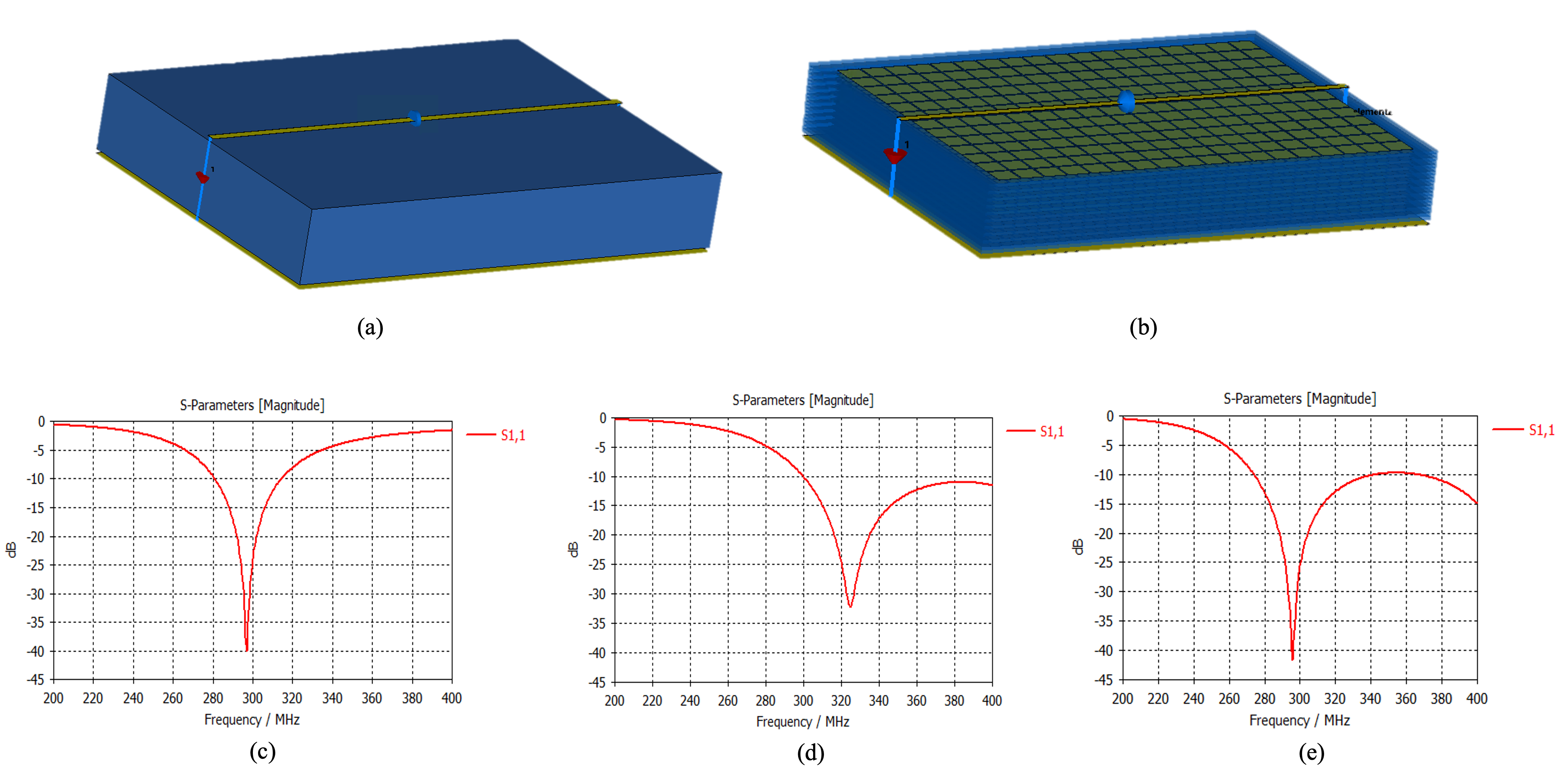
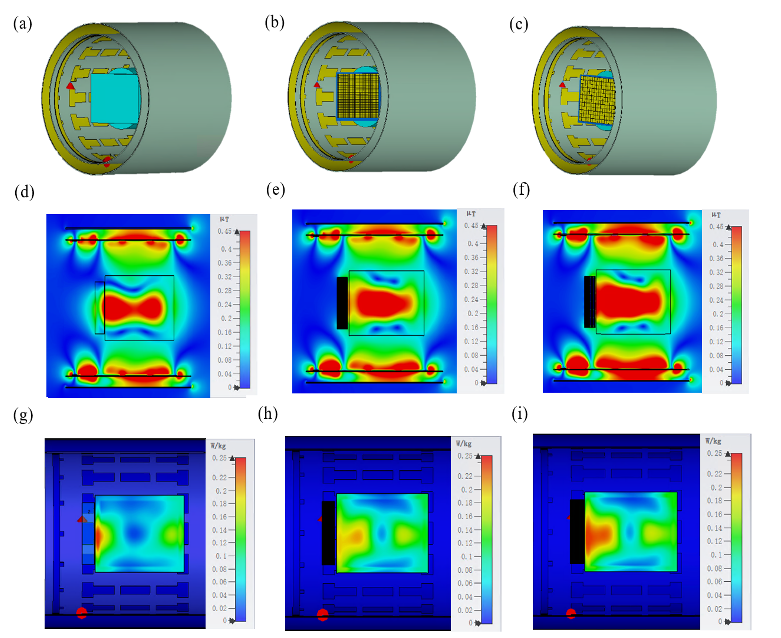
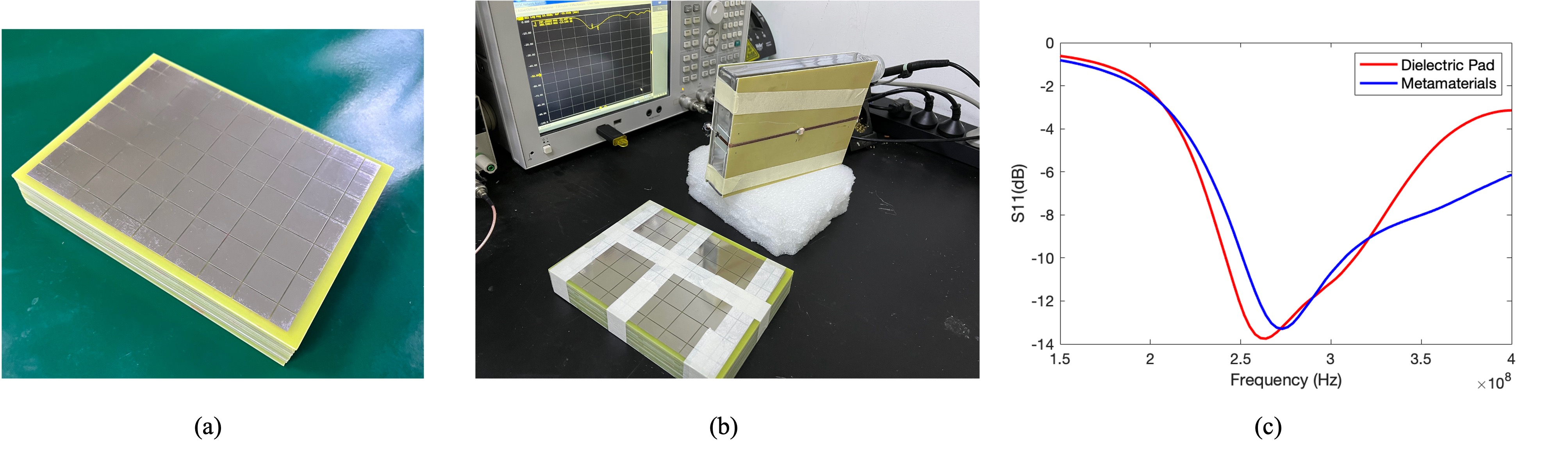
In this study, we utilized the metamaterial structure proposed by Vsevolod Vorobyev et al.2 as a case study to demonstrate our novel design method. This type of metamaterial comprises a stack of capacitive grids realized by using multiple printed-circuit boards, and the unit cell consists of 4 layers: 2 metal patch layers and 2 insulating layers, shifted relative to each other by half the structure's period. Traditionally, determining the equivalent effective permittivity involves retrieving material parameters from reflection and transmission measurements of the sample material3; however, this conventional method relies on the far-field radiative theory, which may not accurately represent the near-field radiation that is typical for RF coils. To address such limitations, our design considers and incorporates near-field reactive effects into the calculation. A microstrip line (MSL) resonator was employed to evaluate the effective permittivity of the material under test (MUT), which served as the dielectric substrate of the microstrip line (Figure 1b). The proposed method involved several steps: 1) the target dielectric material was loaded into the MSL and its resonance was adjusted to 297.2 MHz (Figure 1c); 2) the metamaterials designed using the conventional method was loaded into the MSL to compare its consistency with the target dielectric material; 3) then the metamaterials were further optimized based on our proposed method, as the dimensions of the unit cells were adjusted using the MSL resonator to tune the resonance frequency to 297.2 MHz, as shown in Figure 1d; 4) to evaluate the effects on B1 fields and SAR, numerical simulations were conducted in CST (Dassault Systèmes, France) by using a cylinder phantom placed adjacent to a dielectric pad of permittivity 78.4, a metamaterial pad designed using the conventional method, and a metamaterial pad designed using the proposed method, respectively, all of which were placed in a birdcage coil at 7T; 5) finally, the optimized metamaterials were fabricated, and experimental validations were conducted on a 7T research scanner (MAGNETOM 7T, Siemens Healthcare, Erlangen, Germany) through acquiring proton-density weighted GRE images (Figure 3).RESULTS and DISCUSSION
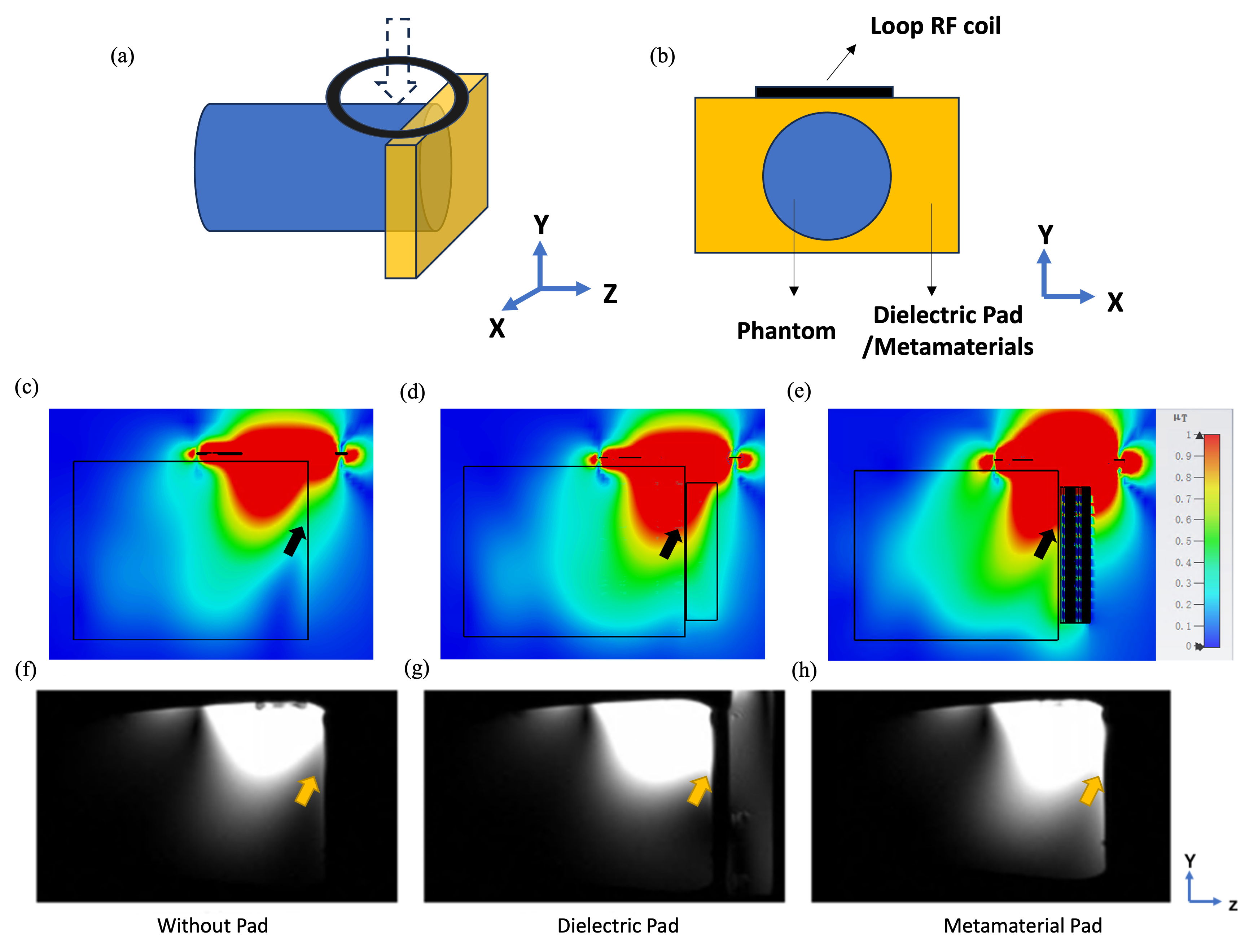
Using the metamaterial pad designed by the conventional method as substrate, the MSL resonator resonated at 325 MHz, significantly deviating from the working frequency of interest (Figure 1d). Figure 2 shows the B1 fields and SAR distribution in the central sagittal plane using the three pads, and the maximum B1 values were 0.50uT, 0.38uT, and 0.47uT, the maximum SAR values were 0.239W/Kg, 0.208W/Kg, and 0.236W/Kg, respectively – these results suggest that the metamaterial designed using the conventional method fails to accurately replicate the permittivity property of the target dielectric material in the reactive near-field region. In contrast, the proposed design exhibited B1 and SAR field effects more similar to those of the target dielectric pad. This observation was further validated through experiments. Using a loop coil at 7T (Figure 4a and 4b), the optimized metamaterial pad yielded image results similar to those obtained with the target dielectric pad. In contrast, the scenario without a pad failed to illuminate the area marked by the arrows (Figure 4f, 4g, and 4h). These experimental results are in good agreement with simulated B1 fields (Figure 4c, 4d, and 4e).CONCLUSION
Both simulation and experimental results demonstrate that the proposed metamaterial design method better mimics the target dielectric pad compared to the conventional method. Future research will explore different types of metamaterials with varying polarization orientations, in order to extend potential applications of RF coils at UHF.Acknowledgements
No acknowledgement found.References
1. W. M. Brink and A. G. Webb, “High permittivity pads reduce specific absorption rate, improve B 1 homogeneity, and increase contrast-to-noise ratio for functional cardiac MRI at 3 T,” Magn Reson Med, vol. 71, no. 4, pp. 1632–1640, 2014.2. V. Vorobyev et al., “An artificial dielectric slab for ultra high-field MRI: Proof of concept,” Journal of Magnetic Resonance, vol. 320, p. 106835, 2020.
3. O. Luukkonen, S. I. Maslovski, and S. A. Tretyakov, “A stepwise Nicolson-Ross-Weir-based material parameter extraction method,” IEEE Antennas Wirel Propag Lett, vol. 10, pp. 1295–1298, 2011.
Figures