1248
Dynamic Mode Decomposition enables low-latency high temporal resolution reconstruction for golden-angle spiral real-time MRI1Electrical and Computer Engineering, University of Southern California, Los Angeles, CA, United States
Synopsis
Keywords: Image Reconstruction, Cardiovascular, fetal, low-field, online reconstruction
Motivation: Real-time MRI methods with higher spatiotemporal resolution employ undersampled non-Cartesian trajectories combined with a computationally intense reconstruction to mitigate aliasing. However, often, a low-latency, coarse-temporal resolution, low-quality reconstruction is provided online. This may hinder the scan quality in interventional and fetal imaging.
Goal(s): To develop a low-latency, high-temporal resolution online reconstruction for real-time MRI.
Approach: We introduce a novel method using Dynamic Mode Decomposition for low-latency, high-temporal resolution reconstruction that removes spiral aliasing. The online version is achieved by predicting and removing aliasing artifacts in upcoming frames.
Results: We evaluate DMD Filtering in the context of real-time adult and fetal cardiac function assessment.
Impact: The proposed technique, Dynamic Mode Decomposition filtering, achieves low-latency (<20ms/frame), high-temporal resolution reconstruction with negligible spiral aliasing artifact, and no iterations. This may be valuable for online reconstruction during interventional and fetal cardiac imaging.
Introduction
Real-time MRI (RT-MRI) is widely used for localization, diagnostic imaging, and the guidance of interventions [1]. RT-MRI methods with the highest spatiotemporal resolution utilize undersampled non-Cartesian trajectories combined with a computationally intense reconstruction that mitigates aliasing through parallel imaging, compressed sensing, or deep learning. Often, a low-latency, low-quality reconstruction is provided online to ensure proper scan placement, monitor subject motion, and/or guide interventions. This is typically a view-shared gridding reconstruction, which has a coarse temporal resolution. This is acceptable in most scenarios, except for a few, such as interventional and fetal imaging.Dynamic mode decomposition (DMD) is a data-driven method that originated in the fluid mechanics community and has since been applied in various fields, including medical imaging [2-5]. Here, we propose using DMD for spiral aliasing artifact reduction and as a low-latency routine for high-temporal resolution online reconstruction. We call this Dynamic Mode Decomposition (DMD) Filtering. We evaluate DMD Filtering in the context of real-time adult and fetal cardiac function assessment.
Methods
Figure 1a shows the input-output relation of the DMD algorithm; given a dynamic input, DMD returns the eigendecomposition of the dynamic system, where eigenvectors $$$\phi$$$ show the spatial correlations and eigenvalues $$$\lambda$$$ show the growth/decay and the frequency. Figures 1b-1c display exemplary DMD for real-time adult and fetal cardiac imaging. Selected outputs show the fundamental harmonics of the respiratory and cardiac motion with the corresponding frequency.Figure 2 shows the flowchart of the proposed DMD Filtering. Filtering relies on the observation when the input dynamic system is undersampled; then, some modes contain only the aliasing artifact, and a portion of the remaining modes contain the body motion without the artifact. These two can be separated based on the frequency alone automatically to provide an artifact-reduced output without an iterative approach.
This retrospective DMD Filtering is low-latency compared to spatiotemporally constrained reconstruction (STCR) [6] since it only requires ~1 second of data, and the computational cost is <200ms. Online DMD Filtering is achieved by exploiting the periodicity of the aliasing artifact in pseudo golden-angle sampling [7], and prospectively estimating the aliasing artifact in future frames, based on a calibration recording of ~1 second.
Experiments were performed on a 0.55T whole-body system (prototype MAGNETOM Aera, Siemens Healthineers, Erlangen, Germany) equipped with high-performance gradients (45 mT/m amplitude, 200 T/m/s slew rate) [8]. Real-time imaging was performed using the RTHawk system (Vista.ai, Palo Alto, California) [9]. A pseudo-golden-angle spiral bSSFP acquisition was used with TE/TR = 0.72/5.35ms, FA = 100$$$^\circ$$$[10,11]. Two volunteers (1F, age 24$$$\pm$$$4) for adult cardiac and three pregnant females (gestational age 32-34w) for fetal cardiac imaging were scanned after providing written informed consent under protocols approved by our Institutional Review Board.
DMD Filtering and Online DMD Filtering results are compared against gridding, view-sharing, and STCR. The temporal resolution was set to 45ms (8TRs), except for the view-sharing, which was set to 90ms (16TRs, footprint 180ms 32TRs).
Results
Figure 3 contains in-vivo results from one adult volunteer that experienced premature-ventricular-contraction during the scan. DMD Filtering notably captures the irregular wall motion without the temporal blurring observed with view-sharing.Figure 4 contains in-vivo results from three fetal cardiac cases. DMD Filtering captured fast fetal cardiac motion without distortion while suppressing aliasing artifacts. View-sharing could not resolve this motion due to its large temporal footprint, as seen in the line intensity profiles.
Figure 5 shows representative results using Online DMD Filtering. The latency of this reconstruction was <20ms at a temporal resolution of 45ms, which is low enough to support RT-MRI applications that require interaction.
Discussion
DMD Filtering exploits the semi-periodicity of cardiac and respiratory motions. The number of fundamental harmonics associated with these motions is limited. Hence, a good separation between the aliasing artifacts and the desired MR signal is possible. In applications like speech production or gastrointestinal motility, where this assumption does not hold, the performance may be subpar.The limitations around DMD Filtering and its online counterpart are not fully explored. An online routine might be feasible without sacrificing image quality by accelerating DMD through random projection based techniques [12,13].
Conclusion
We propose a novel technique, DMD Filtering, to achieve low-latency, high-temporal resolution reconstruction with spiral aliasing artifact reduction and with no iterations.Acknowledgements
We acknowledge grant support from the National Institutes of Health (U01-HL167613, R21-HL159533) and National Science Foundation (Award #1828736) and research support from Siemens Healthineers.
References
1. Nayak KS, Lim Y, Campbell-Washburn AE, Steeden J. Real-Time Magnetic Resonance Imaging. Journal of Magnetic Resonance Imaging. 2022;55(1):81-99. doi:10.1002/jmri.27411
2. Schmid PJ. Dynamic mode decomposition of numerical and experimental data. Journal of Fluid Mechanics. 2010;656:5-28. doi:10.1017/S0022112010001217
3. Jovanović MR, Schmid PJ, Nichols JW. Sparsity-promoting dynamic mode decomposition. Physics of Fluids. 2014;26(2):024103. doi:10.1063/1.4863670
4. Kuntz, J.N. et al. (2016) Dynamic Mode Decomposition: Data Driven Modeling of Complex Systems. Siam.
5. Ilicak E, Ozdemir S, Zapp J, Schad LR, Zöllner FG. Dynamic mode decomposition of dynamic MRI for assessment of pulmonary ventilation and perfusion. Magnetic Resonance in Medicine. 2023;90(2):761-769. doi:10.1002/mrm.29656
6. Tian Y, Mendes J, Pedgaonkar A, Ibrahim M, Jensen L, Schroeder JD, Wilson B, DiBella EVR, Adluru G. Feasibility of multiple-view myocardial perfusion MRI using radial simultaneous multi-slice acquisitions. PLoS One 2019;14(2):e0211738.
7. Kim YC, Katsamanis N, Proctor M, Narayanan S, Nayak KS. Pseudo golden-ratio spiral imaging with gradient acoustic noise cancellation: application to real-time MRI of fluent speech. Proc. ISMRM 2012.
8. Campbell-Washburn AE, Ramasawmy R, Restivo MC, et al. Opportunities in Interventional and Diagnostic Imaging by Using High-Performance Low-Field-Strength MRI. Radiology. 2019;293(2):384-393. doi:10.1148/radiol.2019190452
9. Santos JM, Wright GA, Pauly JM. Flexible real-time magnetic resonance imaging framework. Conf Proc IEEE Eng Med BiolSoc. 2004; 2004:1048-1051
10. Tian Y, Cui SX, Lim Y, Lee NG, Zhao Z, Nayak KS. ‘Contrast-optimal simultaneous multi-slice bSSFP cine cardiac imaging at 0.55 Tesla’. Magnetic Resonance in Medicine.
11. Yagiz E, Garg P, Nayak KS, Tian Y. Simultaneous multi-slice real-time cardiac MRI at 0.55T. Proc. ISMRM 2023.
12. Ozaslan IK, Pilanci M, Arikan O. M-IHS: An accelerated randomized preconditioning method avoiding costly matrix decompositions. Linear Algebra and its Applications. 2023;678:57-91. doi:10.1016/j.laa.2023.08.014
13. Ozaslan IK, Pilanci M, Arikan O. Iterative Hessian Sketch with Momentum. In: ICASSP 2019 - 2019 IEEE International Conference on Acoustics, Speech and Signal Processing (ICASSP). IEEE; 2019:7470-7474. doi:10.1109/ICASSP.2019.8682720
Figures
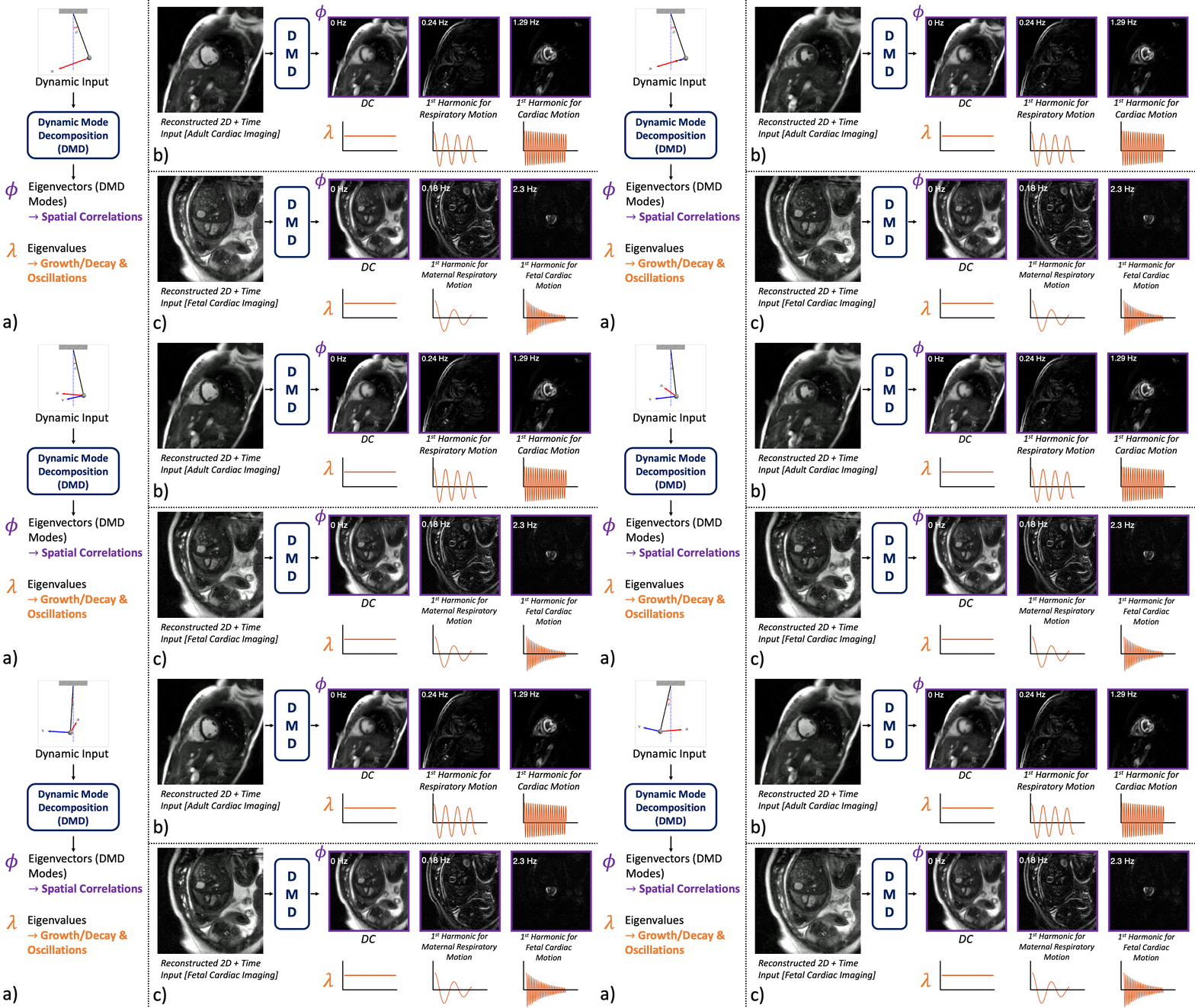
Figure 1: Overview of the DMD algorithm showing the input-output relation. a) Given measurements from a dynamic system, DMD extracts the eigenvectors (or DMD modes, Φ), spatial correlations, and the eigenvalues (λ), growth/decay, and oscillations of the underlying dynamics. Input is STCR [6] reconstructed real-time b) adult cardiac images, c) fetal cardiac images. The DMD Modes correspond to DC, and the first harmonics due to b) respiratory and cardiac c) maternal respiratory and fetal cardiac motion are selected and shown together with the temporal frequency and the eigenvalues.
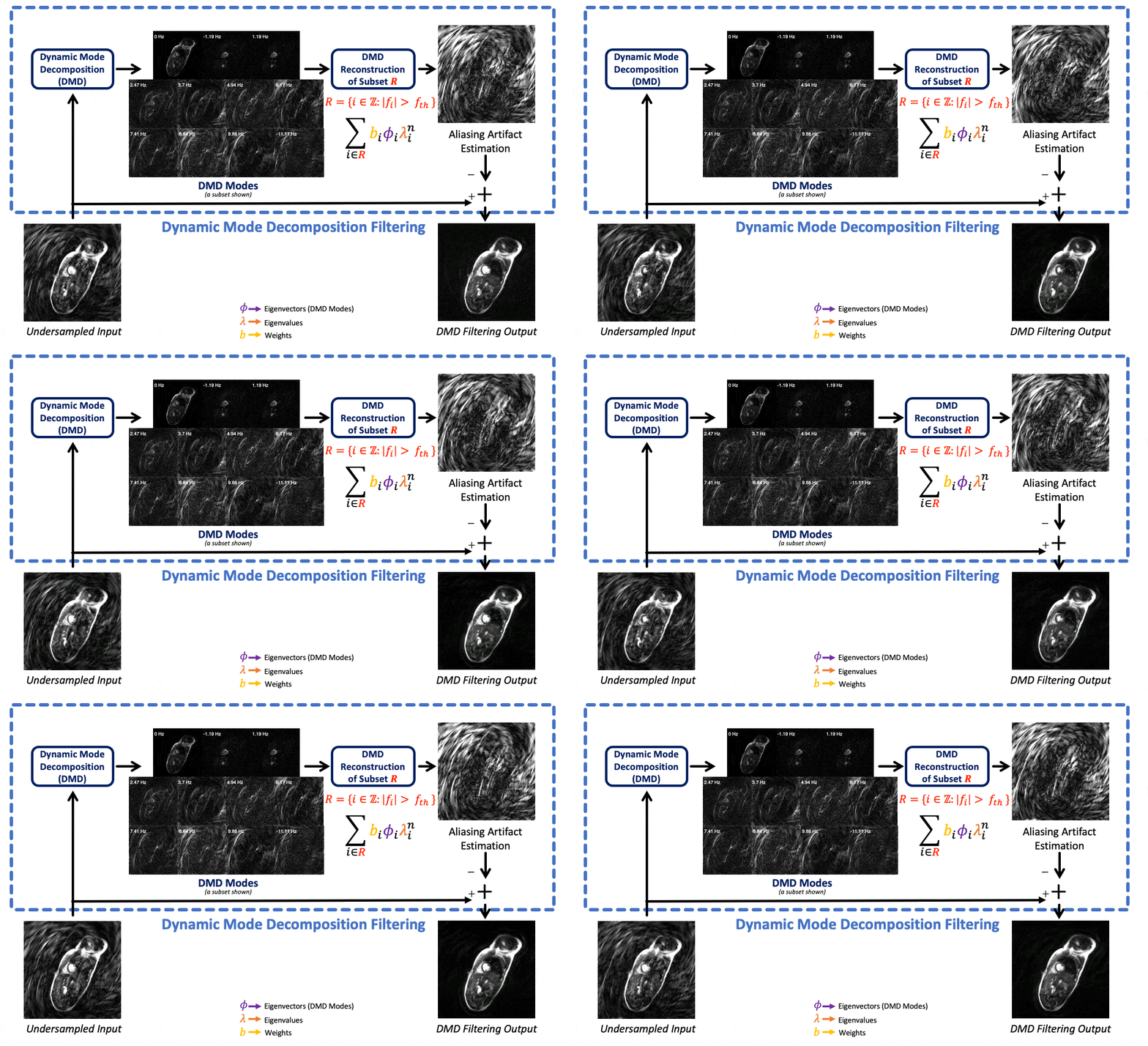
Figure 2: Flowchart of Dynamic Mode Decomposition Filtering. Filtering relies on the observation when the input dynamic system is undersampled; then, some modes contain only the aliasing artifact, and a portion of the remaining modes contain the body motion without the artifact. These two can be separated based on the frequency alone automatically to provide an artifact-reduced output without any iterations. Online DMD Filtering exploits periodicity of the artifacts in pseudo-golden-angle sampling and estimates the aliasing in future frames, based on a ~1-second calibration.
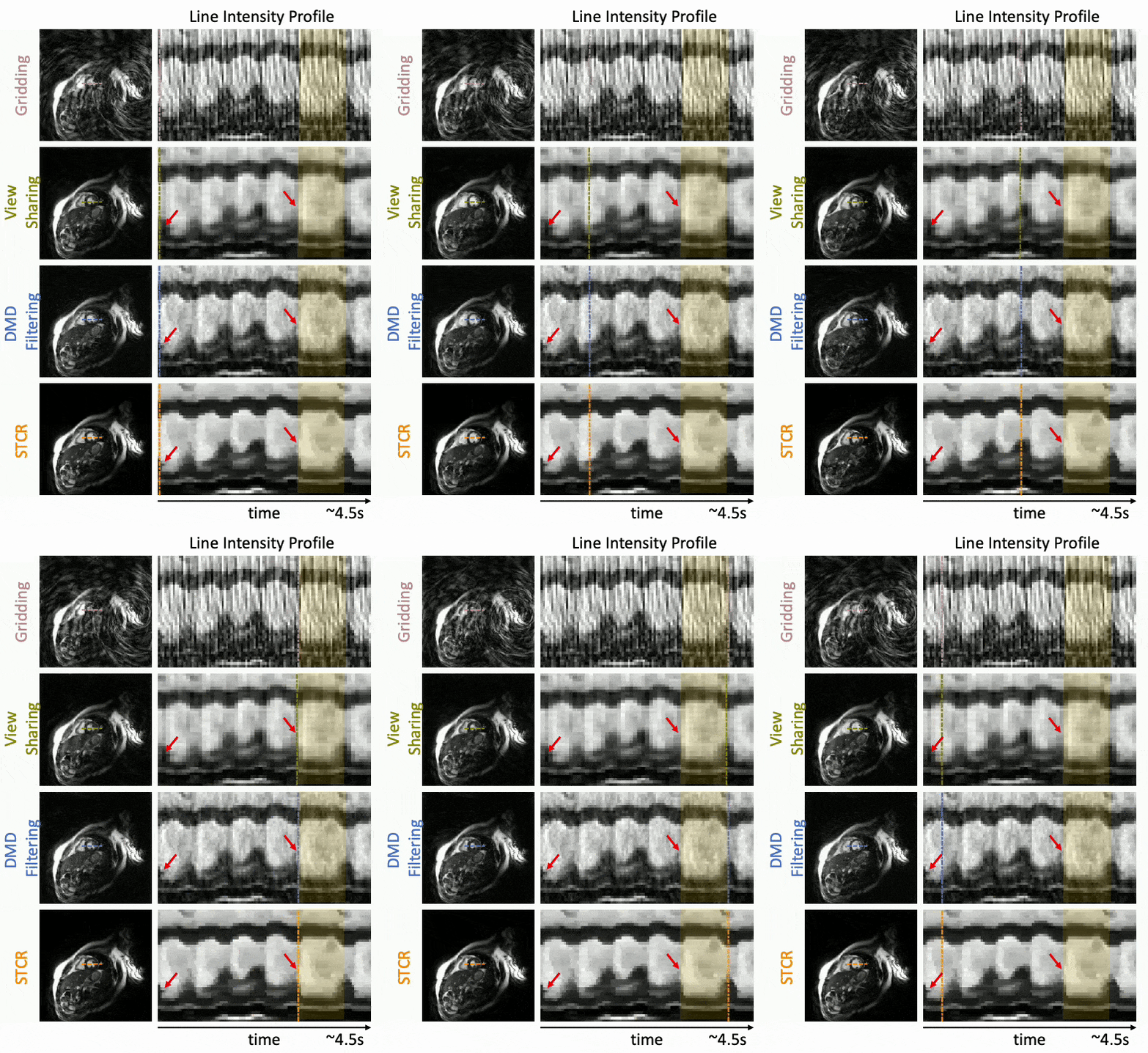
Figure 3: In-vivo cardiac RT-MRI of an adult volunteer experiencing premature ventricular contraction (PVCs) during the study. Irregular beats are highlighted in the line intensity profiles (yellow shading). Temporal resolution was 45ms (8 arms/frame), except for view sharing (90ms, 16 arms sliding; footprint 180ms, 32arms/frame). DMD Filtering was applied to complex images after gridding. DMD Filtering notably captures the irregular wall motion without the temporal blurring present in the view-sharing (indicated by red arrows in the line intensity profiles).
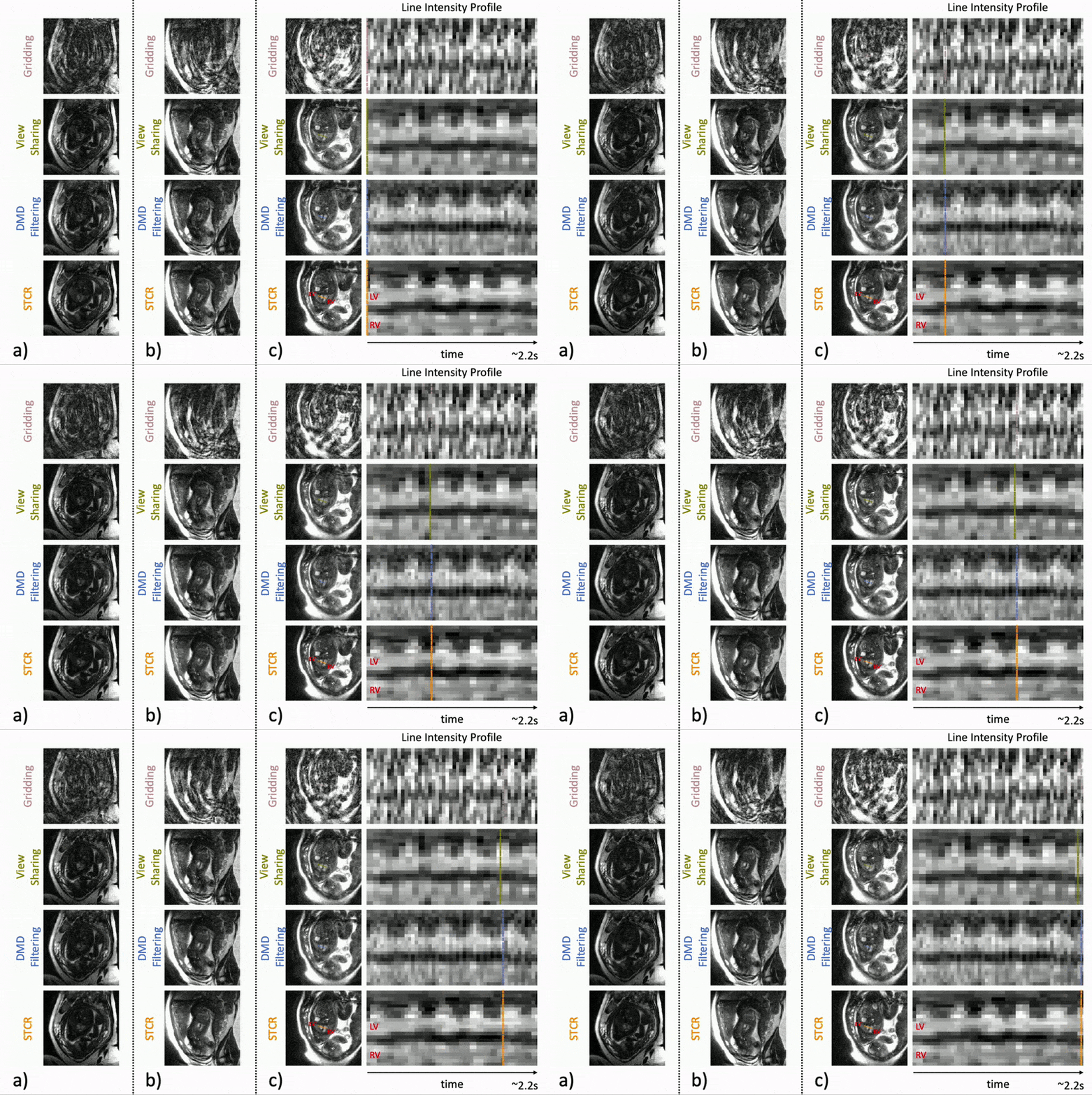
Figure 4: In-vivo comparison results from three real-time fetal cardiac cases. Temporal resolution was set to 45ms (8 arms/frame), except for view sharing (90ms, 16 arms sliding; footprint 180ms, 32arms/frame). DMD Filtering was applied to complex images after gridding. DMD Filtering captured fast fetal cardiac motion without temporal blurring while suppressing aliasing artifacts. View-sharing, however, could not resolve this motion due to its large temporal footprint, as seen in the line intensity profiles.
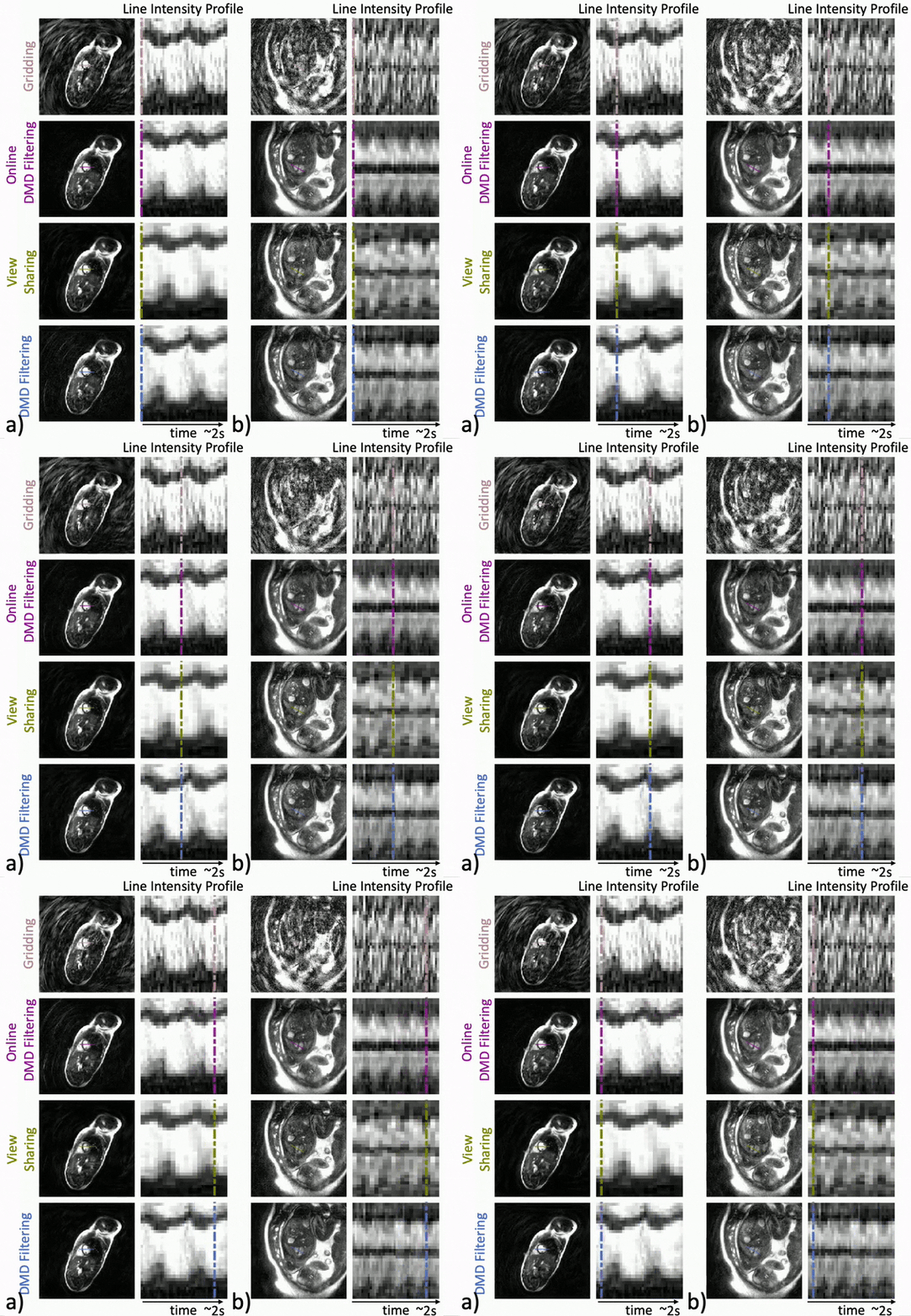
Figure 5: In-vivo evaluation of Online DMD Filtering. Representative examples of real-time (a) adult, (b) fetal cardiac RT-MRI. Online DMD Filtering provides significant aliasing reduction (compared with undersampled gridding) while having a small temporal footprint of 45ms to avoid temporal blurring (compared with view-shared gridding, 180ms). The additional latency is <20ms/frame. DMD Filtering is also shown for comparison and provides slightly better performance.