1180
Protective Effects of High-Altitude Hypobaric Hypoxia on Myocardial Infarction: A 7.0T Cardiovascular Magnetic Resonance Study in a Rat Model1West China Hospital of Sichuan University, Chengdu, China
Synopsis
Keywords: Heart Failure, Cardiovascular
Motivation: The impact of high-altitude hypobaric hypoxia on myocardial infarction cardioprotection is a subject of ongoing research in cardiovascular studies.
Goal(s): We aimed to assess the potential protective effects of high-altitude hypobaric hypoxia in a rat model of MI using 7.0T CMR strain analysis.
Approach: We used rats model and transporting some rats to an elevation of 4,250 meters, while control rats remained at 500 meters. Then surgically induced myocardial infarctions in the rats at each elevation.
Results: The finding was that rats with MI living at high altitude had significantly better preservation of heart function compared to control rats living at 500 meters.
Impact: The outcomes of this study hold significance for the management of patients at risk of MI, particularly those residing in high-altitude environments or experiencing hypobaric hypoxia. Identifying the cardioprotective effects may result in the development of new therapeutic strategies.
Purpose
The impact of high-altitude hypobaric hypoxia on myocardial infarction (MI) cardioprotection is a subject of ongoing research in cardiovascular studies. This investigation aimed to assess the potential protective effects of high-altitude hypobaric hypoxia in a rat model of MI using 7.0T cardiovascular magnetic resonance (CMR) strain analysis.Materials and Methods
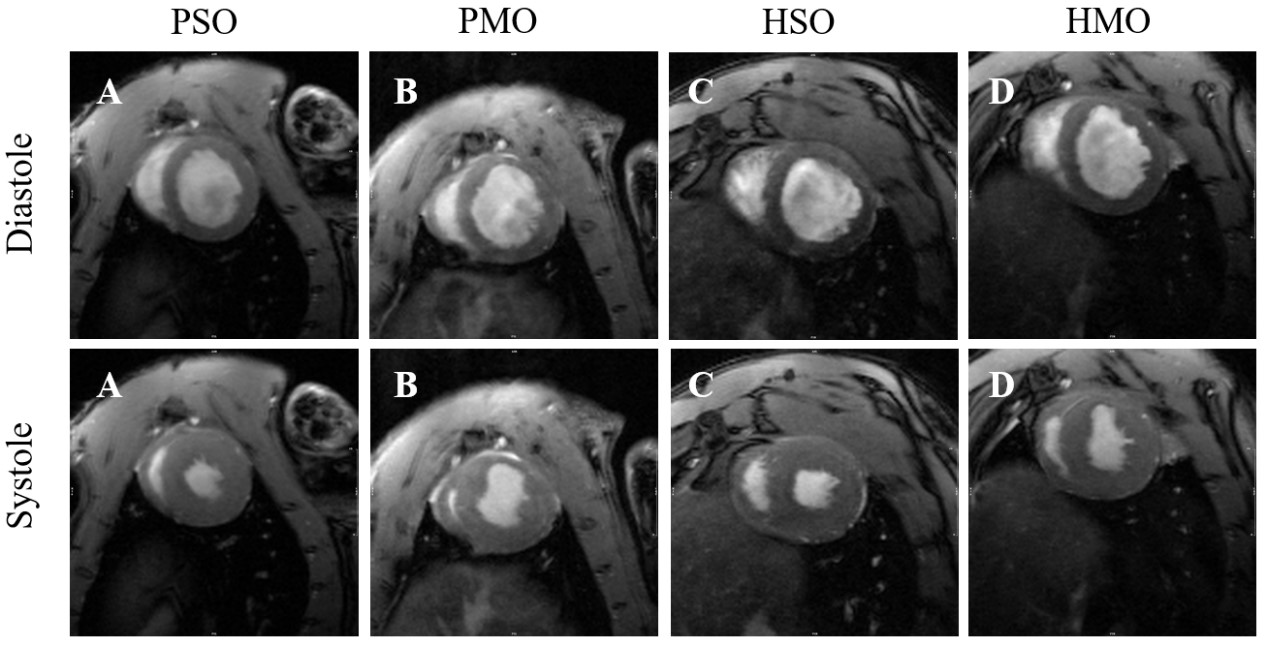
A cohort of 40 rats were randomly distributed into four groups (10 rats per group): plain sham operation control (PSO), plain myocardial infarction operation control (PMO), high-altitude sham operation control (HSO), and high-altitude myocardial infarction operation group (HMO). Rats assigned to high-altitude groups were transported to institution 1 (altitude: 4,250 m), while those in the plain group were sent to institution 2 (altitude: 500 m). The rats underwent acclimatization to their specific environments under standard animal laboratory conditions for three months before initiating the experimental procedures. Four weeks into the modeling process, CMR was employed to assess cardiac function and left ventricular (LV) structural alterations following interventions. Strain analysis was performed to evaluate myocardial wall motion, thereby assessing the protective effects of high-altitude hypobaric hypoxia on MI.Results
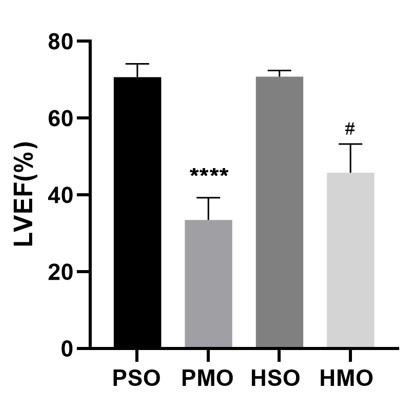
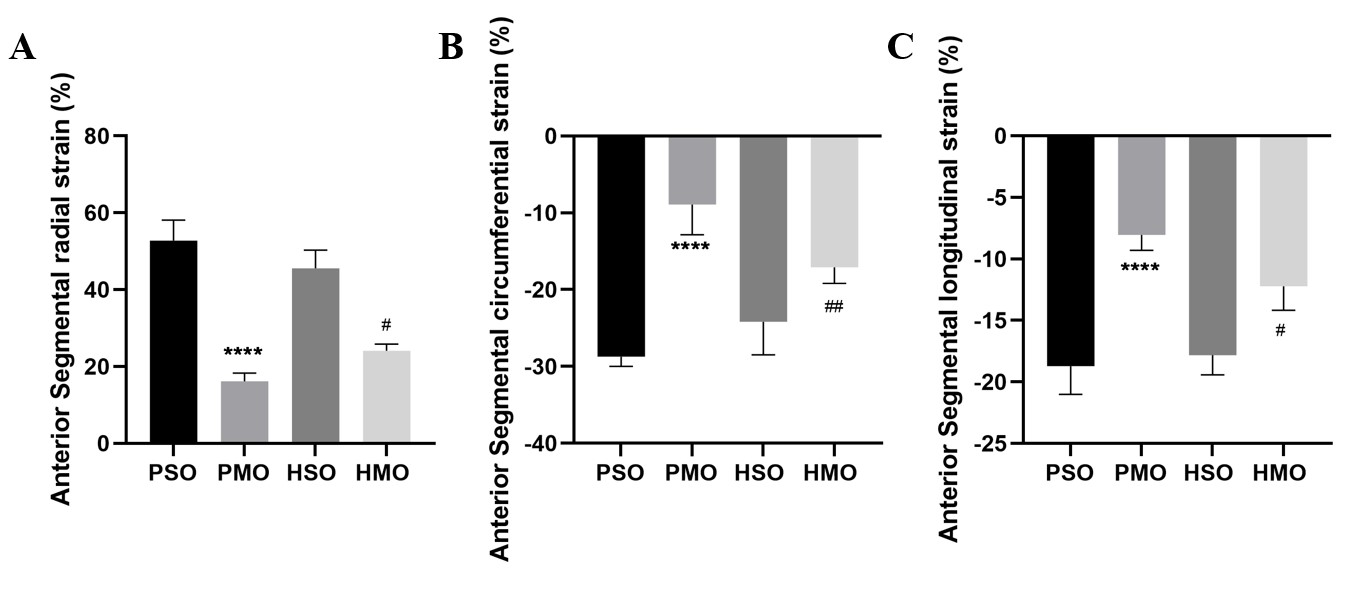
The HMO group displayed a marked improvement in LV function compared to the PMO group (LVEF, HMO vs. PMO = 45.80 ± 7.53% vs. 33.51 ± 5.80%, P = 0.021). Regional strain measurements, such as anterior segmental circumferential strain (ACS, HMO vs. PMO = -17.07 ± 2.12% vs. -8.90 ± 3.94%, P = 0.038), anterior segmental longitudinal strain (ALS, HMO vs. PMO = -12.22 ± 1.96% vs. -8.05 ± 1.24%, P = 0.041), and anterior segmental radial strain (ARS, HMO vs. PMO = 24.08 ± 1.74% vs. 16.17 ± 2.14%, P = 0.003), exhibited significant differences between the HMO and PMO groups. Additionally, histological evaluations showed a decrease in myocardial injury and fibrosis in the HMO group compared to the PMO group.Conclusion
The findings of this investigation suggest that high-altitude hypobaric hypoxia provides a protective effect on MI in a rat model. These results enhance our understanding of the potential therapeutic benefits of high-altitude settings for patients at risk of MI and encourage further exploration into the underlying mechanisms and prospective clinical applications.Clinical Relevance
The outcomes of this study hold significance for the management of patients at risk of MI, particularly those residing in high-altitude environments or experiencing hypobaric hypoxia. Identifying the cardioprotective effects may result in the development of new therapeutic strategies, such as preconditioning interventions or pharmacological agents focused on hypoxia-related pathways. The application of advanced CMR techniques, including strain analysis, can offer essential insights into myocardial function and damage, potentially improving diagnostic and prognostic accuracy in clinical practice.Acknowledgements
This study was supported by the National Natural Science Foundation of China (nos. 81930046, 81829003) and The Expert Workstation of Yunnan Province (No. 202105AF150037)References
1.Mallet RT, Burtscher J, Richalet JP, Millet GP, Burtscher M. Impact of High Altitude on Cardiovascular Health: Current Perspectives. Vasc Health Risk Manag. 2021 Jun 8;17:317-335. doi: 10.2147/VHRM.S294121IF: 2.9 . PMID: 34135590IF: 2.9 ; PMCID: PMC8197622IF: 2.9 .
2.Terada H, Hirata N, Sawashita Y, Ohno S, Yoshikawa Y, Yamakage M. Acute Hypobaric and Hypoxic Preconditioning Reduces Myocardial Ischemia-Reperfusion Injury in Rats. Cardiol Res Pract. 2021 Mar 16;2021:6617374. doi: 10.1155/2021/6617374IF: 2.1 Q3 . PMID: 33815836IF: 2.1 Q3 ; PMCID: PMC7990552IF: 2.1 Q3 .
Figures