1105
Aberrant activations associated with developmental dyslexia and READ1 deletion induced by visual/attentive tasks1Neuroimaging Unit, IRCCS "Eugenio Medea", Bosisio Parini (LC), Italy, 2Department of Information Engineering, University of Padova, Padova, Italy, 3Department of Brain and Behavioral Sciences, University of Pavia, Pavia (PV), Italy, 4Child Psychopathology Unit, IRCCS "Eugenio Medea", Bosisio Parini (LC), Italy, 5V. Buzzi Children’s Hospital, Milano (MI), Italy, 6Milan Centre for Neuroscience (NeuroMI), Milano (MI), Italy, 7Laboratoire de Psychologie de Développement et de l’Éducation de l’Enfant (LaPsyDÉ), Université Paris Cité, Paris, France, 8Department of Psychological Sciences, University of Connecticut, Storrs, CT, United States, 9The Connecticut Institute for Brain and Cognitive Sciences, University of Connecticut, Storrs, CT, United States, 10Yale Child Study Center Language Sciences Consortium, New Haven, CT, United States, 11Molecular Biology Laboratory, IRCCS "Eugenio Medea", Bosisio Parini (LC), Italy
Synopsis
Keywords: Task/Intervention Based fMRI, fMRI (task based)
Motivation: Developmental Dyslexia (DD) is a complex and heritable neurodevelopmental disorder with heterogeneous genotype-phenotype pathways.
Goal(s): Utilise fMRI as a bridge between genetic factors (DD-candidate risk genes) and behavioral traits (proficiency in reading skills).
Approach: A GLM was used to test for relationships between reading proficiency, genetic mutation, and neural activations of two visual-attentive tasks.
Results: A genetic vulnerability to alterations in neural activation was found in the ventral attentive and salient networks during reading-related stimuli in subjects with poor reading proficiency.
Impact: Functional MRI has shown to be a valuable mediator linking genotype to phenotype, possibly leading to the optimization of criteria to diagnose Developmental Dyslexia and the early identification of children with a genetically driven susceptibility.
Background
Developmental Dyslexia (DD) is a complex, heritable, language-based disorder with a neurobiological origin, characterised by impaired reading acquisition and patterns of atypical brain activations in some cognitive and sensory mechanisms. Among DD-candidate genes, DCDC2 is one of the best studied and it encodes a protein essential for neurite outgrowth, neuronal migration, and ciliary functions1. Variations spanning DCDC2 are associated with performance on reading and reading-related skills in both children with DD and Typical Readers (TRs). Imaging-genetics research suggests that a naturally occurring DCDC2 deletion encompassing READ1 (hereafter, READ1-d) is associated with both structural and functional alterations in both subjects with DD and TRs2–5. Here, we explored the possibility of using fMRI as a mediator to identify functional pathways linking genotype to phenotype associated with reading6. This study offers a genetic-imaging approach connecting a specific genetic variant (READ1-d), neural activity, and reading skills.Methods
Participants: The recruited dataset comprised 79 subjects: 18 DD+ (with READ1-d), 21 DD- (without READ1-d), 19 TR+ (with READ1-d), and 21 TR- (without READ1-d). TRs and children with DD showed significant differences in terms of age, gender distribution, QI, and DSM-IV-Inattention (DSM-IV-I) traits (Table 1).MRI Acquisition Protocol: MRI data were acquired on a 3T Philips Achieva d-Stream scanner with a 32-channel head coil. MRI-compatible pads were used to record subjects’ answers and response times. The MRI protocol is depicted in Figure 1.
fMRI Task Design: The fMRI task design comprised two visual tasks eliciting the Magno (M) dorsal, the Parvo (P) ventral pathways, and the attentive network, i.e., a full-field Sinusoidal Gratings (SG) controlled for spatial and temporal frequencies and luminance contrast, and a sensitivity to Coherent Motion (CM) at 6%, 15%, and 40% dot coherence level.
Anatomical MRI Data Analysis: T1w images were corrected for bias field artifacts using the N4 algorithm, and run through the FreeSurfer recon-all pipeline. The HCP-MMP1 atlas was used to parcellate the cortical grey matter of each hemisphere into 180 Regions of Interest (ROIs).
fMRI Data Processing: The fMRI data were processed following the FreeSurfer Functional Analysis Stream (FSFAST). The preprocessing pipeline included motion correction, slice-timing correction, resampling on the “fsaverage” template, smoothing, and intensity normalization. Template resampling used T1w images as an intermediate step, and smoothing was performed using a 3 mm FWHM filter. Outlier volume detection was performed using in-house developed software tools6. SG analysis led to two contrast maps, i.e., M stimulus vs. Baseline (M-vs-B) and P stimulus vs. Baseline (P-vs-B). Three contrast maps were outlined for the CM task, one for each level of motion coherence, i.e., CM Level 6% vs. Baseline (CML6-vs-B), CML15-vs-B, CML40-vs-B. Finally, average contrast values were computed in each ROI following the HCP-MMP1 parcellation of the cortex.
Statistical Analysis: Each contrast map entered as a dependent variable in a univariate General Linear Model including READ1-d (+ vs. -) and sex as factors, while age, mean reading, IQ-Block Design, and DSM-IV-I were inserted as covariates. In addition, the interaction between READ1-d and Mean Reading (READ1-d*Mean Reading) was added to investigate whether the effects of READ1-d upon neural activations during M-related tasks change with proficiency in reading. The critical threshold for identifying significant contributions of Mean Reading, READ1-d, and READ1d*Mean Reading upon neural activations was set at p<0.00014 (Bonferroni correction for 360 ROIs).
Results
At the Bonferroni-corrected level of significance (p<0.00014), two effects upon neural activation were found when performing tasks, i.e., SG or CM (Figure 2).Specifically, 1) Reading skills showed a significant effect in the right polar frontal cortex during the full-field sinusoidal gratings-M task. Regardless of the presence/absence of READ1-d (Figure 3a), subjects with poor reading proficiency showed hyperactivation in this ROI compared to subjects with better reading scores. 2) READ1-d*Mean Reading interaction showed a significant effect in the left frontal opercular area 4 during the coherent motion sensitivity task at 15% (Figure 3b). In detail, READ1d carriers (Figure 3b, red plot) had lower neural activation compared to their counterparts without READ1d (Figure 3b, blue plot). Such a difference changes as a function of reading proficiency, with the gap closing and turning non-significant as reading skills increase.
Conclusion and Discussion
In this study, we were able to exploit fMRI to identify an intermediate phenotype (the functional contrast maps) in the investigation of the relationship between genetic (DCDC2 variants) and clinical (reading skills) variables. Our findings showed a READ1d-moderated genetic vulnerability to alterations in neural activation in the ventral attentive and salient networks during the processing of relevant stimuli in subjects with poor read proficiency.Acknowledgements
No acknowledgement found.References
- Lampis V, Ventura R, Di Segni M, Marino C, D’Amato FR, Mascheretti S. Animal models of developmental dyslexia: Where we are and what we are missing. Neurosci Biobehav Rev. 2021;131:1180-1197. doi:10.1016/j.neubiorev.2021.10.022
- Meda SA, Gelernter J, Gruen JR, et al. Polymorphism of DCDC2 Reveals Differences in Cortical Morphology of Healthy Individuals—A Preliminary Voxel Based Morphometry Study. Brain Imaging Behav. 2008;2(1):21-26. doi:10.1007/s11682-007-9012-1
- Cope N, Eicher JD, Meng H, et al. Variants in the DYX2 locus are associated with altered brain activation in reading-related brain regions in subjects with reading disability. NeuroImage. 2012;63(1):148-156. doi:10.1016/j.neuroimage.2012.06.037
- Marino C, Scifo P, Della Rosa PA, et al. The DCDC2/intron 2 deletion and white matter disorganization: focus on developmental dyslexia. Cortex J Devoted Study Nerv Syst Behav. 2014;57:227-243. doi:10.1016/j.cortex.2014.04.016
- Perani D, Scifo P, Cicchini GM, et al. White matter deficits correlate with visual motion perception impairments in dyslexic carriers of the DCDC2 genetic risk variant. Exp Brain Res. 2021;239(9):2725-2740. doi:10.1007/s00221-021-06137-1
- Mascheretti S, Peruzzo D, Andreola C, et al. Selecting the Most Relevant Brain Regions to Classify Children with Developmental Dyslexia and Typical Readers by Using Complex Magnocellular Stimuli and Multiple Kernel Learning. Brain Sci. 2021;11(6). doi:10.3390/brainsci11060722
- David Wechsler, Naglieri JA. Wechsler Nonverbal Scale of Ability (WNV). 2006. APA PsycTest.
- Conners CK. Conners Teacher Rating Scale (TRS). Am J Psychiatry. 1989. APA PsycTests.
- Conners C, Sitarenios G, Parker J, Epstein J. The revised Conners’ Parent Rating Scale (CPRS-R): factor structure, reliability, and criterion validity. J Abnorm Child Psychol. 1998;26:257-268. doi:10.1023/A:1022602400621
- Nobile M, Colombo P, Bellina M, et al. Psychopathology and adversities from early- to late-adolescence: a general population follow-up study with the CBCL DSM-Oriented Scales. Epidemiol Psychiatr Sci. 2013;22(1):63. doi:10.1017/S2045796012000145
Figures
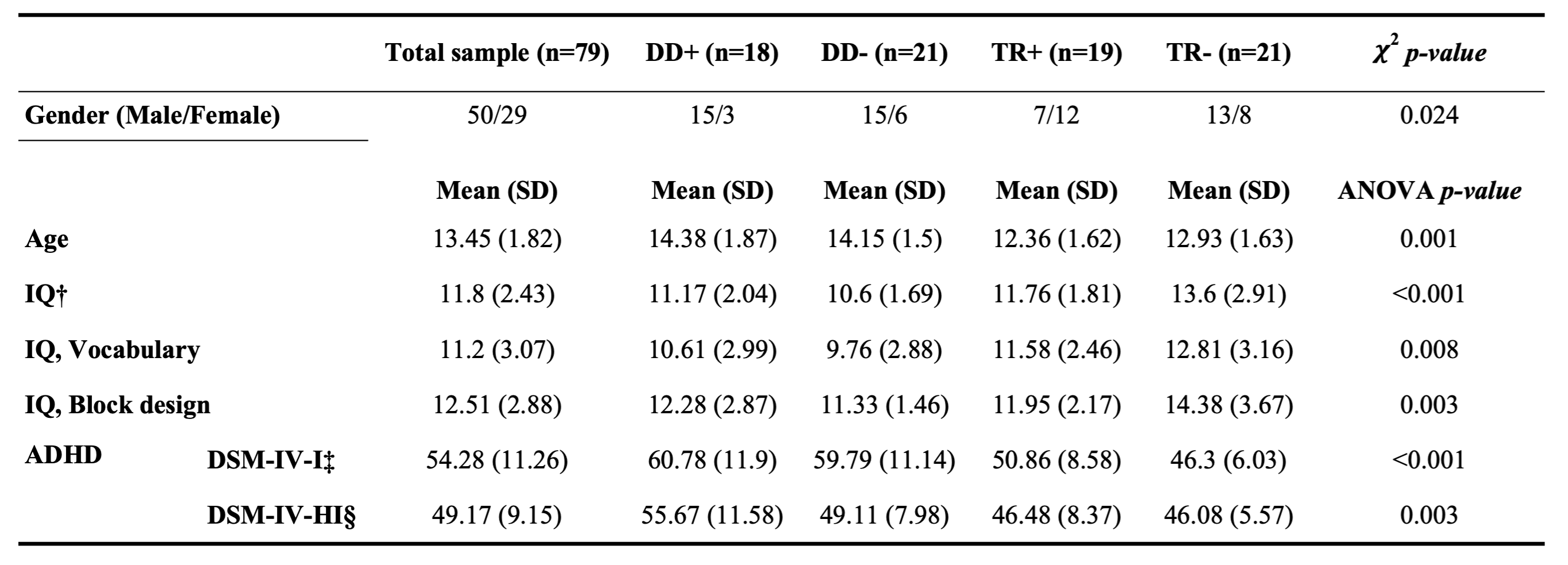
Table 1. Descriptive statistics of demographic and neuropsychological variables in the four study groups.
† Mean score of the weighted scores of the vocabulary and block design subtests of the WISC-III7.
‡ The DSM-IV-Inattention (DSM-IV-I) subscale of the CPRS-R:L8–10.
§ The DSM-IV-hyperactivity/impulsivity (DSM-IV-HI) subscale of the CPRS-R:L8–10.
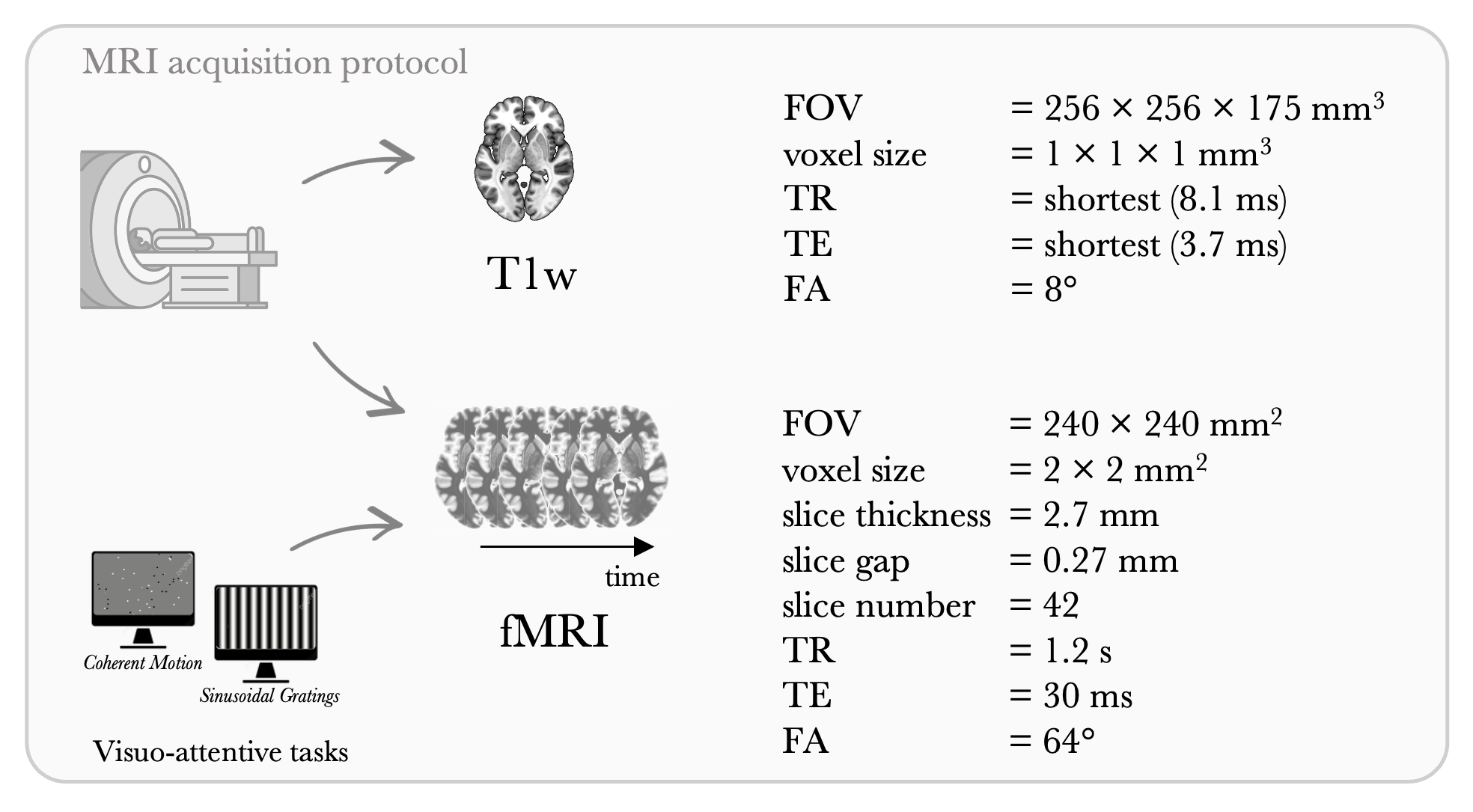
Figure 1. MRI acquisition protocol.
The MRI acquisition protocol included a T1w sequence used as a morphological reference, and fMRI sequences, acquired with T2*w Gradient-Echo planar sequences. Two visual-attentive tasks, i.e., Sinusoidal Gratings (SG) and Coherent Motion (CM) were used to elicit reading-related processing pathways.
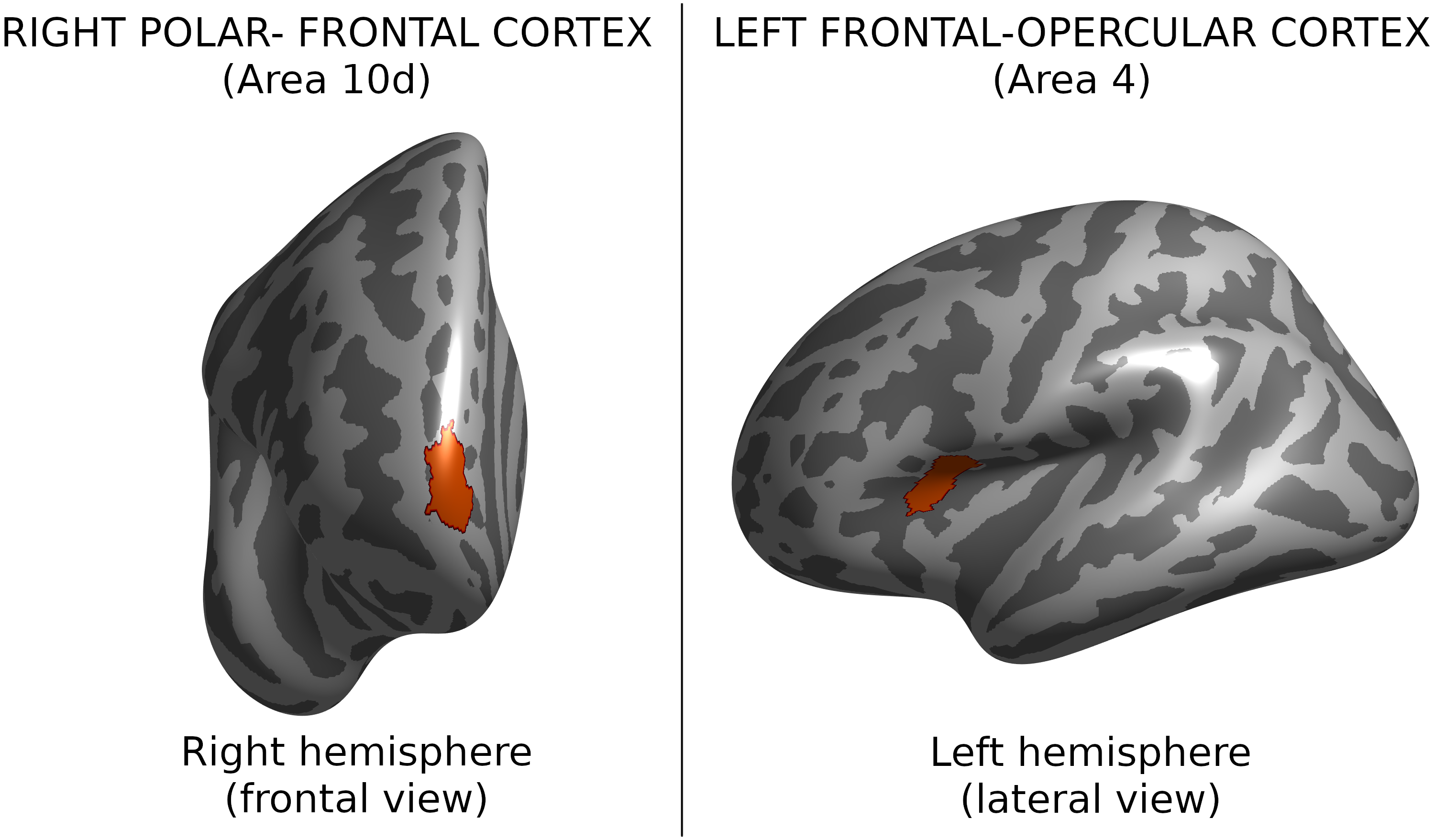
Figure 2. Contributions of Mean Reading, READ1-d and READ1-d*Mean Reading upon neural activations.
The HCP-MMP1 atlas was used to parcellate the cortical grey matter of each hemisphere. Significant Mean Reading (Right polar frontal cortex - Area 10d) and READ1-d*Mean Reading (Left frontal opercular cortex - Area 4) effects were reported after Bonferroni correction for multiple comparisons (p<0.00014). No significant effects of READ1-d were found.
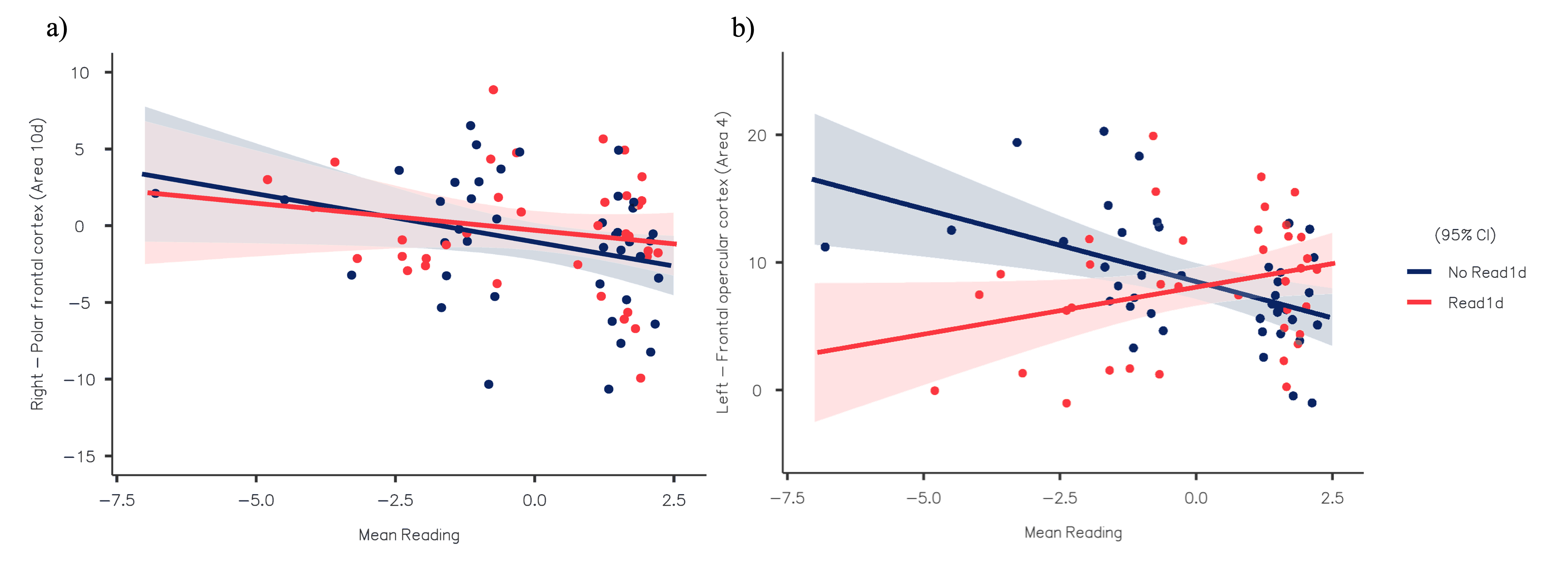
Figure 3. Bonferroni-corrected contributions of READ1-d*Mean Reading.
a) Regardless of the presence/absence of READ1-d, subjects with poor reading proficiency showed hyperactivation in the right polar frontal cortex compared to subjects with better reading scores.
b) READ1-d*Mean Reading interaction showed a significant effect in the left frontal opercular area 4
Mean Reading: Average score among the z-scores from Text, Single Unrelated Words, and Single Unrelated Pseudo-words reading tests (both speed and accuracy); lower scores correspond to worse reading skills.