0918
MR radiomics to predict microvascular invasion status and biological processes in combined hepatocellular carcinoma-cholangiocarcinoma1radiology, Zhongshan Hospital Fudan University, Shanghai, China
Synopsis
Keywords: Liver, Liver
Motivation: Prognostic value of microvascular invasion (MVI) in combined hepatocellular carcinoma-cholangiocarcinoma (cHCC-CCA) was verified, and an effective prediction model is warranted to facilitate risk stratification and individual management.
Goal(s): To establish an MRI-based radiomics model for predicting MVI status of cHCC-CCA, and to investigate biological processes underlying the radiomics model.
Approach: Clinical data, conventional MR features, MR-based radiomics features and RNA sequencing data were collected and analyzed.
Results: A robust MRI-based radiomics model was established for predicting MVI status in cHCC-CCA, in which potential prognostic value and underlying biological processes that regulate immune response were demonstrated.
Impact: MVI is a significant manifestation of tumor invasiveness,and the MR-based radiomics model established in our study will facilitate risk stratification. Furthermore, underlying biological processes demonstrated in radiomics model will offer valuable insights for guiding immunotherapy strategies.
Objectives
To establish an MRI-based radiomics model for predicting microvascular invasion (MVI) status of combined hepatocellular carcinoma-cholangiocarcinoma (cHCC-CCA), and to investigate biological processes underlying the radiomics model.Materials & Methods
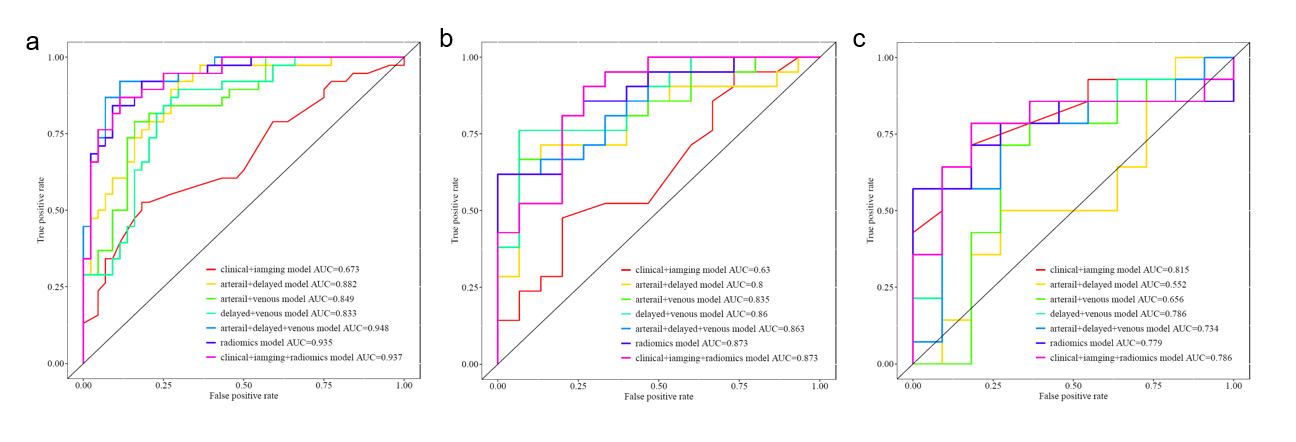
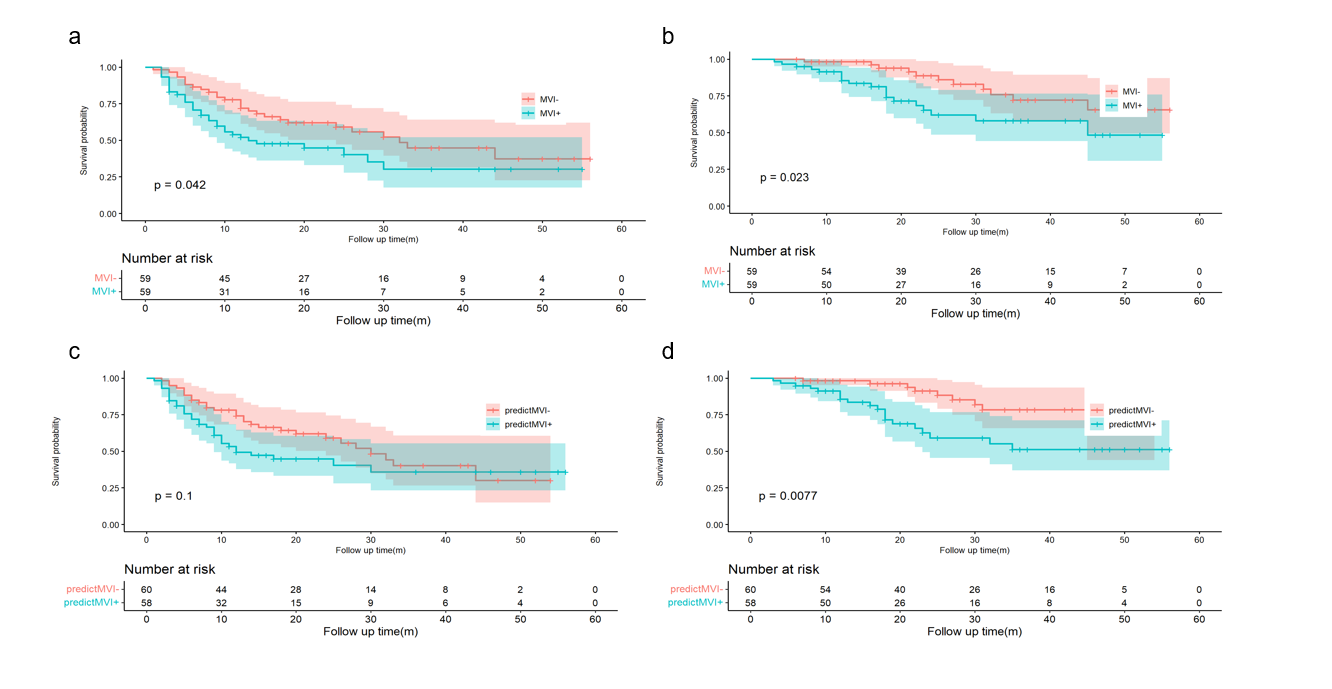
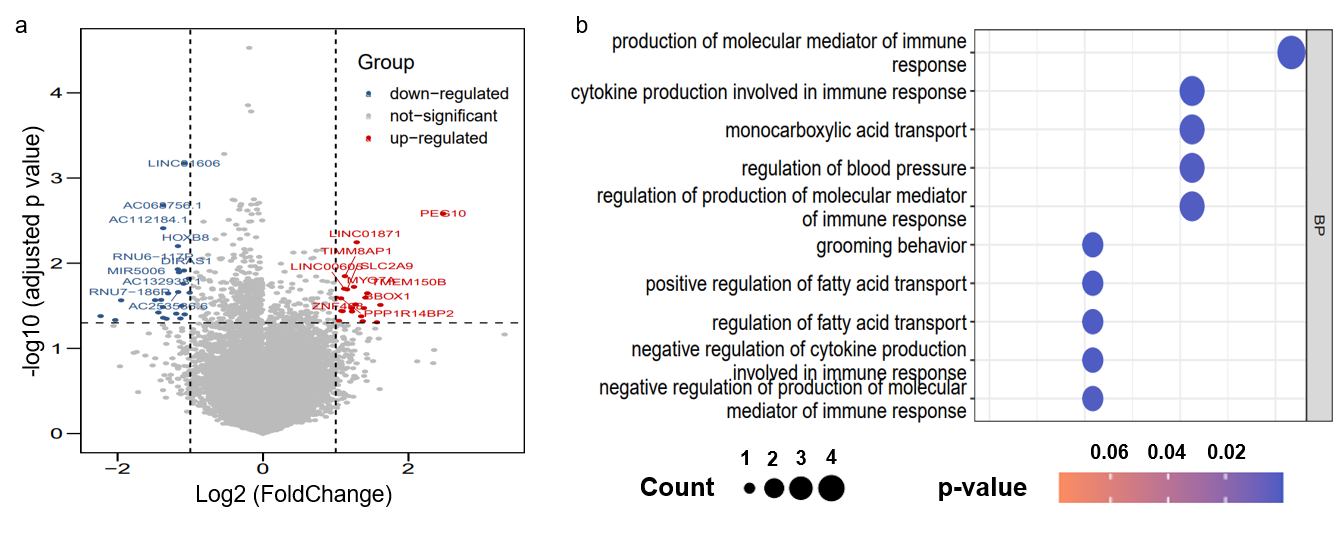
The study consisted of a retrospective dataset and a prospective dataset from two hospitals. Based on the training set, logistic regression analyses were employed to develop the clinical-imaging model, while radiomic features were extracted to construct a radiomics model. The diagnosis performance was further validated in the validation and test sets. Prognostic aspects of the radiomics model were investigated using Kaplan-Meier method and log-rank test. Differential gene expression analysis and Gene Ontology (GO) analysis were conducted to explore biological processes underlying the radiomics model based on RNA sequencing data.Results
The study included 143 patients (mean age, 56.4 ± 10.5; 114 men), in which 73 (51.0%) were confirmed as MVI-positive. The radiomics model exhibited good performance in predicting MVI status, with the area under the curve of 0.953, 0.873 and 0.779 in training, validation, and test sets, respectively. Recurrence-free survival (RFS) and overall survival (OS) were, marginally or significantly, different between the predicted MVI-negative and MVI-positive groups (median RFS: 18 vs. 10.5 months, p = 0.100; median OS: 25 vs. 18 months, p = 0.008). Radiogenomic analysis revealed associations between the radiomics model and biological processes involved in regulating immune response.Conclusions
A robust MRI-based radiomics model was established for predicting MVI status in cHCC-CCA, in which potential prognostic value and underlying biological processes that regulate immune response were demonstrated.Acknowledgements
no acknowledgements in this paper.References
1. Wang Y, Zhu GQ, Zhou CW, Li N, Yang C, Zeng MS. Risk stratification of LI-RADS M and LI-RADS 4/5 combined hepatocellular cholangiocarcinoma: prognostic values of MR imaging features and clinicopathological factors. Eur Radiol. 2022;32(8):5166-5178.
2. Wang X, Wang W, Ma X, et al. Combined hepatocellular-cholangiocarcinoma: which preoperative clinical data and conventional MRI characteristics have value for the prediction of microvascular invasion and clinical significance?. Eur Radiol. 2020;30(10):5337-5347.
3. Nguyen CT, Caruso S, Maille P, et al. Immune Profiling of Combined Hepatocellular- Cholangiocarcinoma Reveals Distinct Subtypes and Activation of Gene Signatures Predictive of Response to Immunotherapy. Clin Cancer Res. 2022;28(3):540-551.
4. Zheng BH, Ma JQ, Tian LY, et al. The distribution of immune cells within combined hepatocellular carcinoma and cholangiocarcinoma predicts clinical outcome. Clin Transl Med. 2020;10(1):45-56.
Figures