0611
In vivo investigation of recuperation dynamics of altered myocardial PDH activity induced by a ketogenic diet1Advanced Imaging Research Center, UT Southwestern Medical Center, Dallas, TX, United States, 2Internal Medicine, UT Southwestern Medical Center, Dallas, TX, United States, 3Biomedical Engineering, UT Southwestern Medical Center, Dallas, TX, United States, 4Radiology, UT Southwestern Medical Center, Dallas, TX, United States
Synopsis
Keywords: Myocardium, Metabolism
Motivation: Metabolic alterations associated with a ketogenic diet (KD) include suppressed carbohydrate utilization in the myocardium, but how quickly they recover by reverting to a normal diet (ND) is under-investigated.
Goal(s): This study investigates recuperation dynamics of myocardial pyruvate oxidation by reverting a KD to a ND.
Approach: Cardiac metabolism of healthy rats was longitudinally assessed using hyperpolarized [1-13C]pyruvate at baseline, during a KD, and a subsequent ND after the 5-week KD.
Results: Cardiac [13C]bicarbonate disappeared with a KD. Reverting to ND gradually recovered the PDH flux over eight days. [1-13C]Lactate production in the KD group showed the opposite but similar dynamic patterns.
Impact: Compensating the metabolic shifts by a ketogenic diet is challenged for proper assessment of cardiac metabolism and is often attempted by temporarily reverting the diet. Understanding the recuperation dynamics is crucial in proper assessment of cardiac metabolism.
INTRODUCTION
Fatty acids and glucose are primary substrates for cardiac metabolism, and the heart produces 70 % to 90 % of its ATP from fatty acids while the remainder is from glucose or lactate1. Their fractional contributions can rapidly adapt to substrate availability, workload, pathological conditions, and nutritional states. For instance, fatty acids’ contribution increases in the heart under a fasted condition due to limited glucose availability. A ketogenic diet (KD) replicates the effects of fasting by inducing a metabolic shift towards the use of ketones for energy production, impeding cardiac glucose metabolism2. Metabolic reprogramming has been extensively studied and it is reported that a long-term exposure to a KD increases pyruvate dehydrogenase kinase (PDK) 4 level3. However, reversibility and temporal dynamics of altered PDH activity induced by a KD is underexplored. In this study, we investigated the reversibility and its temporal dynamics of altered myocardial PDH flux when switching a KD back to a normal diet (ND), using 13C MRS with hyperpolarized (HP) [1-13C]pyruvate. We hypothesized that the suppressed pyruvate oxidation by a KD is long-lasting and the PDH flux slowly recovers after reverting to ND.METHODS
Two types of diet were used in this study: the standard ND (Teklad Global Diet 2014, 13 kcal % from fat, 67 kcal % from carbohydrates and 20 kcal % from protein; 2.9 kcal/g) and the KD (Teklad Customer Diet, TD.96355, 90.5 kcal % from fat [vegetable shortening and corn oil], 0.3 kcal % from carbohydrates and 9.1 kcal % from protein; 6.7 kcal/g). Cardiac metabolism of healthy male rats (n = 7) was longitudinally assessed using 13C MR spectroscopy with a bolus injection of HP [1-13C]pyruvate at baseline, during a KD (2 and 5 weeks), and a subsequent ND after the 5-week KD (1, 2, 5, and 8 days). [13C]Bicarbonate, [1-13C]lactate, and [1-13C]alanine produced in the heart of the KD group were compared with those measured from an age-matched control group (n = 7). For 13C MRS, an axial slice (slice thickness = 10 mm) that included majority of the heart was prescribed and tilted to an oblique plane, if needed, to exclude other major organs such as liver. Acquisition of 13C MRS (spectral width = 5,000 Hz, #spectral points = 2,048) started with a bolus injection of 120-mM HP [1-13C]pyruvate (1.5 mmol/kg body weight, injection rate = 0.25 mL/s, up to 4 mL) and repeated every 3 seconds for 4 minutes. A 10o slice-selective RF pulse was used and the center frequency was set to [1-13C]pyruvate. Separately, three groups of Sprague-Dawley rats were prepared for cross-sectional ex vivo tissue validations: ND for 5 weeks, KD for 5 weeks, and KD (5 weeks) followed by ND (8 days).RESULTS and DISCUSSION
After introducing a KD, the produced [13C]bicarbonate signal in the heart relative to the total HP products (TP; sum of bicarbonate, lactate, and alanine) decreased from 0.086 ± 0.023 (baseline, P = 0.67 vs. control group) to 0.004 ± 0.003 (2 weeks, P = 3.4 ´ 10-9) and 0.005 ± 0.003 (5 weeks, P = 1.0 ´ 10-7), Figure 1. Reverting to ND gradually recovered the PDH flux to 0.029 ± 0.013 (1 day), 0.040 ± 0.022 (2 days), 0.075 ± 0.021 (5 days), and 0.084 ± 0.015 (8 days, P = 0.77 vs. control group). [1-13C]Lactate production in the KD group showed the opposite but similar dynamic patterns, Figure 2. Maximum PDH activity and phosphorylated PDH level, measured by ex vivo myocardium, were not fully recovered whereas PDK4 level was returned to normal level, Figure 3. The mismatch between in vivo and ex vivo measurements of PDH flux highlights the importance of in vivo assessment of this key regulating enzyme activity.CONCLUSION
This study demonstrates slow recuperation dynamics of myocardial PDH flux by reverting a KD to a ND. Considering the much slower basal metabolic rate, it may take longer time to recover the suppressed pyruvate oxidation capacity by a KD in humans.Acknowledgements
This study was supported by the National Institutes of Health of the United States (R01 NS107409, P41 EB015908, S10 OD018468, P30 DK127984, R21 EB034413, R21 EB030765, R21 EB031367); U.S. Army Medical Research Acquisition Activity (W81XWH2210485); Cancer Prevention and Research Institute of Texas (RP210099).
References
1. Gertz EW, Wisneski JA, Stanley WC, Neese RA. Myocardial substrate utilization during exercise in humans. Dual carbon-labeled carbohydrate isotope experiments. J Clin Invest 1988;82:2017–2025.
2. Wilder RM. The effect of ketonemia on the course of epilepsy. Mayo Clin Proc 1921;2:307.
3. Rinnankoski-Tuikka R, Silvennoinen M, Torvinen S, Hulmi JJ, Lehti M, Kivelä R, et al. Effects of high-fat diet and physical activity on pyruvate dehydrogenase kinase-4 in mouse skeletal muscle. Nutr Metab 2012;9:1–13.
Figures
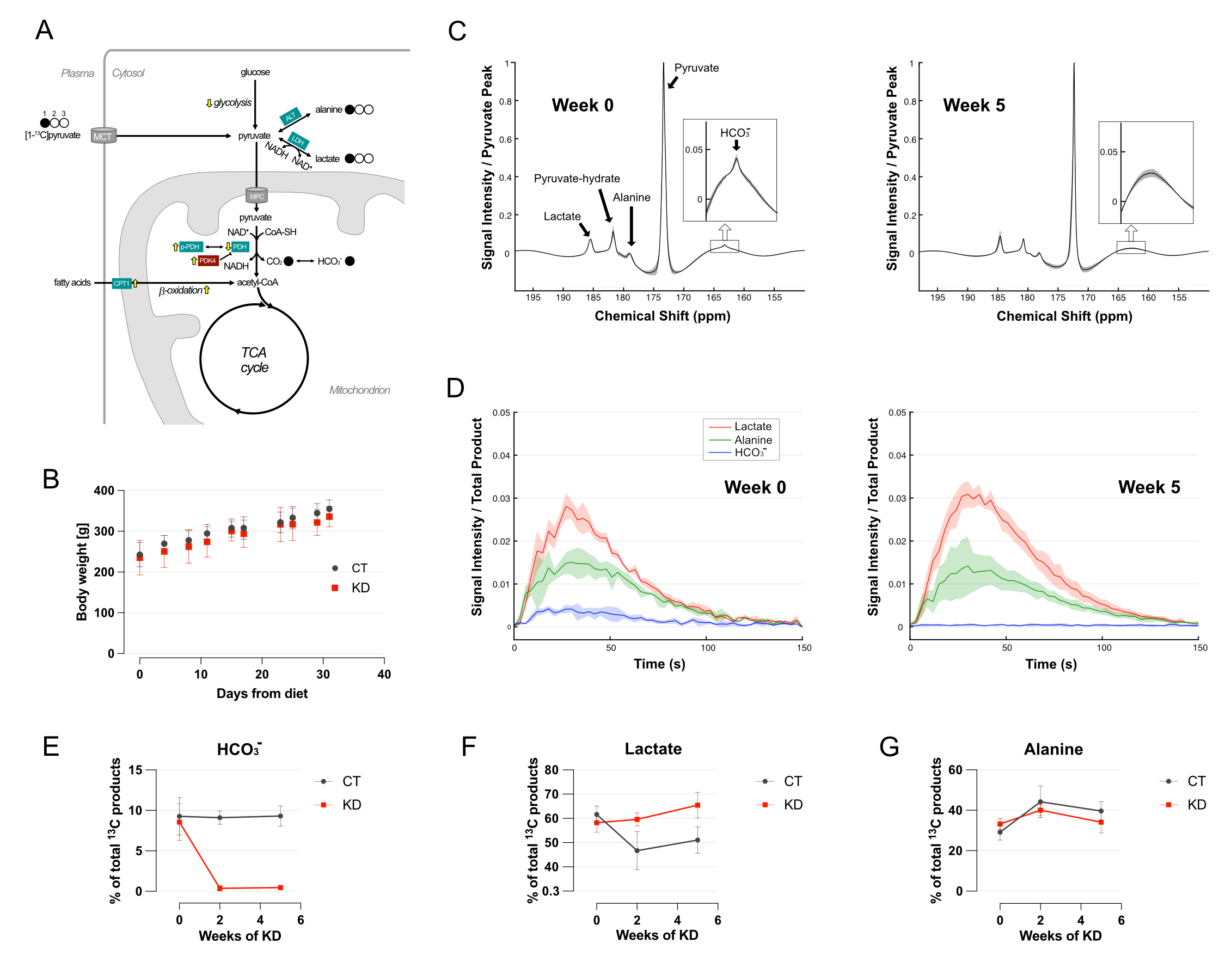
Figure 1. Longitudinal monitoring of skewed cardiac pyruvate metabolism by a ketogenic diet using hyperpolarized [1-13C]pyruvate.
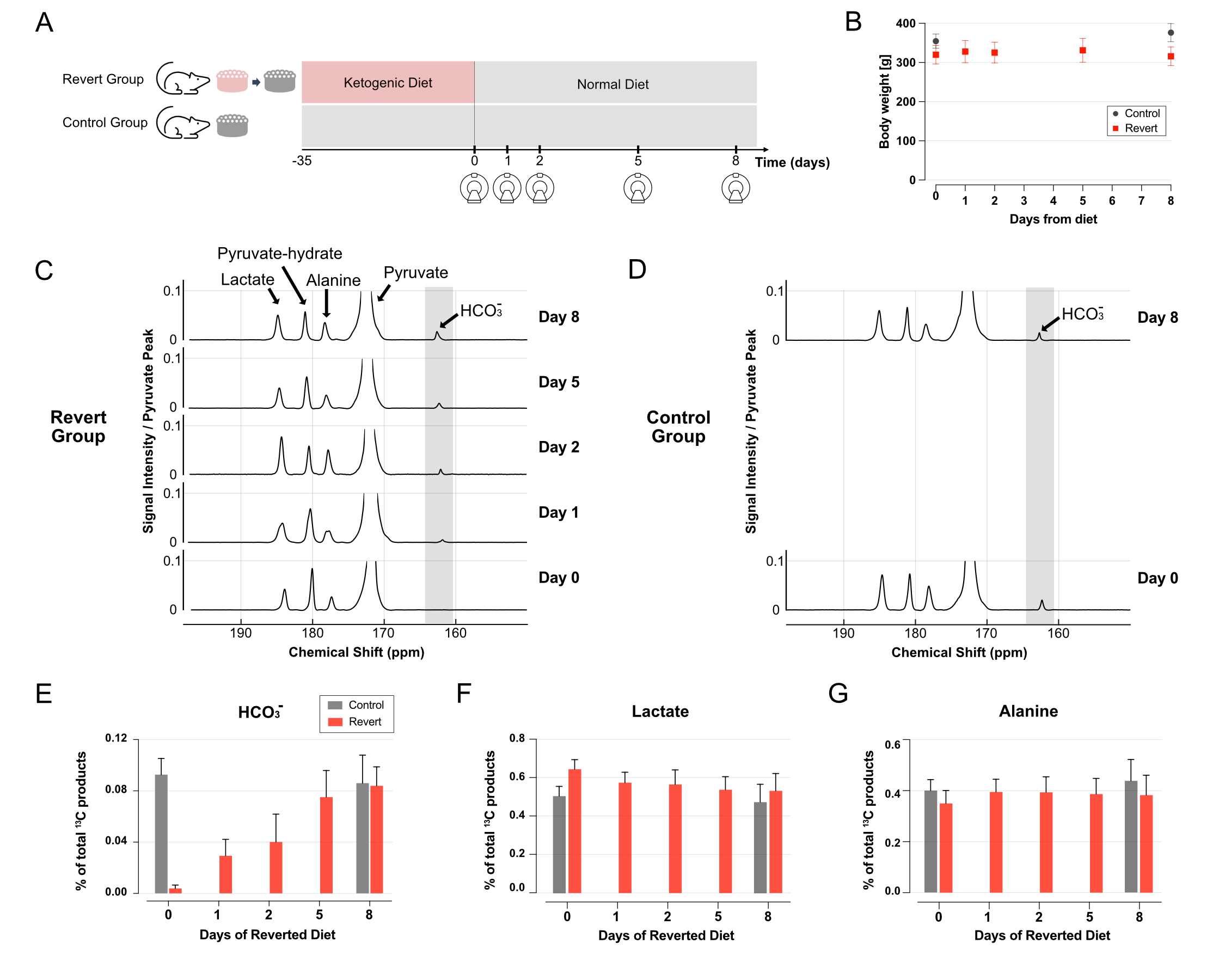
Figure 2. Recuperation of in vivo myocardial PDH flux by reverting ketogenic diet to normal diet.
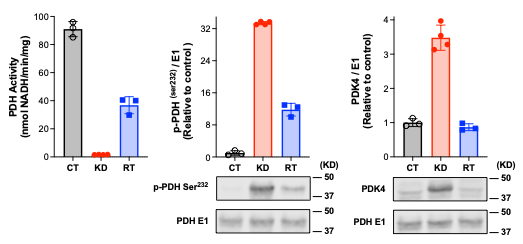
Figure 3. Ex vivo measurement of PDH activity and regulation. CT: control, KD: ketogenic-diet, RT: revert