0417
Bridging Health Disparities: Accessible MRI in Underserved African Countries1Massachusetts General Hospital, Boston, MA, United States, 2National Institutes of Health/ National Institute of Environmental Health Sciences, Durham, NC, United States, 3Massachusetts General Hospital/ Harvard Medical School, Boston, MA, United States, 4FxMasse Associates, Inc., Boston, MA, United States, 5Nationale Référence Teaching Hospital, N'Djamena, Chad
Synopsis
Keywords: New Devices, Neuro, Healthcare Disparities, Neurological Disorders, Accessible MRI
Motivation: Neurological disorders, including cerebral malaria and HIV/AIDS-associated complications, are leading causes of death in underserved African nations, hindered by a lack of medical equipment, particularly MRI facilities.
Goal(s): We seek to address two key questions: the need for MRI facilities in underserved African regions and the potential of accessible MRI in reducing healthcare disparities related to medical imaging.
Approach: We employed a multifaceted approach, involving literature review, interviews, and evaluations of accessible scanner benefits and enhancements.
Results: The marked disparities in MRI capabilities in Africa underscore the pressing need for investment in enhanced MRI infrastructure and customized imaging technologies, tailored to resource-limited settings.
Impact: This research underscores the urgent need for MRI facilities to address neurological disorders in African countries, highlighting infrastructure gaps and the potential for innovative, compact MRI solutions to improve healthcare in resource-limited settings.
Introduction
Neurological disorders pose a significant health burden in numerous African countries1. Alarming rates of conditions such as cerebral malaria, meningitis, tuberculosis of the central nervous system, and HIV/AIDS-associated neurological complications affect the region. Particularly, cerebral malaria2 stands out as a severe neurological complication, afflicting over 600,000 individuals in sub-Saharan Africa (SSA) annually, primarily children under the age of 5. The issue goes beyond mortality, as survivors often endure severe neurological damage, including intracranial hemorrhages and the potential development of epilepsy3. These collective neurological disorders rank among the leading causes of mortality in Africa. However, addressing these challenges is hindered by the lack of essential medical equipment, with MRI machines being a prime example4. This study is dedicated to understanding the critical need for MRI facilities in low-income African nations. Beyond raising awareness, we explore the potential role of cost-effective, compact, and accessible MRI machines as a crucial component of a comprehensive strategy aimed at finding practical solutions.Methods
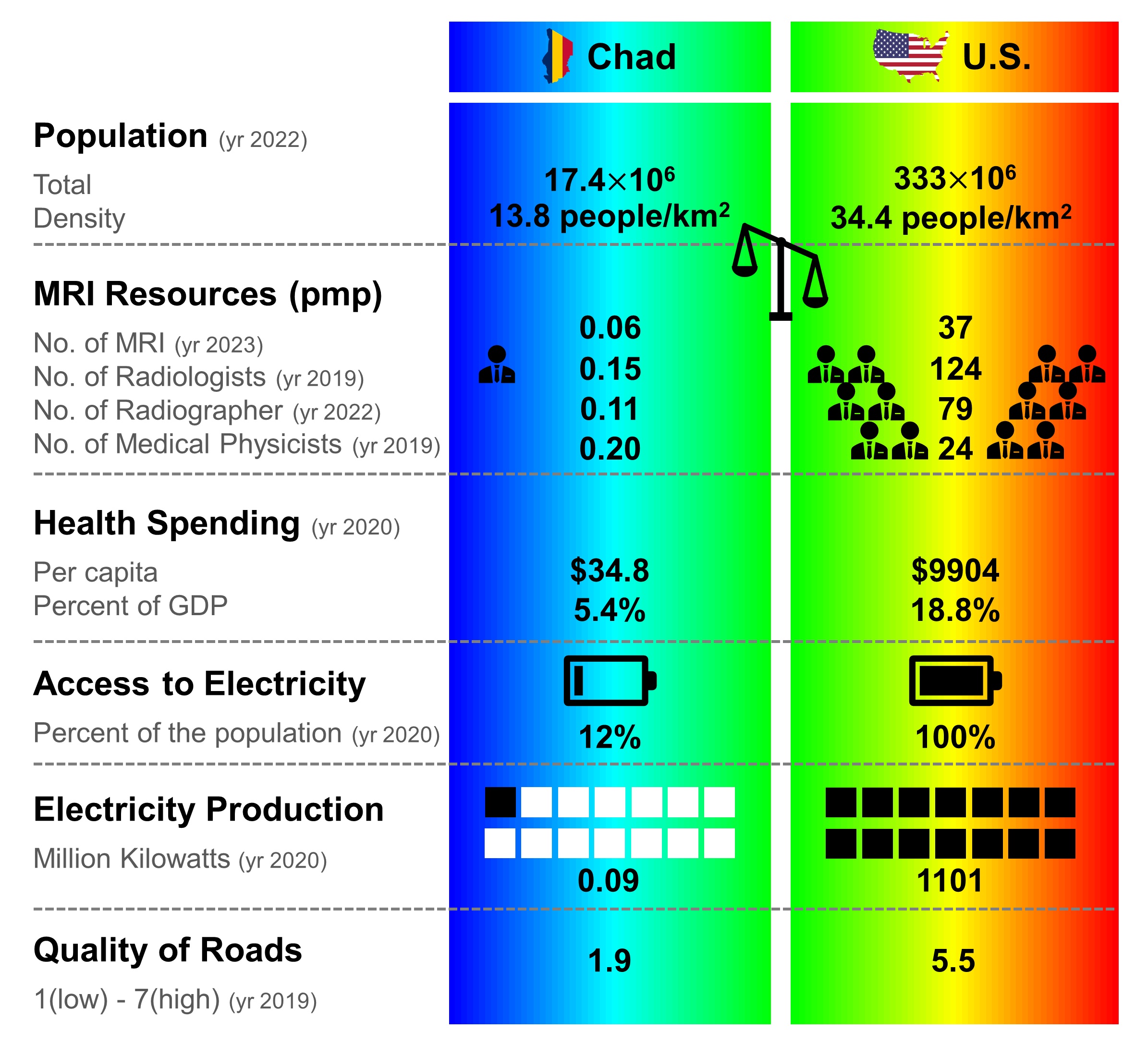
To grasp the challenges, we employed a multifaceted approach. By conducting an extensive literature review, we established a baseline understanding of the status of MRI facilities in Africa4-9. In a case study, we compared radiological resources between Chad and the U.S. from various aspects. Additionally, we conducted interviews with healthcare professionals from both African countries and the U.S. This qualitative research aimed to extract valuable insights into the prevailing state of healthcare, prevalent health issues, and the primary challenges faced by hospitals in the African regions under examination.Results
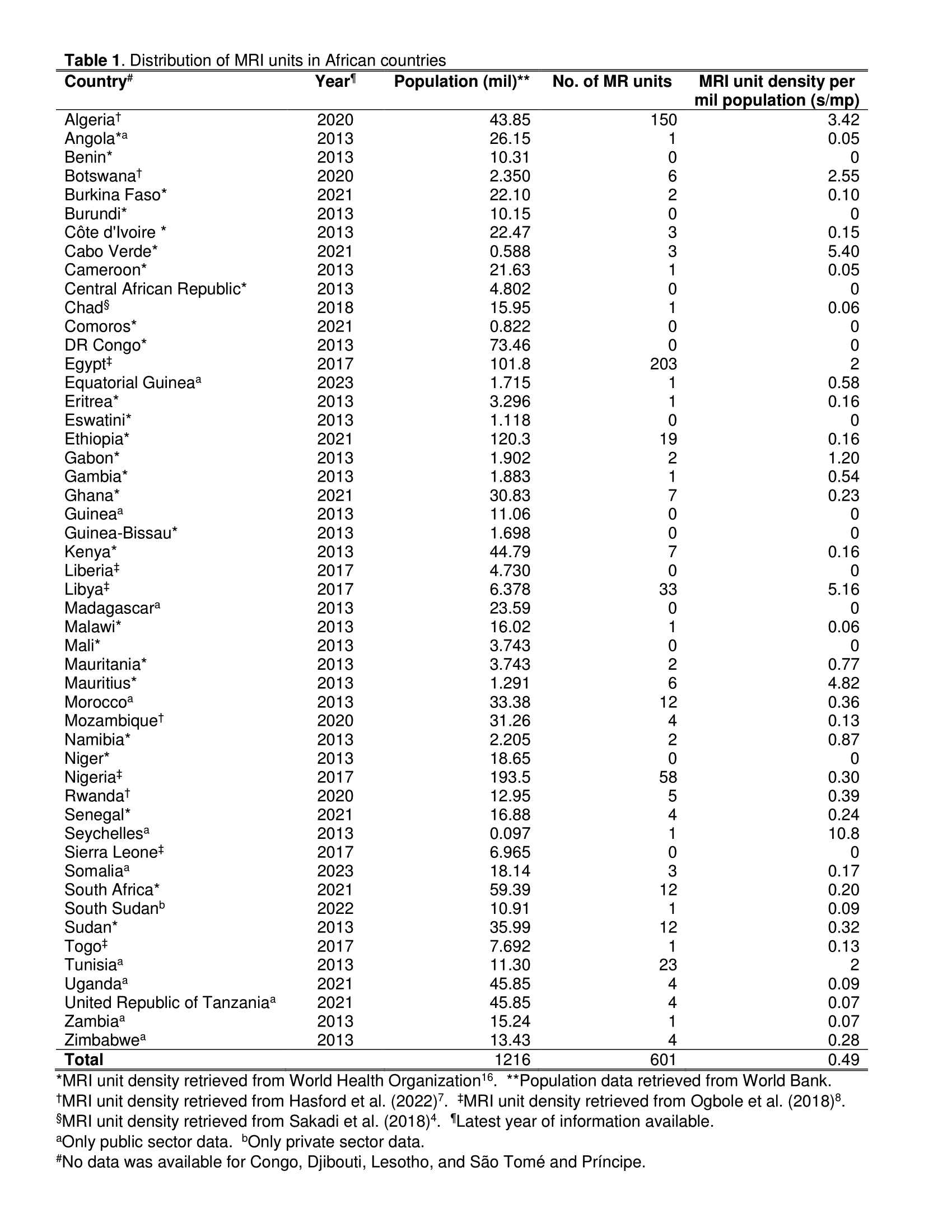
As a result of the literature review, we consolidated data from various sources, providing a dataset that reports the number of MRI machines in each African country (Table 1). The assembled information represents the most current and extensive dataset available. One of the challenges we encountered was the absence of a national policy of some African countries concerning health technology, which restricted access to information on medical devices essential for supporting an action plan related to user training, specialist recruitments, and maintenance technicians. The study reveals a stark contrast in key healthcare and MRI infrastructure indicators between Chad and the United States (Fig. 1). Notably, the number of MRI machines per million people (pmp) is strikingly low in Chad, at just 0.06, in large contrast to the United States, which has 37 MRI machines pmp. The disparity in access to electricity, where only 12% of Chad's population has this essential utility, compared to 100% in the United States, further underscores the infrastructure challenges that affect the reliability of MRI services. The varying quality of road infrastructure, with Chad scoring 1.9 compared to the United States' 5.5, accentuates potential logistical challenges in delivering MRI services to remote areas in Chad.Discussion
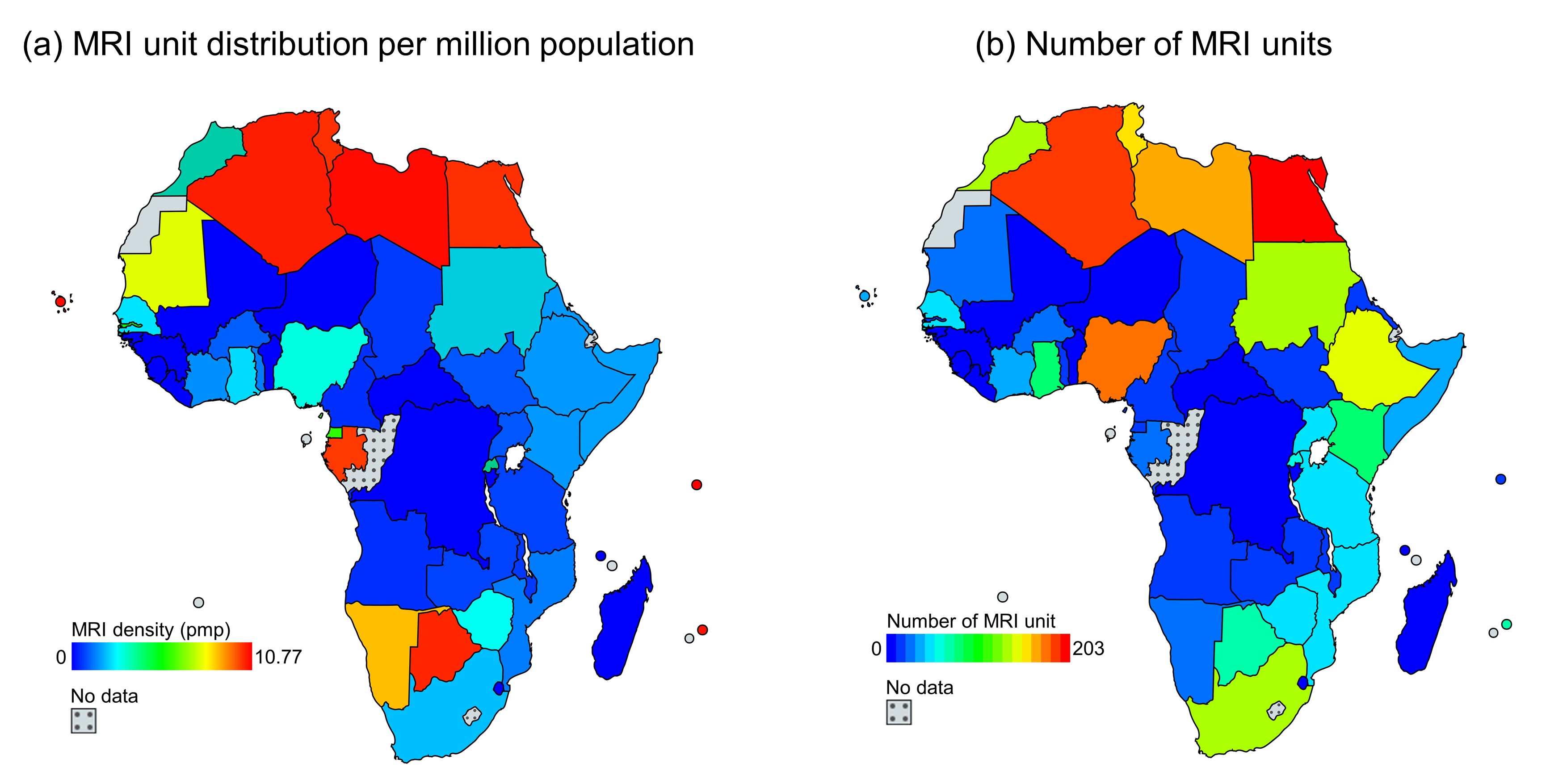
These substantial gaps in MRI capabilities lead us to think critically about how conventional MRI facilities are poorly adapted to under-resourced environments, and how newer technologies such as mobile and portable MRI scanners10-12 might be adopted to better serve underserved African regions. We also recognize the disparities among various sources, possibly originating from the exclusive reporting of data from the public sector by some sources, such as WHO. In South Africa, many scanners are privately owned, and examinations are typically limited to patients with private insurance. It is important to note that other countries in SSA are highly likely to face challenges similar to Chad's, as evidenced by the MRI unit distribution (Fig. 2), underscoring the need for innovative solutions and investments in healthcare infrastructure to ensure access to vital diagnostic tools and improve healthcare capabilities in these regions. Going forward, we plan to examine the potential for lightweight, compact, portable MRI scanners as one component of a comprehensive solution to these unique African conditions, aiming to provide meaningful benefits to local communities.Conclusion
Our interviews revealed a strong interest and concern from both African and U.S. healthcare professionals regarding medical resources in Africa. There is a growing collective effort to bring about change in the region9. While accessible scanners hold promise, they also demand further development to enhance image quality and enable reliable diagnoses. Looking forward, we envision the next generation of accessible scanners becoming highly automated, remotely operated, and powered by rechargeable batteries or solar energy to maximize portability and environmental sustainability while reducing vulnerability to unreliable electricity supplies13. Teleradiology14 will play an important role, as will attention to increasing power efficiency in scanner electronics and cooling systems. In a broader context, efforts toward establishing more training programs in Africa15, diversifying funding sources, providing international aid, and fostering collaboration with local professionals are also crucial.Acknowledgements
This research is supported by R01HD093578, R01HD099846, R01HD110152. We are grateful to Drs. Bruce Rosen, David Rosman, Susie Huang, Ernesta Meintjes, and Ethar Khalil Ibrahim for sharing their insights on this topic and for their support throughout this project.References
- Samba, E. The Malaria Burden and Africa. In: The Intolerable Burden of Malaria: A New Look at the Numbers: Supplement to Volume 64(1) of the American Journal of Tropical Medicine and Hygiene. (ed G. Breman J, A. Egan and G. T. Keusch, Eds.) (Northbrook.)(2001).
- Idro, R., Marsh, K., John, C. C. & Newton, C. R. Cerebral malaria: mechanisms of brain injury and strategies for improved neurocognitive outcome. Pediatr Res 68, 267-274, https://doi.org/10.1203/PDR.0b013e3181eee738 (2010).
- Trivedi, S. & Chakravarty, A. Neurological Complications of Malaria. Curr Neurol Neurosci Rep 22, 499-513, https://doi.org/10.1007/s11910-022-01214-6 (2022).
- Sakadi, F. & Mateen, F. J. Neurological letter from Chad. Pract Neurol 18, 426-428, https://doi.org/10.1136/practneurol-2018-001895 (2018).
- van Zyl, B. C. et al. Towards equity: a retrospective analysis of public sector radiological resources and utilization patterns in the metropolitan and rural areas of the Western Cape Province of South Africa in 2017. BMC Health Services Research 21, 991, https://doi.org/10.1186/s12913-021-06997-x (2021).
- Ali, F. S., Harrington, S. G., Kennedy, S. B. & Hussain, S. Diagnostic Radiology in Liberia: A Country Report.
- Hasford, F. et al. A review of MRI studies in Africa with special focus on quantitative MRI: Historical development, current status and the role of medical physicists. Phys Med 103, 46-58, https://doi.org/10.1016/j.ejmp.2022.09.016 (2022).
- Ogbole, G. I. et al. Survey of magnetic resonance imaging availability in West Africa. Pan Afr Med J 30, 240, https://doi.org/10.11604/pamj.2018.30.240.14000 (2018).
- Udunna, C. A. et al. A Framework for Advancing Sustainable MRI Access in Africa. medRxiv, 2022.2005.2002.22274588, https://doi.org/10.1101/2022.05.02.22274588 (2022).
- Geethanath, S. & Vaughan, J. T., Jr. Accessible magnetic resonance imaging: A review. J Magn Reson Imaging 49, e65-e77, https://doi.org/10.1002/jmri.26638 (2019).
- Yuen, M. M. et al. Portable, low-field magnetic resonance imaging enables highly accessible and dynamic bedside evaluation of ischemic stroke. Science Advances 8, eabm3952, https://doi.org/10.1126/sciadv.abm3952 (2022).
- Cooley, C. Z. et al. A portable scanner for magnetic resonance imaging of the brain. Nature Biomedical Engineering 5, 229-239, https://doi.org/10.1038/s41551-020-00641-5 (2021).
- Obungoloch, J. et al. On-site construction of a point-of-care low-field MRI system in Africa. NMR Biomed 36, e4917, 10.1002/nbm.4917 (2023).
- Tahir, M. Y., Mars, M. & Scott, R. E. A review of teleradiology in Africa - Towards mobile teleradiology in Nigeria. SA J Radiol 26, 2257, https://doi.org/10.4102/sajr.v26i1.2257 (2022).
- Kawooya, M. G. Training for rural radiology and imaging in sub-saharan Africa: addressing the mismatch between services and population. J Clin Imaging Sci 2, 37, https://doi.org/10.4103/2156-7514.97747 (2012).
- Geneva: Health World Organization. (Global atlas of medical devices, Licence: CC BY-NC-SA 3.0 IGO, 2022).
Figures