0292
Abbreviated Whole-Body MRI as a Novel Imaging Modality for Pediatric Lymphoma Follow-Up: A Multicenter study1The Affiliated Hospital of Zhengzhou University, Zhengzhou, China
Synopsis
Keywords: Adolescents, Whole Body
Motivation: Our study is motivated by the need to assess abbreviated whole-body MR for evaluating treatment response in pediatric patients with lymphoma.
Goal(s): To evaluate the diagnostic efficacy and reproducibility of a novel abbreviated whole-body MRI (WB-MRI) for response assessment in pediatric patients with lymphoma.
Approach: We conducted a multicenter prospective study included pediatric patients underwent both PET/CT and abbreviated WB-MRI at baseline and during follow-up.
Results: The image quality of abbreviated WB-MRI was rated good or excellent, with high sensitivity and accuracy.
Impact: Abbreviated WB-MRI has the advantage of being non-invasive and without radiation exposure, making it an alternative to PET/CT for response surveillance in pediatric patients.
Introduction
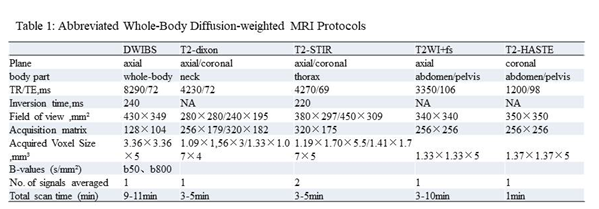
Hodgkin lymphoma (HL) and non-Hodgkin lymphoma (NHL) are common childhood cancers, comprising 14.6% of cases in developed countries.Follow-up imaging is vital for treatment assessment. Guidelines recommend 18 F-FDG-PET/CT for response surveillance, but it exposes young patients to radiation. This multicenter prospective study aimed to evaluate the diagnostic confidence and reproducibility of a novel abbreviated 30-minute whole-body MRI (WB-MRI) for response assessment in children and adolescent patients with lymphoma.Methods:
The study included 103 pediatric patients aged 0 to 18 years with pathologically confirmed lymphoma, who underwent both PET/CT and abbreviated WB-MRI at baseline and during follow-up. Image quality of abbreviated WB-MRI was evaluated using a 5-point Likert scale, and interobserver agreement was assessed. Sensitivity, specificity, and accuracy of abbreviated WB-MRI for detecting residual or recurrent disease were calculated, with PET/CT used as the reference standard.Results
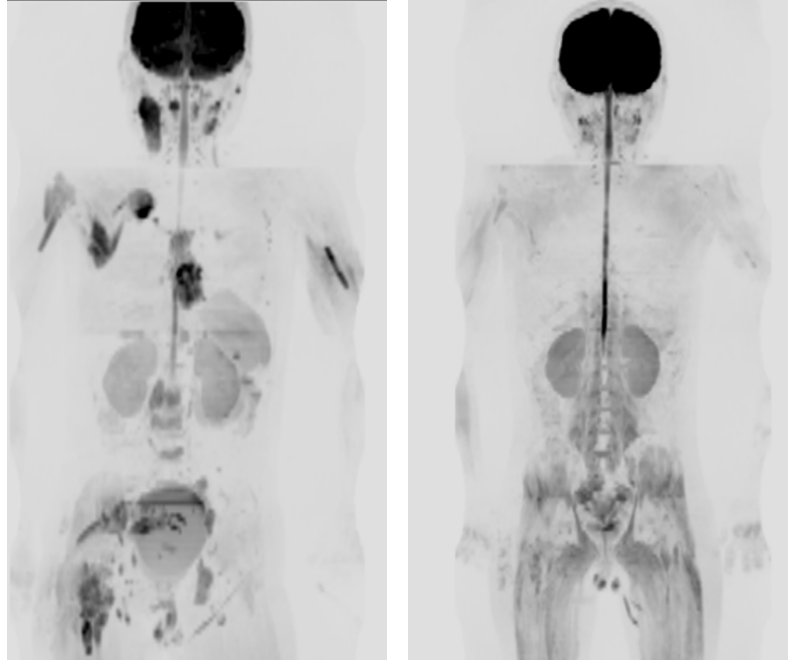
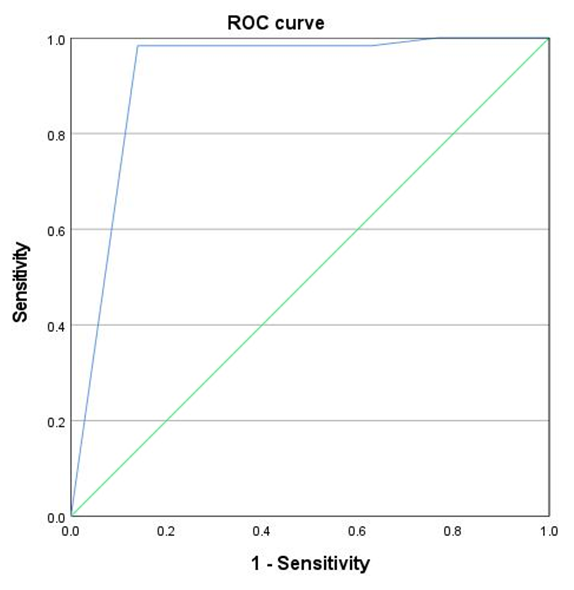
The image quality of abbreviated WB-MRI was rated good or excellent in 97% of cases, with high interobserver agreement. Abbreviated WB-MRI demonstrated a sensitivity of 90%, specificity of 96%, and accuracy of 94% for tumor response evaluation, with excellent agreement between abbreviated WB-MRI and PET/CT findings.Discussion:
The outcomes of this multicenter prospective study underscore the potential of abbreviated whole-body MRI (WB-MRI) as a reliable and radiation-free alternative for monitoring treatment response in pediatric lymphoma patients. With a remarkable 97% rating of good or excellent image quality and high interobserver agreement, abbreviated WB-MRI demonstrates its feasibility and reproducibility. The diagnostic performance, with a sensitivity of 90%, specificity of 96%, and accuracy of 94%, positions it favorably against the conventional 18 F-FDG-PET/CT. The excellent agreement between abbreviated WB-MRI and PET/CT findings emphasizes its reliability. Importantly, its non-invasive nature and absence of radiation exposure make it a compelling option, particularly for the pediatric population. The study suggests that abbreviated WB-MRI could be seamlessly integrated into routine clinical practice, promising enhanced patient care and reduced long-term risks associated with radiation exposure. Future investigations may explore broader applications and long-term outcomes to further establish its role in pediatric lymphoma management.Conclusion:
Abbreviated WB-MRI is a feasible and accurate imaging modality for follow-up of pediatric lymphoma patients undergoing various treatments, with high diagnostic performance and excellent image quality. The non-invasive nature and lack of radiation exposure make it a favorable option compared to PET/CT, especially for pediatric patients.Acknowledgements
No acknowledgement found.References
1. Tunariu N, Blackledge M, Messiou C, et al. What’s New for Clinical Whole-body MRI (WB-MRI) in the 21st Century [J]. Br J Radiol, 2020, 93 (1115) :20200562. DOI: 10.1259/bjr.20200562. 2. Georgi TW, Stoevesandt D, Kurch L, et al. Optimized Whole-Body PET MRI Sequence Workflow in Pediatric Hodgkin Lymphoma Patients [J]. J Nucl Med, 2023, 64(1): 96-101. DOI: 10.2967/jnumed.122.264112. 3. Sandlund JT, Guillerman RP, Perkins SL, et al. International Pediatric Non-Hodgkin Lymphoma Response Criteria[J]. J Clin Oncol, 2015, 33 (18): 2106–2111. DOI: 10.1200/JCO.2014.59.0745. 4. Shapira-Zaltsberg G, Wilson N, Trejo Perez E, et al. Whole-body diffusion-weighted MRI compared to 18F FDG PET/CT in initial staging and therapy response assessment of Hodgkin lymphoma in pediatric patients[J]. Can Assoc Radiol J, 2020, 71(2):217-225. DOI: 10.1177/0846537119888380. 5. Balbo-Mussetto A, Cirillo S, Bruna R, et al. Whole-body MRI with diffusion-weighted imaging: a valuable alternative to contrast-enhanced CT for initial staging of aggressive lymphoma[J]. Clin Radiol, 2016, 71(3):271-279. DOI: 10.1016/j.crad.2015.11.018. 6. Mayerhoefer ME, Karanikas G, Kletter K, et al. Evaluation of diffusion-weighted magnetic resonance imaging for follow-up and treatment response assessment of lymphoma: results of an 18F-FDG-PET/CT-controlled prospective study in 64 patients[J]. Clin Cancer Res, 2015, 21(11):2506-13. DOI: 10.1158/1078-0432.CCR-14-2454.Figures