0219
Perfluorinated Iridium Catalyst for Signal Amplification by Reversible Exchange Provides Metal-Free Aqueous Hyperpolarized [13C1]-Pyruvate1NHLBI/NIH, Rockville, MD, United States, 2NHLBI/NIH, ROCKVILLE, MD, United States, 3NCATS/NIH, Rockville, MD, United States, 4Wayne State University, Detroit, MI, United States, 5Southern Illinois University, Carbondale, IL, United States, 6NCI/NIH, Bethesda, MD, United States
Synopsis
Keywords: Hyperpolarized MR (Non-Gas), Hyperpolarized MR (Non-Gas), NMR spectroscopy, imaging agents, parahydrogen, 13C pyruvate, SABRE, perfluorinated compounds
Motivation: Signal Amplification by Reversible Exchange (SABRE) recent progresses include hyperpolarizing [1-13C]pyruvate in aqueous solutions. However, overcoming the challenge of iridium toxicity in hyperpolarized mixtures is essential for broader biocompatible SABRE applications.
Goal(s): The removal of Ir metal from hyperpolarized SABRE mixtures is an unmet need with substantial clinical significance.
Approach: A perfluorinated SABRE catalyst was developed to counter iridium contamination in hyperpolarized aqueous solutions by exploiting its high hydrophobicity for straightforward separation.
Results: The residual Ir was found to be only 177 ppb, representing a 8130-fold reduction in Ir concentration and the lowest and safest level reported to date for a SABRE-hyperpolarized solution.
Impact: Hyperpolarizing [1-13C]pyruvate using a perfluorinated SABRE catalyst reduced the residual iridium levels to safe levels for human injection. Future development along with solvent removal could make SABRE-SHEATH a faster and cost-effective alternative for biocompatible hyperpolarized agents in next-generation molecular imaging.
Introduction
The process of hyperpolarization can transiently increase the nuclear spin polarization (P) of biological target molecules by several order of magnitude. Hyperpolarized (HP) carbon 13 (13C) MRI is an emerging in vivo molecular imaging method that allows rapid, noninvasive, and pathway specific investigation of dynamic metabolic and physiologic processes that were previously inaccessible for imaging. HP (1-13C)pyruvate has emerged as the leading HP biosensor due to its central role in cellular energy metabolic pathways and fast cellular uptake, converting pyruvate to lactate in tumors.1 The gold standard for HP probes production is done via dissolution Dynamic Nuclear Polarization (d-DNP) hyperpolarization method;2 however, current d-DNP method is expensive and suffers from lengthy experimental preparation due to long hyperpolarization times. SABRE-SHEATH (Signal Amplification By Reversible Exchange in SHield Enabled Alignment Transfer) being a subset of Parahydrogen-Induced Polarization (PHIP),3-5 can achieve rapid hyperpolarization by using parahydrogen (para-H2) as the source of nuclear spin order into a target molecule6 without changing its chemical nature. Hyperpolarized [1-13C]pyruvate using SABRE-SHEATH was pioneered by Duckett and further developed by others,7-9 however, concerns have arisen regarding the toxicity of the catalyst used, which typically contains Ir-based heavy metal complexes, limiting its suitability for in vivo applications. Various attempts to address this issue include the development of heterogeneous catalysts (HET-SABRE)10-11, and methods such as biphasic catalysis12 and Re-Dissolution.13 Recent works has demonstrated that SABRE hyperpolarization of [1-13C]pyruvate can be performed in methanol, with the resulting HP [1-13C]pyruvate being reconstituted into an aqueous medium with an acceptable residual methanol level for in vivo use.21 The main challenge remaining in the translation of SABRE for biomedical purposes is the toxicity associated with the residual Ir content in HP solutions.Methods
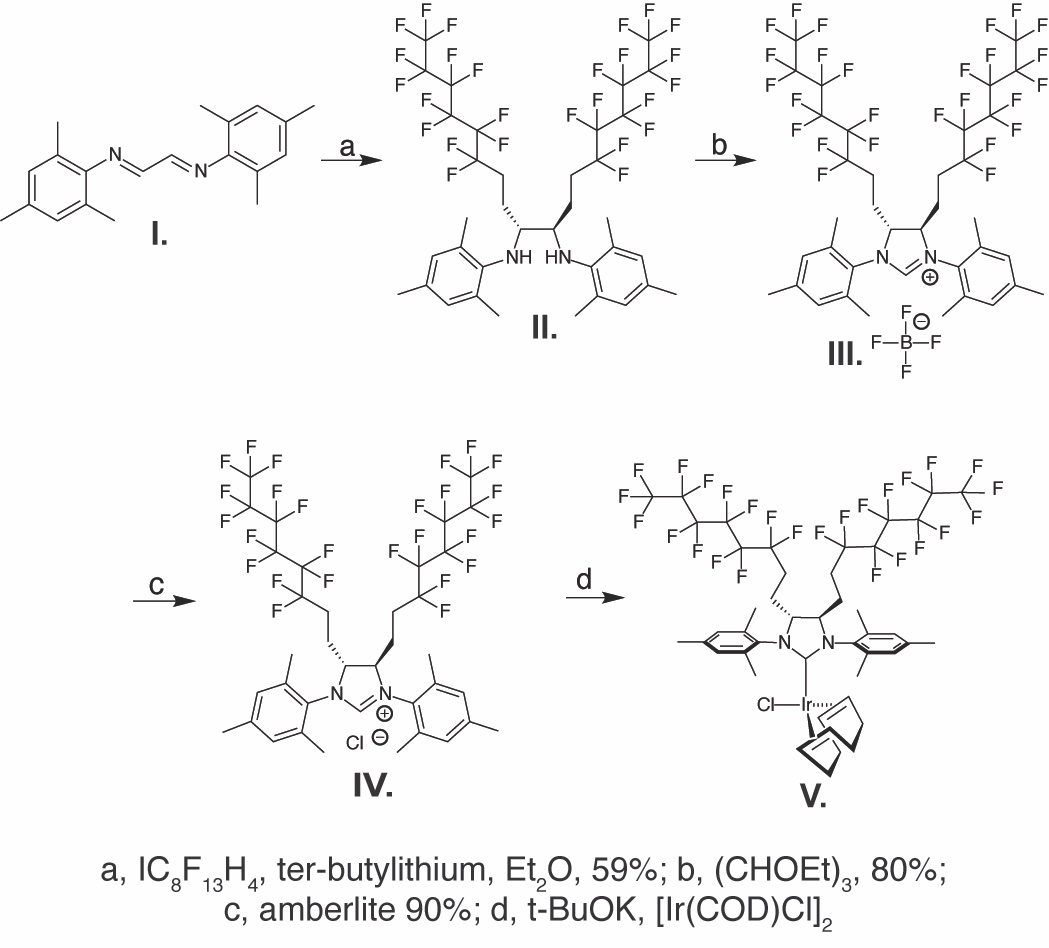
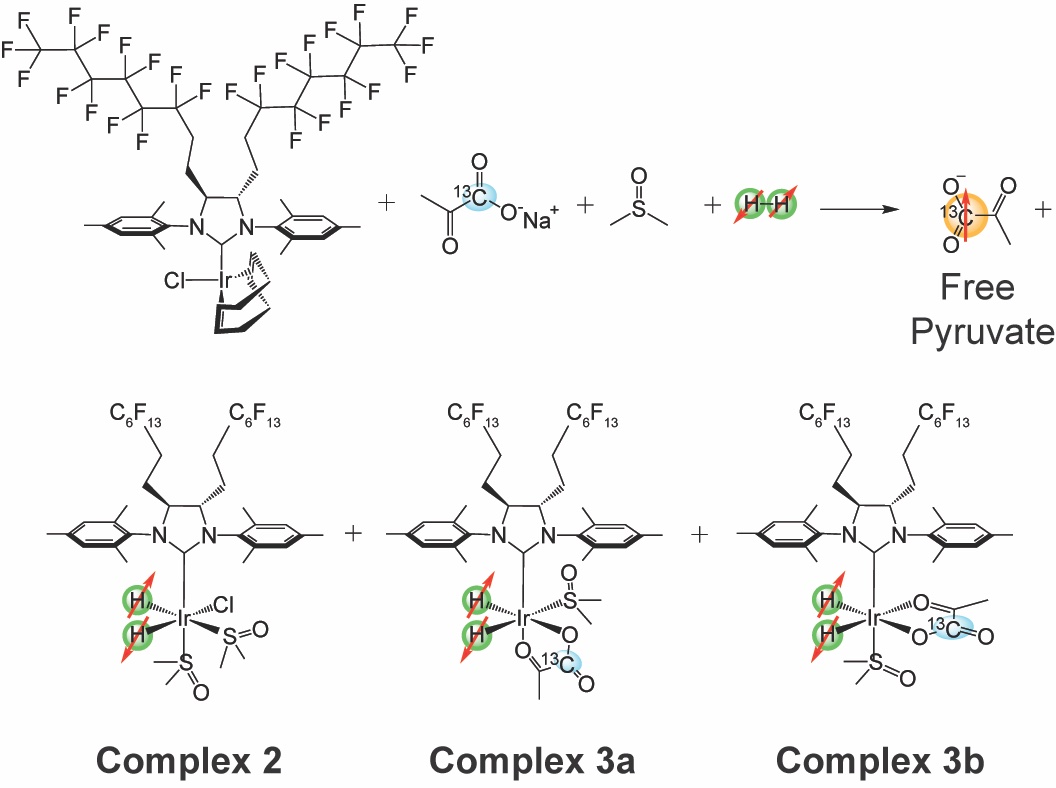
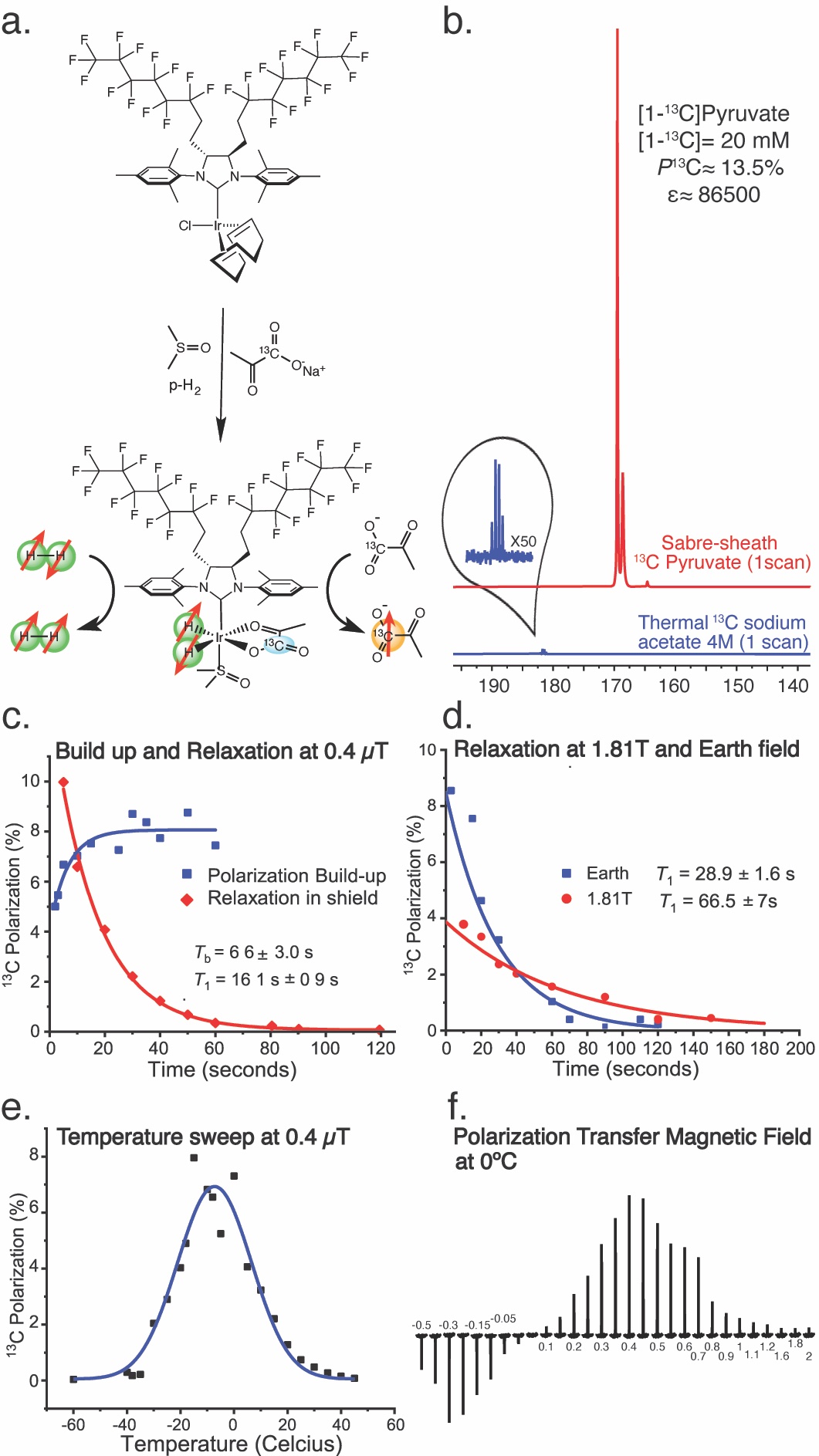
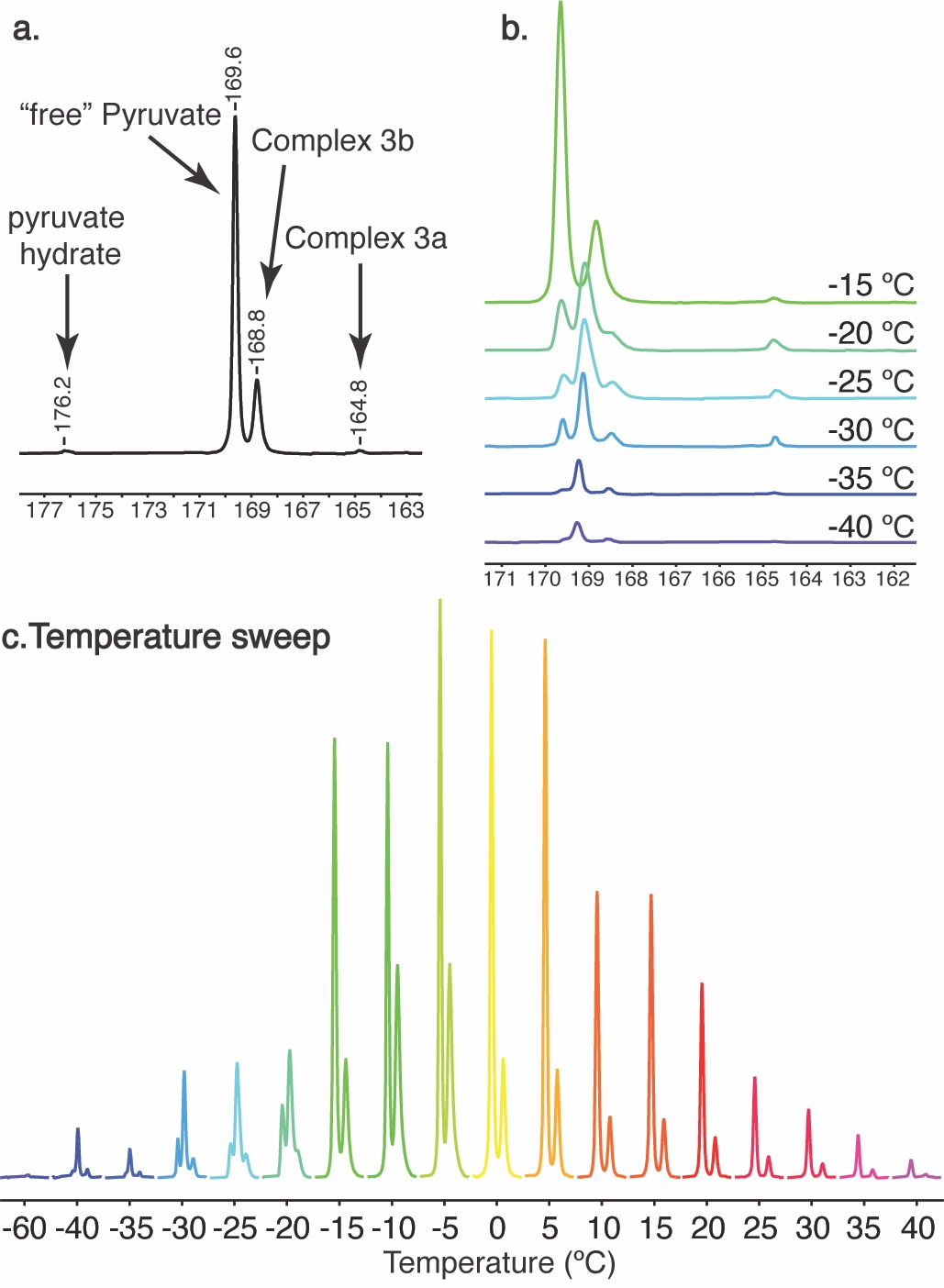
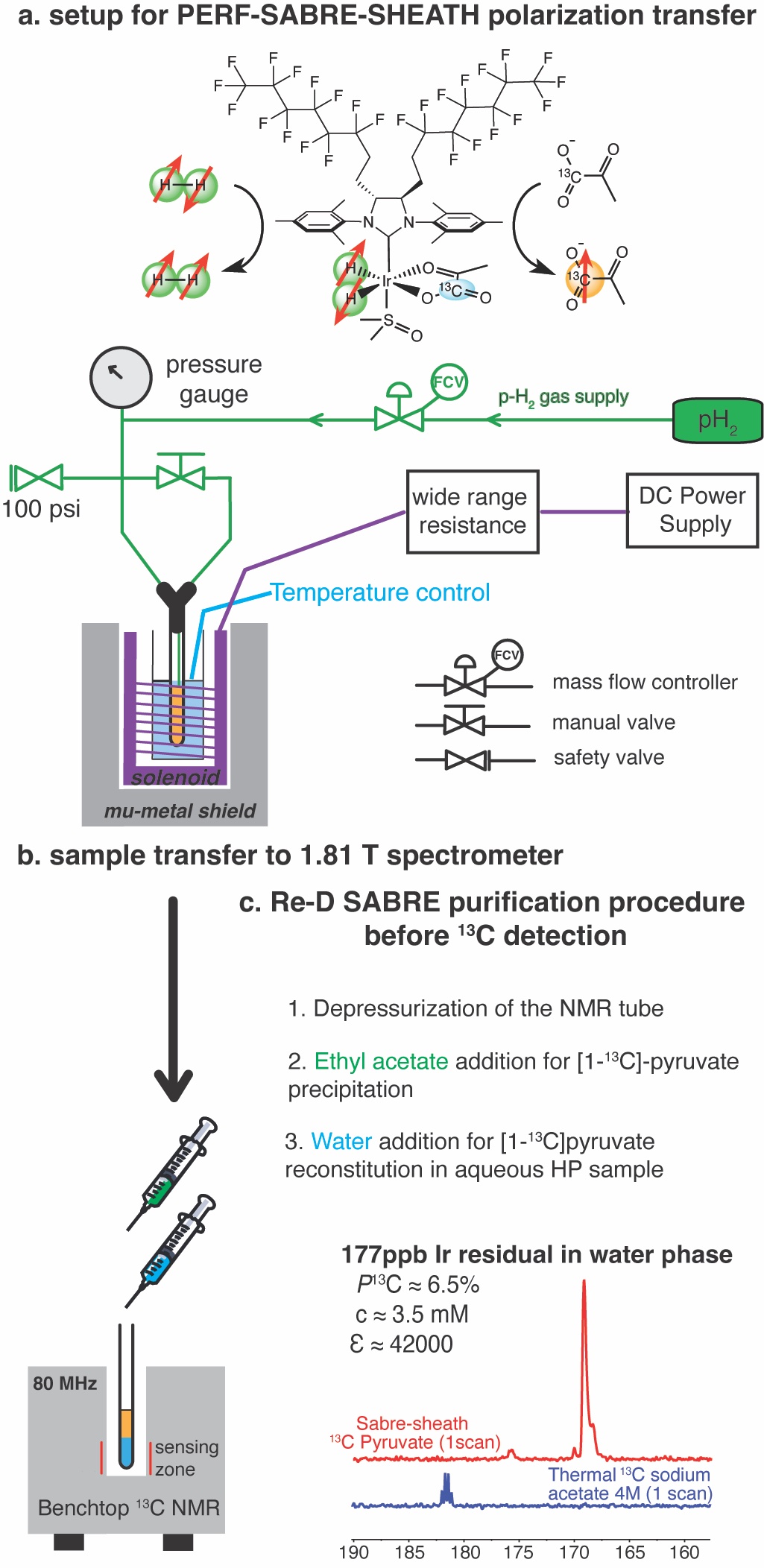
To mitigate the Ir contamination and toxicity challenge, novel perfluorinated versions of the SABRE ligands and catalysts were designed, featuring perfluorinated alkyl chains attached to the imidazolidine ligand as shown in scheme 1. This perfluorinated catalyst exhibited high hydrophobicity and demonstrated similar polarization properties as the original SABRE catalyst. This newly synthesized perfluorinated SABRE catalyst was tested for sodium [1-13C]-pyruvate hyperpolarization using the DMSO-co-ligand approach and showed efficient hyperpolarization of [1-13C]pyruvate with a typical polarization level of approximately 13.5%.The study showed the formation of SABRE-active species (Scheme 2) complexes 2, 3a and 3b after activation (<15 mins), as previously reported,7-9 with complex 3b being the primary SABRE-active species.The relaxation dynamics of hyperpolarized [1-13C]-pyruvate are comparable to those observed with the unmodified SABRE catalyst.7-9 The optimal conditions for polarization transfer include a magnetic field of about 0.4 μT and a temperature of -5°C, which is notably lower than those required for the original SABRE catalyst as seen in Figure 1. The steric bulk of the perfluorinated NHC ligand lowered the 3b free energy (G), and rendered the pyruvate exchange more accessible; therefore, faster exchange takes place at lower temperatures when employing the perfluorinated Irf-sIMES catalyst compared to the IrIMes catalyst.A detailed examination of temperature variations revealed the existence of different isomers of complex 3b, contributing to multiple resolved peaks at low temperatures as seen in Figure 2.The Re-Dissolution (Re-D) SABRE method13 was applied to remove the catalyst from the hyperpolarized solution as presented in Figure 3. This extraction method involves precipitating and redissolving the hyperpolarized pyruvate after a phase-separation by leveraging the immiscibility of water and ethyl acetate. After hyperpolarization in CD3OD, the sample was transferred to a spectrometer to minimize T1 losses, depressurized, mixed with ethyl acetate (during which HP pyruvate is precipitated); and heavy water is added (whereby HP pyruvate is transferred into the aqueous phase). The residual iridium content of the perfluorinated catalyst in the aqueous phase was evaluated via inductively coupled plasma Mass Spectroscopy (ICP-MS) at 177 ppb, marking a significant 8130-fold reduction in Iridium. This is the lowest reported to date and, most notably, safe to use in a clinical setup. Residual solvent impurities were also quantified, with ethyl acetate, methanol, and DMSO concentrations determined, using quantitative NMR (qNMR) and LCMS methods. The resulting aqueous HP [1-13C]-pyruvate exhibited significant enhancement, with a polarization level of 6.5%.Conclusion
Overall, this research demonstrated the feasibility of using a perfluorinated SABRE catalyst and the Re-Dissolution method. Further improvement is anticipated once automation processes for delivery and recovery will be in place. SABRE-SHEATH using the PERF-SABRE catalyst can become an attractive low-cost alternative to d-DNP to prepare biocompatible HP [13C1]pyruvate formulations for in vivo applications at a fraction of the DNP’s cost in next-generation molecular imaging modalities.Acknowledgements
EYC & BMG acknowledge support from the NSF under grants CHE-1904780 and CHE-1905341, and NIBIB R21 EB033872. We thank Shiraz Nantogma and Isaiah Adelabu for their help with preparation of parahydrogen gas.
References
1) 1. Kurhanewicz J, Vigneron DB, Ardenkjaer-Larsen JH, Bankson JA, Brindle K, Cunningham CH, Gallagher FA, Keshari KR, Kjaer A, Laustsen C, Mankoff DA, Merritt ME, Nelson SJ, Pauly JM, Lee P, Ronen S, Tyler DJ, Rajan SS, Spielman DM, Wald L, Zhang X, Malloy CR, Rizi R. Hyperpolarized 13C MRI: Path to Clinical Translation in Oncology. Neoplasia. 2019 Jan;21(1):1-16.
(2) Ardenkjaer-Larsen, J. H.; Fridlund, B.; Gram, A.; Hansson, G.; Hansson, L.; Lerche, M. H.; Servin, R.; Thaning, M.; Golman, K.; Increase in Signal-to-Noise Ratio of > 10,000 Times in Liquid-State NMR. Proc. Natl. Acad. Sci. U. S. A. 2003, 100 (18), 10158–10163.
(3) Bowers, C. R.; Weitekamp, D. P. Transformation of Symmetrization Order to Nuclear-Spin Magnetization by Chemical Reaction and Nuclear Magnetic Resonance. Phys. Rev. Lett. 1986, 57 (21), 2645.
(4) Russell Bowers, C.; P Weitekamp, D.; Bowers, C. R.; Weitekamp, D. P. Parahydrogen and Synthesis Allow Dramatically Enhanced Nuclear Alignment. J. Am. Chem. Soc. 1987, 109 (18), 5541–5542. https://doi.org/10.1021/ja00252a049.
(5) Chekmenev, E. Y.; Hövener, J.; Norton, V. A.; Harris, K.; Batchelder, L. S.; Bhattacharya, P.; Ross, B. D.; Weitekamp, D. P. PASADENA Hyperpolarization of Succinic Acid for MRI and NMR Spectroscopy. J. Am. Chem. Soc. 2008, 130 (13), 4212–4213.
(6) Adams RW, Aguilar JA, Atkinson KD, Cowley MJ, Elliott PI, Duckett SB, Green GG, Khazal IG, López-Serrano J, Williamson DC. Reversible interactions with para-hydrogen enhance NMR sensitivity by polarization transfer. Science. 2009 Mar 27;323(5922):1708-11.
(7) Iali, W.; Roy, S. S.; Tickner, B. J.; Ahwal, F.; Kennerley, A. J.; Duckett, S. B.; Hyperpolarising Pyruvate through Signal Amplification by Reversible Exchange (SABRE). Angew. Chemie Int. Ed. 2019, 58 (30), 10271–10275.
(8) Chapman, B.; Joalland, B.; Meersman, C.; Ettedgui, J.; Swenson, R. E.; Krishna, M. C.; Nikolaou, P.; Kovtunov, K. V.; Salnikov, O. G.; Koptyug, I. V.; Gemeinhardt, M. E.; Goodson, B. M.; Shchepin, R. V.; Chekmenev, E. Y.; Low-Cost High-Pressure Clinical-Scale 50% Parahydrogen Generator Using Liquid Nitrogen at 77 K. Anal. Chem. 2021, 93 (24).
(9) Adelabu, I.; TomHon, P.; Kabir, M. S. H.; Nantogma, S.; Abdulmojeed, M.; Mandzhieva, I.; Ettedgui, J.; Swenson, R. E.; Krishna, M. C.; Goodson, B. M.; Theis, T.; Chekmenev, E. Y.; Order‐Unity 13C Nuclear Polarization of [1‐13C]Pyruvate in Seconds and the Interplay of Water and SABRE Enhancement. ChemPhysChem 2021.
(10) Shi, F.; Coffey, A. M.; Waddell, K. W.; Chekmenev, E. Y.; Goodson, B. M. Heterogeneous Solution NMR Signal Amplification by Reversible Exchange. Angew. Chemie - Int. Ed. 2014, 53 (29), 7495–7498.
(11) Kovtunov, K. V.; Kovtunova, L. M.; Gemeinhardt, M. E.; Bukhtiyarov, A. V.; Gesiorski, J.; Bukhtiyarov, V. I.; Chekmenev, E. Y.; Koptyug, I. V.; Goodson, B. M. Heterogeneous Microtesla SABRE Enhancement of 15N NMR Signals. Angew. Chemie - Int. Ed. 2017, 56 (35), 10433–10437.
(12) Iali, W.; M. Olaru, A.; G. R. Green, G.; B. Duckett, S.; Olaru, A. M.; Green, G. G. R.; Duckett, S. B. Achieving High Levels of NMR‐Hyperpolarization in Aqueous Media With Minimal Catalyst Contamination Using SABRE. Chem. – A Eur. J. 2017, 23 (44), 10491–10495.
(13) Schmidt, A. B.; De Maissin, H.; Adelabu, I.; Nantogma, S.; Ettedgui, J.; Tomhon, P.; Goodson, B. M.; Theis, T.; Chekmenev, E. Y. Catalyst-Free Aqueous Hyperpolarized [1-13C]Pyruvate Obtained by Re-Dissolution Signal Amplification by Reversible Exchange. ACS Sensors 2022.
Figures